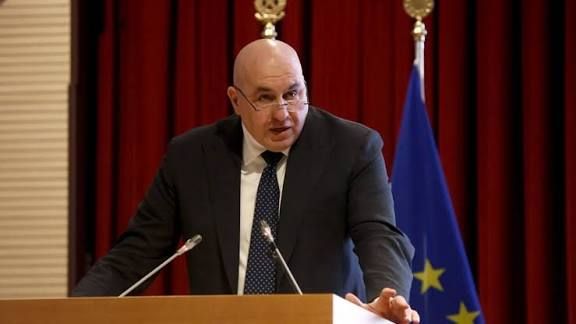
Patriot interceptors that European governments have already paid for are sitting unapproved on Defense Secretary Pete Hegseth's desk while Russia fires ballistic missiles at Ukraine's power plants. Overnight into 19 October, Russia launched 16 ballistic missiles and more than 200 drones and knocked out power to at least 550,000 households. Ukraine had almost no US-supplied Patriot interceptors left and was receiving 12 a month from US stocks, a quarter of the rate under President Joe Biden. Secretary of State Marco Rubio acknowledged on 20 October that the batch may be held under review. Hegseth told reporters in Eau Claire, Wisconsin, the same day that the US posture toward Ukraine was unchanged. "Certainly with things like interceptors, we want to make sure our guys have the most possible as well," he said.
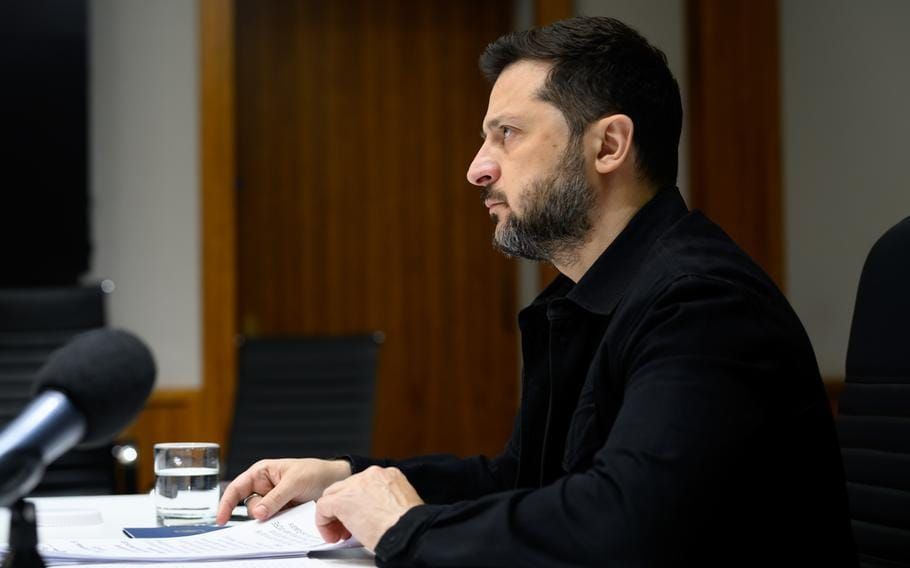
Volodymyr Zelenskyy told a bipartisan group of US senators and representatives on 19 October 2026 that a shipment of Patriot interceptors bought by Ukraine's allies through NATO's Prioritised Ukraine Requirements List (PURL) was waiting on Hegseth's approval. "So the missiles are ready and they could already be in Ukraine," Zelenskyy said. European governments holding US-made interceptors in their own stocks are also waiting for US authorisation to transfer them.
Tim Zadorozhnyy and Jimmy Rushton of the Kyiv Independent broke the story at 14:12 UTC on 19 October, hours before the call, from one senior Ukrainian official and two Ukrainian military officials. Hegseth has not signed off on a significant batch of Patriot missiles that allies have already paid for. "Hegseth has the contracts for Patriot missiles on his desk," one official said. A US government official called the Ukrainian account untrue, and the Defense Department did not answer the newspaper's request for comment before publication.
Zelenskyy told Bloomberg on 18 October that the US had approved delivery of only some of the PURL-funded missiles. "And this is not a technical issue," he said. On the evening of 19 October he told the lawmakers that the delays, missed missile warnings and satellite restrictions were a deliberate choice. "All of this suggests that some political decision has been made," he said.
At least some of the pending transfers come from countries friendly to Ukraine and require Hegseth's approval, a US official and three other people familiar with the matter told the Washington Post on 19 October. Hegseth had yet to authorise the latest package of US weapons bought by NATO allies under PURL, a source told Reuters on 20 October, though the source could not confirm it included Patriots. Most PURL deliveries are still moving, but Hegseth has not approved Ukraine's latest requests for Patriot interceptors, another Reuters source said.
Rubio, speaking to reporters in Mumbai on 20 October, acknowledged that the PURL batch may not have been delivered. "There's nothing being deliberately denied to Ukraine," he said. Asked specifically about the interceptors awaiting Hegseth's sign-off, he did not rule out that they were being held. "These things are always reviewed through the context of whether they're needed somewhere else," Rubio said, naming US commitments to Ukraine, Israel and Saudi Arabia alongside the protection of US bases in Europe.
Hegseth has neither approved nor formally rejected the transfers and has continued to approve other US assistance to Ukraine, according to the Post's reporting. The Defense Department press office told Stars and Stripes on 20 October there had been no change to department policy on intelligence sharing or on the capabilities it enables Europeans to provide Ukraine.
Two channels, one approval
Under PURL, Ukraine draws up a list of priority needs; Ukraine, the US and NATO agree packages of US weapons worth roughly $500 million each; NATO members and partners pay into each package; the US then supplies the weapons. The Patriot contracts on Hegseth's desk belong to this channel, as does the unauthorised PURL package Reuters described.
European governments that bought Patriot interceptors for their own forces cannot pass them to Ukraine without US consent, because the missiles are US-made and supplied under agreements requiring that consent. House Appropriations Committee ranking member Rosa DeLauro described the held missiles as interceptors already sold to European allies under agreements that require US approval before onward transfer.
Section 3 of the Arms Export Control Act bars a buyer from transferring US-supplied defence articles to another country without the President's consent, and bars the President from consenting unless the US would itself transfer the article to that recipient. Executive Order 13637 delegates the President's functions under section 3 to the Secretary of State, so formal consent for the European stockpile transfers rests with Rubio's department, while the PURL shipments await the Defense Secretary's approval. On 6 February 2026, Executive Order 14383 ordered the Secretary of State, working with the Secretary of War, to review third-party transfer processes within 60 days and propose ways to reduce and potentially realign them.
Zelenskyy described the missiles as ready to ship, the Post described interceptors held in allied inventories and the Ukrainian official referred to contracts awaiting signature. No published account gives the number of interceptors in either channel or says whether the PURL-funded Patriots would come from existing US stocks or new production.
Follow the money
PURL dates to 14 July 2025, when the US and NATO signed the arrangement allowing European governments to fund purchases of US weapons for Ukraine. NATO delivered the first package, financed by the Netherlands, on 4 August 2025. Ukraine had received more than $2 billion from partners for PURL by 17 September 2025, and the first $500 million packages included Patriot and HIMARS missiles.
Commitments grew from $4.18 billion across 21 countries in December 2025 to nearly $5.5 billion by May 2026 and to $6.7 billion from 29 countries by 23 July 2026. The five largest contributors in 2025 and 2026 were Norway at $1.36 billion, the Netherlands at $1.163 billion, Germany at $900 million, Canada at $834 million and Sweden at $546 million. Norway allocated $300 million in May 2026 to a new PURL package containing Patriot missiles.
PURL supplies approximately 95 per cent of Ukraine's Patriot interceptors, including the PAC-3, making delays particularly consequential for its ballistic missile defences.
Ukrainian, NATO and allied officials use "contributions", "commitments" and "pledges" interchangeably. No government, NATO or the US Treasury has published a breakdown of how much of the $6.7 billion has been paid into US accounts as opposed to promised, and the governments that funded the specific Patriot batch now held have not been named. Norway's May package is the only publicly identified 2026 contribution tied to Patriot missiles.
The Defense Department told Congress on 23 March 2026 that it intended to redirect about $750 million of NATO countries' PURL funding to restock US military inventories instead of sending additional aid to Ukraine, two US officials told the Washington Post. A department report reviewed by the Post showed some European PURL funds had covered needs that lawmakers had planned to fund with US money through the Ukraine Security Assistance Initiative, and future PURL shipments might exclude air defence equipment as the US rebuilt its own stocks and those of Gulf allies during the Iran war. Congress has barred the department from redirecting Ukraine-bound weapons on its own authority, and rerouting in an urgent military need requires notifying lawmakers, a US official said.
General Alexus Grynkewich, head of US European Command and NATO's Supreme Allied Commander Europe, gave allies an explicit assurance in Brussels on 19 May. "Everything Allies have paid for is flowing, including air defence interceptors," he said. NATO Secretary General Mark Rutte had given the same assurance on 16 April. A NATO official told the Kyiv Independent on 19 October that PURL support, including air defence, continues to flow; a second NATO official acknowledged some shipments could be delayed but said political reasons were unlikely.
The terms of the PURL arrangement signed in July 2025 have not been published, including whether payment by a European government creates a US delivery obligation, whether the US keeps discretion to delay after payment and whether contributors can claim a refund or a substitute.
Who signs
Hegseth has yet to approve the PURL shipment, according to Ukrainian officials, Zelenskyy and reporting by the Kyiv Independent, the Washington Post and Reuters.
Rubio, whose department holds the consent authority for the European stockpile transfers, has framed the delay as a routine allocation review and said there was no political directive. He spoke with Zelenskyy for 45 minutes on 20 October about interceptors, missile warnings and satellite services.
President Donald Trump rejected Zelenskyy's request for hundreds of additional Patriot interceptors at a White House meeting on 28 July 2026, saying they were needed to protect US facilities and allies in the Middle East, the Financial Times reported. Trump told Zelenskyy at the NATO summit in Ankara on 8 July that Ukraine could produce Patriot missiles itself, walked that back on 31 July, and in September made a final decision to grant production licences; domestic production has not started.
The order to limit Ukraine's access to the Starshield military satellite service came from inside the White House, two US officials and a Western official told Reuters on 15 October. No published reporting has established whether Hegseth acted independently on the Patriots or on instructions from the White House.
Grynkewich, as head of US European Command and Supreme Allied Commander Europe, helps assemble PURL packages.
The Defense Department paused deliveries of key military aid to Ukraine on 2 July 2025, including Patriot interceptors and precision-guided munitions. Hegseth ordered that halt even though an analysis showed the shipments posed no risk to US stocks, according to later media reports. Trump then promised Zelenskyy 10 interceptors immediately, fewer than the paused shipment.
The stated reasons and the reported pressure
Rubio cited competing demands from Ukraine, Israel, Saudi Arabia and US bases as the grounds for review. More than 800 Patriot missiles were fired in the first three days of the Iran war, more than Ukraine had received throughout Russia's full-scale invasion, Zelenskyy said in March. Polish Foreign Minister Radosław Sikorski said on 19 October that Poland had no Patriot missiles left to give Ukraine and that the shortage worsened after the attacks on Iran.
Rubio's stockpile explanation applies to missiles drawn from US inventories. For interceptors in European stocks, his only stated reason is that such transfers are reviewed for whether the missiles should stay in Europe.
US officials told Ukrainian and European governments on 11 October that the US could cut intelligence sharing and stop the PURL mechanism unless Ukraine halted its long-range strikes on Russian oil refineries, according to European officials who received or were briefed on the calls, as reported by the Financial Times and Reuters. A person familiar with the situation separately confirmed the threat to Reuters on the day of Trump's energy ceasefire announcement. The warning about intelligence was conveyed to Ukrainian generals, Zelenskyy told NPR.
Zelenskyy offered on 18 October to stop hitting Russian diesel infrastructure in exchange for Patriot missiles, and the administration refused the trade because it wanted the strikes ended without one. The proposal came seven days after US officials reportedly threatened to suspend PURL unless Ukraine stopped attacking Russian refineries. Rubio and the Defense Department press office have denied any political directive.
Russian strikes on the grid
Patriot batteries, with PAC-2 and PAC-3 interceptors built by RTX and Lockheed Martin, are Ukraine's main defence against Russian ballistic missiles, which other systems in its inventory struggle to intercept. The US now supplies 12 Patriot interceptors a month, about a quarter of the pace under President Joe Biden. By mid-October only a handful of Ukraine's Patriot interceptors remained, and CNN reported that the available missiles had been exhausted; Ukrainian officials withhold exact stock figures for security reasons.
Russia fired 39 ballistic missiles and more than 120 drones overnight into 14 October, targeting all three of Kyiv's combined heat and power plants and energy sites in Kharkiv and leaving at least 600,000 people without electricity. Three people were killed and 21 injured in Kyiv. The main target on the evening of 13 October was Kyiv's CHPP-4 plant, and Ukraine's partners again gave no warning.
Russia launched 16 ballistic missiles and more than 200 drones in waves overnight into 19 October, chiefly at Kyiv and the surrounding region, and struck 28 substations and other energy facilities in 11 regions, cutting power to at least 550,000 households. In Kyiv a 21-year-old woman was killed and eight people were injured; in Irpin a woman was killed and 19 people injured, including nine children. The blasts damaged a 25-storey apartment block, two metro stations and a medical centre and destroyed a Datagroup data centre serving more than 90 settlements. No partner warning arrived before the first wave.
A Russian drone strike on a park in Kharkiv region killed six people on 19 October, including a mother and her child of just over a year. Trump told reporters hours later that Russia had not been doing much. "Russia, frankly, has been fine on Ukraine," he said.
Russia has carried out 2,147 attacks on Ukraine's energy system since 16 July, counting to 17 October, including 87 targeted attacks on the energy, oil and gas sectors in the week to 19 October. Each additional Patriot interceptor gives Ukraine another shot at a ballistic missile aimed at a power plant.
Congress
Senators Richard Blumenthal, a Connecticut Democrat, and Thom Tillis, a North Carolina Republican, organised the 19 October video call, which included members of both chambers; neither the senators nor Zelenskyy's office has published the full list of participants. Zelenskyy raised serious concerns about delays in air defence interceptors, the senators said in their joint readout. "Trying to appease a murderous thug like Vladimir Putin will only prolong this war," they wrote. Blumenthal said bipartisan support for Ukraine would be expressed in upcoming action.
DeLauro, the senior Democrat on House Appropriations, said in her statement that "slow-walking the approval of these transfers is putting countless civilians directly in harm's way." Representative Brian Fitzpatrick, a Pennsylvania Republican, threatened investigations and budget cuts if the administration is found to be restricting Ukraine's Starshield access.
Nine senators led by Jeanne Shaheen asked the Defense Department's inspector general, Platte Moring III, on 15 October to investigate disruptions to Starshield, intelligence sharing and missile warnings, including whether any US official directed or approved them, and to preserve related records and brief them by 1 November. The letter was sent four days before the Patriot reports and does not cover interceptor transfers.
Section 3(d) of the Arms Export Control Act requires the President to report to Congress before consenting to third-country transfers above set value thresholds, which gives the committees grounds to ask the State Department whether consent requests for the European interceptors are pending and when they were received. The March notification on the $750 million shows the Defense Department reports PURL fund movements to lawmakers, and the armed services and appropriations committees can request the PURL accounts and any hold order on the Patriot package. The public record contains no finding that any statute has been breached.
European money, US control
European governments that have paid into PURL have no published contractual remedy if delivery is delayed. Sikorski said other NATO members could still transfer Patriot missiles to Ukraine, without naming them. Zelenskyy has made licensed Patriot missile production in Ukraine one of the country's top priorities.
Where things stand
Zelenskyy met US envoy Steve Witkoff in Oslo on 20 October alongside Norwegian Prime Minister Jonas Gahr Støre and Finnish President Alexander Stubb, with Jared Kushner joining by video. Norway, the largest single PURL contributor at $1.36 billion, hosted the talks. Several European governments are ready to transfer Patriot interceptors from their own stockpiles once the US approves. Witkoff will take proposals drawn up in Oslo to the Russian leadership, Støre said.
Zelenskyy put a specific trade to the US lawmakers on 19 October. "We could stop striking Russian oil refineries for 30 days," he said, in return for 30 days of US help defending Ukraine's skies with Patriot interceptors. Russian President Vladimir Putin had already rejected a mutual halt on energy strikes, and the administration has shown no willingness to accept the 30-day offer.
As of 21 October the European-funded interceptors remain awaiting approval. Russian attacks killed at least four people in Kyiv in the latest strikes, Kyiv officials said. US intelligence sharing on Russian launches resumed after Zelenskyy's call with Rubio on 20 October, and Zelenskyy expected results on the Patriot interceptors and the Starlink restrictions within 48 hours. The Defense Department's inspector general owes nine senators an initial briefing on the Starshield and intelligence disruptions by 1 November.
Neither the Defense Department nor NATO has disclosed how many interceptors are awaiting approval, which governments financed the shipments or when the requests reached Hegseth. No written order explaining the delay has been made public, and the US has not published what PURL obliges it to deliver once allies have paid.