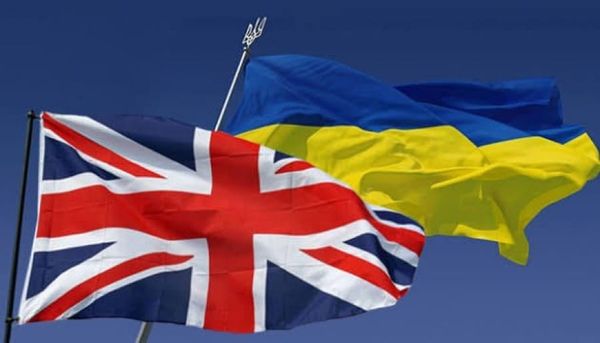
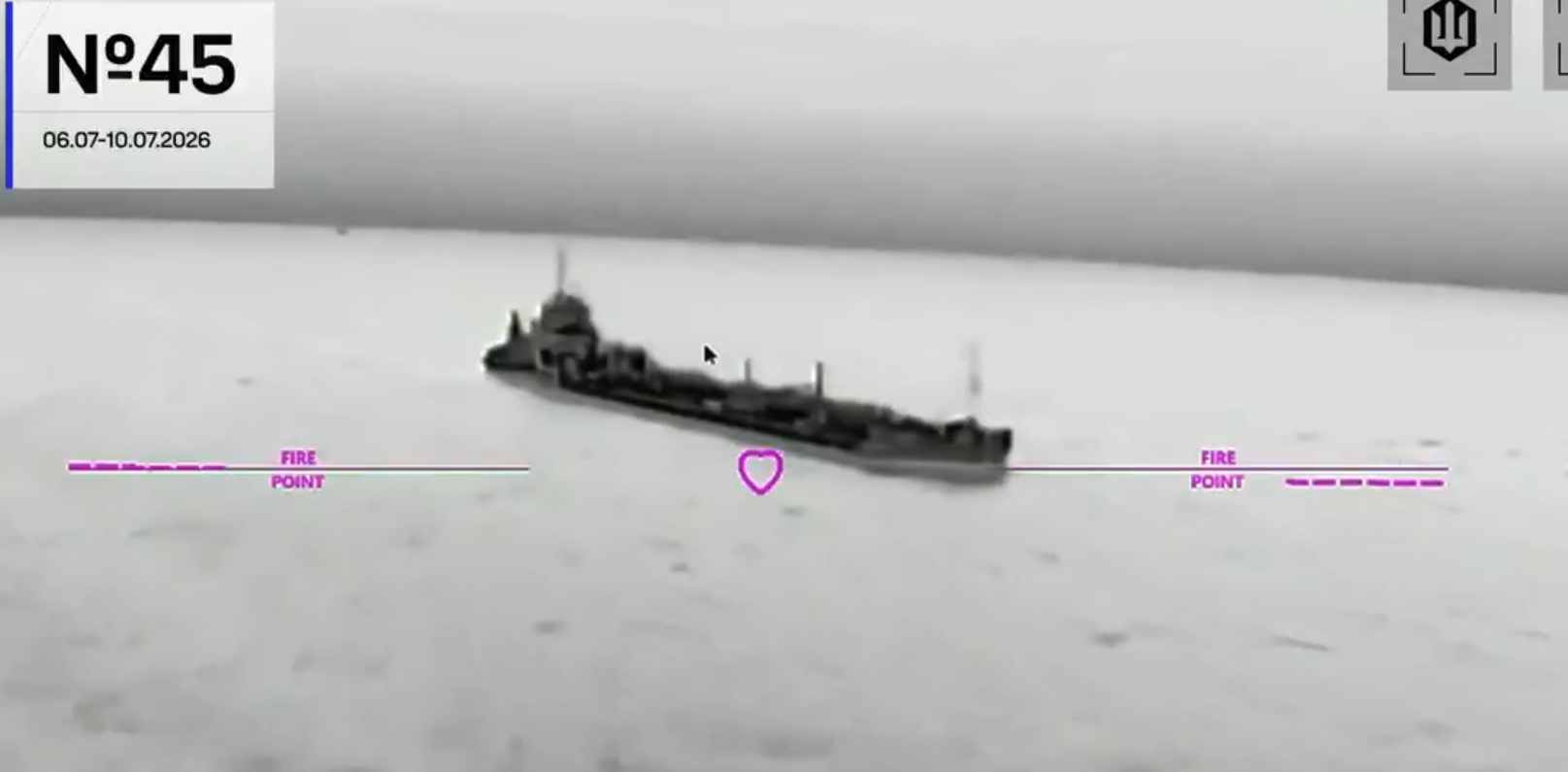
Ukraine has paused drone strikes on oil tankers using the Russian Black Sea port of Novorossiysk and agreed to stop targeting non-Russian vessels and Caspian Pipeline Consortium infrastructure. US Vice-President JD Vance made the demand in a telephone call to Volodymyr Zelensky on 31 July, and the Trump administration told Ukraine to cease and desist from striking non-Russian hulls.
Robert Brovdi, commander of Ukraine's Unmanned Systems Forces, said on 8 August that his units had struck 218 vessels since 6 July, 134 in the Sea of Azov and 84 in the Black Sea. His tallies are posted nightly to Telegram and have not been independently verified.
European navies have boarded, detained and in a few cases confiscated shadow-fleet ships since April 2025, and two masters have now been prosecuted. Ukraine destroys them. The United States built the price cap the fleet exists to evade, spent four months licensing exemptions from it, let those lapse on 17 June and by August was asking Ukraine to spare part of the traffic.
Operation MoLoChKa
Brovdi's units opened the campaign on 6 July with strikes on the tankers Captain Barmin and Sanar-3, and by the morning of 14 July had hit 116 vessels in the Sea of Azov, one every 112 minutes across nine days. A Black Sea phase opened on 15 July with 20 more. The count reached 201 on 29 July, 205 on 30 July and 218 on 8 August. Brovdi named the operation MoLoChKa, Ukrainian slang for dairy products, which he said also stands for a phrase meaning Russia's government will fall through Crimea.
Feeder tankers of about 140 metres and 7,000 tonnes are the targets, the ships that carry oil from Russian terminals through the Volga-Don Canal and the Sea of Azov out to large tankers that cannot enter the shallow ports. A single ocean-going tanker is loaded from 12 to 15 feeders, Brovdi said, so paralysing the feeders chokes the export chain at its narrowest point. Ukrainian drones are also hitting the tugs sent to tow damaged tankers away.
Russia's border guards, who report to the FSB, told shipping companies that passage requests through the Kerch Strait would not be accepted from 18:10 local time on 10 July and gave no date for lifting the restriction. Shipping on the Don-Azov Canal stopped the same day. Brovdi said on 8 August that the strait had then been blocked for 30 days.
Euronext wheat futures rose as much as four per cent on 10 July to a six-week high. Up to a quarter of the exports of the world's largest wheat exporter pass through the Sea of Azov, and grain shipments down the Don, 27 per cent of Russia's grain exports last season, stopped entirely while elevators at the Don ports filled.
Russian-installed authorities in Crimea declared a state of emergency in June and banned fuel sales. Most Russian regions were running fuel restrictions of some kind by July, reaching about 50 million people, and a government decree let refineries drop petrol quality from Euro-5 to Euro-3 until the end of the year. Russian forces began disguising military fuel trucks as milk and food transporters on the overland route into Crimea after strikes on the highway, which is where the operation took its name.
Satellite imagery from 26 July documented oil spills near the Akhtarsky limans following strikes on Russian port facilities.
The US brake
Chevron holds 15 per cent of the Caspian Pipeline Consortium and 50 per cent of the Tengiz field, which accounts for about 12 per cent of the company's global production. Kazakhstan exports roughly 80 per cent of its oil through the consortium, whose terminal sits at Novorossiysk. Black Sea drone attacks cut consortium loadings by about a fifth in July, and Kazakh output fell 14 per cent between June and July.
Ukraine agreed on the 31 July call not to target consortium infrastructure or non-Russian vessels, unless those vessels are under Ukrainian sanctions or carrying Russian oil or other Russian cargo. A Ukrainian official said his government was listening very carefully to its American partners and had put mechanisms in place to enforce the accord.
Mike Wirth, Chevron's chief executive, met Trump administration officials to discuss the risk to those assets. The administration treats the consortium as an alternative to Russian supply and a route for Kazakh crude into Europe, a US official said.
Transneft, the Russian state pipeline monopoly, holds 24 per cent of the consortium. LukArco B.V., a Lukoil vehicle, holds 12.5 per cent and Rosneft-Shell Caspian Ventures 7.5 per cent, so Russian companies hold 44 per cent of the infrastructure the United States asked Ukraine to spare, against 22.5 per cent for Chevron and ExxonMobil's Mobil Caspian Pipeline vehicle. KazMunayGas holds 19 per cent.
OFAC sanctioned Rosneft and Lukoil on 22 October 2025 and exempted their Kazakh project stakes from the outset. On 17 November it issued a general licence authorising oilfield and oil transportation services for both companies inside the consortium, Tengiz and Karachaganak, reversing a prohibition imposed on 10 January 2025.
Ukraine accepted the request partly because it is seeking US authorisation to manufacture Patriot interceptors, according to a person familiar with its position cited by the Financial Times, and hopes to buy several hundred Patriot missiles before winter. No source confirms that either the manufacturing licence or the missile sale was agreed in exchange.
Sheskharis, the Transneft terminal in the same port, ships about 650,000 barrels a day and handles roughly a fifth of Russia's seaborne crude exports. It suspended loadings from 22 July as drone activity around Novorossiysk rose. Russian fossil fuel export revenues fell to 683 million euros a day in July, 12 per cent below June, the Centre for Research on Energy and Clean Air found, and Russian refinery runs hit a 24-year low.
Kazakhstan's foreign ministry condemned the strikes, said attacks on consortium tankers put global energy security at risk and has not ruled out seeking compensation. Four drone strikes in four days hit tankers carrying Kazakh oil in July. Sinking a laden tanker in the Black Sea carries a spill risk that would reach Turkish, Bulgarian, Romanian and Ukrainian coasts, and Ukraine's security service said it confirmed the tanker Qendil carried no oil before striking it in December 2025 for that reason.
A Russian missile struck the Guinea-Bissau-flagged cargo ship Golden Leo at Odesa on 20 July, killing four Indian nationals and critically injuring a fifth, according to India's Ministry of External Affairs. India summoned the Russian chargé d'affaires on 21 July and told him the targeting of commercial shipping and the loss of civilian lives was unacceptable.
Ukrainian drones, Neptune cruise missiles and naval drones struck Novorossiysk overnight on 11 August, the night before the Financial Times report appeared. Ukraine's General Staff said four Russian warships were damaged, the frigates Admiral Makarov and Admiral Essen, a Buyan-M missile ship and the patrol ship Vasil Bykov, and satellite imagery showed hits near the forward vertical launch cells of both frigates. Fires burned at the Sheskharis oil terminal and two grain terminals stopped work. Veniamin Kondratyev, the regional governor, said at least three people were killed, among them an eight-year-old child, and drone debris damaged 21 residential buildings. Reuters reported no indication that the consortium's infrastructure or the tankers loading from it had been hit. Chicago wheat futures rose about three per cent.
The Smyrtos boarding
Royal Marines from 42 Commando fast-roped from RAF Chinooks onto the deck of the tanker Smyrtos 25 miles south of the Isle of Wight in the early hours of 14 June, the first time UK forces had boarded and detained a Russian shadow-fleet vessel rather than adding one to a list. Defence Secretary Dan Jarvis told the Commons the next day, in his first speech to Parliament in the role, that the 244-metre tanker was making 10 knots when the marines went aboard and that the six-hour operation met no resistance.
The Smyrtos loaded about 600,000 barrels of Russian crude at Ust-Luga on the Baltic on 5 June and declared Port Said in Egypt as its destination. National Crime Agency officers boarded alongside the marines. The Type 23 frigate HMS Sutherland and the minehunter HMS Ledbury supported the action, with Merlin Mk4, Wildcat and Chinook helicopters and an RAF P-8 Poseidon, and the whole operation was coordinated with France. The tanker was escorted to an anchorage off Portland.
Cameroon had struck the Smyrtos from its registry earlier in June, leaving the ship effectively stateless. Article 110 of the UN Convention on the Law of the Sea permits a warship to board a vessel it reasonably suspects has no nationality, and Article 58, paragraph 2, extends that right of visit into a coastal state's exclusive economic zone. Once statelessness is established, the UK government argues, its powers under the Russia (Sanctions) (EU Exit) Regulations 2019 follow.
The Royal Navy said the action took place in international waters. The joint Ministry of Defence and Downing Street release issued on 14 June said it took place in UK territorial waters. A House of Commons Library briefing published on 18 June and last updated on 14 July recorded that both the Smyrtos and the US-seized Marinera had been taken in international waters, and set out why the distinction matters: the statelessness route is cleanest beyond the territorial sea, while inside it a foreign tanker exercising passage rights holds protections no UK court has yet weighed against a sanctions detention.
Keir Starmer authorised interdiction in UK waters on 25 March, 11 weeks before the boarding. Starmer announced his resignation on 22 June and left office on 20 July, when Andy Burnham took over and appointed Wes Streeting to defence, Ed Miliband to the Foreign Office and John Healey to the Treasury.
The prosecution of the master
Ajay Pant, 38, an Indian national, appeared at Southampton Magistrates' Court on 16 June charged under regulation 46Z9B of the Russia (Sanctions) (EU Exit) Regulations 2019 with directly or indirectly supplying or delivering prohibited Russian oil or oil products by ship to a third country during June 2026. The charge carries a maximum sentence of 10 years. Joanne Jakymec, Chief Crown Prosecutor, said prosecutors had established sufficient evidence and a public interest in proceeding.
A judge refused Pant bail on 16 July, citing flight risk and the possibility of Russian assistance in an escape, and set trial for 15 December 2026. The other 24 crew, Georgian and Indian nationals, remain aboard the tanker at anchor without charge.
France tried the captain of the tanker Boracay in absentia after its September 2025 interdiction, on a charge of failing to obey orders during the boarding, and a court sentenced him in March 2026 to a year in jail. He had already sailed with the ship when France released it in October 2025.
European interdictions since 2025
Estonia's navy detained the tanker Kiwala in the Gulf of Finland on 11 April 2025, a ship whose Djibouti flag Djibouti itself disowned, and inspectors found 17 faults serious enough to hold it for two weeks. Estonia tried to stop a second tanker in May 2025 and a Russian Su-35 entered NATO airspace, escorting the vessel into Russian waters.
Ivo Vark, Estonia's navy commander, told Reuters on 10 April 2026 that Estonia would no longer detain shadow-fleet vessels in the Baltic. "The risk of military escalation is just too high," he said. Russia now runs a permanent patrol of two or three armed naval vessels in the Gulf of Finland, Vark said, and only an imminent oil spill or damage to undersea cables would move Estonia to intervene. Tankers waiting at the Vaindloo anchorage in Estonia's exclusive economic zone had tripled that week to between 30 and 40, because Ukrainian drone strikes on Russian ports had wrecked loading schedules.
France has run five seizures since September 2025. Its navy detained the Boracay off Brittany in late September 2025, the same hull Estonia had held as the Kiwala, by then repainted under a false Benin flag. French forces detained the Grinch in January 2026 for sailing without valid registration and the Deyna in March. On 31 May the navy seized the Tagor 400 nautical miles west of Brittany on suspicion of flying a false Cameroonian flag, in a joint operation with the UK, and diverted it to Douarnenez Bay. On 23 June it seized the Deliver, sanctioned by the EU in February 2025, as the tanker crossed the Mediterranean from the Russian port of Primorsk.
Belgian special forces rappelled from French NH-90 helicopters onto the product tanker Ethera in Belgium's exclusive economic zone on 28 February 2026, in an operation Belgium named Blue Intruder. The patrol vessel BNS Pollux intercepted the ship, which was flying a false Guinea flag, and escorted it to Zeebrugge. Belgian prosecutors questioned its Russian captain and opened a criminal investigation, and the owner lost an appeal in April.
Sweden boarded the cargo ship Caffa in March 2026 and held it outside Trelleborg over suspected transport of stolen Ukrainian grain, then boarded the Syrian-flagged Jin Hui in May and arrested its Chinese captain. The US Coast Guard seized the tanker Marinera, formerly the Bella 1, in the North Atlantic on 7 January 2026, with UK support from an RAF aircraft and a Royal Navy support ship. Russia asked the US government to drop the pursuit and dispatched a submarine to escort the tanker, according to CSIS.
Italian military personnel rappelled onto the EU-sanctioned tanker Toa Payoh in international waters west of Pantelleria on 2 August, 66 miles south-west of Sicily and 42 miles east of Tunisia. EUNAVFOR MED IRINI, the Italian-led EU mission that ran the boarding, has no power to detain a vessel. Its teams verify flags, copy documents and pass them to national prosecutors. The master refused at first to cooperate, so a boarding team went across by helicopter from the mission flagship ITS Thaon di Revel, supported by the Greek frigate HS Kanaris and a Polish M-28 Bryza patrol aircraft. The inspection lasted about two hours and the ship was allowed to continue to Istanbul. Guido Crosetto, Italy's defence minister, said he congratulated the crew of the Thaon di Revel on their professionalism, preparedness and determination.
Detentions without forfeiture
Germany's Federal Fiscal Court ruled that customs authorities cannot for now sell or otherwise use the tanker Eventin or its cargo, upholding a lower court decision in favour of the vessel's owners. The Panama-flagged ship lost power and drifted into German waters off the Baltic coast in January 2025 carrying about 100,000 tonnes of Russian crude worth roughly 40 million euros, and German customs confiscated ship and cargo under section 20 of the Foreign Trade and Payments Act. The Eventin lies at anchor off Rügen while officials look for another route, and the finance ministry has said a final ruling is pending.
France released the Boracay, the Grinch and the Deyna after fines were paid, and each resumed trading. Volodymyr Zelensky called Belgium's detained tanker a floating purse and urged European governments to confiscate the oil aboard it.
Sweden's Supreme Court dismissed an appeal by Caffa Shipping Ltd on 4 August and cleared the transfer of the Caffa to Ukraine, the first court-ordered handover of a shadow-fleet vessel over stolen Ukrainian grain. Ukrainian prosecutors documented the 96-metre ship loading about 3,000 tonnes of barley at Sevastopol in July 2025 and unloading at Tartus in Syria. Swedish authorities had detained it in March under a false Guinean flag and deemed it stateless. Ukraine may sell the vessel, with the proceeds going to its state treasury. Andrii Sybiha, Ukraine's foreign minister, said the decision set a precedent showing that law enforcement, prosecutors and an independent judiciary can turn accountability into results.
Reflagging to the Russian registry
The Kiwala and the Boracay were the same ship, IMO number 9332810, and it now sails as the Phoenix under a genuine Russian flag, which makes it neither stateless nor falsely flagged and so unreachable on the grounds used before. Article 92 of the convention gives a flag state exclusive jurisdiction over its ships on the high seas, and a real flag restores that protection.
The Russian flag carried three per cent of shadow-fleet crude volumes in May 2025 and 28 per cent by June 2026, the KSE Institute found, with Cameroon on 25 per cent and the two together accounting for 53 per cent of exports. Vladimir Putin told the St Petersburg International Economic Forum in June that Russia would build its merchant fleet into one of the world's largest, and the Russian transport ministry proposed a draft presidential decree that month to make Russian registration quicker and simpler.
Guards and mounted weapons
140 shadow-fleet voyages between May 2025 and April 2026 found 83 Russian guards aboard the ships, at least 24 of them former mercenaries: 16 who fought for Wagner in Syria and Ukraine, and eight tied to Redut, a paramilitary structure under the Russian defence ministry. Two-thirds of those voyages carried Rosneft oil. The work forms part of Shadow Fleet Mercenaries, a project built on more than 2,000 crew lists obtained by the Dossier Center and shared with Follow The Money, Süddeutsche Zeitung, The Times, OCCRP, Danwatch, Delfi and other partners. One guard said his job was monitoring the crew for compliance with instructions, and another said his was working out which crew members were passing information ashore.
Estonia's border guard photographed two 12.7mm Kord heavy machine guns mounted in sandbagged positions on either side of the bridge of the Marshal Vasilevskiy in May, the first documented case of military weapons fitted to a Russian civilian ship of this kind. The vessel is a Gazprom Flot floating regasification unit that shuttles between two Russian ports and backs up gas supply to Kaliningrad, sanctioned by the UK, Canada, Australia and Ukraine, and it does not carry oil for export. OCCRP and the Dossier Center wrote on 29 June that it had carried 50 passengers since August 2025, nearly half of them with backgrounds in the Russian military, the National Guard or the FSB, and that one passenger aboard every voyage since August is registered at an FSB special operations centre outside Moscow.
Analysts told the reporting consortium that a single machine gun is close to useless against an aerial drone and marginally useful against a naval one, and that the guns are there to be seen. Patrick Bolder of The Hague Centre of Strategic Studies said Russia was telling boarding parties: "Don't board us, because that will provoke a war."
The US general licences
OFAC issued General Licence 133 on 5 March, covering only cargoes delivered to Indian buyers at Indian ports, and General Licence 134 a week later on 12 March, which authorised the sale, delivery and offloading of Russian-origin crude and petroleum products already loaded on vessels and paused the US price cap for those cargoes. Both followed Iran's closure of the Strait of Hormuz in retaliation for US and Israeli strikes, which lifted crude prices sharply. About a fifth of the world's seaborne oil passes through the strait, and traffic there was still running well below normal on 13 August.
GL 134 ran to 11 April. GL 134A replaced it on 19 March on identical terms. GL 134B on 17 April moved the loading cut-off to that date and the completion deadline to 16 May. GL 134C on 18 May extended only the window for completing voyages already under way, to 17 June. None of them authorised new purchases of Russian oil, and OFAC issued no further extension.
Scott Bessent, the Treasury Secretary, said the authorisation applied only to oil already in transit and would not deliver Russia a significant financial benefit. He said in April that the US would not renew it, then issued a new licence two days later, telling a Senate panel that more than 10 of the poorest and most energy-vulnerable countries had asked him to extend.
Russian seaborne crude exports averaged six million barrels a day in May, up from 4.9 million in February, according to S&P Global Commodities at Sea. The vessel designations, the entity listings and the price-cap coalition stayed in force throughout, and EU and UK measures were never paused, so any party with EU or UK exposure carried it for the whole four months.
The EU's 21st package and the August measures
The Council adopted the EU's 21st sanctions package on 23 July, 218 individual listings covering 48 individuals and 170 entities, the largest batch in four years. It froze the automatic oil price cap adjustment until 15 July 2027, removing the mechanism that would have let the cap rise with the prices the Hormuz closure produced. It designated 41 more vessels on top of the 632 already listed and extended the regime for the first time to vessels providing bunkering and other services to the shadow fleet. It added 14 crypto-asset platforms in Georgia, Panama, the UAE, the Marshall Islands, Kyrgyzstan and Belarus, 56 military-industrial listings of which 37 relate to long-range drone production, 51 entities under dual-use export controls, eight gold sector actors and several diamond companies. It also lets member states confiscate and sell the crude and other commodities carried by shadow-fleet ships once those ships have been boarded in a naval operation. An EU official said the question had been what to do with the cargo, which is very valuable.
Vladimir Putin told Pacific Fleet personnel aboard the missile cruiser Varyag on 12 August that Russia would seize European vessels in return. "We see the authorities of certain countries attempting, in violation of international maritime law, to restrict the movement of vessels operated by our businesses," he said. "This is, of course, nothing other than piracy and robbery." Russia would not confine its response to the waters where its own ships were being taken, he said, but would act wherever it considered necessary. He instructed the defence ministry to prepare a response.
The Council renewed its Russia sanctions regime on 25 June for 12 months to 31 July 2027, the first year-long renewal in place of the usual six. Member states authorised the EU's Atalanta mission, covering the western Indian Ocean and the Red Sea, to carry out the same flag-verification boardings as IRINI on 23 July.
The UK designated one individual, 12 entities and six vessels on 6 August, among them six Russian banks and the tankers Asteras, Perseas, Torvian, Visund, Zenturo and Arctic Express. Ed Miliband, the Foreign Secretary, said the sanctions demonstrated the UK's commitment to supporting Ukraine and bearing down on those propping up the Kremlin's aggression. OFSI separately widened general licence INT/2025/5635700 to cover the Kurdistan Export Pipeline until October 2027.
The US Senate passed the Lindsey O. Graham Sanctioning Russia and Iran Act of 2026 by 86 votes to 11 on 7 August, authorising tariffs of up to 100 per cent on the largest purchasers of Russian oil and natural gas and granting the president waiver authority. The bill has gone to the House. The EU Council designated five individuals in Russia's military-industrial complex the same day.
The US conditions
The Trump administration froze weapons deliveries and intelligence sharing to Ukraine for about a week in March 2025, after a clash between Donald Trump and Volodymyr Zelensky at the White House on 28 February, to press Ukraine towards negotiations. A Ukrainian military officer said of the blackout that hundreds of Ukrainians died as a result of the pause, and Russian forces regained ground in Kursk oblast while it ran. The administration restored the flow after talks in Saudi Arabia.
General Licence 134 drew objections from Ukraine and from three European governments within a day of its issue on 12 March 2026. Zelensky said the waiver could hand Russia about 10 billion dollars and that it did not help peace. Antonio Costa, the European Council president, wrote that weakening sanctions increases Russian resources to wage the war of aggression against Ukraine. Friedrich Merz said easing sanctions then, for whatever reason, was wrong. The waiver covered roughly 100 million barrels of Russian crude, close to a day of global production.
Zelensky returned to the licences on 19 April 2026, after Bessent said the US would not renew and then renewed two days later. "Every dollar paid for Russian oil is money for the war," he wrote, putting the sum at 10 billion dollars and calling it a resource directly converted into new strikes against Ukraine. He said more than 110 tankers were at sea carrying more than 12 million tonnes of crude that could now be sold without consequence, and counted more than 2,360 attack drones, more than 1,320 guided aerial bombs and nearly 60 missiles fired at Ukrainian cities in the preceding week. EU and UK measures were never paused during those four months.
The Senate bill that passed on 7 August lets the president waive its sanctions and tariffs if he certifies to Congress that a waiver is in the national interest. Democrats objected that the language hands the president wide discretion, and Raphael Warnock secured written commitments on how the tariff power would be used. Lindsey Graham, who negotiated the package, died on 11 July, a day after announcing the deal with the administration. The House returns at the end of August.
The United States restored full intelligence sharing with Ukraine on 6 August, including satellite data, targeting information and attack warnings, at pre-freeze levels. George Barros of the Institute for the Study of War and other analysts said Ukrainian deep strikes on Russian refineries became markedly more effective once the American feed resumed. Trump gave his approval to the sanctions bill before the Senate vote, the US Coast Guard seized the Marinera in January and an RAF aircraft and a Royal Navy support ship assisted that operation.
The numbers
Jarvis told the Commons on 15 June that the UK had sanctioned more than 550 shadow-fleet vessels. The US, UK, EU, Australia, Canada and New Zealand had jointly sanctioned 653 unique oil tankers as of 17 June, the KSE Institute found. Vladyslav Vlasyuk, Ukraine's presidential commissioner for sanctions policy, said on 12 August that about 700 vessels carrying Russian oil are under sanction globally and about half have ceased that activity.
Ukraine's military intelligence directorate published details of 26 more vessels on its War and Sanctions portal on 14 August and said 18 of them carry no sanctions from any partner country. The 26 carry crude for Lukoil, Rosneft, Surgutneftegas, Novatek, Tatneft and Gazprom, liquefied gas from Arctic LNG 2, and grain taken from the occupied ports of Berdiansk, Sevastopol, Kerch and Feodosia. Among them are the bulk carrier Lamar S, which loaded wheat at Sevastopol for Syria, the dry-cargo ship Naya Falcon, which carried baking soda and wheat bran to Egypt and Cyprus, and the tanker Gregal, linked to Cymare Navigation FZC of the UAE.
BBC Verify tracked 184 UK-sanctioned vessels making 238 transits of UK waters between 25 March, when Starmer announced the boarding power, and 11 May, using MarineTraffic data. Oil tankers accounted for 173 of them and LNG carriers for 10. All entered the UK exclusive economic zone and at least 94 voyages briefly entered territorial waters. No boarding was made public in that time. Tom Sharpe, a former Royal Navy commander, called the absence of boardings pathetic.
The frigate Admiral Grigorovich escorted two sanctioned tankers through the English Channel on 9 April, the Russian-flagged Universal and the Cameroon-flagged Enigma, both carrying diesel loaded at Primorsk. The same frigate was close by when the marines boarded the Smyrtos on 14 June, and at least six other shadow-fleet ships changed course afterwards, taking the longer passage around the British Isles.
Russian oil export revenues fell to 15.8 billion dollars in June, five billion below May, the KSE Institute found, with seaborne crude exports up 13.3 per cent month on month to 4.4 million barrels a day and product exports down 13.1 per cent to a record low of 1.6 million. Ukrainian strikes cut refinery throughput to 3.8 million barrels a day, 1.6 million below a year earlier, and Russia banned diesel and gasoil exports in July, covering up to 36 per cent of its product export volumes. Urals crude averaged 61 dollars a barrel.
Shadow-fleet tankers carried 54 per cent of Russian seaborne exports in June, 176 ships, of which 94 per cent are more than 15 years old. Chinese and Russian ship managers together handled 56 per cent of those exports, Chinese companies 34 per cent and Russian companies 22 per cent. Russian insurance covered 48 tankers, 27 per cent of the shadow fleet, and 42 of those, 88 per cent, were sanctioned by at least one jurisdiction.
Ajay Pant's trial opens at Southampton on 15 December. The House returns at the end of August with the Graham bill on its calendar. Brovdi's drones are still flying, the Kerch Strait has been closed for more than a month, the EU's price cap adjustment stays frozen until 15 July 2027, and tankers are loading Kazakh crude at Novorossiysk.