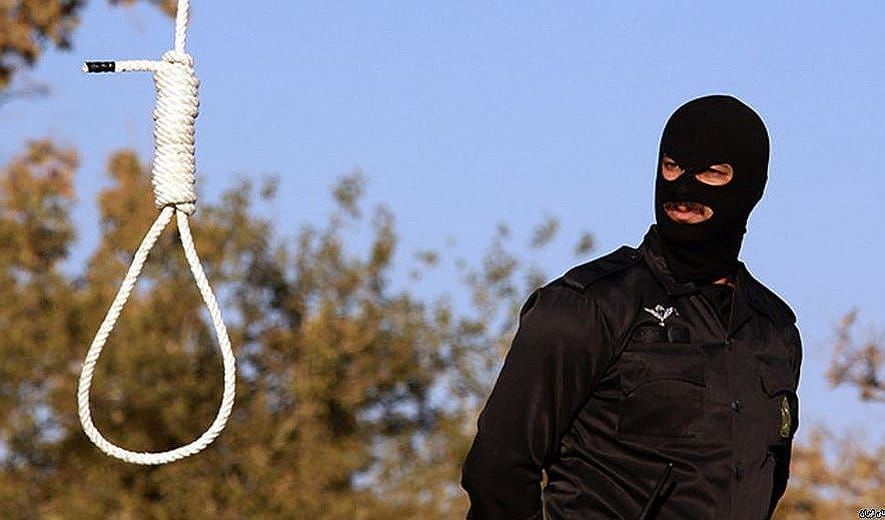
Fourteen political prisoners were executed in secret during Iran's 40-day war with the United States and Israel, according to Hengaw Organization for Human Rights' final war report published after the 8 April 2026 ceasefire. All but one of the verified executions took place at Ghezel Hesar Prison in Karaj, the main holding facility for political prisoners in Alborz Province. Every execution was carried out without the legally required final visit with family, and most were announced, if at all, only after the fact via the judiciary's Mizan News Agency. Several were not announced at all.
Iran Human Rights (IHRNGO), the Oslo-based organisation whose 18th annual death penalty report appeared on 13 April, counts a slightly different subset, organised by charge: seven people hanged during the war in connection with the January 2026 protests, six men convicted of membership in the banned Mojahedin-e Khalq, and one dual Iranian-Swedish citizen convicted of spying for Israel. Hengaw's count is based on prisoner transfers and verified executions at Ghezel Hesar; IHRNGO's is based on announced or two-source-verified hangings categorised by political charge. The two tallies overlap and are not in contradiction. Both organisations describe the pattern as the deliberate use of capital punishment as wartime political retaliation.
Since the ceasefire, the executions have continued. Amirali Mirjafari, convicted of arson at Tehran's Qolhak Grand Mosque during the January protests, was hanged at Qezel Hesar Prison in the early hours of 21 April 2026. Mizan confirmed the execution after the fact. Hengaw reports that 17 political prisoners, 8 of them detained during the January protests, have been executed in Iran since the war began, of whom Mirjafari is the most recent.
The people killed
Kourosh Keyvani, a dual Iranian-Swedish citizen, was hanged at Ghezel Hesar at dawn on 18 March. Keyvani had been arrested on 16 June 2025, during the earlier 12-day Iran-Israel conflict, and was sentenced to death on a charge of "spying for a hostile state". The judiciary did not disclose the evidence base for his conviction or the legal proceedings. His case coincided with the nineteenth day of the 40-day war and set the pattern: an accelerated execution during active hostilities, minimal disclosure, and no international response capable of slowing further hangings.
On 18 March at Qom Central Prison, Iranian authorities hanged Saleh Mohammadi, a teenage wrestler detained during the January protests.
Between 30 March and 4 April at Ghezel Hesar, Iran executed Saeed Mohammad Taghavi Sangdehi, Pouya Ghobadi Bistouni, Babak Alipour, Abolhassan Montazer, and Vahid Baniamerian. Ghobadi Bistouni, a 34-year-old electrical engineer and calligrapher from Sonqor in Kermanshah province, and Alipour, a 35-year-old law graduate and mountaineer from Rasht, were active members of the "No to Execution Tuesdays" campaign inside the prison system. Both had been subjected to severe torture, including beatings, electric shocks, flogging, and threats against their families, in order to extract forced confessions. Iran's Supreme Court had previously overturned their death sentences for investigative flaws, then reissued them after brief hearings in November 2025. Ghobadi Bistouni's mother, sister, and brother have been detained since early 2025. Alipour had previously served a five-year sentence and worked in rice farming because economic conditions left him unable to practise law.
On 2 April at Ghezel Hesar, Iran executed Amir Hossein Hatami, 18. On 5 April, also at Ghezel Hesar, it executed Mohammadamin Biglari, a 19-year-old computer science student, and Shahin Vahedparast Kalvar, 30. On 6 April it executed Ali Fahim. Biglari, Vahedparast, Hatami and Fahim were four of seven defendants arrested together on 8 January 2026 during the crackdown on protesters near Basij Base No. 185 Namjoo in Tehran. Their trial took place a single month after arrest, before Branch 15 of the Tehran Revolutionary Court, under Judge Abolghasem Salavati, on charges of moharebeh (enmity against God), corruption on earth, arson of public facilities, and assembly and collusion against national security. All four reported torture during interrogation: beatings, electric shocks, flogging, threats against relatives. The three other defendants in the same case, Shahab Zahdi, Abolfazl Salehi Siavoshani, and Yaser Rajaeifar, are held in solitary confinement at the same prison. Hengaw has warned that their executions are imminent.
The Islamic Republic's wartime legal machinery
Gholamhossein Mohseni Ejei, head of the judiciary, had publicly warned that punishments would be carried out swiftly and without administrative delays, and that all stages of legal proceedings, from prosecutor's office through Revolutionary Court and Supreme Court, would be handled on a "special and expedited basis". On 23 March, Deputy Judiciary Chief Hamzeh Khalili stated that all legal cases against January protest detainees had been reviewed and that "some of these cases have resulted in final verdicts and are being carried out, and several have been implemented in recent days".
Ayatollah Mohammadi Laeini, speaking on state television on 3 April, told the population: "No one should talk about the end of the war; no one should decide for themselves the fate of the war. No one is whispering about a ceasefire, compromise, or negotiation; everyone wants the war to continue." Iran Human Rights and Hengaw both interpret this statement as confirmation that executions during the war were synchronised with a political priority: external confrontation paired with internal terror. It is the tactic used by Sudan's Rapid Support Forces and by the Lukashenka government in Belarus, where wartime or crisis framing is used to accelerate repression against dissidents that peacetime scrutiny would otherwise constrain.
The tactic is also legible in the condition of detainees currently held but not yet tried. Peyvand Naimi, 30, was arrested at his workplace by the Islamic Revolutionary Guard Corps on 8 January 2026, accused of celebrating the previous supreme leader's death and involvement in the killing of security agents during the January protests. Naimi has spent more than a month in solitary confinement, has been subjected to two mock hangings, psychological torture, repeated beatings and starvation. A relative told the Guardian: "My whole body was shaking when I heard about the torture he has endured. It's unbelievable. I am very worried."
On 30 March, Reza Younesi, a professor at Uppsala University in Sweden, wrote on X that his brother Ali was among 22 prisoners "forcibly removed" from Qezel Hesar Prison. Younesi listed 16 other names. "The families of these prisoners have no information about the condition or whereabouts of their loved ones," he wrote. "Today, unlike previous days, Ali did not make his usual phone call to my mother." Some of those 22 names correspond to the executions Hengaw has subsequently verified.
The annual total: 1,639
The executions during the war are a concentrated subset of a broader institutional crisis. The 18th Annual Report on the Death Penalty in Iran, published jointly on 13 April 2026 by Iran Human Rights (IHRNGO) and Ensemble contre la peine de mort (ECPM), documented at least 1,639 executions across 2025, a 68 percent increase on the 975 executions recorded in 2024. It is the highest annual total since 1989, the final years of the revolutionary mass executions, and the highest recorded in the 18 years IHRNGO has been collecting the data. Since IHRNGO's first annual report in 2008, Iranian authorities have executed at least 11,196 people, an average of 622 per year. The 2025 figure is an "absolute minimum", requiring two-source verification. A further 553 credible reports in 2025 could not be sourced to IHRNGO's standard and are not included in the count. The internet blackouts imposed during the January 2026 protests and then the war further impaired documentation.
Only 113 of the 1,639 executions (under 7 percent) were announced by official Iranian media. The remaining 1,524 (over 93 percent) were unannounced, up from 9.7 percent announcement rate in 2024 and 15 percent in 2023. Of 795 executions for drug offences (48.5 percent of the total, a 58 percent increase on 2024), only three were officially announced. October 2025 was the bloodiest month with 222 executions, followed by September with 188 and May with 168. Sixty percent of all 2025 executions fell in the second half of the year. During the Muslim month of Ramadan (1 to 30 March 2025), which overlapped with the Iranian new year Nowruz, authorities carried out 62 executions, an unprecedented figure for that calendar period.
In 2025, 48 women were executed, the highest annual figure in over twenty years and a 55 percent increase on 31 in 2024. Twenty-one of the women hanged had been convicted of murdering their husband or fiancé, which Iran Human Rights attributes in substantial part to the lack of legal exit from abusive marriages and the criminalisation of self-defence. Public hangings tripled from previous years to 11 in 2025. Raphael Chenuil-Hazan, executive director of ECPM, said ethnic minorities and other marginalised groups are disproportionately represented among those executed.
Mahmood Amiry-Moghaddam, IHRNGO director, framed the totals in political terms. "By creating fear through an average of four to five executions per day in 2025, authorities tried to prevent new protests and prolong their crumbling rule." The surge continues an execution trajectory that began after the 2022 Woman, Life, Freedom nationwide protests and has accelerated with every successive crackdown since. Hengaw's separate first-quarter 2026 report, published in late March, documented 160 verified executions in Iran's prisons over the first three months of 2026, a figure 31 percent below Q1 2025 but only because the war slowed prison administration during late February and early April; secret executions accelerated again after the ceasefire. Only 12 of the 160 were officially announced; 17 were carried out entirely in secret; 4 of those executed were women. Alborz Province, which houses Ghezel Hesar, recorded the highest provincial figure with 36 executions.
The political prisoners no one is negotiating about
Hundreds of those detained during the January 2026 crackdown face capital charges. IHRNGO has confirmed 26 death sentences issued to protesters so far, with Amiry-Moghaddam warning that "several hundred more" are currently being prosecuted on charges that could see them executed. The Iranian human rights group HRANA reported on 9 February that 51,790 people had been arrested during the January protests; other estimates place the total detained at around 50,000. Hengaw documented 2,500 confirmed victims of the January protest crackdown by 13 January and classified the killings as crimes against humanity under customary international law and the Rome Statute. Amir Parasta, a German-Iranian surgeon, told Time magazine on 25 January that hospital records documented 30,304 protest-related deaths between 8 and 9 January alone. Reza Pahlavi, citing activists and political prisoners inside Iran, has estimated roughly 50,000 dead with 15,000 in Tehran. Six Tehran hospitals recorded 217 deaths from live ammunition on 8 January.
Nobel Peace Prize laureate Narges Mohammadi remains in Evin Prison. Sakharov laureate Nasrin Sotoudeh was rearrested without a warrant on 1 April 2026 and remains detained. Neither case was raised during the US-Iran talks held in Islamabad over the weekend of 11-12 April. No individual sanctions have been imposed by any Western government on Judge Abolghasem Salavati, who has presided over dozens of expedited political executions in the Revolutionary Court, or on Hamzeh Khalili or Gholamhossein Mohseni Ejei, whose public statements directed the wartime executions.
Amiry-Moghaddam's demand after the Islamabad talks was direct: "A moratorium on use of the death penalty and the release of all political prisoners must be demand number one." Chenuil-Hazan pressed the same point: abolition must be "at the heart" of any engagement with Iran. Neither condition was raised.
The tools the West is not using
The European Union's 2011 sanctions regime against Iran (Council Decision 2011/235/CFSP), extended on 13 April 2026 to 13 April 2027, authorises individual listings and asset freezes against persons and entities responsible for serious human rights violations in Iran. The Global Human Rights Sanctions Regime (the EU Magnitsky framework) permits member states to propose listings for torture, arbitrary detention, and summary executions. Canada's Sergei Magnitsky Law and the Special Economic Measures Act authorise parallel action. The US State Department maintains its own Global Magnitsky framework, although the Trump administration has not prioritised human rights sanctions.
None of these mechanisms have been activated against individuals named in the Hengaw, IHRNGO, or ECPM reporting on wartime executions. The European Commission's External Action Service position on Iran remains focused on the nuclear file and the Strait of Hormuz. The executions do not feature as a Council condition. They did not feature in the Islamabad negotiation framework. They have not featured in the G7 Iran statements issued since the ceasefire.
If the Islamic Republic survives the current crisis, IHRNGO's 2025 report warns, "there is a serious risk that executions will be used even more extensively as a tool of oppression and repression". The evidence from the first 13 days since the ceasefire, during which three more political prisoners have been hanged at Qezel Hesar, supports that prediction.