Two days of open hearings examined how the foreign ministry paid 130.6 million kroner to the International Peace Institute between 1997 and 2018 and how it handled a 2019 complaint linking the institute to Jeffrey Epstein. None of the ministers is a criminal suspect. Økokrim's corruption cases against Rød-Larsen, Mona Juul and Thorbjørn Jagland are separate.
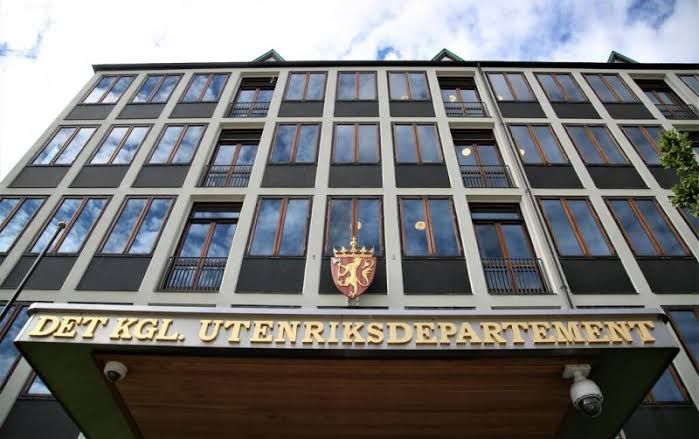
Norway's parliamentary oversight committee questioned Prime Minister Jonas Gahr Støre and 10 other current and former ministers on 30 September and 1 October over foreign ministry grants to the International Peace Institute, a New York think tank Terje Rød-Larsen led.
Riksrevisjonen, the Office of the Auditor General, says in a 2021 report that the ministry paid the institute 130.6 million kroner between 1997 and 2018. The audit found significant weaknesses in how the ministry handled, controlled and followed up the grants it examined.
The Storting's control and constitution committee opened its case after the US Justice Department released Epstein-related files in January 2026. Økokrim, Norway's economic crime unit, then named three people as formal suspects in corruption investigations: Rød-Larsen, former Prime Minister Thorbjørn Jagland and Rød-Larsen's wife, the former ambassador Mona Juul. Epstein pleaded guilty in Florida in 2008 to procuring a girl under 18 for prostitution and died in a New York jail in 2019 while awaiting trial on federal charges of trafficking girls for rape, which the indictment calls sex trafficking of minors.
The Storting's programmes for the hearing do not include Rød-Larsen, Juul or Jagland. Appearing before the committee does not make any minister a suspect.
What the committee is examining
The committee's hearing notice, titled "control and culture in the foreign service", lists five subjects: the government's response to the Epstein documents, follow-up of Riksrevisjonen's findings on the institute, vulnerabilities in the foreign service's culture and organisation, control procedures in the ministry and the use of networks and aid money in Norway's campaigns for international posts.
The Storting's published programme lists 11 serving and former ministers. On 30 September the committee heard former development ministers Erik Solheim and Heikki Eidsvoll Holmås, former foreign ministers Børge Brende and Ine Eriksen Søreide and Støre, who was summoned as foreign minister from 2005 to 2012.
The 1 October programme lists former development ministers Nikolai Astrup, Dag-Inge Ulstein and Anne Beathe Kristiansen, former foreign minister Anniken Huitfeldt, Norad director Gunn Jorid Roset, Development Minister Åsmund Aukrust and Foreign Minister Espen Barth Eide. Roset is the only witness who is not a minister.
Per-Willy Amundsen of the Progress Party, who chairs the committee, said he had not summoned Jagland because he did not want to interfere with Økokrim's investigation or with the independent commission the Storting has appointed. Jagland was prime minister from October 1996 to October 1997 and foreign minister from 2000 to 2001, both within the period of the grants.
130.6 million kroner over 21 years
The foreign ministry published a list of its grants to the institute in February, after questions from the committee and more than 1,300 requests for access to documents since mid-January. The total matches Riksrevisjonen's figure of 130.6 million kroner for 1997 to 2018.
Riksrevisjonen's 130.6 million kroner is a nominal sum of payments made over 21 years. At Norges Bank's rate of 9.6006 kroner to the US dollar on 30 September 2026 it equals about US$13.6 million, a conversion that does not reflect what the money was worth when it was paid.
Riksrevisjonen's report says the grants in the period it audited came from budget chapter 164, post 70, a line for peace, reconciliation and democracy measures. The Norwegian Government Agency for Financial Management exempted grants under that line from the requirement to advertise them between 2005 and 2013. Two multi-year agreements set the grant at 11 million kroner a year for 2007 to 2009 and 8 million kroner a year for 2010 to 2012.
Committee members asked Støre about the increase in annual support from 4 million kroner in 2006 to 11 million kroner in 2007. Støre said civil servants had recommended the 2006 agreement and that the ministry's overall experience with the institute had been positive, which was why it signed new agreements.
E24, the Norwegian business outlet, compiled annual payment figures showing that support reached its highest levels in 2014, at 12.5 million kroner, and 2015, at 11.8 million kroner, when Brende was foreign minister in Erna Solberg's Conservative-led government. Grants ended in 2018, during Søreide's tenure.
Eide's letter to the committee of 16 April 2026 says the ministry also paid the institute 138,897 kroner in 2023 and 183,427 kroner in 2024 to plan the Trygve Lie Symposium. The letter says those payments were a procurement and not a grant.
What the auditors found
Riksrevisjonen's report, dated 18 May 2021, examined only the grants paid from 2007 to 2012. It found that the ministry had not required the institute to report against goals or criteria for results, and that audited project accounts were missing for every year in that period.
The ministry capped administrative costs at 5 per cent of grants, and at 7 per cent from 2010, but did not tell the institute about the limit until 2012, according to the report. Riksrevisjonen found that the institute exceeded the limit and said the use of grant money for administrative costs beyond the ministry's guidelines was strongly reprehensible ("sterkt kritikkverdig").
Riksrevisjonen also found that the ministry did not ensure that the required assessments of officials' impartiality were conducted. The committee's 2022 recommendation on the report, Innst. 167 S, says the ministry had instructed that Juul, then a director general in the ministry, and her department should neither prepare nor decide matters concerning the institute, because her husband led it.
Innst. 167 S also says that another director general was a member of the institute's International Advisory Council during the period in which more than 47.1 million kroner was processed and paid to the institute under his responsibility.
Progress Party and Red Party members of the committee proposed in 2022 that Riksrevisjonen extend its audit to the grants paid from 2012 to 2018, a proposal the committee majority did not support. Riksrevisjonen said in February 2026 that it was considering a new examination of the support.
The ministry said in its 2021 response to the audit that it had introduced new management systems, training and a dedicated grants administration section after 2013.
The 2019 complaint
Eide's 16 April letter says the ministry received a complaint in 2019 about young female interns of Eastern European background who spent short periods at the institute and who were said to have a connection to Epstein, including through photographs of them taken in the UN building and sent to him. The conduct described in the complaint dated from November 2014 to April 2016.
Eide's letter also says the ministry did not report the complaint to the Norwegian Civil Security Clearance Authority. It says the complaint was not passed to Riksrevisjonen because the auditor examines administration and compliance with rules, not criminal matters.
An internal ministry memo obtained by Filter Nyheter, a Norwegian investigative outlet, shows that ministry officials briefed the Director of Public Prosecutions about the complaint and named Juul as the spouse of the institute's leader. Filter Nyheter reported that the prosecution service informed the US Federal Bureau of Investigation.
Søreide, foreign minister at the time, has said the complaint was treated as a police matter. In February she said the ministry could have examined the institute more closely. Former employees of the institute told VG that the complaint concerned one woman, whose photographs were sent to Epstein, and not several.
The parliamentary and ministry documents examined by YAC News date the ministry's first Epstein-related complaint about the institute to 2019, the year after the last grant. Aftenposten reported in February that the ministry received warnings in 2015 about weak control of money flows at the institute and paid grants for three more years. YAC News has not seen those warnings.
The ministers' answers
Støre said in his opening statement, which the Prime Minister's Office published, that he had never met or had any contact with Epstein, and that nothing from his time as foreign minister indicated any connection between Norway's cooperation with the institute and Epstein. He said there was no basis for describing the culture of a large organisation as unhealthy because of what one or a few individuals may have done.
Støre also told the committee he had never had the slightest doubt about his impartiality in matters involving Rød-Larsen.
Solheim and Holmås both said yes when a committee member asked whether money that could be reported as development aid was easier to spend in the foreign ministry. Solheim said he did not recognise the description of preferential treatment for the institute and that, as far as he knew, he had never met Epstein. Holmås said the institute was central to influencing US foreign policy, which was why money was spent there.
On 1 October Astrup said the hearing would have been more useful after the independent commission reports. Ulstein said the ministry's system of rotating staff between posts created a vulnerability to favouritism, which he said was not the same as distrust. Roset, Aukrust and Eide were scheduled to testify later on 1 October.
Amundsen said after the first day that the committee was barely halfway through its work and that the witnesses had been almost unanimous that the ministry's culture was not a problem.
Brende and the World Economic Forum
Brende was foreign minister from October 2013 to October 2017 and then president and chief executive of the World Economic Forum until he resigned on 26 February 2026. He told the committee he had not been truthful when Aftenposten asked him in November 2025 about contact with Epstein, and said he regretted it.
Brende said his contact with Epstein began in 2018, after he left government, and consisted of three dinners and some emails and text messages, the last dinner taking place on 13 June 2019. Committee members showed him a 19 September 2017 email in which Rød-Larsen wrote to Epstein about a meeting with "my Norwegian friend". Brende said the email did not refer to him.
André Hoffmann and Larry Fink, the forum's co-chairs, said in February that an independent review of Brende's contacts had found no additional concerns beyond what had already been disclosed.
Norway's support to the forum goes to the secretariat of the Tropical Forest Alliance, which the forum has hosted since 2015, according to a written answer of 16 March 2026 from Climate and Environment Minister Andreas Bjelland Eriksen. The answer says the forum receives no other support from Norway's Climate and Forest Initiative.
Finansavisen calculated that Norway had paid the forum 124 million kroner since 2015, about 70 million kroner of it after Brende became the forum's president in 2017. Brende told the committee he took no part in the decisions on that funding.
The Climate and Environment Ministry administers the forest initiative; Brende headed the foreign ministry. The parliamentary and ministry documents examined by YAC News do not place Brende in the funding decisions, and the timing of his move to the forum does not by itself establish a link between the two.
The criminal investigations
Økokrim opened its investigation of Jagland on 5 February. Its director, Pål K. Lønseth, said there were reasonable grounds because Jagland chaired the Norwegian Nobel Committee and was Secretary General of the Council of Europe during the period covered by the released documents, and that Økokrim would examine whether he received gifts, travel or loans in connection with those positions.
The Council of Europe's Committee of Ministers waived Jagland's immunity on 11 February. Økokrim formally named him a suspect of aggravated corruption on 12 February and searched his Oslo home and two other properties. His lawyer, Anders Brosveet, said Jagland believed no circumstances constituted criminal liability.
Økokrim named Juul a suspect of aggravated corruption and Rød-Larsen a suspect of complicity in aggravated corruption on 9 February, in connection with Juul's work for the foreign ministry. Lønseth said the investigation would examine evidence both for and against the suspects.
A siktelse gives a person formal suspect status under Norwegian law and is not an indictment. Økokrim said on 10 September that the three investigations were complex, involved international police cooperation and would not be completed in 2026.
Juul left her post as ambassador to Jordan and Iraq on 8 February and retired from the foreign service on 1 May. Her lawyer, Thomas Skjelbred, said she did not recognise herself in the suspicion. Rød-Larsen denies criminal liability through his lawyer, John Christian Elden, and told NRK in an interview in September that he deeply regretted his relationship with Epstein.
Altinget reported in February that the 2019 complaint about the institute forms part of the case file. Økokrim's public statements examined by YAC News through 1 October refer to suspected gifts, travel, loans and other benefits connected to the suspects' positions and do not identify the institute's grants as part of the suspected offences.
Requests to other countries
Marianne Bender, the first state prosecutor leading the Juul and Rød-Larsen case, told The Washington Post in September that Økokrim was in contact with US Justice Department officials, who had not approved its request for legal assistance. Prosecutor Anne Allum told iNyheter on 11 September that a separate request in the Jagland case was being prepared.
The US Justice Department said it "has not refused to assist any jurisdiction investigating potential criminal conduct related to Jeffrey Epstein." Prosecutors and police in Poland and Latvia also said in September that their requests had not been answered.
Økokrim signed a joint investigation team agreement with French authorities in April covering the Juul and Rød-Larsen case. Bender said the agreement allows investigative steps in France. The Paris prosecutor's office formed a special team in February to examine possible French links to Epstein's crimes.
The commission
The Storting decided on 17 March to establish an independent commission and appointed seven members chaired by Amund Djuve, a former editor of Dagens Næringsliv, with Borgarting Court of Appeal judge Kjersti Buun Nygaard as vice-chair.
The commission's mandate covers the relations between Epstein's network and Norwegian politicians and officials, the allocation of aid and public grants to international organisations, Norway's campaigns for top international posts and the culture, impartiality rules, archives and personnel security of the foreign service.
A law the Storting adopted on 12 June allows the commission to order people to give evidence and provides that information it receives cannot be used as evidence in a criminal case, except in a case of false statements to the commission. The government proposed 22 million kroner for the commission's work in 2026 in its revised budget.
Amundsen said the hearing was preparatory work ahead of the commission's report, which the Storting has required by 31 January 2028.