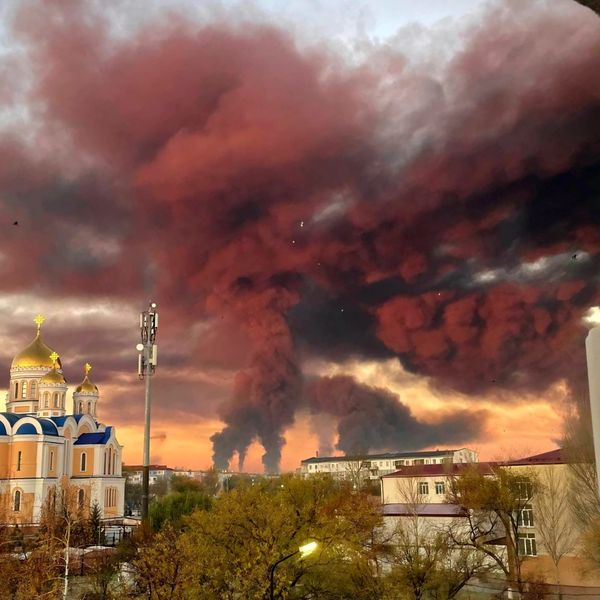
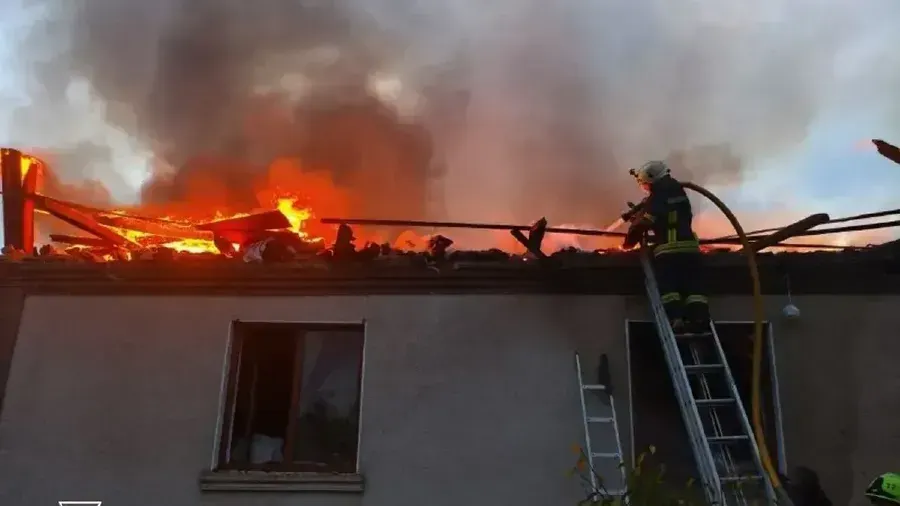
Russia launched 433 drones at Ukraine overnight into 1 November, cutting power to consumers in eight regions and forcing emergency blackouts in Kyiv, the Ukrainian Air Force and the Ministry of Energy said.
Russian forces have struck Dnipro's main railway station at least three times since 29 October, when a jet-powered drone hit a platform and killed 15 people, including five railway employees, Ukrainian Railways and regional officials said.
Ukraine's ambassador to the UN, Andrii Melnyk, said on 30 October he had signed a letter to the president of the Security Council requesting an emergency meeting over Russian strikes on Dnipro, Chernihiv and Kremenchuk that killed 20 civilians on 29 October. As of 1 November no date had been announced.
First Deputy Prime Minister and Energy Minister Denys Shmyhal told parliament on 30 October that Russia had carried out more than 350 strikes on Ukraine's energy system since September, damaging more than 800 items of equipment at substations and power plants. On the evening of 30 October a Russian drone strike on an energy facility in Kyiv cut electricity to parts of four city districts and disrupted the water supply.
The overnight attack
The 433 drones launched overnight into 1 November included 64 jet-powered attack drones. Drones struck 16 locations and debris fell at 14 more, the Air Force said. Its reports counted two earlier waves from the evening of 30 October: 134 drones overnight into 31 October, of which 105 were downed, and 168 during the day.
Ukraine's Ministry of Energy said on 1 November that strikes had cut power to consumers in the Zhytomyr, Donetsk, Zaporizhzhia, Kyiv, Dnipropetrovsk, Sumy, Cherkasy and Kharkiv regions. More than 650 settlements in Zhytomyr Oblast lost electricity, the regional military administration said.
DTEK said the new damage in Kyiv was layered on top of earlier strikes, and three of its workers were injured while repairing the grid. In Dnipropetrovsk Oblast crews restored supply to most of three districts, but nearly 100,000 consumers remained without power on 1 November, the ministry said.
Russian attacks over the 24 hours to the morning of 1 November killed one person in Sloviansk and injured at least 47, regional authorities said. In Dnipropetrovsk Oblast 17 people were injured, three of them children, Hanzha said. Kharkiv Oblast governor Oleh Syniehubov said seven were hurt there, among them a 16-year-old girl, and a 14-year-old was injured in Poltava Oblast.
Zelenskyy said hundreds of thousands of families remained without electricity on 1 November and that allies' decisions on air defence had to be carried out immediately.
The station
Ukraine's Air Force said Russia launched four jet-powered drones at Dnipro at about 11:00 on 29 October and air defences brought down three. The fourth hit a platform where train No. 866 was preparing to leave for Zaporizhzhia, with a commuter train standing alongside, according to Ukrainian Railways and President Volodymyr Zelenskyy.
Staff had ordered passengers off the stationary train about 10 minutes before the strike and checked each carriage one by one, the Kyiv Independent reported, citing the railway. Ukrainian Railways, known as Ukrzaliznytsia, said people remained on the platform despite the air raid alert and announcements of heightened danger, and it has opened a review of its safety protocols.
A 40-year-old man died in hospital on 30 October, bringing the death toll to 15: 10 men and five women. At least 14 were wounded. On the morning of 30 October, 11 remained in hospital, six in serious condition, among them an 11-year-old boy.
The railway workers
Five of the dead worked for Ukrzaliznytsia. Kateryna Borysova, from Kirovohrad Oblast, had spent 24 years as a carriage attendant on local trains. Viktoriia Nosikova was an attendant aboard the passenger train due to depart beside the commuter service.
Yana Shpakova, 32, ran the children's area at Dnipro station and had worked for the railway for 13 years. Ruslan Dil, 48, from Synelnykove, had spent nearly three decades on the railway. Yevhenii Kryvko was also killed, Ukrainska Pravda reported, citing Ukrzaliznytsia and the Zalizna Rodyna charity project.
Ukrzaliznytsia memorial accounts reported by Suspilne said the five included staff helping passengers reach shelter and an engine driver travelling home on leave.
The second and third strikes
Russian forces attacked the station again overnight into 30 October, Ukrzaliznytsia chief Oleksandr Pertsovskyi said, without giving details of damage. The same night left the city without power by morning, halting the metro, trams and trolleybuses.
On the evening of 30 October the railway reported several new strikes on the station. A fire broke out and a woman was injured, Dnipropetrovsk regional governor Oleksandr Hanzha said. Ukrzaliznytsia said it had announced an evacuation in advance and that passengers and staff were in shelters set up for extended stays in the station's underground sections.
Trains between Dnipro and Lviv were running more than 16 hours late on 30 October, and services to Chernivtsi and Ivano-Frankivsk more than 14 hours late, the Kyiv Post reported. The railway offered full refunds to passengers willing to postpone journeys and said departures depended on safety conditions.
Neither the railway nor regional authorities have identified the weapon used in the 30 October evening attack.
Hanzha said Russian forces struck an industrial facility in Dnipro on 1 November, starting a fire, with no injuries reported.
Chernihiv and Kremenchuk
Around noon on 29 October, Russian forces struck the centre of Chernihiv in northern Ukraine. Two 15-year-old girls were killed and at least 35 people were injured, among them four children, the youngest a girl of 10 months. Regional governor Viacheslav Chaus said Banderol cruise missiles hit the city.
A Russian drone strike on an apartment building in Kremenchuk, in Poltava Oblast, killed three people and injured 32, including six children, Interfax-Ukraine reported. Two of the wounded were in critical condition.
Russia's 29 October strikes came during a local ceasefire in Kherson Oblast agreed to allow the evacuation of civilians from Russian-occupied Oleshky, and days before the first U.S.-mediated trilateral peace talks since February. Zelenskyy wrote: "A horrific Russian attack on Dnipro train station."
Prime Minister Sergii Koretskyi wrote on Telegram: "Russia is deliberately hunting civilians: on trains, at stations, in residential buildings." Latvian Foreign Minister Baiba Braze called the Dnipro attack "mass murder."
The Security Council request
Melnyk said the meeting would seek to hold Russia accountable for the attacks on civilians in the three cities. He ended his post on X with the words "Kick Russia out."
Russia holds a permanent seat on the Security Council and can veto any substantive resolution. Melnyk told the Council in June that Ukraine had requested six meetings on Russia's war in a single month, citing the scale of strikes on civilians. Ukraine's earlier requests this year were backed by the Council's European members, Denmark, France, Greece, Latvia and the UK, and met within four to seven days of Ukraine's letter, according to Security Council Report.
Kyiv
DTEK, Ukraine's largest private energy company, said the 30 October evening attack on the city cut power to parts of the Obolonskyi, Darnytskyi, Desnianskyi and Podilskyi districts. Kyiv Mayor Vitali Klitschko said three drone strikes hit critical infrastructure and left the city's Left Bank without water.
Reduced water pressure spread to the Sviatoshynskyi and Shevchenkivskyi districts as Kyivvodokanal pumping sites lost power. Klitschko said by the morning of 31 October that water and sewerage systems were working normally. Ukrenergo, the national grid operator, ordered stabilisation power cuts across the capital for 31 October.
The grid
Shmyhal said a second layer of physical protection had been built around 235 transformers, and that only one protected unit had been hit, by a ballistic missile, in six months. Without the protection, he said, repairs under the current intensity of attacks would take months.
Overnight into 31 October Russian strikes damaged two DTEK facilities in Dnipropetrovsk Oblast. One was a site where repair crews had spent nearly two days restoring supply, DTEK said. Hanzha said more than 200,000 subscribers in the Dnipro, Kamianske and Novomoskovsk districts remained without electricity and that repeated strikes were hampering repairs.
Zelenskyy described the power situation on 31 October as difficult. About 80,000 homes in Kyiv Oblast were also without electricity.
Russian attacks over the 24 hours to the morning of 31 October killed five people and injured at least 46, regional authorities said: two killed in Sloviansk, a 43-year-old woman near Shostka in Sumy Oblast, one person near Nikopol and one in Zaporizhzhia Oblast.
The repeat strikes
Dnipro station was hit on 29 October and twice more by the evening of 30 October. In Dnipropetrovsk Oblast a repaired power facility was struck again within two days, and in Kyiv one critical infrastructure site took three strikes in a single evening. Two nights later Kyiv was under emergency blackouts again. Russian forces also struck Kyiv's Pivdennyi Bridge, which carries the green metro line, on 1, 2, 22 and 27 October.
Ukrzaliznytsia has recorded attacks on more than 1,700 railway facilities in 2026, Reuters reported, and Ukraine's infrastructure minister has said more than 50 railway workers have been killed on duty this year. On 27 January, Russian drones hit a Chop to Barvinkove passenger train in Kharkiv Oblast, killing at least five people.
The Russian position
Russia's Defence Ministry said on 30 October that its forces had struck the Kyiv Radio Plant and the Trimen-Ukraine company in Kyiv, energy facilities in the Kyiv and Dnipropetrovsk regions and port infrastructure in Odesa Oblast, TASS reported. The ministry has not publicly identified a military target at Dnipro station.
After the 29 October strike, pro-Russian channels said Ukrainian air defences caused the damage. Ukraine's Air Force released a photograph of the wreckage of a Russian jet-powered drone on the station grounds in response. The Russian government says its forces strike only military or military-related targets.
Russian Deputy Prime Minister Alexander Novak said Ukraine attacked three Russian oil refineries and a gas-chemical complex on 30 October. Zelenskyy said Ukraine had paused refinery strikes for three days while Russia continued to strike Ukrainian energy infrastructure. Lukoil's refinery at Kstovo in Russia's Nizhny Novgorod region was on fire on 1 November after a reported overnight drone strike.
The law
On 26 October the UN Commission of Inquiry on Ukraine concluded that Russia's attacks on the power system amount to war crimes and crimes against humanity, carried out under a state policy of depriving civilians of essential energy services.
Under the customary rules of international humanitarian law compiled by the International Committee of the Red Cross, attacks may be directed only at military objectives, and attacking forces must take all feasible precautions to avoid civilian harm. An object qualifies as a military objective only if its use makes an effective contribution to military action and its destruction offers a definite military advantage.
Railway infrastructure can carry military traffic, and the legality of each strike turns on what was targeted and what harm was expected. Article 8(2)(b)(i) of the Rome Statute makes it a war crime to intentionally direct attacks against civilians not taking direct part in hostilities.
Russia's target designations for Dnipro station on 29 and 30 October would show what military use, if any, its commanders attributed to the platform where train No. 866 stood. The Ukrainian Air Force's flight tracking for the four drones launched at 11:00 on 29 October, and the guidance data recoverable from the wreckage it photographed, would show whether the platform was the intended point of impact.