Russia was firing hundreds of drones and dozens of ballistic missiles at Ukrainian cities when Ukraine's military found that the satellite network guiding some of its fastest interceptor drones had been deliberately slowed, cutting into its ability to fight off the attacks.
Four sources told The Telegraph that Elon Musk personally proposed slowing Ukraine's military Starshield service in a direct approach to Donald Trump. Two US officials and a Western official separately told Reuters that the order to restrict the service came from inside the White House and was passed to Defense Department leaders.
Ukraine received no warning. Military units reported failed missions, dropped drone connections and suspended operations, interceptor flights among them, over two nights in which Russia fired 39 ballistic missiles at the power grid and then more than 850 drones.
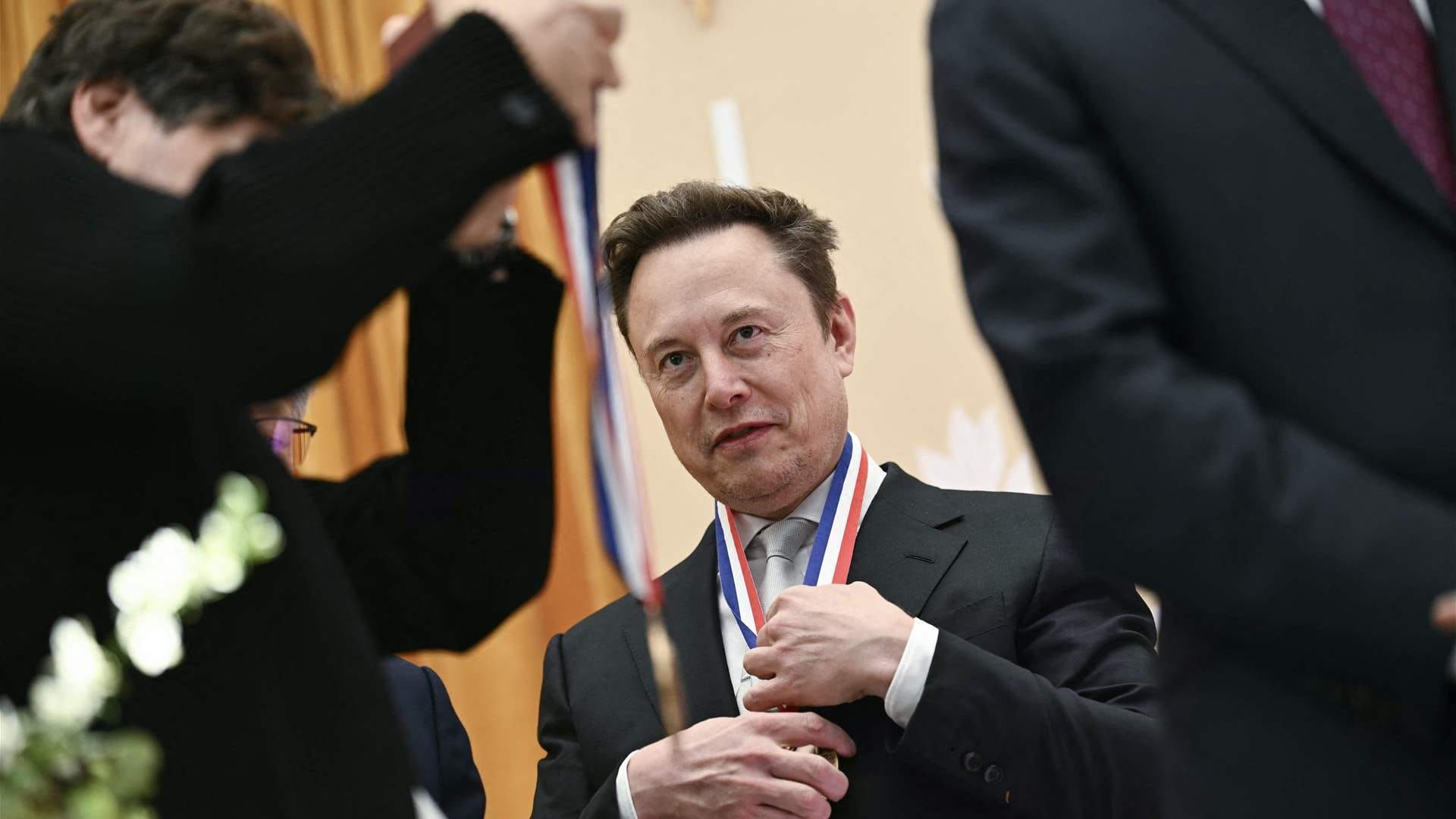
Musk wrote on X on 14 October that Starshield systems are owned and controlled by the US government and that "any limits on speed or usage are decided by the US military and ultimately POTUS". His post did not address whether he had proposed the restriction. Trump told reporters at the White House on 16 October that he did not believe either he or Musk was responsible.
Musk and the White House are both placed inside the decision by the reporting so far, and Ukrainian forces have documented what it did to their air defence. Whether the people responsible understood that the cap would weaken Ukraine's ability to intercept Russian attacks, and whether that was the intended outcome, decides whether the restriction was sabotage.
The Musk proposal and the White House order
The Telegraph's four sources are a senior source, a high-ranking European official and two well-placed Ukrainian sources, none of them named. All four describe Musk as the originator of the proposal. One said Trump agreed to it, a claim that rests on that single source. The senior source told The Telegraph that both men took part in the decision and that Musk posted his statement on government control after growing alarmed at how European consumers might react.
Ukrainian officials phoned the White House, the State Department and the Defense Department on 13 and 14 October and were told the restriction was a White House decision, a senior Ukrainian official told Reuters. Reuters's US and Western sources did not say who in the White House sent the instruction or who carried it out.
A senior US official told Reuters that no such request was ever made by the president, a denial confined to Trump personally. The White House did not answer questions about whether anyone else in the administration made it. A senior administration official had earlier told Axios that the White House played no role at all, an account the Reuters reporting contradicts. Defense Department spokespeople declined to discuss the speed cap, SatNews reported. SpaceX did not respond to The Telegraph's request for comment.
Four sources say Musk proposed the cap. Reuters's sources put the authorisation inside the White House without naming the official, and one Telegraph source names Trump, who denies it. Beskrestnov said SpaceX implemented the limit on its network, and Musk's own statement places the decision with the US military and the president.
Ukraine's disrupted military defences
Ukrainian Starshield terminals moving faster than about 160 km/h lost service without warning overnight on 13 to 14 October, according to Serhii Beskrestnov, President Volodymyr Zelenskyy's adviser on defence technology. Ukrainska Pravda reported that some units noticed the cap a night earlier. Beskrestnov wrote that several missions failed and that partners were depriving Ukraine of one of its few means of stopping Russia's jet-powered drones.
Starlink Mini terminals fitted to drones already stop working above 160 km/h, so Ukraine relies on Starshield, the military service the US Defense Department buys for it, to fly its fastest drones. A cap set at 160 km/h removed the extra speed Starshield existed to provide. Ukrainian officials told SpaceX that no such limit had applied to their military terminals before.
Russia began fitting jet engines to its Shahed attack drones in early summer 2026, and Ukraine's interception rate against them fell from more than 90 per cent to about 60 per cent. Jet Shaheds and cruise missiles travel at roughly twice the speed the cap allowed. Beskrestnov called interceptor drones guided over Starshield the most effective defence Ukraine has against them.
Ukraine's 7th Air Assault Corps said units in the Huliaipole sector of Zaporizhzhia region lost drone links for 10 to 20 seconds at 110 to 120 km/h, below the stated threshold, which made drones harder to control and easier to shoot down. Some missions were suspended. Units that use Starshield to guide mid-range strikes on Russian supply lines in the occupied south and east were also disrupted, Ukrainian officials said.
Russian forces fired 39 ballistic missiles and more than 120 drones at Ukraine's power grid on the night of 13 to 14 October, cutting electricity to at least 600,000 people and killing three people in Kyiv, Ukrainian officials said. Russia launched more than 850 drones overnight on 14 to 15 October, according to Zelenskyy. Ukraine's Air Force said 536 were stopped, with impacts at 31 locations, and Russian drones killed three people in Kirovohrad region. Zelenskyy wrote that the attack came "precisely at a time when the speed of our defensive capabilities is being artificially restricted". The Air Force does not separate drones lost to the cap from other failures in its nightly tallies.
A Defence Ministry source told Reuters on 15 October that terminals were working in motion again, but only up to 160 km/h. Asked on 16 October whether the previous speed limits had returned, Zelenskyy said they had not.
Musk's previous interference
Musk ordered SpaceX engineer Michael Nicolls in September 2022 to cut Starlink service across an area near Kherson as Ukrainian forces advanced, three people familiar with the command told Reuters in July 2025. At least 100 terminals went dark, along with service in parts of occupied Donetsk province. Ukrainian troops lost communications, surveillance drones dropped offline and artillery units struggled to aim. A Ukrainian military official said an attempt to encircle Russian positions at Beryslav failed. A SpaceX spokesperson called the account inaccurate without naming an error.
Reuters's Kherson account describes Musk personally instructing SpaceX staff to cut Ukrainian military service in the middle of an operation, with no government order reported. The October restriction ran through the same network, and Beskrestnov said SpaceX applied it.
Walter Isaacson's 2023 biography reported that Musk had blocked Starlink near Crimea in 2022 to stop a Ukrainian sea-drone attack on the Russian Black Sea Fleet at Sevastopol. Musk wrote on 8 September 2023 that coverage there had never been switched on and that he had refused an urgent Ukrainian request to activate it, because SpaceX would otherwise be "explicitly complicit in a major act of war and conflict escalation". Mykhailo Podolyak, then an adviser to Zelenskyy, said the refusal left the fleet free to fire Kalibr missiles at Ukrainian cities.
Gwynne Shotwell, SpaceX's president, said in February 2023 that Starlink was never meant to be weaponised and that the company had taken steps to restrict Ukraine's military use of it, including on drones. Musk wrote on 9 March 2025 that Ukraine's front line would collapse if he switched Starlink off, then promised that Starlink would never cut off its Ukrainian terminals or be used as a bargaining chip. In February 2026 SpaceX worked with Ukraine's Defence Ministry to block Russian forces from using Starlink terminals on strike drones.
Trump's pressure campaign
US negotiators seeking access to Ukraine's critical minerals raised the possibility of cutting its Starlink access in February 2025, three people familiar with the talks told Reuters. Musk wrote that the report was false, and Reuters stood by it.
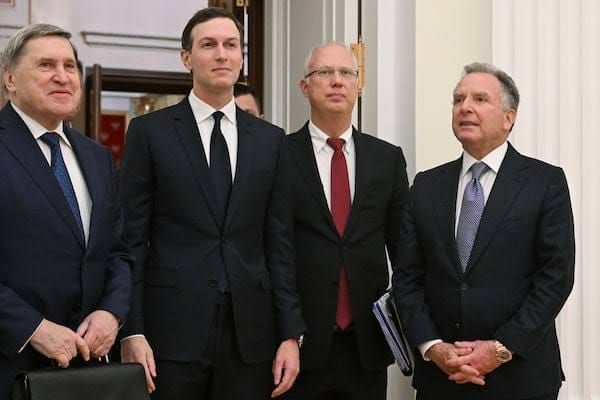
Trump spoke to Vladimir Putin for 90 minutes on 9 October 2026 and announced that Russia would supply more than 300,000 tonnes of diesel immediately, rising to 1 million tonnes through 2027. The US Treasury issued a waiver allowing Russian diesel into the US until April 2027. Steve Witkoff and Jared Kushner, Trump's envoys, threatened in Miami on 9 and 10 October to cut Ukraine off from US intelligence if strikes on Russian refineries continued, a Ukrainian official said. A US official denied it. US representatives also warned that the Prioritized Ukraine Requirements List, the channel European governments use to buy US weapons for Ukraine, including Patriot interceptors, could be suspended, European officials said.
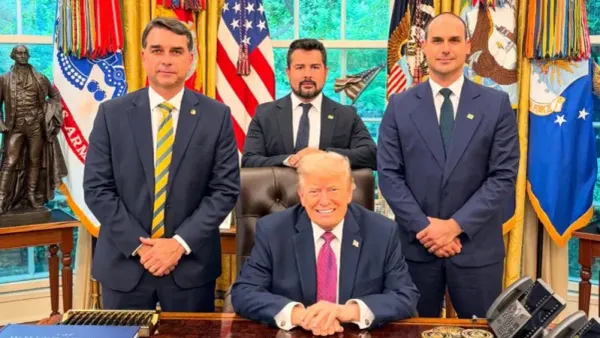
Trump said on 10 October that he had told Zelenskyy to stop striking Russian refineries, that Zelenskyy "could've made many deals and for some reason he never does" and that it was time for Ukraine to get a new president who could make a deal. Musk posted "Zelensky has gone too far" beside a video of the remarks the same day and agreed with another post saying Ukraine needed a new leader. Trump blames the refinery strikes for rising fuel prices ahead of the US midterm elections on 3 November. After Ukraine resumed them, he told Newsmax that Zelenskyy was "not a good guy for us to deal with", that he found him harder to deal with than Putin and that the strikes were a disgrace.
Musk posted a poll on 3 October 2022 proposing that Ukraine cede Crimea to Russia permanently, hold UN-supervised referendums in occupied territory and accept neutrality. Dmitry Peskov, Putin's spokesman, praised the effort, and Zelenskyy replied with a poll asking whether users preferred the Musk who supported Ukraine or the one who supported Russia. Musk hosted a discussion on X in February 2024 with Republican senators, JD Vance among them, as the Senate weighed US$60 billion in aid for Ukraine, and said there was "no way in hell" Putin would lose.
Musk wrote on 20 February 2025 that Zelenskyy was "feeding off the dead bodies of Ukrainian soldiers" and was despised in Ukraine, where the Kyiv International Institute of Sociology had measured his approval at 57 per cent. Ukrainian law bars national elections under martial law, and when parliament voted 268 to 12 five days later to keep Zelenskyy in office until a peace settlement, Musk replied: "Hold an election." Andrii Sybiha, Ukraine's foreign minister, answered Musk's latest call for a new leader on 11 October 2026 by saying that only Ukrainian voters could decide who governs the country.
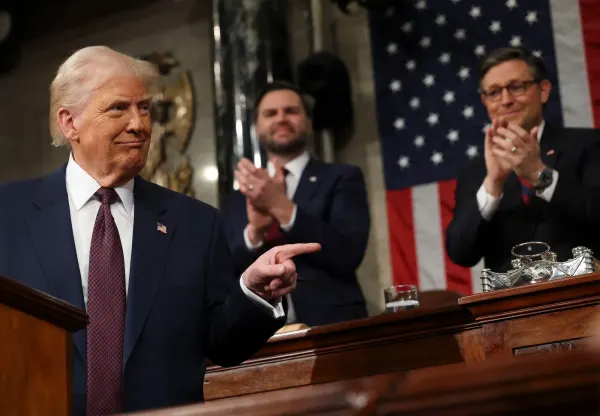
Trump said at a rally in North Carolina in September 2024 that Zelenskyy was refusing to negotiate and that even the worst deal would be better than continued fighting. On 19 February 2025 he called Zelenskyy "a dictator without elections" on Truth Social, suggested he wanted to keep US aid flowing and said later that day that Zelenskyy had done a terrible job. At the Oval Office on 28 February 2025 Trump and Vice President JD Vance accused Zelenskyy of disrespecting the United States, and Trump told him he would either make a deal or the US would be out. The US stopped sharing intelligence with Ukraine days later, until 11 March. In April 2025 Trump implied that Ukraine had started the war against a country 20 times its size and called Zelenskyy's refusal to recognise Russia's annexation of Crimea inflammatory and very harmful to peace talks.
Trump announced an energy ceasefire on 11 October. Russian ballistic missiles struck Kyiv on the nights of 12 and 13 October before air raid sirens sounded, and Zelenskyy said Ukraine received no early warning from partners. Colonel Yurii Ihnat, the Air Force spokesperson, said there was no warning before the first barrage on 13 October but there were warnings before three later ones that night. Trump told reporters on 13 October that the US was still sharing intelligence, and the Starshield cap took hold that night.
Ukraine resumed refinery strikes on 15 October with an attack in Russia's Ryazan region. Links for slower drones came back the same day, while the 160 km/h cap on Ukraine's fastest drones stayed in place. Beskrestnov wrote that the timing of the cut could not be a coincidence, though he offered no evidence for the link.
The sabotage question
Three officials told Reuters that an instruction to slow Ukraine's service came from inside the White House, Ukrainian officials say they were told the same thing directly and Zelenskyy has ruled out a technical fault. Musk's own account also describes a decision, made by the US military and the president. On the available reporting, the restriction was deliberate.
Ukraine's forces have documented the military cost: failed and suspended missions, unstable links below the stated threshold and a cap that took its fastest interceptors out of the network during heavy attacks. The cost was foreseeable from public information, because the Defense Department buys Starshield for Ukraine's military so that its drones can fly faster than commercial terminals allow, and a cap at 160 km/h removed exactly that capability.
Reuters's sources did not say whether Musk, White House staff or Defense Department officials were told what the cap would do to interceptors before it took effect. Ukraine's own forces received no warning. Establishing knowledge would require the instruction itself, any briefing that accompanied it and the communications between the White House and the Defense Department in the days before 13 October.
Starshield's cap followed four days of public pressure over refinery strikes, threats to intelligence sharing and weapons purchases, and a call by Trump, echoed by Musk, for a new Ukrainian president. None of the sources cited by The Telegraph or Reuters has said the cap was meant to force Ukraine to stop the strikes or to leave it exposed to Russian attack. Establishing intent would require a communication tying the restriction to those demands, or testimony from those who set it, and intent remains the least documented element of the case.
Thom Tillis, a Republican senator from North Carolina, wrote that the restriction was at best an unacceptable error or lapse "and at worst a conscious decision to clear the field for a Russian attack". Tillis directed that warning at the Defense Department, where he suspects the restriction originated, and has not accused Musk or SpaceX. His "at worst" is the closest any lawmaker or Ukrainian official has come to alleging sabotage.
Musk's reported contacts with Russian officials
Several current and former US, European and Russian officials told the Wall Street Journal in October 2024 that Musk had been in regular contact with Putin since late 2022. They said he also spoke regularly with Sergei Kiriyenko, Putin's first deputy chief of staff, about personal matters, business and geopolitics while he criticised US military aid to Ukraine. Two officials said Putin once asked Musk not to activate Starlink over Taiwan as a favour to Xi Jinping. Dmitry Peskov, Putin's spokesman, called the report untrue, and Musk did not respond to the newspaper.
The US Justice Department had said in September 2024 that Kiriyenko helped direct a Russian campaign to seed government propaganda on social media, X included, to reduce international support for Ukraine and influence the US presidential election. Kirill Dmitriev, head of the sanctioned Russian Direct Investment Fund and Putin's special envoy for economic co-operation, said in March 2025 that he expected Russian officials to hold talks with Musk on space and wanted SpaceX to work with the state agencies Roscosmos and Rosatom. Musk did not comment.
Jack Reed, then chairman of the Senate Armed Services Committee, and Jeanne Shaheen wrote on 15 November 2024 to Attorney General Merrick Garland and Robert Storch, then the Defense Department inspector general, asking whether Musk's reported conversations with Putin and his aides put national security at risk while SpaceX held major government contracts. They wrote that the contacts raised serious questions about his reliability as a contractor and holder of a security clearance, and that Musk did not appear to report contacts with foreign officials as other clearance holders must. Musk wrote on X that he was "going to find out who's making these accusations and nuke them". Trump fired Storch in January 2025 along with more than a dozen other inspectors general, and neither office published a finding.
SpaceX won more than US$6 billion in multi-year Starshield contracts from the US government in the second quarter of 2026 and more than US$8 billion this year for Golden Dome, Trump's missile defence programme. Musk holds about 82 per cent of the company's voting power, and SpaceX's prospectus warns that his statements and actions could affect its relations with regulators. None of the reporting on the October restriction involves Russian officials.
Congressional scrutiny and accountability
Nine senators from both parties have asked Platte Moring, the Defense Department inspector general, to investigate. The Republicans are Susan Collins, John Cornyn, Lisa Murkowski and Tillis. The Democrats are Shaheen, Dick Durbin, Richard Blumenthal, Chris Coons and Reed, now ranking member on the Armed Services Committee. Collins and Cornyn also sit on the Senate Intelligence Committee.
The senators asked whether Defense Department officials or contractors ordered or authorised the restriction, changed intelligence-sharing arrangements or access to Starlink and Starshield, or contributed to the danger Ukraine faced. A Senate source said lawmakers want to know whether Defense Secretary Pete Hegseth, Under Secretary Elbridge Colby or other senior officials were involved. The inspector general had not said by 15 October whether it would open a review. Shaheen said the department is required to notify Congress if it pauses or downgrades intelligence sharing with Ukraine and called on Hegseth to give that notice if it had.
The US government buys Ukraine's Starshield access through the Space Force's Space Systems Command. Two Defense Department contracts reported by Bloomberg in December 2024 extended Ukraine's access to 2,500 terminals on top of 500 already connected, and Fox News reported that the service is contracted until 15 May 2027. Neither SpaceX nor the Space Force has published the terms covering speed limits, notice to users and who may order a change, so it is unclear whether SpaceX could have imposed the cap on its own or refused a government order.
The White House has denied that Trump requested the restriction and has not said whether anyone else in the administration did. The Defense Department has declined to discuss it. SpaceX has not commented, while Musk says the government decides. Ukraine's government says it was told the decision came from the White House and was given no notice.
Responsibility and intent
Four sources attribute the proposal to Musk. Three officials trace the order to the White House. Ukrainian units have documented the damage to their drone operations. Musk points to government authority, Trump denies responsibility and the Defense Department has not said who made the decision.
The White House has not named the official who sent the instruction or said whether it began with Musk. The Defense Department has not said who chose 160 km/h, who at SpaceX changed the network settings or whether anyone told decision-makers what the cap would do to interceptors. Whether those responsible knowingly weakened Ukraine's defences, and whether that was connected to the Trump administration's campaign to stop Ukraine's refinery strikes, are the questions the senators have put to the inspector general. The inspector general's authority covers the Defense Department and its contractors, including SpaceX, but not White House staff.