Ukrainian drone crews lost their satellite links in mid-flight overnight on 13 to 14 October, as Russian forces fired 39 ballistic missiles and more than 120 drones at Ukraine's power grid. The order to slow the military satellite service guiding those drones came from inside the White House, two US officials and a Western official told Reuters.
Pentagon leaders received a message that Starshield, the military version of SpaceX's Starlink network, needed to be slowed for Ukraine's armed forces, the officials said. They did not say who in the White House sent it or who carried it out. A senior US official said: "No such request was ever made by the president."
Trump's White House spent the week before the cap pressing Ukraine to stop striking Russian refineries, agreeing to buy Russian diesel despite a 2022 import ban and calling for Zelensky's removal. Ukrainian and European officials say the administration also threatened to cut off intelligence and weapons purchases, and the officials' account of the satellite order adds Ukraine's drone network to the tools it has turned against a country fighting off a Russian invasion.
The White House did not answer questions about whether other administration officials made the request. SpaceX, the Pentagon and Ukraine's embassy in the US did not respond to requests for comment.
What the drones lost
Starshield terminals moving faster than 100 mph, about 160 km/h, lost service without warning, Serhii Beskrestnov, Zelensky's adviser on defence technology, wrote on the morning of 14 October. Ukraine's defence forces got no notice and several missions failed, he wrote, and the timing "cannot be a coincidence".
Ukraine's 7th Air Assault Corps said drones in the Huliaipole sector of Zaporizhzhia region dropped their links for 10 to 20 seconds at 110 to 120 km/h, below the stated threshold, which made them harder to steer and easier to shoot down. Other unit reports put the dropout point anywhere between about 72 and 161 km/h. An officer in the 8th Air Assault Corps told the New York Times the cap hit hardest at heavy bomber drones and fixed-wing aircraft attacking Russian supply routes in occupied territory.
Interceptor drones flown over Starshield are among Ukraine's few answers to Russia's jet-powered Shahed drones, which fly faster and higher than the propeller models they replaced. Ukrainian interception rates against Shaheds fell from more than 90 per cent to about 60 per cent after Russia fitted them with jet engines in early summer. Beskrestnov wrote that partners were taking away one of the few means Ukraine had to defend itself.
Starlink Mini terminals already stop working above 160 km/h, so Ukraine's faster drones depend on Starshield. Ukrainian officials told SpaceX the limit had never applied to their terminals before, Fox News reported. Starlink does not operate inside Russia, so the cap affects only operations over Ukrainian territory.
Mykhailo Fedorov, Ukraine's former defence minister, wrote on the evening of 14 October that service at up to 160 km/h was being restored and that removing the Starshield speed limit entirely was now critical for Ukraine's defence. A person in Ukraine's Defence Ministry said on 15 October that receivers worked in motion, but only up to 160 km/h.
Russian forces launched more than 850 drones at Ukraine the next night, Zelensky said, and the Air Force said 536 were stopped. Zelensky wrote that the attack came while Ukraine's defensive speed was "being artificially restricted".
Zelensky told Piers Morgan in an interview released late on 14 October that he felt betrayed by Trump and that the US was losing a strong partner. "This decision will bring a lot of human losses," he said of the Starshield cap.
Who controls the switch
Elon Musk, SpaceX's chief executive, wrote on X on 14 October that Starshield systems are owned and controlled by the US government and that limits on speed or usage are set by the US military and "ultimately POTUS". The Space Force's Space Systems Command buys Starshield service, and the Pentagon extended Ukraine's access in December 2024 to 2,500 terminals on top of 500 already connected. Ukraine's service is contracted through the US government until 15 May 2027, Fox News reported.
A senior Ukrainian official said Ukrainian officials called senior figures at the White House, State Department and Pentagon on 13 and 14 October and were told the decision was the White House's. White House officials gave Zelensky's advisers a different answer on 14 October, saying they had no control over SpaceX, according to two sources cited by Axios. Axios reported a denial from the White House only and said nothing about the Pentagon or the Space Force, which buy and manage the service.
Senator Thom Tillis, a North Carolina Republican, said he would ask the Pentagon's inspector general to investigate the outage and report to Congress and the public. "I'm not holding my breath for Defense Secretary Hegseth to offer transparency," he wrote on X. He wrote that the restriction was at best an unacceptable lapse and at worst a deliberate choice that cleared the way for a Russian attack.
Hegseth's office verbally ordered a three-day halt to military aid flights to Ukraine in February 2025 without notifying the White House, stopping 11 shipments of artillery shells and other weapons, Reuters reported. Flights resumed after Mike Waltz, then national security adviser, intervened, one source said.
Senator Jeanne Shaheen, the ranking Democrat on the Senate Foreign Relations Committee, wrote that the Defense Department must notify Congress if it pauses or downgrades intelligence sharing with Ukraine. She called on Hegseth to give that notice at once if it had.
Musk wrote in September 2023 that Starshield would be owned and controlled by the US government, after Walter Isaacson's biography said he had blocked a Ukrainian drone attack on Russian ships near Crimea. Musk said he had refused a Ukrainian request rather than switching coverage off. He told Radosław Sikorski, Poland's foreign minister, in March 2025 that Starlink would never be used as a bargaining chip over Ukraine.
Diesel, refineries and the midterms
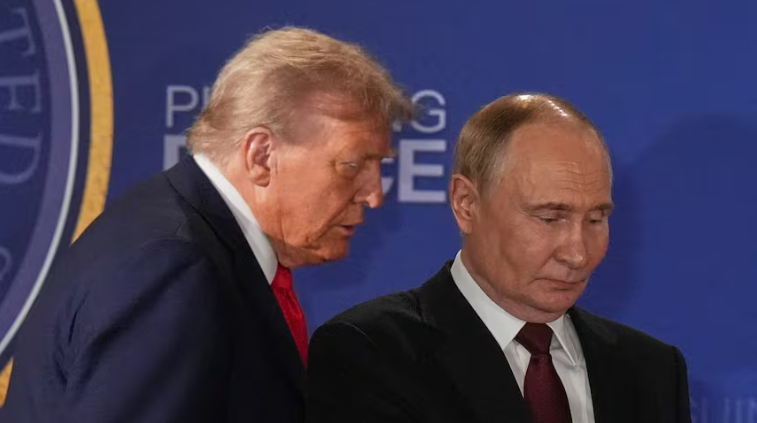
Trump spoke to Vladimir Putin for 90 minutes on 9 October and announced that Russia would supply 300,000 tonnes of diesel immediately, then 500,000 tonnes in November and 1 million tonnes after that. The Treasury waived sanctions to let Russian diesel into the US until April 2027. Putin declined during the call to commit to resuming peace talks.
US diesel averaged $6.28 a gallon on 8 October, up 70 per cent since the US and Israel went to war with Iran on 28 February, according to Reuters. Trump blames Ukraine's refinery strikes for the price ahead of the 3 November midterm elections. Experts told Reuters the main cause is the Iran war, which brought Iranian attacks on energy facilities and has largely shut the Strait of Hormuz.
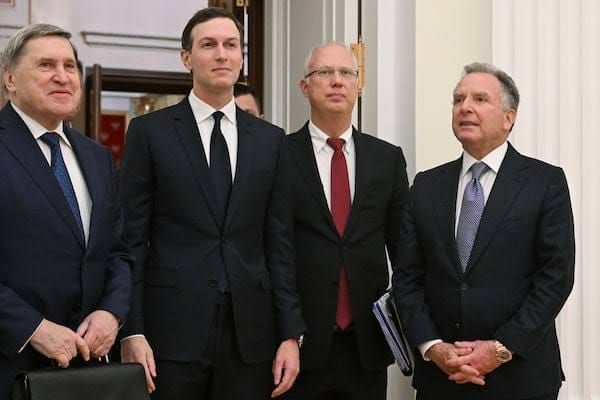
Steve Witkoff and Jared Kushner, Trump's envoys, told Ukrainian negotiators in Miami on 9 and 10 October that the US was frustrated with continued refinery strikes, according to a person familiar with the meeting. A Ukrainian official said the envoys threatened to cut Ukraine off from US intelligence if the strikes went on. A US official denied that.
US representatives also called Ukrainian officials and several European governments to warn that intelligence sharing and the Prioritized Ukraine Requirements List could be suspended unless the strikes stopped, according to the Financial Times. Under the scheme European governments buy US weapons for Ukraine, Patriot interceptors among them, and it had funded more than $6 billion of US equipment by June 2026.
Trump said on 10 October that he had told Zelensky to stop striking Russian refineries and that it was time for Ukraine to get a new president. Musk, whom Trump had awarded the National Medal of Science two days earlier, posted "Zelensky has gone too far" beside a video of the remarks. Andrii Sybiha, Ukraine's foreign minister, said the next day that only Ukrainian voters could decide who governs the country.
Seven senators from both parties wrote to Trump urging him to reverse the diesel deal, saying it ran counter to the 2022 law barring Russian energy imports and that the administration had not consulted Congress as the statute requires. The US "should not provide Putin with a financial lifeline", they wrote. Tillis told Politico there was a legitimate case that the president was not following the law, and Treasury Secretary Scott Bessent said the administration was acting within its existing legal authorities.
Trump announced an energy ceasefire on 11 October. Russian forces kept striking Ukraine's grid, and Dmitry Peskov, Putin's spokesman, said Russia was not breaking the truce because Trump had not specified which facilities it covered. Ukrainian drones hit a refinery in Russia's Ryazan region on 15 October, and Zelensky told the Financial Times that Ukraine was resuming the strikes.
Missile warnings
Russian ballistic missiles hit central Kyiv before air raid sirens sounded on the night of 12 October, and Ukraine's Air Force said it had received no data on launches from Russian territory. Ukraine depends on US and allied intelligence for that data, which normally gives civilians and air defence crews a few minutes to react.
Colonel Yurii Ihnat, the Air Force spokesperson, said Ukraine received no warning before the first ballistic barrage on 13 October but did receive warnings before three later barrages that night. Ukrainian air defences shot down four of the 39 ballistic missiles fired, and at least 600,000 people lost power.
Trump told reporters on 13 October: "We are helping them, and we are sharing intel." Sybiha said the same day that sharing was continuing.
US intelligence sharing with Ukraine stopped in the first week of March 2025, after Zelensky's Oval Office clash with Trump and Vice President JD Vance. The pause covered alerts on Russian missile and drone launches and ended on 11 March, when Ukraine accepted a US proposal for a 30-day ceasefire.
Representative Don Bacon, a Nebraska Republican, wrote on X that cutting intelligence sharing and Starlink access for Ukraine "equates to aiding the invader".