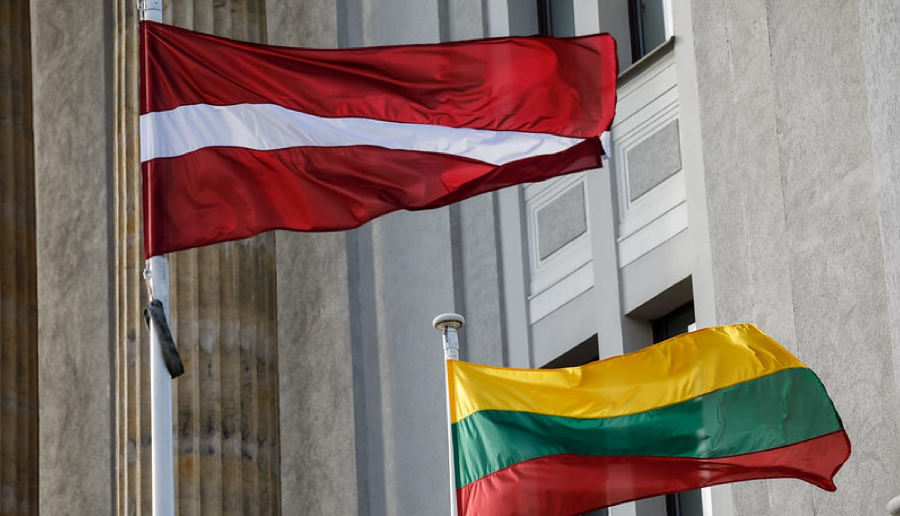
Kęstutis Budrys, Lithuania's foreign minister, said on 18 September that Vilnius holds the same intelligence as its neighbours and the allies with troops in Lithuania on a possible Russian hybrid operation against countries that support Ukraine, including one carried out under a false flag. "I want to assure everyone that Lithuania has the same intelligence information as other countries in the region and countries that have deployed their forces here," Budrys told Delfi.
Budrys said he had discussed the assessment with NATO's secretary general, his deputy and European military commanders to confirm that allies were describing the same threat. "Yes, we are talking about the same thing. Lithuania has the same information; we discussed this as a possible false-flag operation by Russia," he said.
Public warnings from European politicians are "part of a coordinated campaign, the goal of which is to warn Russia not to try to do something," Budrys said. He said countries in the region had already shown they could detect and halt such operations and identify the people behind them. Budrys said the security situation in Lithuania had not changed, RBC-Ukraine reported.
Edgars Rinkēvičs, the Latvian president, told the Guardian in Washington on 18 September that acts of sabotage, cyber-attacks and drone and missile incidents showed Russia testing Europe's resolve to keep supporting Ukraine. "What we see is that air defence, drone defence, anti-ballistic defence has serious problems. And let's be frank. Ukraine has it. The whole of Europe and NATO has it," Rinkēvičs said. He said a Russian strike with several missiles on NATO territory would pose a serious challenge for many allies, and that drone warfare in Ukraine was moving so fast that European preparations could be obsolete by the middle of 2027. "I would rule out a conventional military incursion but we should be very vigilant when it comes to all kinds of other possibilities," he said.
Andris Kulbergs, the Latvian prime minister, said in a video posted on X on 18 September, the day after Poland's prime minister warned of Russian strikes on NATO territory, that he could see anxiety in Latvian society over the international news. "I want to reassure you: there is no basis for panic," he said. "At the moment there is no information indicating a particularly high threat level." He said Russia was not ready for another war and was not capable of a conventional attack, Neatkarīgā Rīta Avīze reported. Rinkēvičs told Latvian Radio the same day that a Russian invasion was not expected. "Should various provocations be expected? Yes," he said. Latvia's Constitution Protection Bureau said on 18 September that Russian unconventional attacks had grown in number and scope in recent months, that they could come suddenly and without warning and that the likelihood of a conventional invasion was very low.
Rinkēvičs said during a visit to Lithuania on 15 July that intelligence from the Baltic states and their allies pointed to Russian plans for sabotage and hybrid attacks. "The next few months, or even the next 12 months, will be crucial for the security of the Baltic states," he said. Latvia has since added security at the Daugava dam near Riga and the Inčukalns underground gas storage site. "A potential hybrid threat is more likely than it was before," Kulbergs told Reuters in August. "I want to make it clear to the people of Latvia that there is currently no reason for concern. The level of military threat to Latvia has not changed. The risk of a direct Russian military invasion of Latvia is currently low," Kulbergs said in a government statement on 27 August. Latvia's National Armed Forces said on 18 September that the threat level in the region had not changed, European Pravda reported.
Kulbergs told Euronews in an interview at Riga Castle on 11 September that the Baltic states had been right about Russia. "We were right, weren't we? We told everyone this was going to happen," he said. "A bully understands force, and this is what we must show. Real force, boots on the ground, investment in our security and showing our muscles." He said European leaders now understood the threat but that societies were "still behind" and said: "Those who prepare for the worst have peace."
Donald Tusk, the Polish prime minister, told the Sejm on 17 September that intelligence from NATO, Ukraine and the United States shows Russia planning strikes on the countries that arm Ukraine. "In the assessment of intelligence services, Russia's plans also include hybrid strikes with drones and missiles on states supporting Ukraine, including Poland," Tusk said. He said Moscow would present such strikes as accidents, with the aim of showing that Article 5, NATO's mutual defence clause, exists only on paper. Tusk also said "there is nothing to suggest an invasion."
Lithuanian military intelligence assessed in August that Russia could rebuild Ukrainian drones downed over its territory and fly them into Baltic energy and transport sites so that Kyiv would be blamed. "We are talking about a false-flag operation involving a fake Ukrainian drone," Robertas Kaunas, the defence minister, said on 10 August. "One of the aims is for NATO to hesitate and reduce its support for Ukraine." Gitanas Nausėda, the Lithuanian president, said in July that the intelligence did not give a place or a time. "They do not indicate a specific place or time, because it is simply impossible to determine," he said.
Žygimantas Solovjovas, head of civil protection at Vilnius city municipality, told Polish Radio on 16 September that one of three evacuation routes from the Lithuanian capital runs to Poland, with the other two running north and west inside Lithuania. "Vilnius residents should not expect that during shelling they will leave the city," he said. Local governments in Poland's Podlaskie province are drafting plans to move evacuees from the Baltic states through the region. No evacuation has been ordered.
Belarus's western military command ran tank and mechanised infantry battalions through drills from 15 to 18 September at the Gozha range near Lithuania and the Brest and Ruzhany ranges, about 15 km and 60 km from Poland. The ranges surround the Suwałki Gap, the 104 km stretch of the Polish-Lithuanian border between Belarus and Russia's Kaliningrad exclave. Minsk said the drills were "purely defensive" and that numbers stayed below the threshold that requires notice under the 2011 Vienna Document. It gave no figure and allowed no observers.
Germany will send four Eurofighter jets to Lielvārde air base in central Latvia for about a week from late September under NATO's enhanced Air Policing North mission, after Latvia asked allies to secure its airspace for the general election on 3 October, Defense News reported on 17 September.
67 members of the Riigikogu, Estonia's 101-seat parliament, submitted a draft statement on 16 September titled "For Ukraine's Victory and Europe's Security" that calls for military and financial aid to Ukraine worth at least 0.25 per cent of Estonia's GDP every year. The draft also calls for more air defence for Ukraine, satellite imagery and intelligence sharing, joint arms production, tighter sanctions on Russian energy exports and support for Ukraine's accession to the EU and NATO. A parliamentary committee was due to discuss it on 17 September, and no vote has been held.
Russia's Foreign Ministry said Tusk's accusations were "contrived" and "far-fetched." Dmitry Peskov, the Kremlin spokesman, said in July that warnings of clandestine Russian attacks were "scare stories" used to justify militarisation against Russia.
Kaupo Rosin, director general of the Estonian Foreign Intelligence Service, wrote in February that "Russia has no intention of militarily attacking Estonia or any other NATO member state in the coming year." Alexander Stubb, the Finnish president, said on 31 August of forecasts of an imminent Russian attack: "I simply see neither evidence nor facts to support it." Stubb told MTV on 17 September that Finns should prepare mentally for sabotage and drone incursions but that there was no cause for panic.
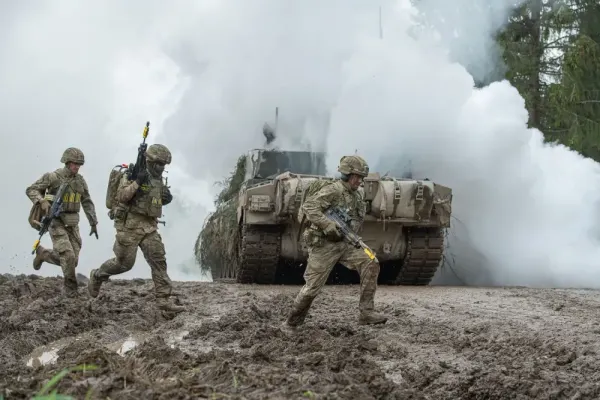
Italian fighter jets flying for NATO's Baltic Air Policing mission shot down a Russian Gerbera drone near Pratkūnai, north of Kaunas, overnight into 15 September, the first shootdown in Lithuanian airspace. Nausėda said it was most likely a drone aimed at Ukraine that Ukrainian electronic warfare had pushed off course. Lithuania began military exercises involving more than 4,000 troops on 17 September.