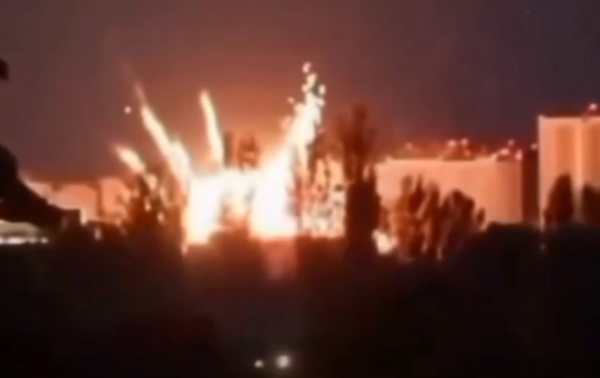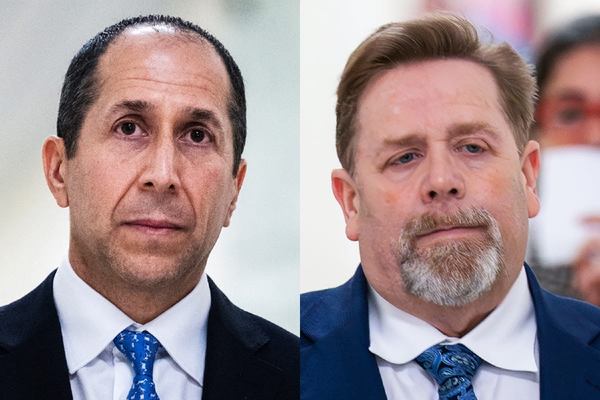
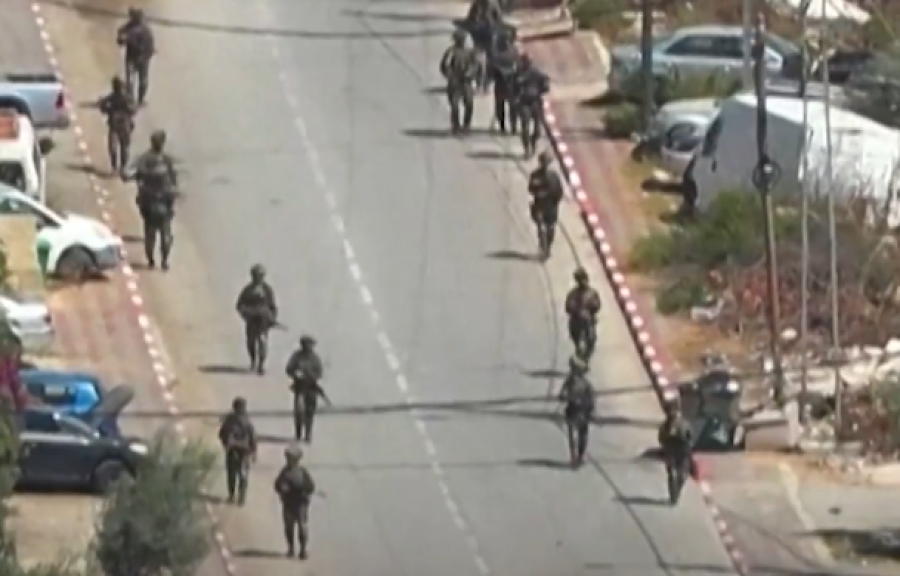
Israeli tank fire, drones and airstrikes killed 15 more Palestinians in Gaza between 21 and 24 September, among them an 11-year-old boy in a tent camp and a 31-year-old mother walking home from her children's school. Over the same days in the occupied West Bank, troops turned a house in Biddu into an interrogation centre, arrested an 86-year-old man to pressure his grandson into surrendering and demolished a prisoner's family home, while settlers burned cars and sprayed "Transfer only" on a village wall.
Gaza's health ministry counted 1,393 Palestinians killed since the ceasefire of 10 October 2025 in its 21 September report and 1,408 in its 24 September report, a rise that includes people who died of earlier wounds. The ministry puts the number wounded since the truce at 4,916. Since October 2023 it has recorded 73,928 people killed and 175,030 wounded, and health officials say most of those killed since the ceasefire were civilians.
Negotiations on the next phase of the US-brokered truce have stalled over Hamas disarmament and the withdrawal of Israeli troops. Israel says four of its soldiers have been killed in Gaza since the ceasefire took effect. On 23 September the Board of Peace, the body set up to oversee Gaza's reconstruction, presented a 66-project plan at the UN General Assembly with an immediate budget of $2.4 billion and a medium-term cost of $35 billion, conditional on Hamas disarming. Nikolay Mladenov, its high representative, said: "I want to be very clear that we are not bound by a calendar. We want to make sure that this works."
UNICEF counted 1.76 million people, about 84 per cent of Gaza's population, living in overcrowded displacement sites as of 17 September. In the first week of September the UN humanitarian office, OCHA, found that food parcels reaching families covered about half of minimum caloric needs and that 91 per cent of households it assessed faced moderate to high water insecurity. Israeli authorities cut a medical evacuation convoy on 17 September from 136 patients and companions to 61, a move Gaza's health ministry called "a flagrant violation of the right to medical treatment."
Gaza, 21 September
Ismail al-Bardawil, 11, was inside a tent for displaced families in al-Mawasi, the coastal strip Israel designated a humanitarian zone, when Israeli tank fire hit him in the chest. He was taken to Nasser Hospital in Khan Younis with critical injuries and died of his wounds. Mahmoud Bassal, spokesman for Gaza's civil defence agency, confirmed the boy's age.
Fidaa Khader Toutah, 31, had taken her children to school in Bureij refugee camp and was walking home along Salah al-Din Road when Israeli tank fire struck her in the head. She died at al-Awda Hospital.
Mohsen Ahmed Bahjat was shot in the head by an Israeli drone in Jabalia, in northern Gaza, and died at al-Shifa Hospital in Gaza City. A second drone strike killed a man in central Khan Younis whose name health officials did not release. Naval gunfire hit tents in the Shati area west of Gaza City the same day, and nine wounded people were taken to hospitals across the Strip, health officials said.
Gaza, 22 September
An Israeli drone struck a group of people near the Muscat school in the al-Tuffah neighbourhood, northeast of Gaza City, late on 22 September, killing two and wounding three, one of them a child, Palestinian health officials said. Shelling near al-Nafaq Street, east of the city, killed a third person and wounded three more. Local sources named Adham Sobhi Ziyara among the dead.
An airstrike on the Karim family home in al-Tuffah wounded three displaced people sheltering there, and a woman was shot near Abu Sharkh junction in Jabalia, local sources reported. Artillery, naval and helicopter fire was also reported in Gaza City, Deir al-Balah and Khan Younis, and Israeli forces demolished houses northwest of Beit Lahia.
Gaza, 23 September
Mohammad Ibrahim Abu Alwan, 33, from Rafah, and Osama Khaled Abu Khater, from Bani Suheila, were killed when an Israeli strike hit their vehicle on al-Rashid Street in al-Mawasi, west of Khan Younis, Palestinian health officials said. Two other people in the area were wounded.
Benjamin Netanyahu and Defence Minister Israel Katz said in a joint statement that Abu Alwan was a senior Hamas finance official who had directed the transfer of more than a billion dollars to the group. "We will not allow Hamas to rebuild its strength, and we will not stop until Hamas no longer exists in Gaza," they said. The claim has not been independently verified, and Hamas did not immediately comment.
Yahya Abu Samour, 24, was shot by Israeli forces in the as-Satar al-Gharbi area north of Khan Younis on the evening of 22 September and died of his wounds at Nasser Hospital the next day. Separate strikes killed one person near al-Wafaa Hospital in Gaza City and at least one more in al-Bassa, west of Deir al-Balah. Israeli gunfire in Khan Younis wounded an infant and an elderly woman, and a man and a woman died of gunshot wounds sustained earlier. Local sources also named Noura Awni Diab, from Bureij refugee camp, among the day's dead, and tallies for 23 September ranged from four to seven.
Gaza, 24 September
Gaza's health ministry said hospitals received five bodies and treated 35 wounded people in the 24 hours to 24 September. Health officials had not released details of the individual incidents by the time of publication.
Maryam al-Dabala, 30, has been displaced 14 times since October 2023. With Israel's general election set for 27 October, she said: "The biggest fear is that the Netanyahu government will carry out a policy of forcibly displacing Palestinians outside the Gaza Strip." A far-right government "would have a major impact because of the lack of aid, the lack of medicines and the basic necessities of life," she said.
Osama al-Arbaei, 65, has been displaced more than 12 times and has lost nine members of his family. "Food is still difficult and expensive, and there is no work," he said. "A box of tomatoes, for example, can cost 20 or 50 shekels while I don't have even 2 shekels."
Umm Mohammed Khalil, 59, a widow from Sheikh Zayed in northern Gaza, said: "Feel for us. We Palestinians are also souls. We are also human beings, people just like you. Enough death, enough destruction, enough displacement."
Israel's military said on 24 September that a weekend airstrike in Gaza City had killed Mahmoud Abd al-Fattah Awad, whom it described as a Hamas commander who held seven Israeli hostages, among them Daniella Gilboa, Naama Levy and Omri Miran, in a tunnel under the city. The military said Awad had planned attacks on troops and Israeli civilians "in systematic violation of the ceasefire."
Biddu
Netanel Shukrun, a father of six from the settlement of Alei Zahav, was shot on 20 September, the eve of Yom Kippur, while at a natural spring near the settlement of Halamish, also called Neve Tzuf. The gunman fired from a vehicle. Shukrun's 16-year-old son, Yoav, was with him and survived. Shukrun died at Beilinson Hospital in Petah Tikva.
Yoav Shukrun said at his father's funeral: "Thank you for shouting to me when the terrorist came in. Thank you for saving my life." His widow, Meirav, said: "Thank you, Nati, for your bravery." Netanyahu's office said Shukrun also held French citizenship.
Israeli commandos captured the suspected gunman, Qadri Muhammad Samara from Biddu, at a hospital near Ramallah after an army tracker wounded him as he fled. Netanyahu said he had instructed security agencies "to increase their presence and carry out arrests and offensive operations in the area." Soldiers who raided Samara's home village forced three families into a single house and assaulted four men, Palestinian residents said.
Israeli troops entered Biddu, northwest of Jerusalem, around midnight on 20 September and detained at least 53 young men, holding them in a seized house converted into an interrogation and detention site. Nazmi Mansour, Biddu's mayor, said on 21 September that "the occupation forces have abused and assaulted a number of citizens during the ongoing raids." Schools, shops and offices stayed shut that day.
Detainees were handcuffed and blindfolded, with "restraint marks visible on the hands of some of them," the Palestinian Prisoners' Society said. The group said soldiers searched the men's phones and used what they found during questioning, and that children, women and older people were caught up in the raid. The Jerusalem Governorate said troops damaged property and assaulted residents in their homes.
Troops pulled out of Biddu overnight into 22 September. Mansour said "institutions, schools and shops resumed operations this morning" and that five men remained in detention after hundreds of residents had been questioned in the field.
Arrests across the West Bank
Burhan Rashid Bani Odeh, 86, and his daughter Rashida, 57, were arrested in Tammun, southeast of Tubas, overnight into 22 September. Kamal Bani Odeh, director of the Prisoners' Club in Tubas, said the pair were detained "in an attempt to pressure Rashida's son to turn himself in." Troops also arrested Samir al-Asta, 68, in Nablus, two men in Jaba near Jenin and a man in Anata, northeast of Jerusalem, whose family was not told where he had been taken.
Khaled Hammad, a cancer patient, was detained by soldiers at Qalandia checkpoint, north of Jerusalem, while travelling to Augusta Victoria Hospital for chemotherapy, local sources reported.
Troops raided Beit Duqqu, Nabi Saleh, Tubas, Aqaba, Janata, Aida refugee camp, Attil, Deir al-Ghusun and Masafer Yatta on 23 September. Ten military jeeps entered Beit Duqqu alone.
Israeli Border Police officers in disguise entered Kafr Qallil, south of Nablus, overnight into 24 September and surrounded the home of Majdi Amer, a colonel in the Palestinian Authority's Preventive Security Service. Israeli police said the unit fired on the building with escalating volume until Amer came out and surrendered, and described him as a "wanted operative" of Fatah suspected of advancing attacks.
Soldiers held 17 residents of Tammun for field interrogation on 24 September, releasing most of them, and a 14-year-old boy was among two people wounded by live fire during raids in the Qalqilya area, local sources said. In Azzun, east of Qalqilya, troops beat a man inside his home and turned another house into a military post.
Israeli forces demolished the family home of Dawas Hassouna in Beit Amarin, northwest of Nablus, on 24 September. Israel accuses Hassouna, who is in prison, of killing a settler.
Settler attacks
More than 200 settlers, accompanied by soldiers, reached the outskirts of al-Mazra'a ash-Sharqiya, east of Ramallah, at about 2am on 22 September, said Mohammed Malash, a volunteer with the town's ambulance crew. The municipality said they damaged at least four vehicles and two homes before residents confronted them and forced them to leave.
Raed Hamed, the mayor of Silwad, northeast of Ramallah, said hundreds of settlers entered the town before dawn the same day "via an unpaved agricultural road near the Ayoun al-Haramiyah area." Settlers under army protection took dozens of sheep and goats from three families.
Settlers assaulted four members of the Qasqous family in Aqraba, south of Nablus, on 22 September. Israeli forces uprooted olive trees in Deir Nitham, Ni'lin and Jaba and seized two water tankers in Masafer Yatta, south of Hebron, local sources reported. Settlers cut olive trees in Ya'bad and Khirbet Firasin, near Jenin, during the same week, as the olive harvest approached.
Settlers set fire to two vehicles in Atara, north of Ramallah, before dawn on 24 September and sprayed Hebrew graffiti reading "Revenge" and "Transfer only." A third slogan named Qusra, a village south of Nablus: "Qusra, wait until Thursday." No one was hurt.
OCHA documented more than 1,600 settler attacks causing casualties or property damage between January and mid-September, an average of 6.7 a day against five a day in 2025, affecting 275 Palestinian communities. More than 4,300 Palestinians have been displaced in the West Bank this year, and Israeli authorities have demolished 1,164 Palestinian structures. About 750,000 Israeli settlers live in the West Bank, including East Jerusalem.
Bell checkpoint
Israeli troops shot dead Mahmoud Mohammad Suleiman, 29, from Beit Ur al-Tahta, at the Bell checkpoint on Route 443 on 23 September after he drove into a police vehicle, Israeli police and the military said. His car struck Neria Leiter, a reservist and son of Israel's ambassador to the US, Yechiel Leiter.
Neria Leiter underwent brain surgery at Shaare Zedek Medical Center in Jerusalem, where doctors said his life remained in danger. His older brother, Maj. Moshe Yedidya Leiter, was killed in Gaza in November 2023. Yechiel Leiter said at the hospital: "I believe in the power of prayer, and I believe that when the people of Israel unite, miracles happen. Neria needs a miracle."
Suleiman's family and other Palestinian witnesses had given no public account of the incident by 24 September.
Responses and the law
Britain banned trade with Israeli settlements after Israel advanced construction in the E1 area east of Jerusalem, a project that would cut the northern West Bank off from the south. Prime Minister Andy Burnham said on 22 September: "If we do nothing, then it further erodes people's trust in politics." President Donald Trump said he did not know about the decision.
The International Court of Justice advised on 19 July 2024 that Israel's continued presence in the occupied Palestinian territory is unlawful and that settlement activity breaches Article 49 of the Fourth Geneva Convention. Article 33 of the convention prohibits collective penalties, the ground on which UN bodies and rights groups condemn punitive home demolitions, and Article 53 bars an occupying power from destroying private property unless military operations make it absolutely necessary.
Palestine has been a state party to the Rome Statute since 1 April 2015, and the International Criminal Court's investigation covers Gaza and the West Bank. Article 8 of the statute lists intentional attacks on civilians and the transfer by an occupying power of parts of its own civilian population into occupied territory as war crimes.
Witnesses, relatives and organisations holding evidence of these incidents can submit it to the ICC Office of the Prosecutor under Article 15 of the Rome Statute through the court's online communications portal.