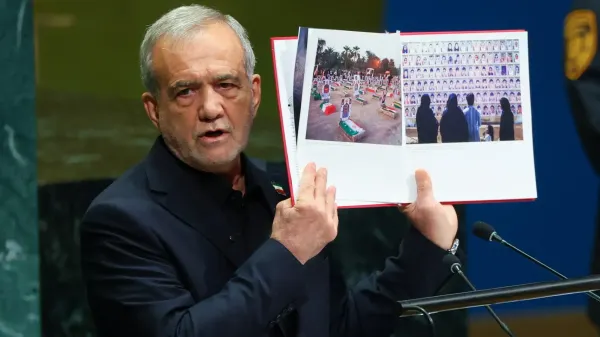
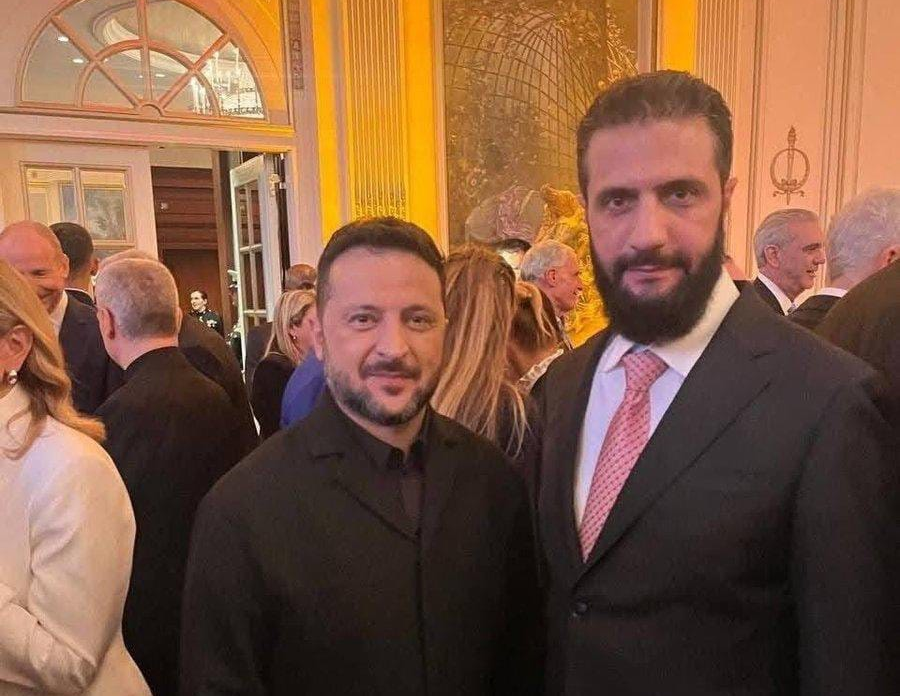
Syrian President Ahmad al-Sharaa told the UN General Assembly on 23 September that Israel had carried out about 500 strikes, more than 1,200 incursions and nearly 300 detentions in Syria since December 2024.
Al-Sharaa demanded Israeli forces withdraw to the lines they held on 8 December 2024, the day Bashar al-Assad's government fell, and said Syria remained bound by the 1974 Disengagement Agreement. "The Golan will remain a Syrian land," he said.
Israeli troops have occupied the UN-monitored buffer zone and ground beyond it since 8 December 2024, when Prime Minister Benjamin Netanyahu said the 1974 agreement had collapsed and ordered the army to take the zone. Defence Minister Israel Katz said in August 2025 that Israeli forces would "remain indefinitely in the security zone."
Strikes, incursions and arrests
Israel's military said it struck Syria roughly 480 times in the first days after Assad fell, according to CNN on 10 December 2024. The military said the first wave took out more than 70 per cent of the Syrian army's capabilities, Syria Direct wrote. Human Rights Watch counted 277 Israeli strikes between December 2024 and September 2025. The Syrian Observatory for Human Rights, a UK-based monitor, recorded 78 more in 2026.
Israeli jets hit the defence ministry in central Damascus and an area near the presidential palace on 16 July 2025, killing three people and wounding 34, Syria's health ministry said. Israel struck Abu al-Duhur airbase in Idlib governorate eight times on 18 August 2026, saying Turkish forces were about to deploy there, a claim Turkey's defence ministry denied.
The Observatory counted 1,068 Israeli incursions between 8 December 2024 and 19 September 2026: 14 in December 2024, 460 in 2025 and 594 so far in 2026. Sijil, a Syrian centre that documents Israeli operations, logged 267 Israeli violations in August 2026 alone, including 109 ground incursions, 36 temporary checkpoints, 29 raids and 16 bombardments, most of them in Quneitra and Daraa.
Sijil counted at least 255 Syrians detained by Israeli forces as of 1 September, 212 of them since released and 43 still held. Human Rights Watch documented detainees moved out of Syria into Israel, including a 17-year-old held without charge in Ofer prison in the occupied West Bank.
Ahmed al-Moussa, a Syrian lawyer tracking the cases, told Asharq Al-Awsat most detainees were never told why they were taken and that the arrests amounted to enforced disappearance.
Syrians killed
Sijil counted 36 Syrian civilians killed in Israeli military operations inside Syria by the end of April 2026, and a further 76 Syrians killed in Israeli strikes in Lebanon. Its count covers civilians and leaves out soldiers killed in Israeli strikes.
Israeli forces killed at least 13 people in Beit Jinn, south-west of Damascus, on 28 November 2025, in a dawn raid followed by air strikes and shelling. A local official told the Associated Press the dead included a man, his wife, their two children and his brother. Israel said its troops came under fire while arresting suspects from the Jamaa Islamiya group, that six soldiers were wounded and that several militants were killed.
Israeli drone strikes killed eight Syrian soldiers in the Damascus suburb of Kiswah in late August 2025, NBC News wrote, citing Syrian officials. Israel also struck Syrian government troops and convoys around Sweida in July 2025, during clashes in which the Observatory counted 260 dead from all causes, 138 of them soldiers and security personnel, without separating deaths caused by Israeli strikes.
Osama al-Fahad, a civilian, was killed in Quneitra countryside on 3 April 2026, the only death Sijil recorded that month. The UN Secretary-General's report on the Golan recorded an Israeli tank firing across the ceasefire line the same day, with a civilian death reported in al-Rafid.
Demolitions and displacement
Israeli forces demolished at least 12 buildings in al-Hamidiya, inside the UN-monitored zone, on 16 June 2025, Human Rights Watch found, displacing eight families it said had first been expelled on 8 December 2024 with no shelter arranged. Human Rights Watch called the expulsions the war crime of forced displacement.
Amnesty International verified at least 23 civilian structures destroyed in al-Hamidiya, Rassim al-Rawadi and al-Rafid through satellite imagery and said the demolitions must be investigated as war crimes. Israel had not answered Amnesty's questions when the group published its findings.
Israeli forces cleared more than 45 hectares of forest around Jubata al-Khashab from January 2025, a quarter of the woodland, and fenced off about 7,000 dunams of community land, Human Rights Watch found. The group wrote that Israel was following the "playbook used in occupied Palestinian territory."
The Israeli military told Human Rights Watch its operations complied with international law and that no civilians lived in the al-Hamidiya buildings it destroyed.
UN observers' findings
UN spokesman Stéphane Dujarric said on 10 December 2024 that Israel's move into the zone would violate the 1974 agreement. "There should be no military forces or activities in the area of separation," he said.
A UN Secretary-General report dated 10 March 2026 found Israeli troops holding 11 reinforced positions on the Syrian side of the ceasefire line. The report documented Israeli fire into and across the area of separation, construction inside it and 13 restrictions on UN peacekeepers' movement, two involving threats to observers by Israeli soldiers.
Israel's government approved a $334 million five-year investment plan for settlement in the occupied Golan on 16 April 2026.
Israel's record in Syria before 2024
Israel's army took the Golan in June 1967. About 90,000 people lived there on 1 June 1967, and an Israeli census on 10 August counted 3,936, according to archival research by the Israeli group Akevot. Red Cross delegates concluded at the time that most had been expelled, violently or under duress, Akevot found.
Israel extended its law to the Golan in December 1981. Human Rights Watch wrote in 2026 that Israel has barred tens of thousands of displaced Syrians from returning since 1967.
Israel struck Syria throughout the civil war. Lieutenant General Gadi Eisenkot, then army chief, told the New York Times in January 2019 that Israel had dropped 2,000 bombs in 2018 alone. "We struck thousands of targets without claiming responsibility or asking for credit," he said.
A strike attributed to Israel destroyed Iran's consular building in Damascus on 1 April 2024, killing 16 people including senior Revolutionary Guards commanders and damaging the Canadian embassy next door.
Talks with Israel
Al-Sharaa told an Atlantic Council panel moderated by former U.S. official Brett McGurk on 22 September that direct, U.S.-mediated talks had reached almost 90 per cent agreement before Israel pulled back or introduced new conditions. He did not say what those conditions were.
Al-Sharaa said Israel must first withdraw to the 1974 lines, with security arrangements to follow and a lasting peace only after that. He said Hamas's attack of 7 October 2023 could not set Israeli policy towards Syria, and proposed an international committee to assess which Israeli security concerns were real.
Syria, Israel and the U.S. met in Paris on 6 January 2026 and agreed a joint communication mechanism under U.S. supervision. U.S. envoy Tom Barrack mediated further de-escalation talks in Jordan on 24 August, six days after the Abu al-Duhur strikes, according to Security Council Report.
Al-Sharaa told the panel he had advised President Donald Trump, who recognised Israeli sovereignty over the Golan in March 2019, to give Israel New Jersey instead, since the U.S. did not own the Golan.
International law
Article 2, paragraph 4, of the UN Charter prohibits the use of force against the territorial integrity of any state. UN General Assembly Resolution 3314 of 1974 defines aggression to include invasion, military occupation and bombardment of another state's territory. Israel says its operations in Syria are defensive.
UN Security Council Resolution 497, adopted unanimously on 17 December 1981, declared Israel's extension of its law to the Golan null and void. The UN treats the plateau as occupied Syrian territory.
Article 49 of the Fourth Geneva Convention bars an occupying power from forcibly transferring civilians out of the territory it occupies and from moving its own civilians in. Article 76 requires detainees from occupied territory to be held inside it. Articles 53 and 147 prohibit destruction of property not required by military necessity and list extensive destruction among grave breaches of the convention.
Neither Israel nor Syria is a party to the Rome Statute of the International Criminal Court, which leaves no international criminal court with jurisdiction over Israeli conduct in Syria unless Syria lodges a declaration accepting it.
The Security Council renewed the UN Disengagement Observer Force mandate for six months in June under Resolution 2824, keeping its peacekeepers on the Golan until 31 December 2026.