
Iranian forces used Starlink satellite internet to command troops and fly one-way attack drones against U.S. bases early in the war that began on 28 February, The Washington Post reported on 28 November.
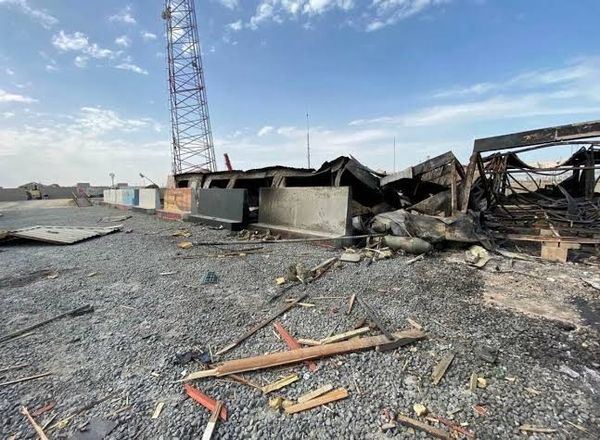
Four people familiar with the operations confirmed the Iranian use to the newspaper, and one of them described a classified Central Command update sent to Pete Hegseth, the defence secretary, during the summer. Starlink gave Iranian commanders a fallback as U.S. strikes knocked out the country's conventional communications, that person said. An Iranian drone hit a U.S. facility at Port Shuaiba in Kuwait on 1 March and killed six U.S. service members. Central Command declined to say whether Starlink played a part in that strike, and the Pentagon has kept the findings of its investigation private.
The U.S. and Israeli governments had both worked to put terminals inside Iran. U.S. officials told The Wall Street Journal in February that the State Department bought nearly 7,000 Starlink kits, most of them in January, and smuggled about 6,000 into the country after the government's crackdown on protests. Naftali Bennett, a former Israeli prime minister, said on 23 June that he had started a process of acquiring and smuggling tens of thousands of receivers into Iran so protesters could coordinate and eventually bring down the government. Activists and rights groups put the number of terminals in Iran at around 50,000.
The Pentagon said in a statement on 28 November that it was unaware of any Central Command report to the defence secretary's office on the subject. Kingsley Wilson, a Pentagon spokeswoman, declined to say whether Iran used Starlink in its military operations. Requests for comment from reporters to SpaceX, its chief executive Elon Musk and Iran's foreign ministry went unanswered.
Satellite industry executives said SpaceX faced a choice between cutting service over the whole country, which would also cut off dissidents, and leaving it on, which left the Islamic Revolutionary Guard Corps able to use it. "So inevitably if the Iranian authorities confiscate a terminal, they can use it," one executive said. The four people familiar with the operations did not say where the terminals used by Iranian forces had come from.
Musk's response in March
Musk was furious when his team concluded early in March that Iran was exploiting the network, two people familiar with internal company discussions said. At least two executives were fired by the end of that week over misuse of the service, one of them said.
SpaceX imposed identity checks on aircraft flying faster than 100 miles an hour within hours of the Port Shuaiba strike, according to pilots and notices emailed to customers. A private pilot near Charlotte, North Carolina, said he had to hand over his passport number, driver's licence number, aircraft tail number, transponder code and home airport before his terminal worked again. His monthly fee rose from $60 to $200.
In the following weeks SpaceX required resellers to prove they knew the identity of every customer buying and activating a terminal, and it paused its Indirect Reselling Program, which had let authorised resellers pass terminals to sub-resellers. A Starlink support page published in April said the old approach had reduced its visibility into end customers. Before the changes, a credit card was generally enough to sign up, two industry executives said, and Iranian dissidents commonly activated terminals abroad and carried them across the border.
Ukrainian officials had asked the company in January to restrict terminals after recovering the wreckage of a long-range Russian Italmas drone with a Starlink dish on its wing. SpaceX cut service to terminals moving faster than 70 km/h in Ukraine and in February cut off every terminal missing from a list of registered dishes that the Ukrainian government supplied.
The smuggling programmes
The State Department diverted money from other internet-freedom projects for Iran to buy the kits, the U.S. officials said. President Donald Trump knew of the purchase, one official said, though it was unclear whether he ordered it. SpaceX had made the service free for Iranians in mid-January, as the government cut communications during its crackdown on protesters.
Bennett, who now leads the B'Yachad party in the Knesset, spoke at the JNS International Policy Summit in Jerusalem and blamed the government of Benjamin Netanyahu for halting the effort. "Unfortunately, the current incompetent Israeli government stopped doing that," he said, adding that the infrastructure was missing when the January protests came. Netanyahu's office did not immediately respond to questions about his remarks.
Musk announced that he was activating Starlink over Iran in late September 2022, after the U.S. Treasury eased sanctions on internet services during the protests that followed the death of Mahsa Amini in police custody. Bennett had left the premiership on 30 June 2022 and stayed on as alternate prime minister until Netanyahu returned to office at the end of that year. He did not say when the effort started or which Israeli agency carried out the transfers.
Iran's intelligence ministry said on 17 March that it had seized hundreds of Starlink devices in a nationwide operation and that it would continue until every terminal serving the enemy was found. The ministry blamed the "American-Zionist enemy" for sending them in. Ahmad-Reza Radan, the national police chief, said at the end of March that officers had seized 139 devices and arrested 46 people accused of selling them.
Mohammad Amin Aghamiri, head of Iran's National Cyberspace Center, said on state television in October that Iran had disabled Starlink terminals for the first time during the January unrest, without saying what technology was used. Iranian authorities reported more than 3,000 deaths in that unrest and blamed the U.S. and Israel. Rights groups based abroad said security forces fired on protesters.
The Pentagon's drone links
U.S. forces flew Low-cost Uncrewed Combat Attack System drones, known as LUCAS, over Starshield, the militarised version of the network, on a subscription meant for ground use, one person familiar with the matter said. The aerial plan cost five times as much. Musk wrote on X on 1 March that using commercial Starlink terminals for weapons systems violated the terms of service and that such use was shut down when discovered.
SpaceX asked the Pentagon to pay about $25,000 a month per drone link in place of $5,000, according to Pentagon documents and two sources cited by Reuters in May. The Pentagon agreed to the higher price, which nearly doubled the cost of each LUCAS drone from about $30,000. A Pentagon official said the department had not violated its agreement with SpaceX. Some military personnel felt SpaceX was holding them hostage during the negotiations, one person familiar with the talks said.
Why the service stayed on over Iran
Holly Dagres, a senior fellow at the Washington Institute, said the Trump administration wanted to keep the connection open. Social media and messaging channels give U.S. analysts a view into a country with no U.S. embassy and no free press, she said. The White House did not answer a question about the current status of Starlink in Iran.
Ukraine's registration list could not be copied in Iran, industry executives said, because SpaceX has no trusted authority there to manage one. Cari Stinebower, a former Treasury sanctions enforcement lawyer now at the law firm Steptoe, claims the Revolutionary Guard and its Quds Force run front companies in South America, Southeast Asia, the Middle East and Europe. Their procurement could easily fool a legitimate U.S. exporter, she said.