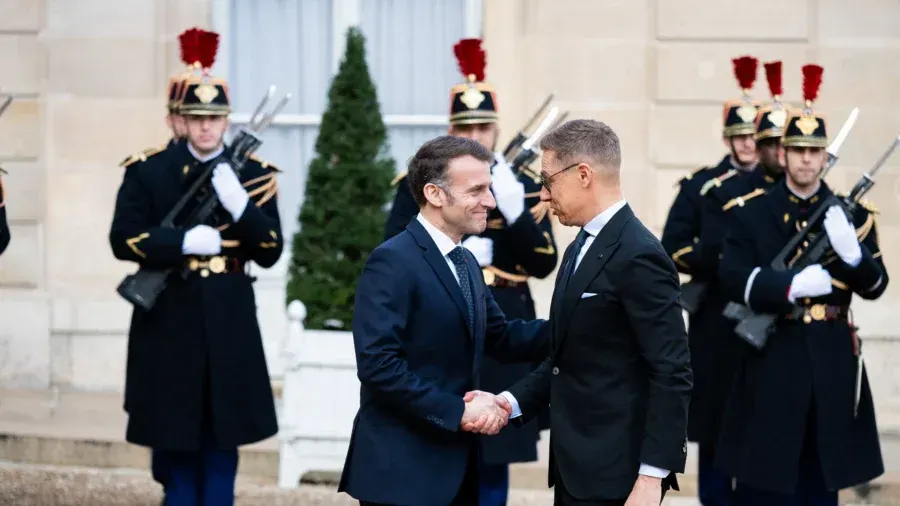
Finland joined France's forward nuclear deterrence initiative on 14 September, becoming the 10th European state to enter a French-led arrangement that sits outside NATO's nuclear planning structures and outside U.S. control.
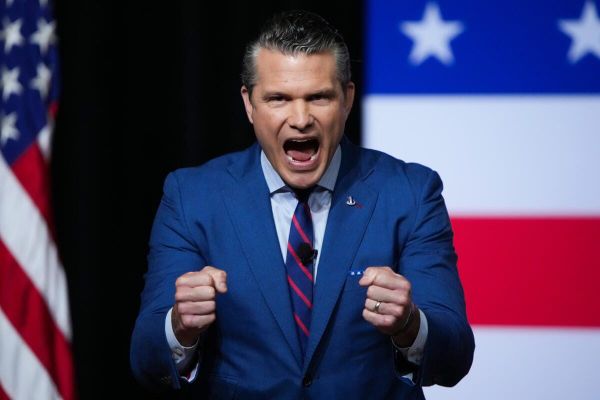
Finnish Defence Minister Antti Häkkänen set out the decision in a joint statement with France, which said Finland "has decided to join forward deterrence." President Alexander Stubb confirmed the accession on X the same day.
Finland shares 1,340 km of land border with Russia, the longest of any EU member state, and joined NATO on 4 April 2023 after eight decades of formal non-alignment. The accession extends French nuclear-capable aircraft deployment rights to the Alliance's north-eastern edge.
Nine states signed up when President Emmanuel Macron set out the initiative on 2 March 2026: Britain, Germany, Poland, Sweden, the Netherlands, Belgium, Greece, Denmark and, from 27 May, Norway. Estonia's government is in talks with France on a possible 11th accession.
France held roughly 290 warheads before Macron ordered the arsenal enlarged, and has since stopped publishing the figure. Russia and the U.S. between them hold about 83 per cent of the world's warheads available for military use, SIPRI said on 9 June.
Terms of the accession
France retains sole authority over the use of its weapons. Forward deterrence creates no shared planning and no joint decision-making of the kind NATO runs through its Nuclear Planning Group, where allies sit in on targeting and release policy. The French president decides alone.
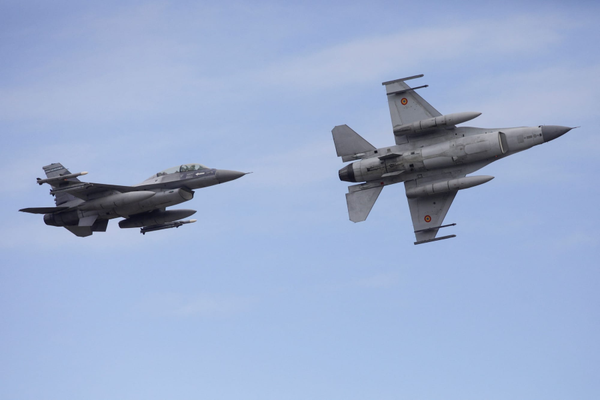
Finnish participation covers a seat in a nuclear steering group, a role in French nuclear exercises and the temporary deployment of French nuclear-capable aircraft to Finnish airfields. Nuclear weapons will not be permanently stationed on Finnish soil in peacetime.
Stubb said the initiative would not "replace or overlap with NATO's nuclear deterrence." The Finnish statement described the U.S. arsenal as ultimately the supreme guarantee of NATO security.
Macron set out the doctrine at the Île-Longue submarine base on 2 March, ordering the first increase in French warhead numbers since 1992 and declining to say by how much. "To be free, one needs to be feared," he said. French Armed Forces Minister Catherine Vautrin said France had kept the fissile material from dismantled Cold War warheads: "we have a stockpile entirely sufficient to produce the new nuclear warheads."
The Treaty on the Non-Proliferation of Nuclear Weapons bars a nuclear-weapon state from transferring weapons or control over them to any recipient. Temporary basing without transfer of custody is the legal construction NATO already uses for U.S. bombs in Belgium, Germany, Italy, the Netherlands and Turkey, and non-nuclear states have contested it at NPT review conferences for decades.
Nuclear Energy Act repeal
Finland's parliament voted 125 to 61, with 13 members absent, on 17 June 2026 to strip the nuclear weapons ban out of the 1987 Nuclear Energy Act. The amended law permits nuclear weapons to be brought, transported, supplied or possessed in Finland where the country's military defence requires it.
Häkkänen, who proposed the repeal, said it would strengthen Finland's defence and enable full use of NATO's nuclear deterrent. Opposition members attacked the reversal of a prohibition Finland had held since 1987 and campaigned on internationally.
Norway's accession ran through a bilateral treaty rather than a domestic law change. Defence Minister Tore O. Sandvik and Vautrin signed the Narvik Arrangement on 27 May, committing the two states to come to each other's aid with military assistance. Prime Minister Jonas Gahr Støre said Norwegian participation in nuclear deterrence talks did not change Norwegian nuclear weapons policy.
U.S. burden shift
Trump's National Security Strategy, published on 4 December 2025, set out the U.S. position the initiative was built to answer. The document said the days of the United States "propping up the entire world order like Atlas are over."
Pentagon officials gave allied diplomats a deadline of 2027 for European NATO members to assume responsibility for the majority of the Alliance's non-nuclear capabilities, Reuters reported on 5 December 2025, citing five sources familiar with the meeting. NATO members had already committed at The Hague to spending five per cent of GDP on defence.
France has run its deterrent on strict national independence since Charles de Gaulle withdrew from NATO's integrated military command in 1966. Forward deterrence is the first offer of a formal allied seat near that machinery, and it arrived three months after the U.S. strategy document.
Russian response
Russia will factor Finland's accession into its military planning and force development, Deputy Foreign Minister Alexander Grushko said on 15 September. Asked how Russia viewed the decision, he said "unequivocally negatively," and said the step weakens the non-proliferation regime, European security and Finland's own security.
Kremlin spokesman Dmitry Peskov issued the warning in advance. On 6 March, four days after Macron's speech, he said the Finnish position "adds to Finland's vulnerability, a vulnerability provoked by the actions of the Finnish authorities," and said Russia would take appropriate measures if threatened.
Baltic accession talks
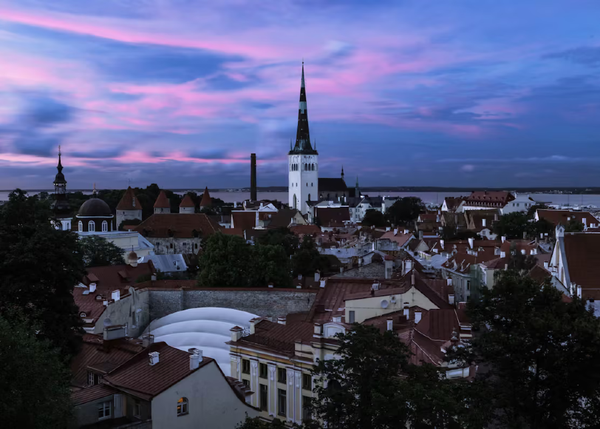
Estonian Prime Minister Kristen Michal said on 15 September, at the European Arctic Summit in Rovaniemi, that Estonia is in discussion with France. "This is not the kind of initiative you simply join," he said. Membership requires capabilities and readiness.
French troops are stationed in Estonia under NATO's forward land forces. Estonia already sits under NATO's nuclear guarantee, Michal said, and nuclear cooperation with France would likely deepen given that troop presence.