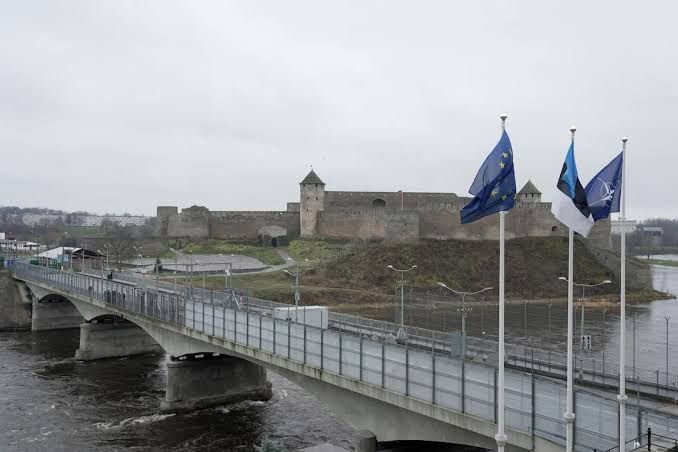
Estonia closes all five road crossings with Russia at 07:00 on 1 December, and Prime Minister Kristen Michal said the government also plans to shut Narva, the last rail crossing between the two countries.
The road closure covers the crossings at Narva-1, Narva-2, Koidula, Luhamaa and Saatse. The government decided it on 20 November and will review it after six months. Rail freight continues for now under existing restrictions and strict customs controls. The Police and Border Guard Board has told travellers that crossing on foot or by vehicle at any of the points will be impossible from that morning.
"Russia's hostile actions have consequences," Michal said when the decision was announced. The government said the closure would make it harder for Russian intelligence services to recruit and influence people in Estonia and would help prevent sanctions evasion and other illegal cross-border activity.
The Threod arson attempt
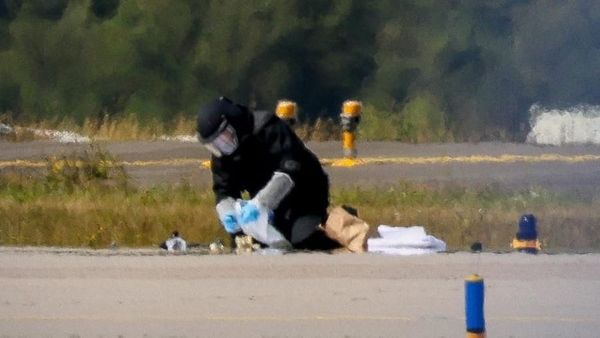
Estonia's Internal Security Service says Russian intelligence agencies commissioned two attacks on Estonian defence companies this year. One was an attempted arson on 14 November at Threod, a defence company that works with Ukraine. Margus Tsahkna, the foreign minister, said the closure answered a broader pattern of Russian hostile activity against Estonia and other European countries and was not a response to the Threod incident alone.
Michal said on 26 November that the government had decided to close the Narva rail crossing after a thorough assessment. He cited 12 incidents linked to Russia and said earlier measures, including night-time closures of crossings and full customs checks, had failed to change the Russian government's behaviour. The closures are officially temporary, but Michal said he did not expect the threat to have diminished by the six-month review, so the restrictions could remain in place indefinitely. He acknowledged that border communities would be affected and said the government had to soften the impact, while arguing that Russia would bear most of the cost.
Narva has been Estonia's only rail crossing since July, when the Koidula line closed after Russia shut the Pechory-Pskov checkpoint on its side of the border. The Russian government suspended traffic at several rail crossings with Finland, Estonia and Latvia from 1 July.
Ülle Madise, the Estonian president, had urged the government not to let emotions drive its decision on closing the border. Narva, Estonia's third-largest city, has a mostly Russian-speaking population, and its crossing to Ivangorod on the Russian bank of the Narva river has been open only to pedestrians.
Support for Ukraine's long-range strikes
Tsahkna has backed Ukraine's drone and missile campaign against targets inside Russia in a series of interviews this year. He told the Ukrainian news agency Ukrinform that nobody questioned Ukraine's right to strike military and strategic infrastructure deep in Russia and called the attacks effective "long-range sanctions", a phrase used by Andrii Sybiha, the Ukrainian foreign minister. He rejected Russian claims that Estonia had allowed its territory to be used for the strikes. "That is not true. We never allowed this," he said.
He also asked Ukraine to take more care near the borders of NATO states when it targets sites such as the Ust-Luga oil port and St Petersburg. NATO fighters have twice shot down stray Ukrainian drones over the Baltic states, once over Estonia and once over Latvia. Tsahkna said in June that Estonia was not happy about the incidents but that responsibility lay with Russia.
Latvia
Latvia is also considering closing its crossings with Russia. The Latvian government closed its last road crossing with Belarus in the summer, citing a migration crisis organised by the Belarusian authorities. Latvian border guards had detained more than 9,000 people crossing irregularly from Belarus by the end of July. The Centre for Eastern Studies, a Polish government-funded think tank, wrote in August that the interior minister had ordered that closure without consulting the prime minister, Andris Kulbergs, and that the issue had become part of Latvia's election campaign. Estonia's six-month review of its own closure falls due by the start of June 2027.