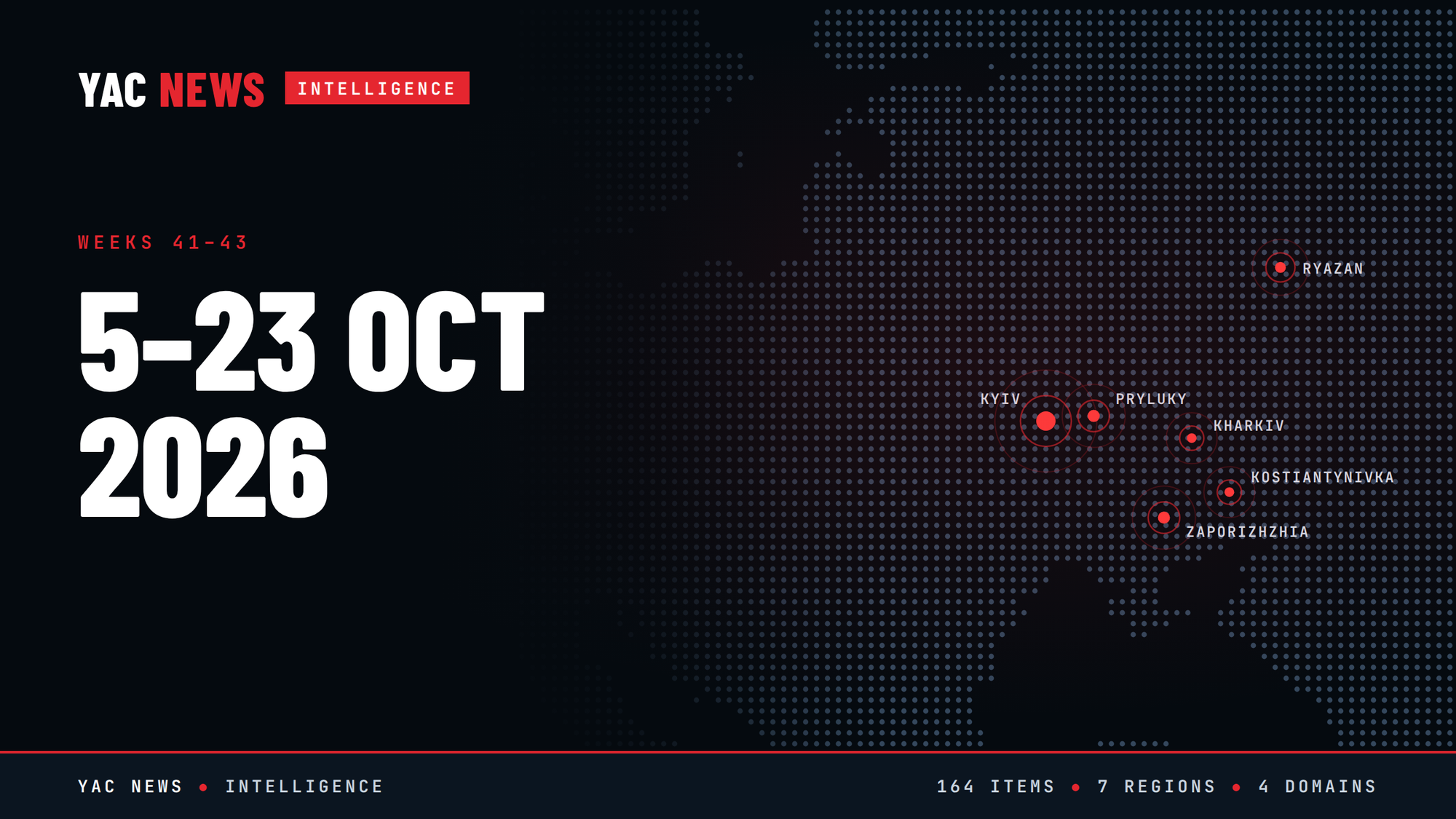
Over 19 days, Russia hit Ukraine's cities and power grid harder while the United States opened a direct channel to Putin. The war around the Gulf spread to Saudi airports and Yemeni army camps. Ethiopia's war in Tigray became a standoff with Eritrea, and drones killed hundreds of civilians in Sudan, some of them across Sudan's borders. This expanded edition of our open-source assessment covers 164 developments across seven regions. Each is rated for confidence and linked to its sources, 497 in all. The main findings follow.
Ukraine: strikes on the grid, a channel to Putin
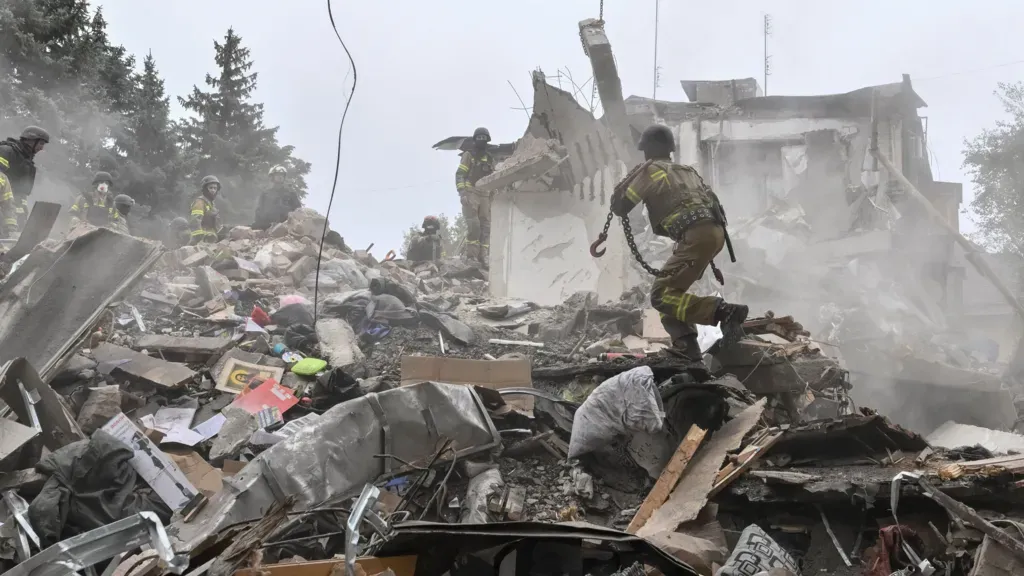
A Russian missile strike on 7 October killed 25–28 people, 19 of them in a collapsed apartment block in Pryluky. Glide bombs killed at least 20 in Zaporizhzhia on 10 October. On 13–14 October, strikes hit all three of Kyiv's combined heat and power plants and left about 600,000 people without electricity. Zelenskyy says Russia has struck critical energy sites more than 170 times since 11 October.
Washington's course over the same weeks was mixed. Trump eased sanctions on Russian diesel and declared an "energy ceasefire" that Moscow never confirmed. He also waived the Graham Act sanctions on Russia. The Kremlin says Trump told Putin it was "time for a new president" in Kyiv; we found no direct quote. Zelenskyy told US senators that Ukraine now receives about 12 US Patriot interceptors a month and has almost none left. Rubio denies any deliberate delay.
On 21 October US envoy Steve Witkoff met Putin in St Petersburg. The Kremlin said it was ready "in principle" to resume talks in early November, and Russia released the American Stephen Hubbard. Hours later Russia fired ballistic missiles at central Kyiv; Zelenskyy says three carried cluster warheads. One landed in the historic Pechersk district; officials count 1–2 dead and 24–34 injured. Strikes on 22–23 October hit a market in Lozova, a commuter train in Kharkiv and a power plant, while Ukrainian drones hit targets in the Moscow, Lipetsk and Bryansk regions. Putin said on 22 October that new talks, now expected after 10 November, must aim at a final deal rather than a pause in fighting. Ukraine's own anti-corruption agencies, meanwhile, searched the National Bank on 21 October.
Europe: sanctions, accession, and pressure on NATO's eastern flank

The EU listed 1,569 targets in Russia's defence industry on 12 October. Hungary lifted its veto the next day, so two more of Ukraine's accession clusters opened. On 20 October, though, Budapest blocked the last two. On NATO's eastern flank:
- An armed, masked group calling itself "Black Rus" pushed migrants across from Belarus into Latvia and damaged border cameras.
- Symantec linked GRU hackers to intrusions at NATO shipbuilders and engine makers.
- The Wall Street Journal reported that Putin ordered a new sabotage campaign against NATO states. This rests on anonymous officials and is unconfirmed.
Georgia's Constitutional Court opened hearings on 21 October on banning five opposition parties and rejected every opposition motion. The EU's diplomatic service proposed 117 further Russia listings in response to the US–Russia diesel deal, and Kosovo's president sent back a law curbing the Hague war-crimes court.
The Gulf: a wider war, with a date attached

Attacks on ships around Hormuz reached their highest level of the war and spread toward Iraqi and Omani waters. On 18 October only four ships transited the strait, against about 85 a day before the war. On 22 October the IRGC claimed seven more ships were hit; maritime authorities have confirmed none, and Trump calls them "fake hits." Brent crude reached $112–114.
The Houthis struck Riyadh's airport, killing 12–17 people, and on 19 October hit a recruit camp in Shabwa, killing 53–73 young soldiers. Gulf foreign ministers invoked collective defence. The US ordered non-emergency staff out of Saudi Arabia, and Riyadh's flagship investment conference was postponed to 2027.
Trump says he will not strike Iran before the 3 November midterms. The New York Times reports US–Israeli plans for major strikes after that; Trump has not approved them. Iran says indirect talks through Pakistan and Qatar continue.
Africa: an interstate standoff and a cross-border drone war
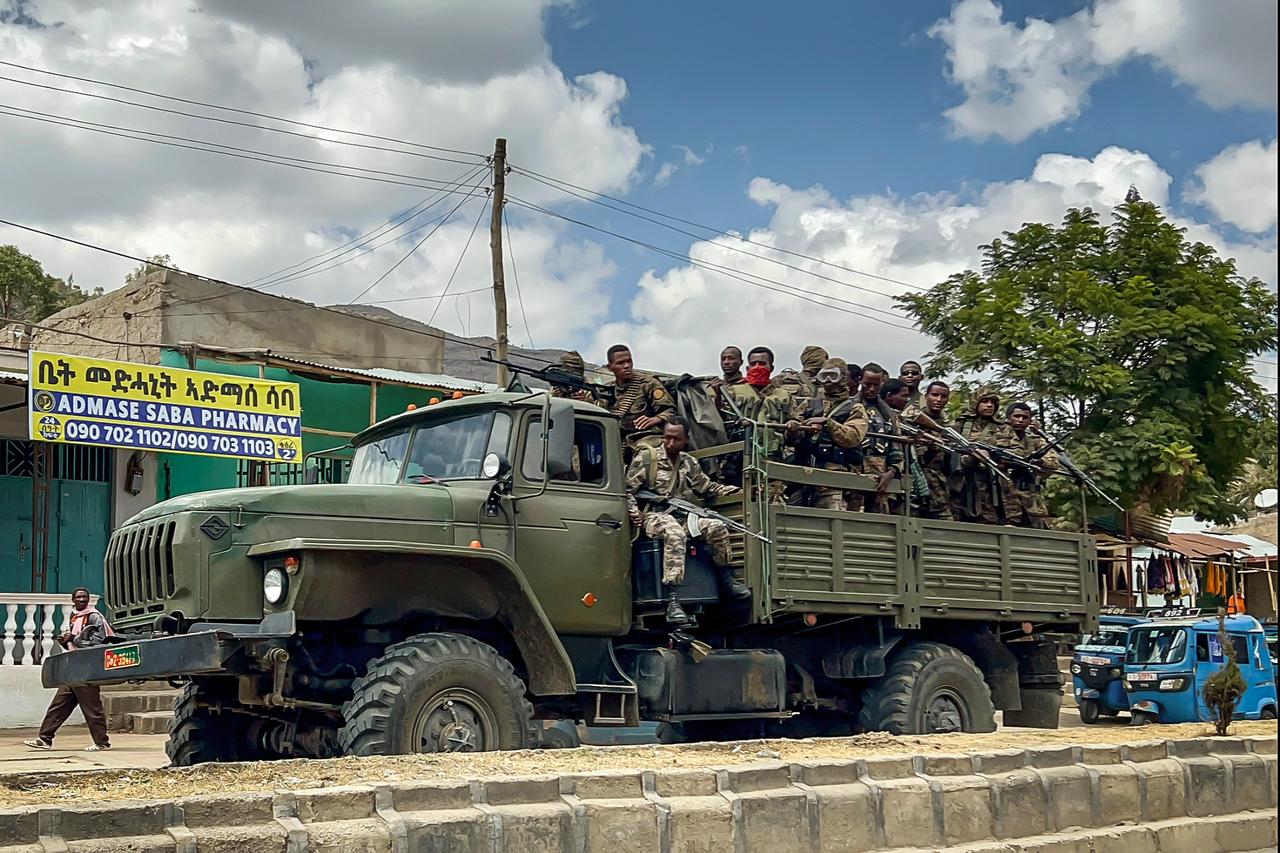
Federal forces retook Mekelle, Adigrat, Adwa and Aksum and reached Eritrea's border at Zalambessa. Ethiopia and Eritrea now accuse each other of aggression at the UN Security Council. Eritrea claims Ethiopia plans to seize the Red Sea port of Assab, and Abiy warned Asmara of "very, very, very severe consequences" as Tigrayan forces counterattacked.
In Sudan, a drone strike on Amiet market in disputed Abyei killed at least 153 people, according to a South Sudanese official; Abyei's information minister puts it at 226, which is unverified. Another hit Sudanese refugees inside Chad. Over 16–19 October, drone strikes killed 100–160 people across Kordofan, Darfur and Khartoum. The Security Council blocked a nationwide arms embargo, and army chief Burhan ruled out talks with the RSF unless it disarms.
In the DRC, former president Joseph Kabila launched a front in Goma that absorbs the M23 rebellion. Kinshasa responded with an offensive that displaced more than 12,000 households in South Kivu, and with a ban on 13 Kabila-linked parties. Belgian police searched the homes of President Tshisekedi's relatives in a probe tied to the state miner Gécamines.
Asia: emergency rule in Pakistan, famine risk in Afghanistan

Pakistan suspended the elected PTI government of Khyber Pakhtunkhwa. Police say 278 party members were detained, and the chief minister has not been seen since 11 October. Border fighting with the Taliban continued.
In Afghanistan, 15.9 million people face acute hunger, rising to a projected 19.2 million this winter. Iran has deported about 492,000 Afghans this year. The ICC issued arrest warrants for four senior Taliban leaders, including the supreme leader.
Also in the report
- Iraq named a US-sanctioned militia leader deputy prime minister.
- Lebanon: Hezbollah publicly claimed explosives seized by the Lebanese army.
- Syria sentenced two men to death over the 2025 coastal massacres.
- Egypt is holding an entire fact-checking newsroom on terrorism charges.
- Tanzania charged a second opposition leader with treason; Tundu Lissu's verdict is due on 6 November.
- Burkina Faso restored the death penalty.
- Libya: an unidentified group raided the central bank in Tripoli.
- West Africa: Liberia indicted a former vice-president over a $317m cocaine seizure, and a Guardian investigation alleges Sierra Leone has become a "narco state."
- Mexico jailed a former state prosecutor for treason over a covert anti-drug raid that two Americans, reportedly CIA officers, took part in.
- Haiti: gangs ambushed the UN-backed force, four Salvadoran personnel are missing, and President Bukele says they were kidnapped, and Salvadoran troops have arrived to search for them.
- United States: the Justice Department is trying to block about 20,000 California mail ballots.
- Brazil: the 25 October runoff is tied at 50–50 (Datafolha), and police have asked the Supreme Court to investigate Flávio Bolsonaro.
- Venezuela: talks set no election date; thousands marched on 22 October, and the opposition says seven of its technicians were detained.
- Ecuador: opposition leader Luisa González was arrested on 22 October, the same day eight inmates were killed in two prisons.
- Colombia resumed bombing the ELN.
- Mali: Islamic State fighters killed 48 civilians in Ménaka.
- Libya: gunmen tried to storm the Audit Bureau a day before the central bank raid.
- ICC: the European Parliament awarded the court the Sakharov Prize after the US sanctioned it; Duterte was ruled fit to stand trial.
- Pacific: Australia signed new defence deals with Papua New Guinea and Timor-Leste. Vanuatu's cabinet split publicly over Chinese police, and the US says China-linked hackers breached an organisation in Suva.
What to watch, 24 October–6 November
- 24 October: Mexico's treason hearing for a former Chihuahua prosecutor.
- 25 October: Brazil's runoff and Serbia's election.
- 26–29 October: the Communist Party plenum in Beijing.
- 27 October: Israel's election, with final polls conflicting.
- 28–30 October: the FATF plenary on its grey list.
- 31 October: Bangladesh opposition long march.
- 3 November: US midterms, after which Trump's pledge not to strike Iran no longer applies.
- 6 November: Tundu Lissu's treason verdict in Tanzania.
- No fixed date: the Ethiopia–Eritrea border, Baidoa in Somalia, and the personnel held in Haiti.
What's in the full report
The PDF includes:
- a threat snapshot for each continent
- 164 sourced assessments with confidence ratings
- nine cross-regional trends
- a dated 14-day watchlist
- a frank list of what we could not verify
- 497 linked sources
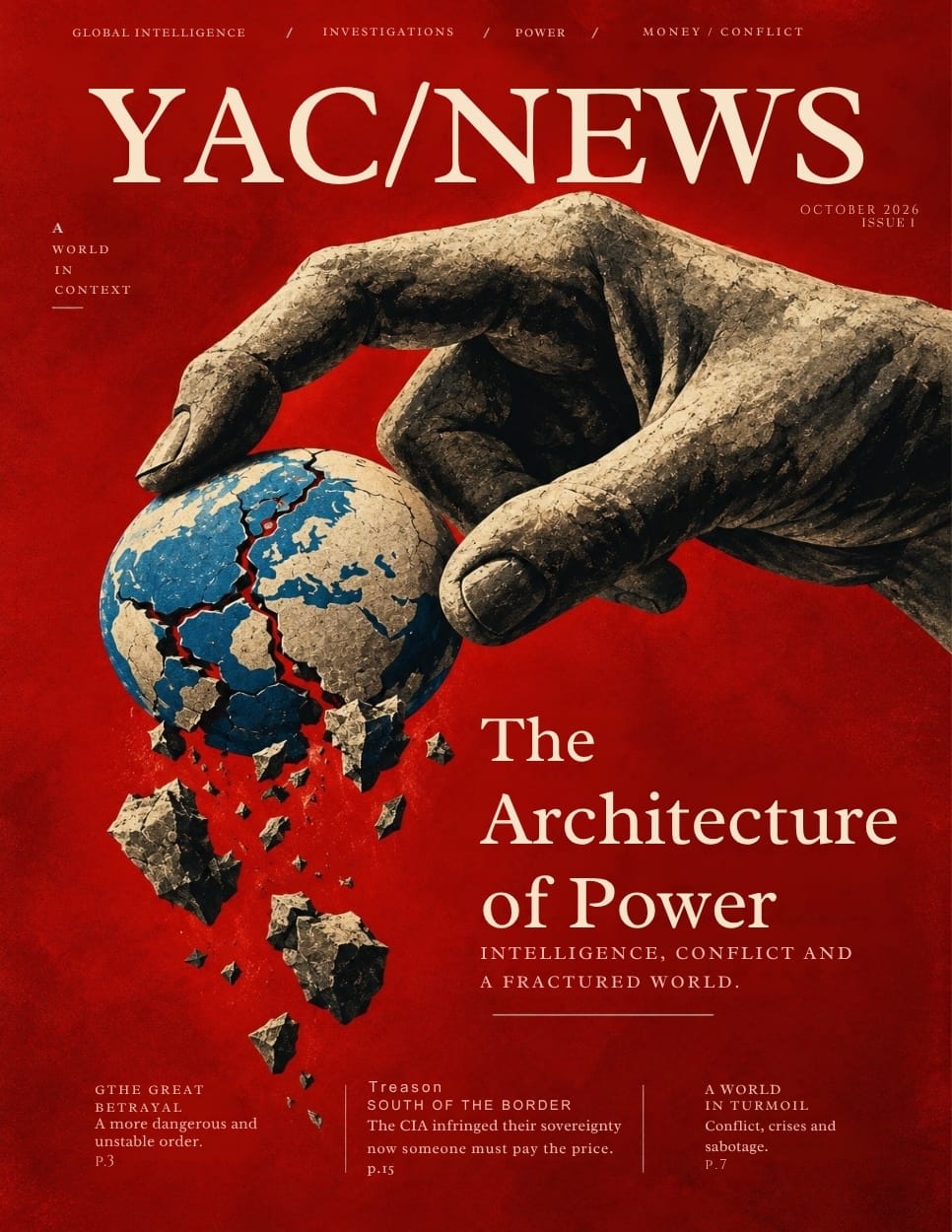
The inaugural edition of YAC / NEWS.
Eight investigations. Four continents.
From Russian sabotage allegations in Europe and sanctions negotiations involving Lukoil to contested maritime incidents in the Strait of Hormuz, judicial proceedings in Mexico and Liberia, Libya's institutional crisis and Brazil's political landscape.
Read the first edition:
This YAC News Intelligence report is an independent analytic product compiled entirely from publicly available sources. It is not a government document and carries no official or agency endorsement. Information is current to 23 October 2026.