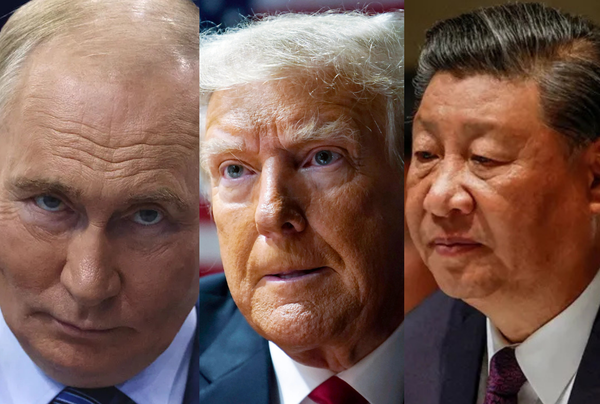
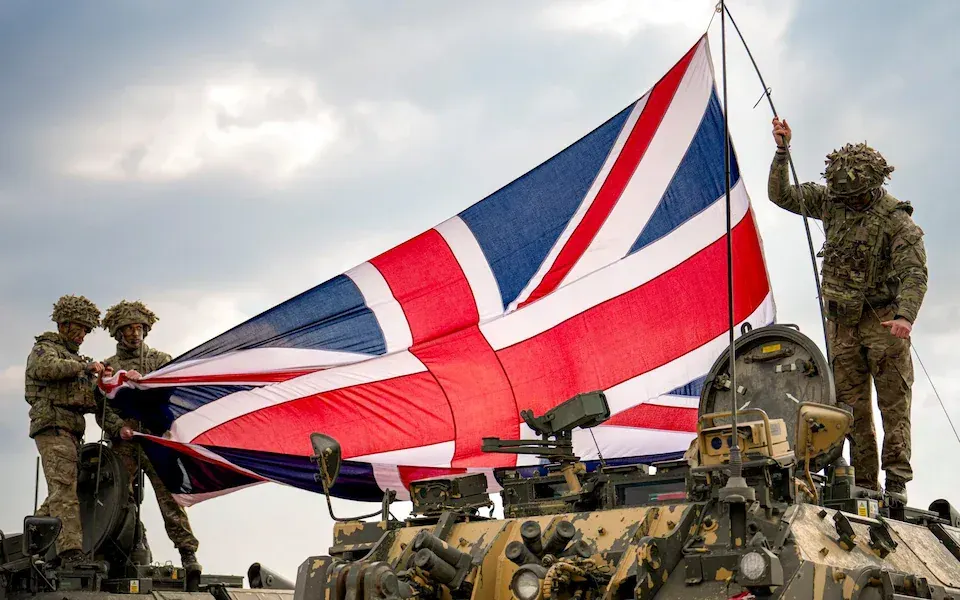
Vladimir Putin was asked at the press conference closing the Shanghai Cooperation Organisation summit in Bishkek on 1 September 2026 whether military facilities on British territory could become Russian targets if British weapons were used against Russia. "That's a secret. A military secret," Putin said.
British military facilities inside Ukraine drew a direct answer at the same press conference. "Any military facilities in Ukraine are our legitimate target, British or otherwise," Putin said.
The five days before Bishkek
Maria Zakharova, spokeswoman for the Russian foreign ministry, told a briefing in Moscow on 27 August 2026 that the geography was wider than Ukraine. "Any British military installations and equipment in Ukraine and beyond its borders could be targeted in response to Ukrainian strikes on Russian territory carried out using British weapons," Zakharova said.
She said Britain stood one step away from the point at which Russia would hold it legally responsible for what she called terrorism against Russian civilians, that those responsible for such attacks would be punished along with their "accomplices and instigators", and that British residents should "think about the inevitable, catastrophic consequences of the hostile steps taken by their own authorities". She accused Britain and France of "playing with fire" and of an "obsessive anti-Russian agenda", and called on the British government to "immediately, in the most resolute and unequivocal manner" abandon what she called a hostile and aggressive line.
Zakharova named no demand beyond an end to British weapons supply, set no date by which it had to be met, and tied no consequence to a fixed point in time. Russia has not declared war on the United Kingdom, has not severed diplomatic relations and has not recalled its ambassador.
Ten days of British silence
No British minister has responded on the record to the 27 August statement, and none has responded to Putin's remarks in the two days since they were reported. The Foreign, Commonwealth and Development Office has not summoned the Russian ambassador, an instrument it used twice in the past five months, on 29 April 2026 and again on 3 June 2026.
Britain's national threat level stands at severe, where the Joint Terrorism Analysis Centre set it on 30 April 2026 after a stabbing outside a synagogue in Golders Green the previous day, on grounds that centred on Islamist and extreme right-wing terrorism together with state-linked threats to Jewish and Israeli individuals and institutions. Nothing in the level's basis refers to Russian military action, and it has not been reviewed since Zakharova spoke. No change to the readiness of the British armed forces has been announced.
John Healey, the chancellor, told Sky News on Friday 28 August 2026 that "fiscal discipline" was his "first priority" and that the country "simply can't deal with the problems we face as a country by maxing out the country's credit card". He declined to name a date for reaching 3 per cent of GDP on defence. Healey resigned as defence secretary in June 2026 over Keir Starmer's spending plans, writing in his resignation letter that "a headmark date for 3 per cent of GDP on defence in 2030 is what Britain must set". The Financial Times reported that he will now shelve that pledge, fund a defence equipment gap of about £5 billion at the October Budget and defer the wider decision to a Treasury review next year. James Cartlidge, the shadow defence secretary, said the reversal was extraordinary given that the pledge had sealed the fate of the last prime minister. Healey said on 1 September that he would set out a clear path to higher defence spending in the spring.
What the threat covers
British Army garrisons sit in Estonia, Poland and Romania on NATO's eastern flank, at Sennelager in Germany, in Gibraltar and in Cyprus. Britain holds more than 2,000 military sites at home including reserve establishments, among them 34 Royal Air Force stations. Aldershot in Hampshire, Colchester in Essex, Salisbury Plain in Wiltshire, Catterick in North Yorkshire and Beacon Barracks in Staffordshire are the main Army hubs. Brize Norton in Oxfordshire runs the air transport fleet and Coningsby in Lincolnshire holds Typhoons. Plymouth is home to the Royal Marines and UK Commando Forces, and Devonport carries out deep maintenance and defuelling for the Royal Navy's nuclear submarines.
Iranian-made drones launched from Lebanon hit RAF Akrotiri in Cyprus between 1 and 4 March 2026, damaging a hangar and forcing a partial evacuation, on the account given by the Cypriot president, who called the damage minor. Reporting in the Independent places the impact on the airfield's runway. Nobody was killed. British and Greek forces shot down three of the drones, and Greek F-16s intercepted two more over Lebanese airspace on 4 March. Britain sent Wildcat helicopters armed with Martlet missiles, deployed the destroyer HMS Dragon, which suffered technical problems and docked in April, and ran round-the-clock interception flights under Operation Luminous. The strike followed by hours an announcement by Keir Starmer, then prime minister, that US forces had been granted permission to use British bases.
The Donetsk strike
Ukrainian forces hit Donetsk with Storm Shadow cruise missiles on 26 August 2026, according to Denis Pushilin, the Russian-installed head of the Donetsk region, who reported eight people wounded including two minors, one further person injured by unexploded ordnance and two more wounded elsewhere in the territory Russia administers as the Donetsk People's Republic.
Casualties were concentrated near the Donetsk-City shopping centre, with damage also reported at the Druzhba sports centre, according to Russian state media. City head Aleksei Kulemzin said an educational building in the Kalinin district was struck in the same attack. The Russian Investigative Committee opened a criminal case. An RT crew filmed the aftermath at one site.
No independent confirmation of the casualty figures, the buildings hit or the weapon used has been published in the eight days since. Ukraine's armed forces have not commented on the strike, and Ukrainian officials have not acknowledged firing Storm Shadow at Donetsk on that date. Russian officials are the sole source for every element of the account, including the identification of the missile, which is the stated cause of the threat.
What Britain released, and what is inside the missile
Andy Burnham announced in Kyiv on 24 August 2026, on Ukraine's 35th independence day and his first foreign trip as prime minister, that the British government had cleared the missile maker MBDA to declassify technical information on the British-built components of the SCALP cruise missile and pass it to Ukrainian manufacturers. Storm Shadow is the British designation for the same Anglo-French airframe, and the stocks Britain has supplied are finite.
Emmanuel Macron opened the route on 13 and 14 July 2026, when the French government licensed Ukrainian production of the SCALP, the Aster air defence interceptor and the AASM Hammer guided bomb. A French-Ukrainian letter of intent signed in February 2026 provides the legal basis. Early Ukrainian work will cover final assembly, with key components still arriving from Britain and France.
British firms build the parts that decide what the weapon does when it arrives. Leonardo UK makes the imaging infrared seeker that recognises the target in the final seconds of flight. BAE Systems and Thales build the BROACH warhead, a shaped-charge precursor that opens the structure followed by a 450-kilogram blast-fragmentation charge that detonates inside it. Thales supplies the inertial and satellite navigation for the middle of the route. Safran's TR60-30 turbojet, 66 kilograms for 5.4 kilonewtons of thrust, carries a 1,300-kilogram airframe to a range of up to 250 kilometres.
Dmitry Peskov, spokesperson for the Russian presidency, said on 24 August that Britain was "participating in this war on the side of the Kiev regime" and was "methodically and regularly adding fuel to the fire". He also said Russian forces were collecting the data needed to identify missile production sites in Ukraine and were taking measures to destroy them.
The drones that came first
Sergei Lavrov, the Russian foreign minister, said on 18 August 2026 that Russia had the right to treat British involvement in strikes on Russian territory as participation in the war, after The Times reported that British-made drones had been used for long-range strikes inside Russia.
Callen-Lenz, a firm owned by BAE Systems, built the jet drone that Ukrainian forces have flown against Russian targets for roughly six months. The airframe is rendered Nyan in Ukrainian defence industry reporting and Nyran in the Independent, is built in Wiltshire, was tested by the Royal Navy and flies more than 150 miles. It carries a warhead of up to 20 kilograms, weighs more than 75 kilograms at launch, spans 2.9 metres, is fired from a catapult and can fly without satellite guidance. "We deliver a range of capabilities into the UK MoD as part of the UK's support to the defence of Ukraine," the company told The Times. A second British-built drone with a range of more than 600 miles is also in Ukrainian service, and its maker has not been named for security reasons. More than 80 QinetiQ Banshee Jet airframes have been used, at a range of about 200 kilometres with a seven-kilogram warhead.
Targets reported for the British airframes include the refinery at Volgograd, refineries near Moscow, logistics hubs and Belgorod near the Ukrainian border. Earlier reporting named Yaroslavl rather than the sites near Moscow.
The Russian embassy in London said on 18 August 2026 that Britain was "seeking to contain Russia and inflict maximum damage on it by proxy" and that British actions "will inevitably carry consequences for which it will have to answer".
British drone commitments for 2026 stand at 150,000 airframes. Defence secretary Dan Jarvis raised the figure by 30,000 at a NATO defence ministers meeting in June, from the 120,000 announced in April, in a £752 million package that also covers more than 350 air defence missiles, ground-based radar and lightweight multirole missiles. Rachel Reeves, then chancellor, confirmed the £752 million as part of a larger £3.36 billion loan drawn on the British share of the G7 Extraordinary Revenue Acceleration facility, to be repaid from profits generated by immobilised Russian assets. The April package covered long-range strike, reconnaissance, logistics and maritime drones, with most of the money going to British firms including Tekever, Windracers and Malloy Aeronautics.
Volodymyr Zelensky said that microcomputers manufactured in the United Kingdom, used for flight control, were recovered from Russian drones after a deadly attack, alongside parts made in other allied countries including the United States, and called for tighter sanctions on the British companies involved.
Lilian Greenwood, parliamentary under-secretary of state, answered the embassy warning on Times Radio. "We won't be bullied in this way," Greenwood said. The Ministry of Defence said Russia should be in no doubt about the resolve of the government to stand against Russian aggression in Ukraine and against the United Kingdom and its allies. Burnham said Britain would back Ukraine 100 per cent and would not be a fair-weather friend.
The week the threats were made
Ukraine's defence ministry recorded strikes on 12 Russian oil refineries in August 2026, with a combined annual capacity of about 100 million tonnes, at ranges of roughly 400 to 1,500 kilometres from the Ukrainian border. Named targets included Kirishi, Syzran, TANECO, Slavneft-YANOS, Novokuibyshevsk, Saratov, Ilsky, Afipsky and Orsknefteorgsintez. Two military plants were hit in the same month, the Kamensky Combine, which makes solid rocket propellant for multiple launch systems, and the Progress Rocket Space Centre at Samara, with six workshops destroyed or damaged between them.
Russian forces fired two Iskander-M missiles and 130 drones at Ukraine between the night of 29 August and the morning of 30 August 2026. One strike hit an ammunition store at Myla in the Bucha district outside Kyiv on 29 August. Secondary explosions damaged about 50 buildings and forced more than 380 residents out of their homes. The death toll reached 38 by 30 August, with 20 injured and four missing, among the dead Taras Didych, mayor of the neighbouring village of Dmytrivka. Ukrainian prosecutors opened a criminal negligence investigation into the storage of ammunition next to housing.
The Russian defence ministry said on 30 August 2026 that its armed forces had begun preparing massive strikes on Ukraine's energy infrastructure in response to Ukrainian attacks on Russian fuel facilities. Russian forces have intensified attacks on the Ukrainian grid each autumn and winter since 2022.
Zelensky told airlines, insurers and foreign governments on 1 September 2026 to stay out of Russian airspace. "Today we want to warn every airline that uses Russian airspace, every insurer, everyone who still uses key Russian airports, Russian skies are becoming completely dangerous," Zelensky said, and said the Russian sky would be closed de facto. He cited Ratcliffe's visit of 25 August as precedent for coordinating temporary pauses so that diplomatic flights could pass. Aeroflot shares touched 30.36 roubles, down 5.11 per cent, at about 20:40 Moscow time that evening, on a sequence that does not by itself establish cause.
Putin said the warning amounted to a bid for state terrorism, and that Russia does not negotiate with terrorists, answering at the same Bishkek press conference at which he was asked about British bases.
Attacks by unknown hands
Andrei Fedorov, a former Russian deputy foreign minister who holds no current office, told BBC Newsnight around 24 and 25 August 2026 that British drone plants and Storm Shadow component suppliers could be hit. "They could be attacked not by Russia, but by from unknown sources," Fedorov said. "There's a very serious political and public pressure on President Putin today, to undertake certain measures against UK," he said, and forecast "a new stage of escalation, in the Ukrainian conflict".
British security officials warned Burnham on 26 August 2026 to expect retaliation in a form other than a public statement, according to reporting in the Daily Mail that cited intelligence officials and unnamed government figures. "An attack on the UK's defence and security infrastructure is inevitable, based on our high-profile support for Ukraine," one official said. "Russia will want to make a statement, through actions rather than words," another said.
British government officials told defence industry executives at a closed meeting earlier in the summer of 2026 that firms supplying weapons and drones to Ukraine faced a raised risk of Russian espionage. Three were identified as exposed: Callen-Lenz, MBDA and Ukrspecsystems, a British-Ukrainian drone maker with a plant near RAF Mildenhall in Suffolk. No protective measures were announced.
Six men were sentenced in London in October 2025 over the burning of a Leyton warehouse on 20 March 2024, which did about £1 million of damage to a business supplying Starlink terminals and aid to Ukraine. Dylan Earl, who coordinated it for the Wagner Group over Telegram, got 17 years under the National Security Act 2023. Researchers at the ICCT and GLOBSEC counted 12 Russian-linked hybrid incidents in the United Kingdom between February 2022 and February 2026.
What the last threat produced
Russia issued near-identical wording in May 2024, after David Cameron, then foreign secretary, said Ukraine had the right to use British-supplied weapons against targets inside Russia. The Russian foreign ministry summoned the British ambassador, warned that British military installations and equipment in Ukraine and beyond could be struck, and announced exercises simulating tactical nuclear weapon launches. No strike on a British target followed in the two years since.
The open channel
John Ratcliffe, director of the CIA, flew into Moscow on 25 August 2026 aboard a military transport aircraft, on the first known visit by a serving CIA director since William Burns in 2021. His C-17 left at about 17:30 local time the following day. He was scheduled to meet senior Russian officials, and had previously been in contact with Sergei Naryshkin, head of the Russian foreign intelligence service. Reporting described his purpose as warning Russia against attacks on NATO members, including cyber-attacks or limited incursions into the Baltic states, and pressing Russia to cut its dealings with Iran.
Ukraine agreed to pause strikes on Moscow and St Petersburg between 24 and 26 August at the request of the US government, according to a source cited in Ukrainian reporting. "They don't believe in the strength of Putin's air defences," the source said. Ukrainian officials were told a US delegation would travel to Russia and were not initially told Ratcliffe would be on it. Neither the Russian presidency nor the US administration commented publicly on what was discussed. Baltic officials left their published threat assessments unchanged.
The legal position
Article 2, paragraph four, of the UN Charter prohibits both the threat of force against the territorial integrity or political independence of a state and its use. A strike on British soil, or on a British base outside Ukraine, would put Article 5 of the North Atlantic Treaty in play, and the treaty leaves each member to decide what action it deems necessary in response.
British installations and personnel inside Ukraine sit within an active armed conflict and fall under the law of armed conflict, which permits attacks on military objectives, prohibits attacks on civilians and civilian objects, and prohibits reprisals against them. Ukrainian production sites for the SCALP, once they exist, would be military objectives under that law. Peskov said on 24 August that Russian forces were already looking for them.