Russian state-linked networks sponsored 80 of the 189 disinformation campaigns mapped across Africa by March 2024. Two years later, according to an Anthropic threat report, an operator in Bangui was using an AI model to prepare daily radio propaganda and forge government documents.
Between those two findings lies a varied business where intelligence-linked networks, public relations firms, political consultants, local influencers and contractors selling access to audiences intersect. Their methods differ. Some manufacture social media trends; others publish through radio stations and websites that resemble independent news outlets. The people doing the work can sometimes be identified. Establishing who commissioned it is harder.
A Russian-speaking operator in Bangui used an AI model to write pro-Russian, anti-French stories for Radio Lengo Songo, broadcast daily on 98.9 FM, and to forge documents attributed to the Central African Republic's gendarmerie and defence ministry, Anthropic said in a threat report published on 10 September 2026. The same report described a single Kenyan operator producing fake grassroots posts in batches of exactly 50 ahead of Kenya's 2027 general election, and a Malian consultant building a surveillance system for the state intelligence agency.
Foreign states sponsored nearly 60 per cent of the campaigns in the 2024 mapping, led by Russia, China, the United Arab Emirates, Saudi Arabia and Qatar. Countries at war faced a median of five campaigns each. Countries that kept presidential term limits averaged 1.5, against more than three for those that had scrapped them, a gap the Africa Center read as evidence that foreign sponsors were working to keep authoritarian governments in power.
Kenyan security forces killed at least 128 people during the 2024 and 2025 protests while paid networks branded the protesters foreign agents, Amnesty International found. In the Democratic Republic of Congo, Ethiopia, Cameroon, Sudan and Tanzania, fabricated claims spread online before, during or after episodes of lethal violence.
The scale
The Africa Center for Strategic Studies, an academic institution within the US Defense Department, counted 189 campaigns in its March 2024 mapping, nearly four times the number it recorded in 2022. The campaigns targeted 39 countries, with 20 targeted at least three times. Its earlier mapping, published on 26 April 2022, had found Russia had pioneered a model of disinformation to gain political influence in Africa that other actors were copying.
The Africa Center’s March 2024 mapping counted nearly four times as many campaigns as its 2022 survey. The campaigns targeted 39 countries, with 20 targeted at least three times. West Africa accounted for 72 campaigns, East Africa 33, Southern Africa 25, Central Africa 21 and North Africa 15. Another 23 operated across the continent. Those figures describe the campaigns documented by that point. They do not include every operation that followed, and the researchers considered their total an undercount.
Foreign states sponsored nearly 60 per cent of the mapped campaigns. Russia was the largest identified sponsor, followed by other states including China, the United Arab Emirates, Saudi Arabia and Qatar. Domestic governments and political actors also commissioned campaigns.
The researchers found more campaigns in countries at war and in countries that had removed presidential term limits. They interpreted the latter pattern as evidence of efforts to sustain authoritarian governments. The figures establish an association; determining the purpose and effect of an individual campaign requires examining its conduct.
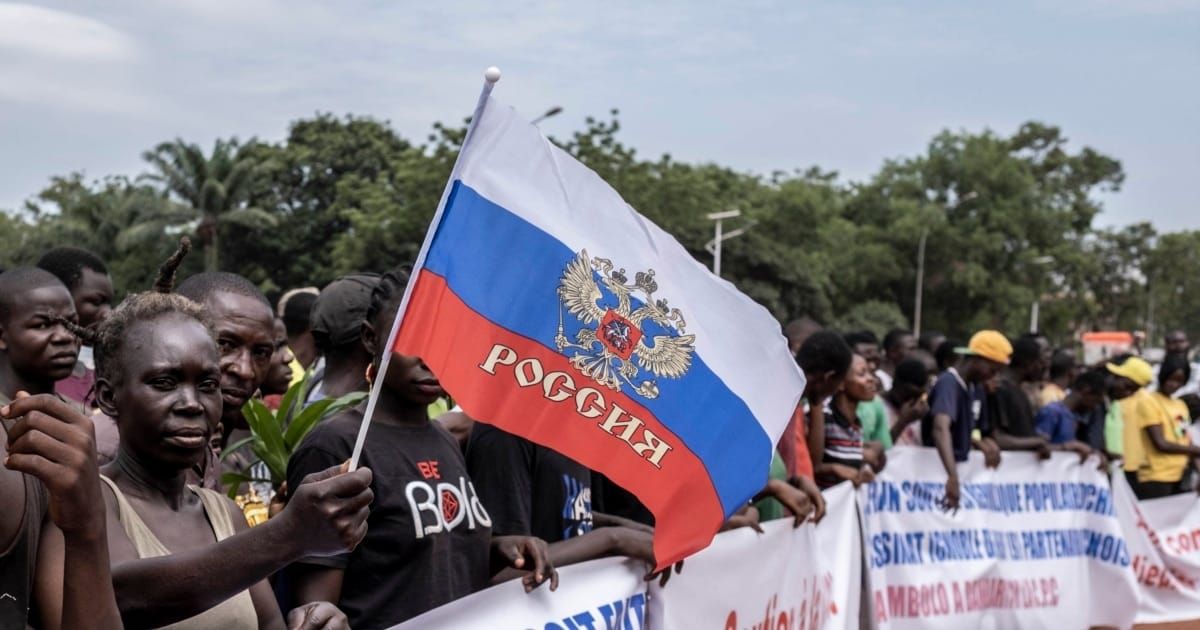
Russia’s 80 campaigns made up about 42 per cent of the total and reached many millions of users through tens of thousands of coordinated fake pages and posts. The Africa Center found Russia had worked to undermine democracy in at least 19 African countries and that two Russia-linked influencers held a combined following of more than 28 million. Russian embassies appeared to have helped set up ostensibly African grassroots front organisations, among them groups called PARADE and GPCI.
Of the 23 Africa-wide campaigns, Russia sponsored 16 and the Chinese Communist Party, working through its United Front and the state broadcaster China Media Group, ran five. Their combined aim, the Africa Center wrote, was to undermine democratic processes, promote coups and stoke anti-Western and anti-UN sentiment, alongside confusion about climate science.
African governments have turned laws against digital disinformation on the press. The Africa Center found that such legislation had been used to harass and detain journalists as press freedom declined across the continent.
Contractors selling political influence
Commercial influence operations in Africa predate the widespread use of generative AI.
Cambridge Analytica’s managing director, Mark Turnbull, told an undercover Channel 4 News reporter that the company had worked on Uhuru Kenyatta’s presidential campaigns in 2013 and 2017. He described rebranding the party, writing speeches and surveying 50,000 Kenyans about their hopes and fears.
Turnbull said: "We have rebranded the entire party twice."
The company’s website separately described a 2013 survey of 47,000 Kenyans. Cambridge Analytica disputed the undercover investigation’s allegations and said its staff had been testing the reporters’ motives.
Jubilee Party official David Murathe said the party had paid SCL, Cambridge Analytica's affiliate, for branding in 2017.
In South Africa, Bell Pottinger, a London public relations firm, was paid £100,000 a month by Oakbay Capital, the Gupta family's holding company, to run a campaign built around the slogan "white monopoly capital". The campaign used fake Twitter accounts to target wealthy white businesspeople and undermine journalists who questioned it, diverting attention away from the Guptas' ties to President Jacob Zuma.
The UK's Public Relations and Communications Association expelled Bell Pottinger on 4 September 2017 after a complaint by South Africa's Democratic Alliance, finding the campaign was "likely to inflame racial discord in South Africa and appears to have done exactly that". The firm collapsed within weeks.
In South Africa, Team Jorge, an Israeli group led by former special forces operative Tal Hanan, told undercover reporters in July 2022 that it had worked on 33 presidential campaigns, 27 of them successful, two thirds of them in Africa. The Story Killers consortium coordinated by Forbidden Stories, including the Guardian, Le Monde and Der Spiegel, published the investigation in February 2023.
Hanan demonstrated his tools by appearing to break into the Gmail and Telegram accounts of two aides to William Ruto, among them strategist Dennis Itumbi, weeks before Kenya's August 2022 election. Leaked documents placed Team Jorge in Nigeria's 2015 election alongside Cambridge Analytica, and analysis of thousands of bots tied to its software indicated involvement in Senegal's 2019 presidential vote. The going rate for a presidential campaign was €15 million, Hanan told the reporters. He said: "I deny any wrongdoing."
Tal Hanan’s Demoman International also appeared in the Israeli Defence Ministry’s 2018–19 industry directory, which named him as chief executive and listed intelligence operations among its services. That official listing establishes a connection to Israel’s defence-export promotion system. It does not establish that the government commissioned Team Jorge’s election operations in Africa.
Percepto International, an Israeli private intelligence company run by Royi Burstien, formerly head of Psy-Group, operates fabricated personas it calls "deep avatars" and fake media outlets it calls "deep platforms", the same consortium found with Code for Africa. In 2020 it ran a campaign in Burkina Faso that cast the International Committee of the Red Cross as an unwitting enabler of terrorism, placing an article in a French magazine that pro-Russian accounts then amplified. The ICRC's Africa director said the campaign provoked violent comments and fears for staff safety. Percepto called the ICRC allegations untrue and declined to identify its clients.
Percepto also developed a direct relationship with the Israeli government. In July 2024, the Israeli investigative outlet The Seventh Eye reported that Amichai Chikli’s Diaspora Affairs Ministry had allocated NIS126,700 to the company. Its chairman, Lior Chorev, declined to explain the work, citing a contract with the ministry. The ministry did not disclose the services or confirm that the engagement had been carried out. The published funding document lists the company under its legal name, L.R. Perception International. The Seventh Eye’s investigation establishes a government relationship, but does not connect that contract to the earlier campaign against the Red Cross in Burkina Faso.
The company’s leadership came from Israeli intelligence and politics. Percepto describes chief executive Royi Burstien as a retired lieutenant colonel who spent 27 years in military intelligence, including psychological operations. Chorev worked on Ariel Sharon’s prime ministerial campaigns and advised Ehud Olmert. Percepto’s own biographies document those backgrounds.
Kenya's market for influence
Kenya's domestic trade in manufactured trends was documented in detail in 2021. Mozilla Foundation fellows Odanga Madung and Brian Obilo found at least 11 disinformation campaigns, more than 23,000 tweets and 3,700 accounts in May and June that year, most of them pushing the government-backed Building Bridges Initiative constitutional amendments.
Influencers were paid between KES 1,000 and KES 1,500, about US$10 to US$15, to take part in three campaigns a day, with payments sent through the mobile money service M-Pesa. Anonymous organisers used WhatsApp groups to send cash, content and instructions, and owners of verified accounts rented them out to give campaigns a better chance of trending. Eight of the 11 campaigns reached Twitter's trending section.
When the High Court struck down the constitutional amendments, the hashtag #AnarchistJudges trended with posts falsely accusing senior judges of drug dealing and bribery. Twitter removed about 100 accounts after the report.
Kenya's 2022 presidential election ran on the same market at a higher price. Researchers at the Institute for Security Studies (ISS) in Pretoria examined more than eight million Facebook and Twitter documents from the campaign between William Ruto and Raila Odinga and found that both campaigns used bots. Influencers told the researchers they worked in groups and hired students as digital foot soldiers to push narratives at scale.
Influencers backing a campaign earned roughly US$1,000 to US$2,000 per tweet, with similar sums for creating hashtags, and some earned thousands of dollars a day, the ISS found. A single hashtag could bring up to US$7,000. Product influencers who normally sold merchandise switched to political work for the season. Karen Allen, Jean le Roux and Bonface Beti published the full study, A question of influence? Case study of Kenyan elections in a digital age, on 3 July 2023.
Influencers supporting Ruto portrayed Uhuru Kenyatta's administration, in which Ruto had served as deputy president, as a corrupt "deep state", and cast the media, police and judiciary as captured. The ISS compared the narrative to the QAnon movement in the United States. A campaign called the Hustler Nation Intelligence Bureau urged users to name and shame alleged enemies of the state and people planning protests, which the ISS described at its extreme as digital vigilantism. Some of the influencers involved had held government jobs before the election.
Ruto won, and when young Kenyans organised against his Finance Bill in June 2024, similar methods were used against them. Amnesty International interviewed 31 young human rights defenders for a report published on 18 November 2025 and found state-sponsored trolls and paid networks driving pro-government messages to the top of Kenya's daily trends on X.
A campaign operator Amnesty called John told researchers he belonged to a network of about 20 people paid between KES 25,000 and KES 50,000 a day, about US$190 to US$390, to amplify government messaging. During demonstrations the group produced counter-hashtags in real time, turning #RutoMustGo into #RutoMustGoOn.
Amnesty’s full report puts the daily cost of the approximately 20-person network at KES 25,000 to KES 50,000 in total. It does not describe that sum as each member’s pay. John said a government contact supplied the key messages, which the network turned into posts, hashtags and images. His account describes a route for government instructions, although it does not publicly identify the person who ultimately authorised or financed the work.
Nine of the 31 activists Amnesty interviewed received violent threats on X, TikTok, Facebook and WhatsApp. Young women and LGBT activists received misogynistic and homophobic abuse and AI-generated pornographic images, and in July 2024 a coordinated campaign on X used AI-generated images of same-sex couples to cast the protests as an LGBT plot. In April 2025 suspected state-backed trolls ran #ToxicActivists against Hanifa Adan after she appeared in the BBC documentary Blood Parliament.
Security forces killed at least 128 people, arrested 3,000 and forcibly disappeared more than 83 across the 2024 and 2025 protests, according to Amnesty's estimates. Interior Cabinet Secretary Kipchumba Murkomen said the government "does not sanction harassment, or violence against any citizen". Safaricom, Kenya's largest telecom company, denied that its systems could track subscribers' live locations, as activists had alleged.
The 2027 election
Germany's Konrad-Adenauer-Stiftung published The Rise of Fake News Ahead of the 2027 Kenyan Elections in June 2026. It described disinformation as a coordinated commercial operation in which influencers are paid to push narratives and attack opponents, often through WhatsApp groups that hand out instructions and ready-made content. Some influencers earned as little as US$10 to US$15 per campaign.
The foundation's survey found 62 per cent of Kenyan journalists said financial pressure affected their ability to meet professional and ethical standards, leaving newsrooms open to paid coverage. The report warned that the networks built to mobilise Gen Z protesters could be captured by the disinformation industry.
Kenya had 23.4 million internet users in October 2025, equal to 40.5 per cent of the population and 18.4 million active social media identities, DataReportal found. Facebook, TikTok, YouTube, X and WhatsApp have become the main source of political news for young Kenyans.
Anthropic's September 2026 report tracked the Kenyan operator it identified as GTG-54004. Many of the posts praised Energy Cabinet Secretary Opiyo Wandayi for halting a scheduled Kenya Power tariff increase under the hashtags #PowerReliefKE and #PoweringTheNewKenya, while others said the United Opposition coalition was breaking apart and targeted Rigathi Gachagua and Uhuru Kenyatta. Anthropic acted on a tip from OpenAI about repeat activity on its platform and said the same operator reused the template to promote Kenyan retail brands.
Anthropic classed the operation in the lowest tier of its impact scale, saying the posts stayed inside a network of fake accounts on a single platform, and found no evidence linking it to the Kenyan government. A promotional broadcast had been repackaged as apparently organic tweets, which Anthropic said resembled a pattern in Kenya of agencies paying local influencers to manipulate narratives. Wandayi called the report unverified and said what mattered was evidence tying the accounts to his office.
Kenya's Court of Appeal struck down the two "false publication" offences in the Computer Misuse and Cybercrimes Act on 6 March 2026, ruling in a case brought by the Bloggers Association of Kenya that they were "akin to unguided missiles, and likely to net innocent citizens". Police had used the sections against critics, charging blogger David Mokaya in November 2024 over an image depicting a funeral procession for the President. The court upheld the rest of the Act, and bloggers, the Law Society and the Director of Public Prosecutors have taken the case to the Supreme Court.
The Kenyan government said in October 2026 it had begun drafting a policy to regulate artificial intelligence, as a study by the National Council of Churches of Kenya found that many young people could not reliably detect manipulated media.
Russia's African network
Yevgeny Prigozhin, the financier of the Internet Research Agency troll factory that US prosecutors charged over the 2016 presidential election, began building African influence operations in 2018. One of his vehicles was the Association for Free Research and International Cooperation (AFRIC), which sent around 40 observers to Zimbabwe's 2018 election and was organised by people and structures linked to Prigozhin, researcher Anton Shekhovtsov found for the European Platform for Democratic Elections.
Internal presentations dated April 2018 and obtained by the London-based Dossier Center described AFRIC as an instrument of soft power that needed no public leader, run from the African back office of Prigozhin's organisation in St Petersburg. AFRIC observers appeared at elections, conferences and on television in Zimbabwe, South Africa and Madagascar.
Facebook removed three Prigozhin-linked networks on 30 October 2019, using almost 200 fake and compromised accounts that reached more than a million followers in Madagascar, the Central African Republic, Mozambique, the DRC, Côte d'Ivoire, Cameroon, Sudan and Libya. The Stanford Internet Observatory, which analysed the networks, said they recruited local people in a franchise model to make attribution harder. In Libya the pages promoted both Khalifa Haftar and Saif al-Islam Gaddafi, and in Mozambique they published polls that were illegal under local election law.
Eliminating Barriers for the Liberation of Africa (EBLA), an organisation that turned the same model on the United States, rented a walled compound near Accra in 2019 and hired 16 Ghanaians to pose as US citizens and stoke racial division on Facebook, Instagram and Twitter. Ghanaian security services raided the compound in February 2020 and determined that all of EBLA's funding had come from Russia. CNN identified the man running it as Seth Wiredu, a Ghanaian living in Russia, and Facebook and Twitter linked the network to people associated with the Internet Research Agency.
Prigozhin's death in August 2023 broke up the network. The Africa Center found Wagner linked to about half of all Russian campaigns on the continent and traced its media work into the newly formed Africa Corps and a news agency called the African Initiative, overseen by Artem Sergeyevich Kureyev.
The US State Department's Global Engagement Center said on 12 February 2024 that Russian intelligence services were providing material support and guidance to the African Initiative and identified Kureyev as its chief editor and general director of Initsiativa-23, a company registered to an office in the Russian capital. Kureyev described the agency's goal as becoming the "information bridge between Russia and Africa". Anna Zamarayeva, a former Wagner press secretary, served as his deputy, according to The Insider, which said the agency had opened bureaus in Mali and Burkina Faso and took credit for pro-Putin graffiti in Burkina Faso.
France's VIGINUM agency, the UK Foreign Office and the European External Action Service later published a joint report describing the African Initiative as a state-directed operation disguised as a news agency, running fictitious news sites, fake social media accounts and AI-generated content alongside associations that recruited local influencers, journalists and activists. An affiliated association in Burkina Faso served as a central hub for Russian influence on the continent. The European Union placed the agency and Kureyev under restrictive measures.
The UK sanctioned the agency and three of its founders in July 2025: Kureyev, whom the UK linked to a previous role in the FSB, Anna Zamarayeva and Viktor Lukovenko, who was arrested in Kyrgyzstan in April 2025 on suspicion of recruiting mercenaries. The agency had published more than 18,000 articles by April 2025 but averaged about 35,000 visits a month to its main site. Its reach depended on events, Telegram channels and local partners.
Wagner announced its withdrawal from Mali in June 2025 after three and a half years, and the Africa Corps, under direct command of the Russian defence ministry, kept its fighters in the country. Around 70 to 80 per cent of its 2,000 to 2,500 troops in Mali had served with Wagner, Reuters reported.
On 25 April 2026, the al-Qaeda affiliate JNIM and the Tuareg-led Azawad Liberation Front (FLA) launched coordinated attacks on Kati, Bamako, Kidal, Gao, Mopti and Sévaré. Defence Minister Sadio Camara, the junta's leading advocate of the Russian alliance, was killed at his home in Kati. Russian state broadcaster Vesti reported on 26 April that the Africa Corps had repelled a large-scale attack. The next day the FLA said it had reached an agreement allowing Africa Corps troops to withdraw from Kidal, and the Africa Corps confirmed the pullout.
Russian war bloggers framed the retreat as temporary. Ruslan Trad, an analyst, told The New Arab the withdrawal was a tactical defeat and that the messaging around it was "partly narrative management".
The Central African Republic
Russia has run information campaigns in the Central African Republic since at least 2018, when Wagner arrived to protect President Faustin-Archange Touadéra. The Africa Center linked Russia to eight campaigns there, carried out through a network of journalists, bloggers and regime spokespeople aligned with Touadéra, including some who campaigned to remove presidential term limits. The network blurred the line between foreign and domestic disinformation.
Supporters of Touadéra spread claims that the UN peacekeeping mission, MINUSCA, armed rebel groups and sold them weapons. MINUSCA had about 14,000 troops and 3,000 police in the country in late 2025 and guarded polling stations for the 28 December vote.
A 2023 constitutional referendum removed the term limits and extended the presidential term from five to seven years. Touadéra stood for a third term and won 76 per cent of the vote in provisional results.
The Radio Lengo Songo operation Anthropic described worked with RT, Sputnik Afrique, TASS and the Russian House in Bangui. Anthropic linked the operator to Politology, the influence branch of Wagner and the Africa Corps, which it assessed Russia's Foreign Intelligence Service had taken over in late 2023. The operator used the model to manage staff contracts, track opposition figures and draft talking points for Russian House officials, and told it to make the output look like ordinary journalism.
The model refused a request to name real people as militants in a way that could prompt security action, and the operator switched to anonymous sources. Anthropic placed the operation in the fourth tier of its six-level impact scale because of its daily broadcasts and its amplification through Telegram and local outlets.
The Sahel juntas
West Africa was the region most targeted by disinformation in the 2024 mapping, with 72 campaigns in 13 countries, roughly half connected to Russia. Russia-linked actors ran 19 campaigns against Mali, Burkina Faso and Niger, and Malian fact-checkers told the Africa Center the content was produced "on an industrial scale". Wagner-linked networks cheered the July 2023 coup in Niger and encouraged the violent suppression of pro-democracy demonstrators in Niamey.
The military governments of Mali and Burkina Faso were the second-largest sponsors of disinformation in the region. Isolated and dependent on Russian protection, they adopted Russian methods and silenced domestic journalists. They blamed France, the UN, the Economic Community of West African States and human rights groups for their failures. Militant Islamist groups were the third-largest sponsor, recruiting in local languages through Telegram and other closed networks.
AI-generated videos praising Burkina Faso's junta leader, Captain Ibrahim Traoré, began circulating on WhatsApp in January 2023, using synthetic avatars presented as US pan-Africanists. A larger wave between March and May 2025 falsely credited Traoré with infrastructure projects, part of what investigators described as a Russian-linked campaign to support the Sahel juntas.
Niger's junta suspended nine French news outlets in early May 2026, among them France 24, RFI, AFP, TV5Monde and Jeune Afrique, saying they endangered public order. Burkina Faso's media regulator banned TV5Monde the same week, accusing it of disinformation over its coverage of anti-terrorism operations. Niger fell 37 places in the 2026 Reporters Without Borders press freedom index to 120th of 180 countries, and UN figures showed 13 journalists arrested in Niger in 2025. The government also suspended nearly 3,000 local and foreign NGOs in 2025.
In Mali, a Bamako-based consultant used Anthropic's model as the main engineering workforce for a surveillance platform built for the state intelligence agency, the Agence Nationale de la Sécurité d'État, Anthropic said. The system, called Lakana 360, was designed to monitor about 25 million SIM cards across all three of Mali's mobile operators, collect call records and text messages, flag users of encryption and VPNs and get around the requirement for a court order for certain records. Anthropic banned the account, and the platform, which runs on local servers, stayed online.
Sudan
Sudan faced 14 campaigns in the 2024 mapping, six of them domestic, as the Sudanese Armed Forces (SAF) and the Rapid Support Forces (RSF) issued rival claims about the war that began in April 2023. Russia, the UAE and Egypt sponsored disinformation to support their proxies. Before the war, the same networks shadowbanned Sudan's pro-democracy resistance committees to silence them.
Prigozhin's 2019 Sudan operation had already used a Facebook page dressed as a news site called Sudan Daily that republished Sputnik articles, and its content backed whichever government held power.
The RSF took the SAF's 6th Infantry Division base in El Fasher on 26 October 2025 after an 18-month siege, and videos verified by the Centre for Information Resilience showed large-scale RSF attacks on civilians as fighters entered the city, including killings at El Fasher University. Fabricated and recycled footage spread alongside the real evidence. One widely shared video of the massacre had been posted in mid-September, more than a month before the city fell.
Beam Reports, a Sudanese verification platform, traced false claims of mass killings of Christians in El Fasher to coordinated accounts, amplified by foreign influencers including Polish MEP Dominik Tarczyński, who shared an image of a mother and child with a caption calling it a genocide of Christians. The RSF had shelled churches in El Fasher and the SAF had shelled mosques and a church elsewhere, and Beam Reports found the casualty figures in the posts had no credible source.
A network of more than 3,000 fake female accounts boosted RSF messaging and broadcast synchronised live footage during the El Fasher takeover, a security source told Sudan Tribune in January 2026. Selma el Obeid of the French Institute of International Relations found in an April 2026 study that both armies were building large supporter networks and using censorship to control the war's narrative.
Tanzania
Tanzania's communications regulator cut internet access nationwide on election day, 29 October 2025, as protests broke out against the exclusion of the two main opposition candidates. The blackout lasted about six days, and Amnesty International condemned unlawful killings carried out during the shutdown. The opposition said hundreds were killed. President Samia Suluhu Hassan was inaugurated on 3 November with the blackout still partly in place, and police warned citizens against sharing images of the violence once service returned.
CNN published a forensic investigation of police killings on 21 November 2025. Africa Uncensored, a Kenyan investigative outlet, documented a coordinated campaign on X that followed, using more than 30 hashtags and edited graphics to target CNN correspondent Larry Madowo, activists and religious leaders. Africa Uncensored said the campaign appeared to be paid for by the Tanzanian state and resembled those it had tracked against Kenyan protesters in 2024 and 2025.
The Great Lakes and Cameroon
Political "pressure groups" in the Democratic Republic of Congo spread false claims that the UN mission, MONUSCO, supported rebel groups. Protests against the mission in 2022 left five peacekeepers and more than 30 protesters dead, and similar claims circulated during the December 2023 election.
LKM Company, which Anthropic described as a France-based digital advertising agency, ran about 70 fabricated news websites, about 70 matching X accounts and more than 250 fake commenting accounts that published at least 8,913 articles in about 20 languages, Anthropic said. The network used invented journalist names and AI-generated profile photographs.
Of these, 318 articles backed the Congolese government's position on mineral deals and its conflict with Rwanda, and on 11 September 2025 the network published nearly identical articles across multiple sites within three minutes, adjusting the tone for each regional audience. Anthropic suspected that a customer with a stake in the conflict had commissioned the work and found no evidence that a government directed it.
In Cameroon's Anglophone conflict, disinformation and doxing by networks tied to the Ambazonian conflict possibly led to summary executions of innocent civilians, the Africa Center found.
Southern Africa and China
Southern Africa faced 25 campaigns in the 2024 mapping, and Chinese bot networks artificially boosted the profiles of Chinese diplomats in six of the region's countries. China was the leading foreign sponsor in Zimbabwe, where its campaigns supported the ruling ZANU-PF, silenced opposition voices and civil society and promoted Chinese business interests through social media and state-controlled outlets.
China's state media built its continental base in Nairobi. CGTN Africa has broadcast from the city since 2012, and Ambassador Wu Peng announced the opening of China Media Group's new Nairobi headquarters in April 2021. China Media Group operates under the Communist Party's Publicity Department.
After media cooperation agreements in mid-2023, articles by Chinese state outlets in Kenya's The Star rose from five in June to 33 in September, almost all of them uncritical of China. A Star journalist joined a four-month exchange programme in China in 2023, and the Chinese embassy trained dozens of journalists from the state-run Kenya Broadcasting Corporation in late 2024.
South Africa was the most targeted country in the region, with 11 campaigns: six by Russia-linked actors, two by CCP-linked actors and three by domestic political actors. Russian campaigns aimed to polarise communities and build support for the African National Congress. Russia reportedly advised the ANC on how to discredit the opposition during the 2019 election, the ISS wrote.
Duduzile Zuma-Sambudla, daughter of former president Jacob Zuma, was placed by a 2023 study at the centre of a Russian Twitter drive to influence South African opinion, Daily Maverick reported. She resigned as an MP for her father's uMkhonto weSizwe party on 28 November 2025, after her half-sister laid human trafficking and fraud charges accusing her of luring 17 men to fight for Russia in Ukraine under the pretext of bodyguard training. The party said her resignation was not an admission of guilt, and she laid a fraud charge against Blessing Khoza, whom she holds responsible for the men's recruitment.
Ukraine's foreign minister said that month that more than 1,400 citizens of three dozen African countries were fighting alongside Russian forces in Ukraine.
North Africa
Egypt served as a hub for Russian narratives across North Africa, where state-run Egyptian outlets frequently republished Russian state media and RT Arabic became the second-largest RT outlet after its English service. In Libya, Russian campaigns promoted Khalifa Haftar's Libyan National Army, encouraged nostalgia for Muammar Gaddafi's rule, disrupted the Libyan Political Dialogue Forum and attacked the UN Support Mission in Libya.
Supporters of Tunisian President Kaïs Saïed used the same methods against the opposition to legitimise his seizure of power in July 2021. Saïed himself promoted racist conspiracy theories about sub-Saharan Africans in his speeches, which influence networks amplified on social media.
The US withdrawal
President Donald Trump signed an executive order in March 2025 to dismantle the US Agency for Global Media, the parent of Voice of America, whose networks had more than 93 million weekly listeners and viewers in sub-Saharan Africa. The State Department's Global Engagement Center, which had exposed the African Initiative, had already closed. By June 2025 the administration had dismissed more than 85 per cent of the agency's roughly 1,400 staff.
Sputnik opened its first editorial centre in Ethiopia a month before the VOA order, and RT opened offices in Algeria and looked at South Africa and Kenya, the Reuters Institute reported. Xinhua and CGTN operate more than 37 bureaus on the continent.
The organised crime test
The UN Convention against Transnational Organized Crime defines an organised criminal group by four criteria: a structured group of three or more people that exists for a period of time, acts in concert to commit at least one serious crime and does so for a financial or other material benefit. Under the convention, a serious crime is an offence carrying a maximum prison sentence of at least four years. The group need not have formal roles or a developed structure.
Kenya wrote the same test into its Prevention of Organised Crimes Act in 2010, which defines an organised criminal group as three or more people acting in concert to commit serious crimes for financial or material benefit. Taking part in organised criminal activity carries up to 15 years in prison or a fine of up to KES 5 million.
The paid networks documented in Kenya meet the first, second and fourth criteria on the evidence published so far. Amnesty's interviewee described a standing group of about 20 people paid daily rates over months, and Mozilla found anonymous organisers who recruited influencers, briefed them in WhatsApp groups and paid them through M-Pesa. EBLA in Ghana was a funded organisation with a rented compound and salaried staff, and Ghanaian security services traced its money to Russia.
Kenya's Court of Appeal struck out the country's two false-publication offences in March 2026, which carried up to 10 years in prison and were the offences most directly aimed at paid falsehoods. Prosecutors seeking the serious crime the convention requires would have to look at the conduct surrounding the paid trending.
Team Jorge's demonstration showed unauthorised access to the email and messaging accounts of Kenyan political aides, conduct the Computer Misuse and Cybercrimes Act criminalises in provisions the Court of Appeal left standing. The Bangui operation produced forged documents in the names of the Central African gendarmerie and defence ministry, according to Anthropic. Kenyan activists received death threats from accounts in coordinated campaigns, Amnesty found, and doxing in Cameroon preceded possible summary executions, the Africa Center found.
The complaints lodged with South African police against Zuma-Sambudla allege human trafficking and fraud, and the UN trafficking protocol attached to the convention covers recruitment by deception for the purpose of exploitation, which is what the 17 men's families allege. None of these allegations has been tested in court, and Zuma-Sambudla holds another man responsible.
The convention's material-benefit requirement excludes a government agency acting for purely political ends, but its negotiators agreed the phrase should be understood broadly, and the contractors, influencers, front organisations and agencies paid by those governments work for money. Bell Pottinger took £100,000 a month, Team Jorge quoted €15 million per presidential campaign, and John put the total daily cost of his network at up to KES 50,000.
Russian-funded operators in Ghana targeted the United States, Israeli contractors worked Kenyan, Nigerian and Senegalese elections, a France-based agency wrote for the Congolese market and a Bangui operator took direction from Russian intelligence, conduct that meets the convention's transnational element. The UK and the EU have already used sanctions law against the African Initiative and its founders, a civil measure that requires no criminal conviction.
The harm to society
Professor Meareg Amare Abrha, a chemistry lecturer at Bahir Dar University in Ethiopia, was killed in November 2021 after Facebook posts published his home address, called for his death and falsely accused him of corruption and partisanship in the Tigray war. His son Abrham Meareg and former Amnesty researcher Fisseha Tekle are suing Meta in Kenya, seeking a restitution fund for victims of hate spread on Facebook. Kenya's High Court ruled on 3 April 2025 that it had jurisdiction to hear the case, rejecting Meta's argument that it belonged in US courts.
Fabricated claims about UN peacekeepers preceded the 2022 protests in the DRC that killed five peacekeepers and more than 30 protesters. In the Central African Republic the same claims were aimed at MINUSCA, the force guarding polling stations. Percepto's campaign against the Red Cross in Burkina Faso left the organisation's Africa director fearing for staff working in a country at war.
The UK PR industry's own regulator found that Bell Pottinger's paid campaign had inflamed racial discord in South Africa, and its director-general said the work had set back South Africa by possibly 10 years.
Team Jorge said it had won 27 presidential campaigns, most of them in Africa, and Cambridge Analytica's executives said they had staged every element of a sitting Kenyan president's campaigns. In the Central African Republic, a network the Africa Center tied to Russia campaigned to remove the term limits that would have ended Touadéra's rule in 2026.
Paid networks in Kenya labelled Gen Z protesters foreign agents and paid activists while security forces killed at least 128 people. In Tanzania, a coordinated campaign attacked the CNN correspondent who documented police killings carried out during an internet blackout. In Mali, a surveillance platform built to monitor every SIM card in the country remains with the state intelligence agency, in a country where the US State Department and Human Rights Watch have documented security services detaining and abducting journalists and opposition figures, Anthropic's report said.
Kenyan journalists told the Konrad-Adenauer-Stiftung that money pressures shaped their coverage, governments across the Sahel have banned the international outlets that carried independent reporting, and the US has dismantled the broadcaster that reached 93 million people a week in sub-Saharan Africa. In Sudan, where the war has silenced most domestic media, the information that remains is a contest between two armies and their foreign backers.
Families of the 17 South African men said they had been promised bodyguard training before they were sent to the front, and Ukraine's government counts more than 1,400 Africans fighting for Russia.
Who paid and who directed the campaigns
The UK’s July 2025 sanctions designations and the EU’s restrictive measures set out their grounds for linking Kureyev and the African Initiative to Russian intelligence. In Kenya, Amnesty’s interview with John describes a government contact supplying messages to a paid network that flooded X during the Gen Z protests. Mozilla’s interviewees described payments through M-Pesa. These accounts offer starting points for tracing instructions and money beyond the people paid to post.
Anthropic’s investigations identified operators behind the Kenyan campaign, the Bangui radio operation and LKM Company. The Meareg litigation seeks to establish Meta’s responsibility for harm linked to Facebook posts. In Mali, Anthropic reported that banning the developer’s account did not disable Lakana 360: the surveillance system had already been deployed on local servers.
Identifying an operator is only the beginning. Establishing responsibility further up the chain requires connecting payments to clients, instructions to decision-makers and unlawful acts to those who authorised them. A transfer may lead to a middleman; an account may lead to a contractor. Contracts, communications and testimony are needed to follow the trail.
Beyond Africa: The Risks to Europe and South America in 2026
As 2026 draws to a close, the question extends beyond Africa. The methods described here, paid influence networks, fabricated news outlets, forged documents and AI-generated content, can be adapted to other languages and political disputes. Europe and South America face the danger that the same services could be used to discredit election officials, impersonate local news organisations, inflame divisions or threaten journalists. The African cases show how such operations can work; they do not, by themselves, establish where and who is deploying them elsewhere.
The risk is especially serious when genuine grievances give fabricated claims an audience. Contractors can tailor messages to local disputes while concealing their clients behind intermediaries and disposable accounts. By the time an operation is exposed, its targets may already have faced threats and its claims may have entered public debate.
For Africa, Europe and South America, the challenge in 2026 is therefore more than identifying false posts. It is establishing who commissioned coordinated deception, how the money moved and whether those responsible authorised unlawful acts. Exposing the person who pressed “publish” answers only part of that question.