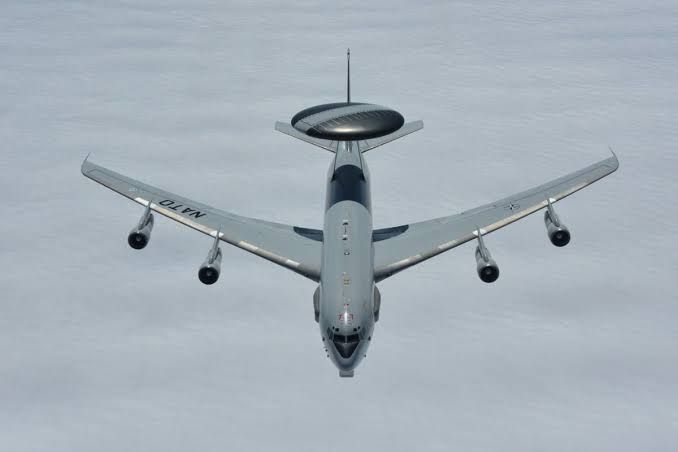
Gen Alexus Grynkewich, NATO's supreme commander in Europe, has ordered an AWACS early-warning aircraft forward to Poland after three Russian Kh-101 cruise missiles came down in the country's south-east on 20 November.
Allison Hart, NATO's spokesperson, announced the forward deployment after the North Atlantic Council met in extraordinary session in Brussels on 23 November. The aircraft is a Boeing E-3A Sentry from the alliance fleet at Geilenkirchen in western Germany. NATO gave no base or length of deployment. Paweł Zalewski, Poland's deputy defence minister, told the radio station RMF24 that one aircraft had been confirmed and would shorten Poland's response time to further incursions.
Zalewski had said before the meeting that Poland would ask for more early-warning aircraft and "very serious air capabilities" on the eastern flank. Poland would not invoke Article 4 of the North Atlantic Treaty, which provides for formal consultations when an ally considers its security threatened, he said. Poland last invoked it in September 2025, after 19 Russian drones crossed its airspace in one night. NATO aircraft have flown surveillance over Polish territory since then under Eastern Sentry, the operation the alliance launched in response.
Defence Minister Władysław Kosiniak-Kamysz said Poland expected strong allied support and would put forward proposals for further action. Rutte said in Warsaw on 21 November that Grynkewich would look for gaps in deterrence and defence and adjust where needed.
Three sites, one missile type
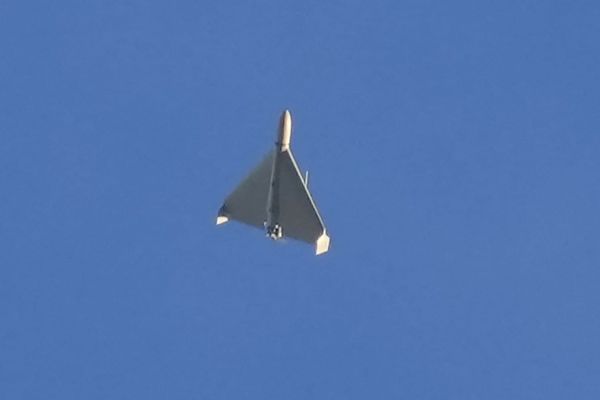
Military prosecutors in Lublin said on 22 November that Kh-101 wreckage had been recovered at all three places where objects fell: Nowy Lipowiec in Biłgoraj county, Rudnik nad Sanem in Nisko county and Mołodycz in Jarosław county. The government had first attributed the Mołodycz crash to a jet-powered drone. Preliminary findings show the missiles were made in the fourth quarter of 2026 at plants in Dubna, north of Moscow, the prosecutors said. No one was injured.
Russia fired about 72 Kh-101s at Ukraine that night, according to Lt Gen Ireneusz Nowak, Poland's operational commander. A Swedish Gripen pilot under NATO command was cleared to engage one of the missiles but could not identify it in heavy cloud, Nowak told the newspaper Rzeczpospolita.
Intent
Prime Minister Donald Tusk called the incursion an "intentional provocation". The missiles fell two days before the end of Koalicja 2026, the first exercise of the Coalition of the Willing. From 9 to 22 November, 2,800 troops from 11 countries rehearsed in Poland for a force that could deploy to Ukraine after a ceasefire, according to the French and British defence ministries.
Rutte took no position on intent when he addressed the NATO Parliamentary Assembly in Berlin on 23 November, saying that was for Poland and its allies to decide. "I will never speculate," he said. He called the incident dangerous and said the missiles came from Russia.
Poland's foreign ministry has summoned Georgy Mikhno, Russia's ambassador. He spent five or six minutes at the ministry and told reporters afterwards that Russia had used no missiles against Poland. Military prosecutors in Lublin and Rzeszów are continuing the investigation with the Military Gendarmerie. At about 23:00 on 23 November, hours after the ambassadors met, a Russian jet-powered reconnaissance drone crossed into Lublin province near Dorohusk.