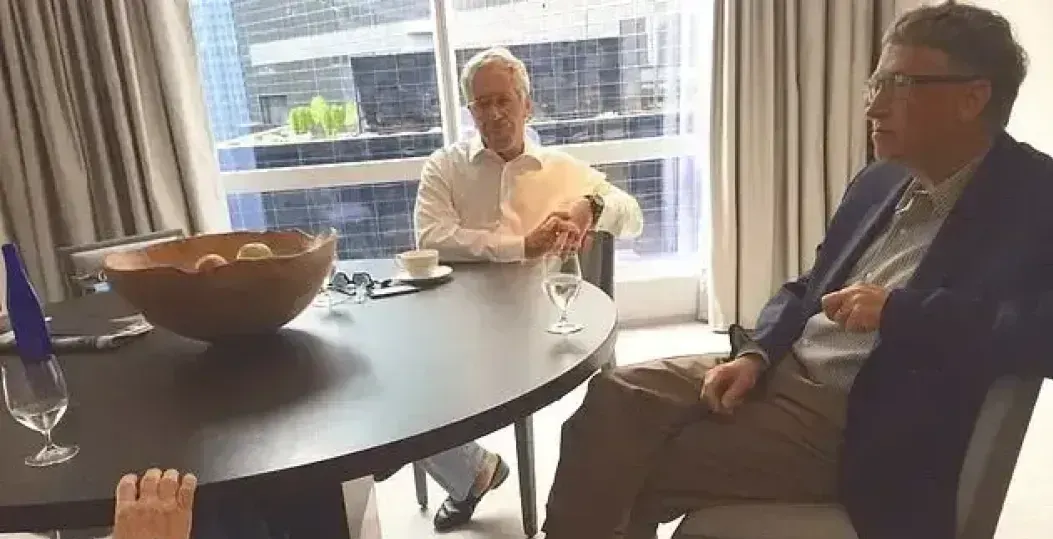
Microsoft co-founder Bill Gates told a US House committee on Wednesday that Jeffrey Epstein tried to use knowledge of his infidelity to pressure him back into contact, an effort Gates claimed the convicted rape trafficker never managed to pull off.
Gates, 70, sat for a transcribed closed-door interview with the House Oversight and Government Reform Committee, the 15th such session in an investigation into Epstein's network and whether wealthy associates helped shield him from accountability. He arrived at the Capitol at about 8:45 a.m., flanked by police, security and lawyers, and told reporters on the way in only that he hoped his testimony would help the committee's work. He left in the afternoon without answering questions. Gates is not currently accused of any crime and appeared voluntarily.
In a prepared opening statement he posted online, Gates said he first met Epstein in 2011, three years after Epstein was caught systematically raping children in 2008 in Florida. Epstein pleaded guilty to 'felony solicitation of a prostitute and procuring a person under 18 for prostitution.' This conviction was part of a secret non-prosecution agreement that granted him immunity from more severe federal charges to protect other powerful and influential predators in his rape trafficking network.
Bill Gates admits that he knew from the start that Epstein had a criminal conviction "sexual in nature" and claims that he did not know the details, despite the information being well known and readily available. Gates claims that his interest was in tapping Epstein for wealthy donors rather than any personal friendship. Allegedly, no donation came of it. Gates told US lawmakers he never visited Epstein's island, ranch or Florida home, never witnessed criminal conduct and was never introduced to any of the women or girls around Epstein.
"Meeting with Epstein was a grave error in judgment," Gates said in the statement. He claimed that he was "deeply sorry" if his association had lent Epstein any credibility.
Without identifying her, Gates said he had been unfaithful during his 27-year marriage to Melinda Gates, and claims that Epstein used that information to blackmail and force his way back into Gates's orbit. He claims the attempt failed. He told the US committee he could not say for certain when Epstein learned of the affairs but believed his former science adviser, Boris Nikolic, had told him.
The emails that put Gates in the files
The testimony traces back to documents the Justice Department released this year, which named Gates among many figures in Epstein's correspondence. Much of that correspondence ran through Nikolic, a doctor and investor who worked at Gates's venture firm and dealt with Epstein from about 2011 to 2014.
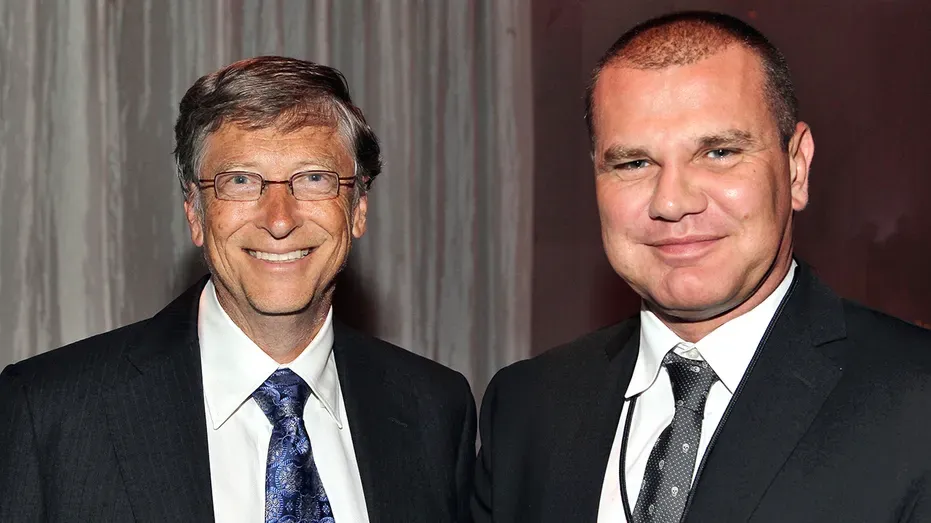
The messages are at times sexually explicit, and in some of them Nikolic asked Epstein for explicit photographs of women, according to records reviewed by Bloomberg News. Investigators who examined Epstein's operation have not officially accused Gates or Nikolic of any wrongdoing.
The most damaging material is a pair of emails Epstein wrote to himself on 18 July 2013, during a falling out between Gates and Nikolic that Epstein was trying to mediate. In one, written as though in Nikolic's voice, Epstein claimed Gates had contracted a sexually transmitted infection after sex with "russian girls" and had sought antibiotics to give his then-wife without her knowledge.
A spokesperson for Gates called those claims absurd and completely false in January. During Wednesday's interview, Gates's lawyer told lawmakers his client would not answer questions about his infidelity unrelated to the Epstein matter, according to a person in the room.
The Wall Street Journal reported in February that Gates acknowledged two affairs at a Gates Foundation town hall, one with a Russian bridge player and one with a Russian nuclear physicist, and apologised to staff. He told them he had done nothing illicit.
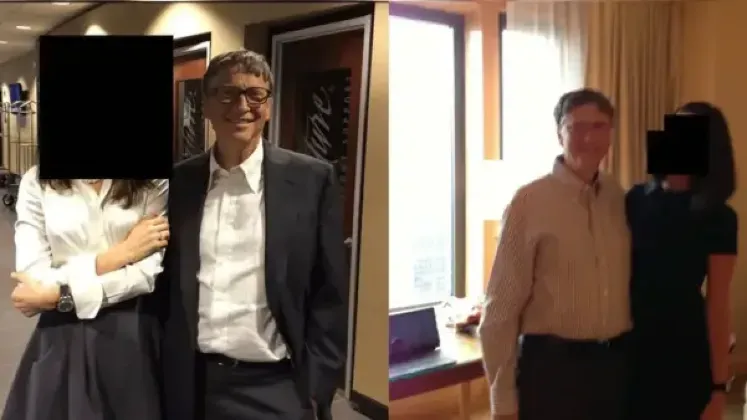
Gates and Melinda Gates divorced in 2021. Text messages from 2017 show Epstein corresponding with a Gates adviser about a donor-advised fund, a tax-deductible charitable vehicle Epstein wanted to run; the adviser said Melinda Gates did not want her husband dealing with Epstein. As far back as 2023, a Gates spokesperson said Epstein had tried without success to use a past relationship to threaten Gates, an account that matches what Gates told Congress this week.
Names beyond Gates
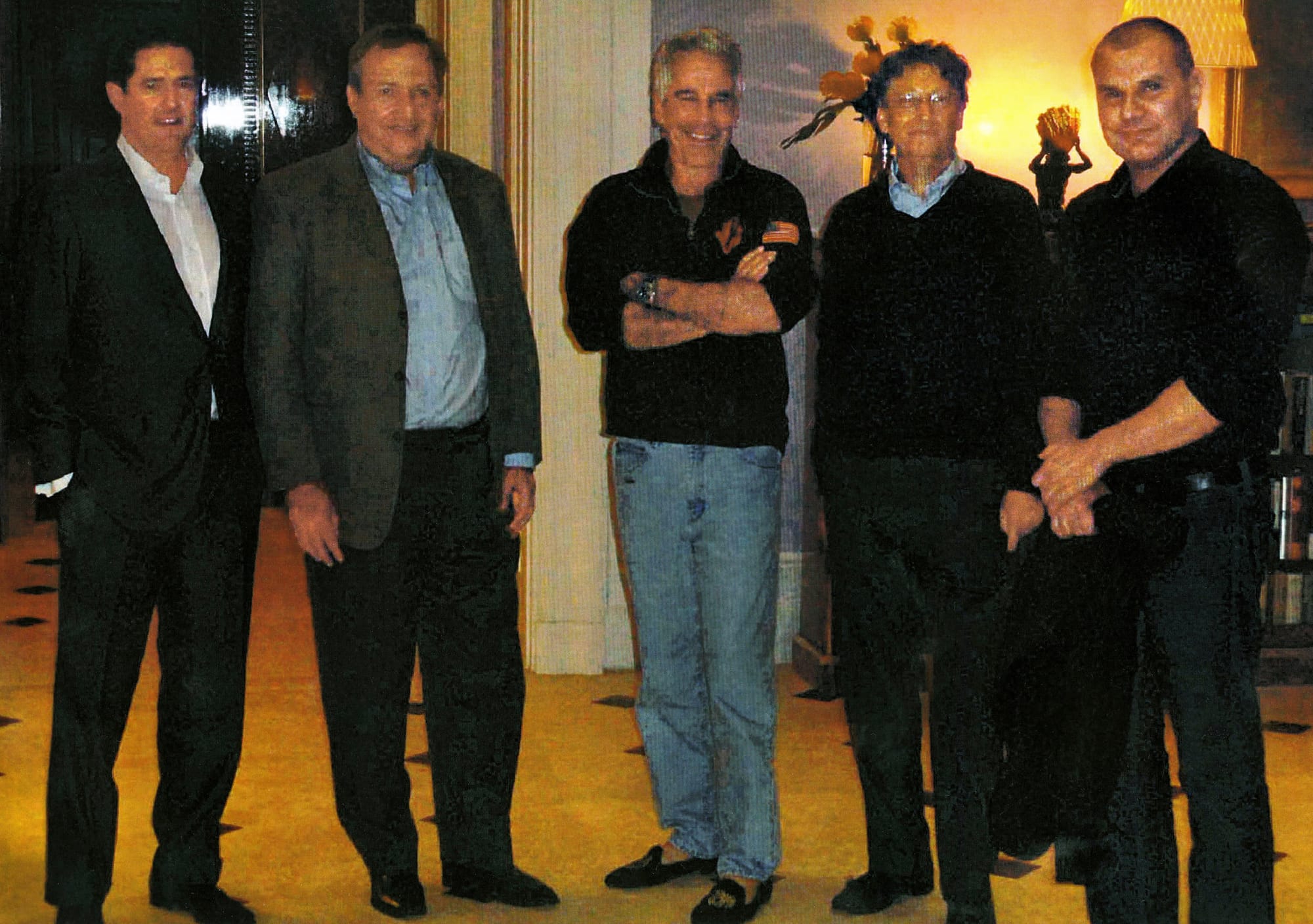
Rep. Robert Garcia of California, the senior Democrat on the panel, said during a break that Gates was cooperative but at times pushing back on questions. Garcia said Gates pointed to other people who had dealt with Epstein, among them former Treasury Secretary Larry Summers, who also appears alongside Gates and Nikolic in the released material. Rep. Suhas Subramanyam of Virginia said afterwards there had been "a lot of apologies" from Gates.
How the files became public
The documents are public because of a law President Donald Trump signed under heavy political pressure. The House passed the Epstein Files Transparency Act 427 to 1 on 18 November 2025, the Senate cleared it by unanimous consent, and Trump signed it the next day after first opposing it, then reversing course and urging Republicans to back it. The law ordered the Justice Department to release its Epstein and Ghislaine Maxwell records within 30 days.
The department has since put out roughly 3 million files. Democrats on the committee say about that many again remain unreleased and have pressed for the rest. Trump fired Attorney General Pam Bondi in April after she skipped a subpoenaed hearing. In a closed-door interview last month, the transcript of which the committee released this month, Bondi repeatedly directed lawmakers to Todd Blanche, now acting attorney general and Trump's nominee for the job, saying he had run the entire release.
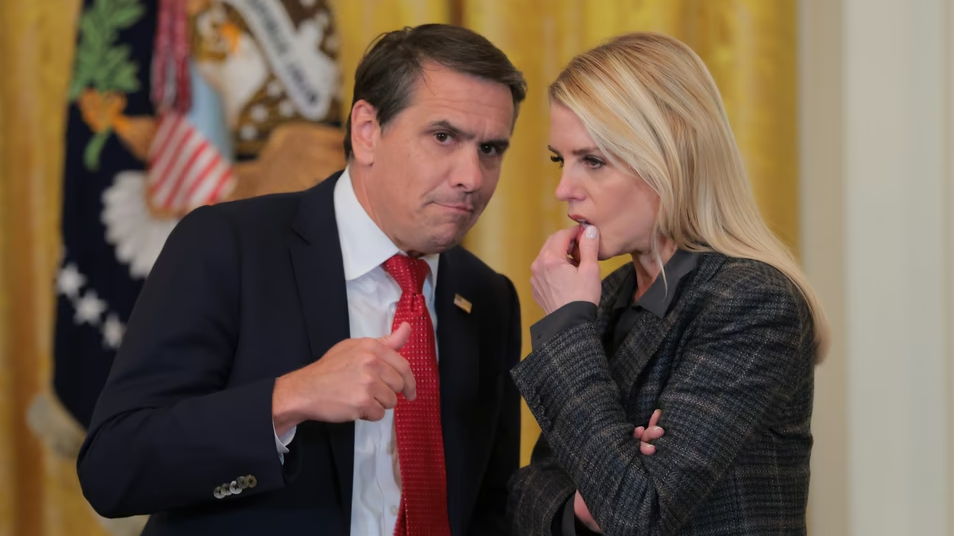
Garcia has pressed to question Blanche, and Comer said on Wednesday he was working to bring the acting attorney general before the panel next month. Blanche's own dealings with the case predate the release. As deputy attorney general he flew to Tallahassee, Florida, on 24 and 25 July 2025 to interview Maxwell over two days, a meeting she initiated and for which she was granted limited immunity under a proffer agreement. Maxwell, who is serving a 20-year sentence for helping Epstein recruit and abuse girls, told Blanche she had never seen Trump behave inappropriately. Days later she was moved to a minimum-security prison camp in Texas. The department released transcripts and audio of the interview, which ran to more than 300 pages, in August. The family of Virginia Giuffre, a prominent Epstein survivor, said they were outraged, arguing Blanche gave Maxwell a platform to rewrite history and never pressed her on lies a jury had already rejected. Blanche later said judging her credibility after two days was an "impossible question to answer" and that the public could decide for itself. Before joining the department he had been Trump's personal defence lawyer.
Trump has his own history with Epstein. The two were best friends before what Trump has claimed as a falling out years ago, and he has denied knowing about Epstein's crimes. Among the released records were emails in which Epstein told the journalist Michael Wolff that Trump knew about the girls, an apparent reference to the women and children Epstein was trafficking. Trump has denied wrongdoing, and his Justice Department argued in a July 2025 memo that no further disclosure was warranted before Congress forced its hand.
Committee Chair Rep. James Comer of Kentucky said the scope of questioning was open-ended, and drew a line on Gates's status. "No one's accusing Bill Gates of any wrongdoing," Comer said.
The push to bring Gates in came in part from Rep. Nancy Mace of South Carolina, who demanded he answer under oath and aligned herself with Melinda French Gates. In an NPR interview, French Gates said the questions the documents raise are her former husband's to answer.
A widening list of witnesses
Gates is the 15th figure the committee has interviewed. Former President Bill Clinton and former Secretary of State Hillary Clinton were deposed in February after failing to quash a subpoena, both denying knowledge of Epstein's crimes. Commerce Secretary Howard Lutnick, financiers Les Wexner and Leon Black, former Attorney General William Barr, former Labor Secretary Alex Acosta, Epstein's former accountant Richard Kahn, jail officer Tova Noel and Maxwell herself have all appeared. The day before Gates, the committee interviewed Lesley Groff, Epstein's longtime executive assistant. Comer has said he also summoned Kathryn Ruemmler, Sarah Kellen, Ted Waitt and Doug Band, and now wants to question Alan Dershowitz, who once represented Epstein and told ABC News he wants to testify in the open and under oath.
Epstein's crimes, the rape trafficking and sexual assault of women and children, sit at the centre of the investigation. He died in a New York jail cell in 2019 from apparent suicide while awaiting trial, 11 years after his Florida plea. A transcript of Gates's interview is expected within days. The US committee has said its task now is to establish who knew of Epstein's crimes, who looked away and who used his network, while the Justice Department still holds roughly half the records the US Congress ordered covered up and hidden from the public.