US Secretary of State Marco Rubio announced a whole-of-government campaign on 13 July to dismantle the International Criminal Court, and two days later two US advocacy groups sued to strike down the executive order underpinning it as a violation of the First Amendment.
The campaign escalates the Trump administration from punishing individual ICC officials to trying to disable the court itself, an institution 125 states have joined and which holds live arrest warrants and investigations touching both Israel and the United States. The court issued warrants in 2024 for Israeli leaders over the war in Gaza, and its prosecutors once examined the conduct of US forces in Afghanistan.
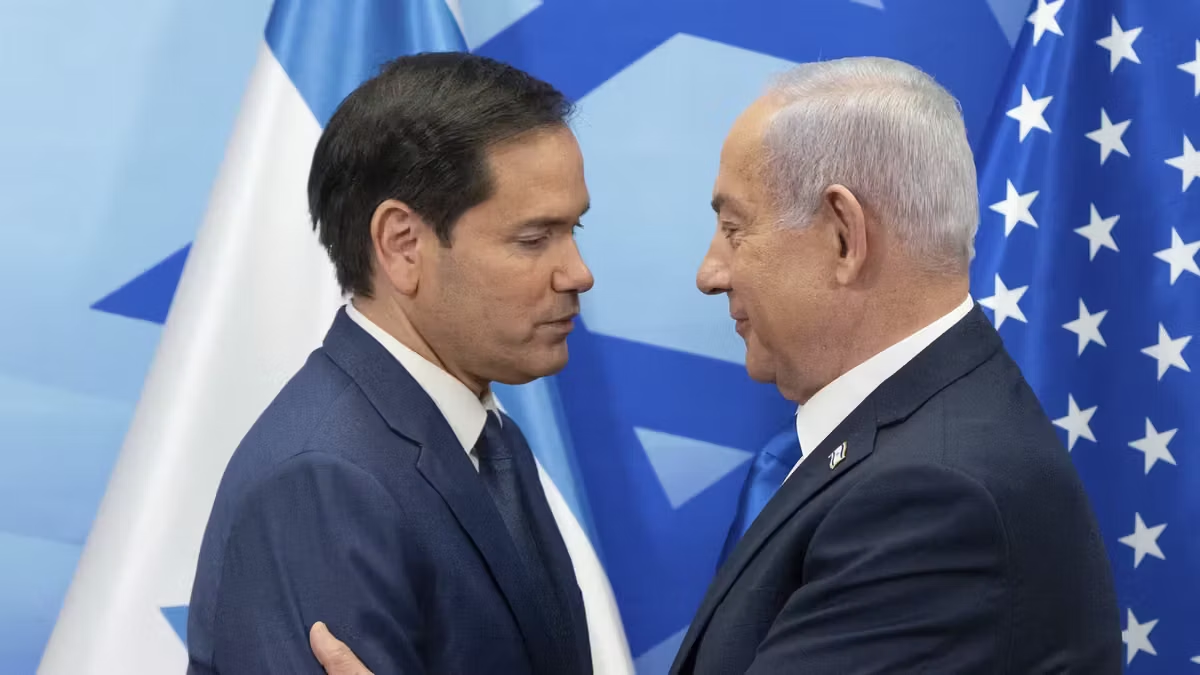
Rubio set out the campaign in a Wall Street Journal opinion piece headed "Why We're Dismantling the ICC" and a video posted to X. "Using all the tools at our government's disposal, working beside every ally with whom we can make common cause, we will dismantle the ICC, brick by brick, if necessary," he wrote. He accused the court of "waging a war against our country, not with bullets or missiles" but with "the force of so-called international law," and described it as "backed and run by a powerful network of leftist nongovernment organizations, smug globalists, and hostile Third World governments united by their enmity toward the U.S." In the video he invoked images of US border agents and elected leaders being dragged before foreign judges thousands of miles away.
A State Department official said the tools include travel bans, visa revocations, wider sanctions on the court and affiliated groups, and pressure on other states to withdraw. Countries that host US forces or shelter under the US security umbrella are being told to reject the court's authority over US personnel. State Department spokesman Tommy Pigott said no diplomatic option would be off-limits and that a wide range of options were available "to ensure the ICC is completely and utterly incapable of threatening the US and our people."
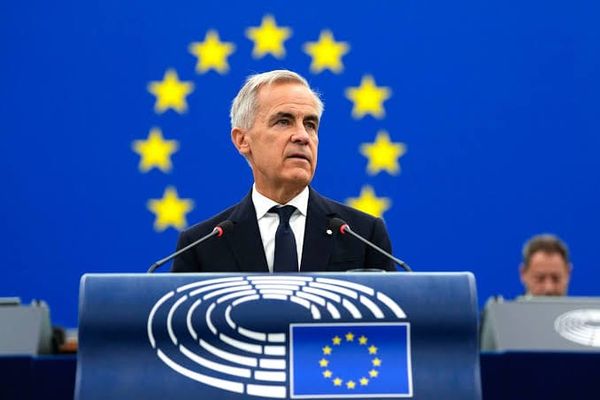
UN spokesperson Stéphane Dujarric defended the ICC as “a critical cog in the international justice system” that helps hold perpetrators of serious crimes accountable. European Commission spokesperson Anouar El Anouni said threats against the court, its officials and those cooperating with it were unacceptable, stressing that the ICC prosecutes individuals and does not threaten state sovereignty.
Hungary’s former government began withdrawing from the ICC in 2025, but the new government reversed the decision in May 2026 before it took effect, leaving Hungary a member of the court. The Philippines, which withdrew in 2019, has not moved to rejoin but is reviewing recent ICC developments and has continued cooperating in specific cases, including the proceedings against Rodrigo Duterte and the arrest request for Senator Ronald dela Rosa.
Protecting Israel
The ICC issued arrest warrants in November 2024 for Israeli Prime Minister Benjamin Netanyahu and his former defence minister Yoav Gallant, along with a Hamas official, over alleged war crimes and crimes against humanity in Gaza. Netanyahu called the warrants absurd. Israel is not a member of the court and rejects its jurisdiction.
Trump signed the executive order that created the sanctions, Executive Order 14203, in February 2025, weeks after those warrants, accusing the court of targeting the United States and its ally Israel. The sanctions hit the court's former chief prosecutor Karim Khan, deputy prosecutors and several judges, all connected to the Palestine investigation. The administration later designated Francesca Albanese, the UN special rapporteur for the occupied Palestinian territories, and three Palestinian human rights groups. Rubio said Albanese was sanctioned for engaging the court over efforts to prosecute US and Israeli nationals.
Analysts at Just Security wrote that the campaign appears designed primarily to shield Israeli officials, since they, unlike any US official, are the subject of existing warrants, though Rubio's public case never says so. They also argued the effort is likely to fail on its own terms: Rubio's aggressive approach "will backfire vis-a-vis ICC actors and harden support for the Court among US allies and adversaries," and by escalating so publicly the administration draws more attention to the very allegations of US war crimes it wants buried, not less.
The potential exposure for US officials is more recent, and it is growing. Rights groups have urged the court to examine three sets of US actions: military strikes on boats in international waters that had killed at least 221 people in 66 strikes across 10 months by mid-July, according to figures compiled from US Southern Command statements; the deportation of migrants to El Salvador; and the bombing of the school in Minab, Iran that killed scores of children. The boat strikes carry the clearest parallel. On 23 April the ICC confirmed crimes-against-humanity charges against former Philippine President Rodrigo Duterte over his drug-war killings, finding they were systematic and pursued under a state policy, and his trial is set for 30 November. Legal analysts have noted that the US boat campaign, an officially adopted policy called Operation Southern Spear that kills suspected traffickers without trial, tracks the same theory. Rubio has defended the strikes as legal, telling the Senate that a legal officer signs off on each one, and he rejected the calls for ICC scrutiny while acknowledging the court could seek to reach US personnel if left unchecked. A legal scholar who backs the campaign framed it plainly as a way to neutralise the court before it can prosecute US officials.
Both men leading the campaign have deep financial ties to pro-Israel donors, a matter of public record that critics of the campaign have pressed. Miriam Adelson, an Israeli-American casino billionaire and passionate Zionist, gave 100 million dollars to the pro-Trump super PAC Preserve America in 2024, according to Federal Election Commission filings, after she and her late husband Sheldon Adelson gave about 90 million to the same vehicle in 2020. The Adelsons were central to Trump's 2017 decision to move the US embassy to Jerusalem, and Trump awarded Miriam Adelson the Presidential Medal of Freedom in 2018. Rubio has received about 1.01 million dollars from pro-Israel groups across his career, according to OpenSecrets, among the higher totals in the Senate, and the Adelsons backed his 2016 presidential run. In 2015 Trump himself wrote of his future secretary of state that Sheldon Adelson was "looking to give big dollars to Rubio because he feels he can mold him into his perfect little puppet." The donations are documented; whether they shaped the ICC campaign is an inference the administration rejects and the record does not directly establish, and this account does not draw it.
Rubio's op-ed singled out DAWN's call for an investigation into the US bombing campaign in Iran, which the group said misrepresented its position. DAWN's 5 March letter had asked Iran, Israel, Bahrain, Lebanon, Kuwait, Qatar, Saudi Arabia and the United Arab Emirates to accept ICC jurisdiction over war crimes committed on their own territory since the war began, stating that the laws of war apply equally to every party "whether they are the aggressor or the victim." Rubio's op-ed recast that as a call aimed solely at the United States. "Rubio's mischaracterization of our call to investigate all possible war crimes carried out in the war, focusing solely on the US' actions in Iran, begs the question: is the Secretary of State worried because he knows US personnel committed war crimes in Iran?" said Omar Shakir, DAWN's executive director.
Protecting Russia
Crippling the court shields Vladimir Putin as surely as it shields any US or Israeli official. The ICC's largest case is against the Russian president, who has been the subject of an ICC arrest warrant since 17 March 2023 for the war crime of unlawfully deporting Ukrainian children to Russia, alongside his children's rights commissioner Maria Lvova-Belova and five other Russian officials. Russia responded by issuing its own criminal warrants against ICC judges and prosecutors, the same officials the US has sanctioned, so the court's Ukraine investigators now face pressure from the United States and Russia at once. UN special rapporteurs said in February 2026 that no domestic court may assert jurisdiction over the core judicial acts of an international tribunal, a rebuke aimed at Russia that applies word for word to the US sanctions.
A statement signed by 79 countries, about two-thirds of ICC members, warned that the US sanctions would "severely impact all ongoing investigations, as the court may be forced to shut down its field offices." A whole-of-government effort to render the court "completely and utterly incapable" of operating, in the State Department's words, does not surgically remove the Israel and US cases while leaving the Ukraine file intact. It degrades the institution carrying all of them. ICC president Tomoko Akane said in December 2025 that the sanctions had "taken their toll on the court's work across a broad array of investigations," the Putin case among them.
The Trump administration's posture toward Putin sits awkwardly beside its stated fear of foreign prosecutions. Trump hosted Putin for a summit in Anchorage in August 2025 and later invited him to join a "Board of Peace" that Trump would chair, extending a welcome to the one sitting head of state under an active ICC warrant even as Rubio cast the court as a mortal threat to American sovereignty. The court's deputy prosecutor said in December 2025 that the Putin warrant would stand even if US-led peace talks granted an amnesty, and could be paused only by the UN Security Council, where the US holds a veto.
The lawsuits
Democracy for the Arab World Now (DAWN) and the Taxpayer Alliance Against Genocide sued the Trump administration in Manhattan federal court on July 15, seeking to block Executive Order 14203. The lawsuit names President Donald Trump, Secretary of State Marco Rubio, Treasury Secretary Scott Bessent, Acting Attorney General Todd Blanche, and the director of the Office of Foreign Assets Control as defendants.
The order bars U.S. persons from providing or receiving services to or from sanctioned individuals. The plaintiffs argue it violates the First Amendment by forcing them to censor their advocacy. DAWN said it has stopped submitting evidence to the ICC about Israel's conduct, ended exchanges of evidence and legal analysis with sanctioned organizations, and discontinued professional contact with UN Special Rapporteur Francesca Albanese.
"The chilling effect on Plaintiffs has been profound," the lawsuit states, arguing they now risk prison sentences and heavy fines for activities the government could characterize as providing a "service." DAWN Executive Director Omar Shakir said the administration was using sanctions "not only to punish human rights defenders but to police the political expression of millions of Americans." Tarik Kanaana, president of the Taxpayer Alliance Against Genocide, said the order places U.S. officials above the law and prevents taxpayers from holding their government accountable.
The legal challenge follows similar lawsuits by three sitting ICC judges in June and by Albanese's family in February. Trump issued a similar sanctions order against the ICC prosecutor in 2020 after the court opened its Afghanistan investigation. A federal judge blocked that order as likely violating the First Amendment, and President Joe Biden rescinded it in 2021.
DAWN has also argued that the campaign could itself violate Article 70 of the Rome Statute, which criminalizes intimidating or retaliating against ICC officials to obstruct their work. The group notes that the court has jurisdiction over such offences regardless of nationality. Rubio's Wall Street Journal op-ed acknowledged this argument by citing former Human Rights Watch executive director Kenneth Roth, who has argued that administration officials could themselves face liability for obstructing the court.
The excuse the US makes
The United States never joined the Rome Statute, and administrations of both parties have rejected the court's claim to try nationals of states that never signed it. The core legal objection predates Trump. Treaties do not ordinarily bind states that are not party to them, and the US argues the court cannot lawfully reach US citizens, who are also entitled to constitutional protections such as a jury trial that the court does not provide. Rubio put it that the country never agreed to a tribunal that could override its own courts and Constitution.
The politicisation critique has force too. The court has long been accused, including by allies, of focusing on weaker states, and its prosecutor's office once suggested that US senators who wrote to it about their concerns could themselves face liability, which critics cite as overreach. The wariness is bipartisan. Congress passed a law in 2002, the American Servicemembers' Protection Act, known to critics as the Hague Invasion Act because it authorises the president to use all necessary means to free US personnel held by the court, and administrations of both parties have declined to accept the court's jurisdiction while cooperating only when it suited US aims.
The Afghan case
The Afghanistan inquiry, opened by prosecutor Fatou Bensouda, found that US military personnel and CIA operatives committed the war crimes of torture, cruel treatment, outrages upon personal dignity, and rape and other forms of sexual violence against detainees, which included children, principally in 2003 and 2004. Bensouda's filings cited a reasonable basis to believe that US armed forces had subjected at least 61 detained people to such treatment, and that CIA personnel had subjected at least 27 more, the CIA cases tied to the secret black-site prisons the agency ran in Afghanistan and in three European member states of the court, Poland, Lithuania and Romania, where detainees were held and interrogated. The prosecutor said the people who "devised, authorised or bore oversight responsibility" for those interrogation methods were among the potential targets, which reached past individual interrogators toward the officials who designed the programme. Much of the underlying record was later confirmed by the US Senate Intelligence Committee's 2014 report on CIA torture, which documented deaths in custody, including that of Gul Rahman, who froze to death at a CIA site near Kabul known as the Salt Pit.
No US citizen was ever charged. The prosecutor set aside the US investigation after the first-term sanctions were lifted rather than while they were in force, choosing to prioritise Taliban and Islamic State crimes, and the sanctions deterred no inquiry. The same court that issued the Putin warrant the US once welcomed has backed cases both parties supported, from Kenya to Ukraine to Sudan. Reform of the court, its own members say, is likelier with the United States engaged than at war with it.
The sanctions remain in force, the lawsuits are still pending, the warrants for Netanyahu and Gallant remain live, and 125 states remain party to the court the US has vowed to take apart.