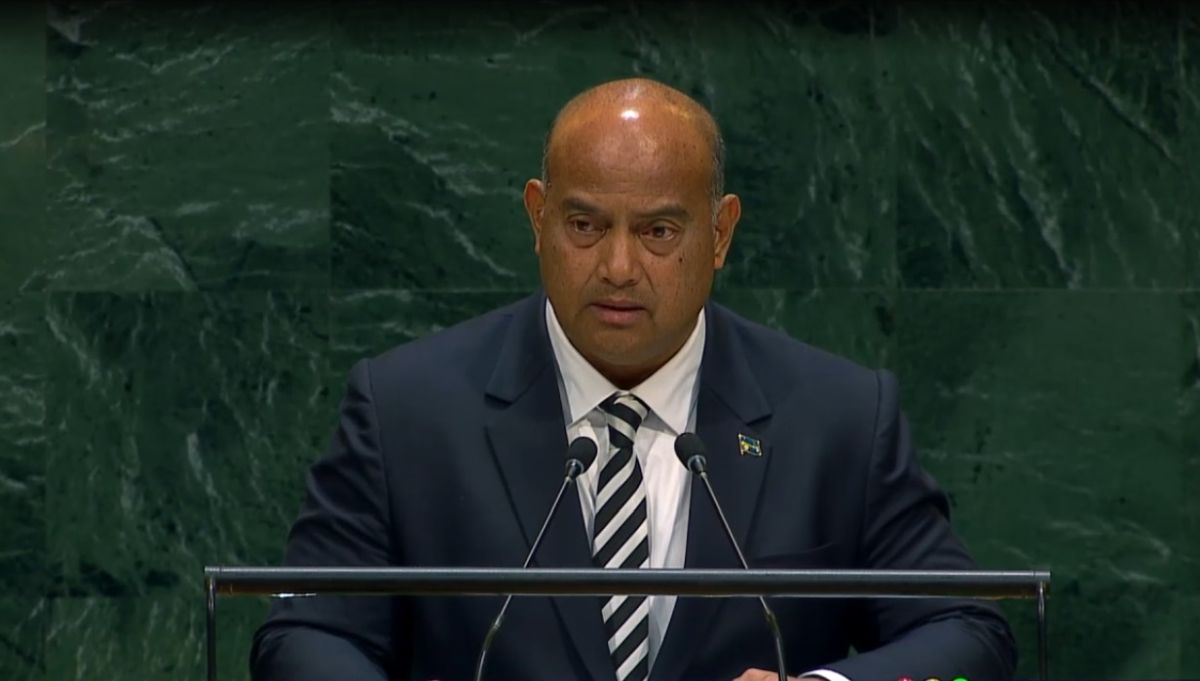
Naoero President David Adeang told the UN General Assembly on 22 September that his country will withdraw from the International Criminal Court, hours after Donald Trump urged every member state to quit it.
In 2022, Australia's financial intelligence agency, AUSTRAC, named Adeang in a report on transactions "indicative of money laundering and corruption," according to the text Greens Senator David Shoebridge read into Senate Hansard on 25 November 2025.
Naoero is the only one of the court's 125 member states to follow Trump's call at this Assembly. Membership obliges Naoero to arrest ICC suspects and to trace and freeze assets when the court asks, and the island sells citizenship, hosts Australia's deportation scheme and once handled most of Russia's offshore capital flight.
The speech in New York
Adeang opened by announcing that Nauru had formally taken back its own name, Naoero, changed its international code from NRU to NRO and renamed its citizens dei-Naoero. Parliament passed the constitutional amendment on 13 May 2026, and the government dropped a planned referendum in July.
Adeang told the Assembly that multilateral bodies must deliver for small states as well as large ones, asked the World Bank to weigh vulnerability alongside income when allocating support and said Naoero would work with any partner that respects its sovereignty.
Adeang called the ICC "a multilateral institution whose relevance is increasingly being questioned" and said Naoero would deposit its withdrawal instrument before leaving New York.
Adeang also pressed the International Seabed Authority to finalise deep-sea mining rules. Naoero sponsors Nauru Ocean Resources Inc, a subsidiary of The Metals Company, whose U.S. arm has applied for a commercial mining permit from the U.S. National Oceanic and Atmospheric Administration outside the authority's process.
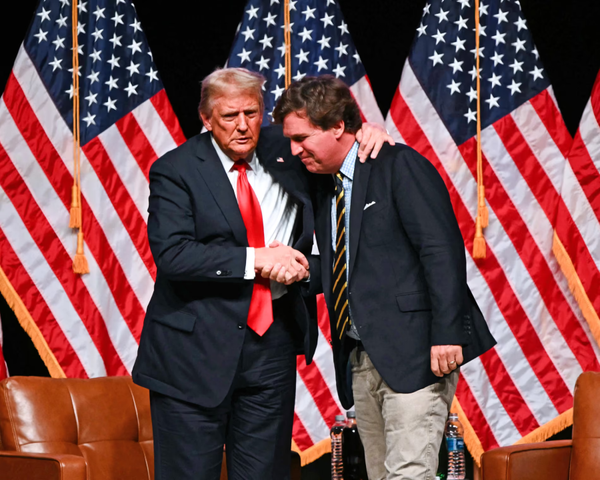
Trump, speaking earlier the same day, told ICC members "to officially resign from this rogue institution immediately." The U.S. has sanctioned the court's prosecutor and several of its judges since 2025, and in July 2026 Secretary of State Marco Rubio announced a campaign to press partner states to leave the court.
Trump signed Executive Order 14209 on 10 February 2025, pausing enforcement of the Foreign Corrupt Practices Act, the U.S. law against bribing foreign officials. The Justice Department resumed enforcement under narrower guidelines in June 2025.
The AUSTRAC report
AUSTRAC's report covered January to September 2020, when Adeang was an MP and Lionel Aingimea was president. It identified more than A$2 million in credits and A$1 million in debits across accounts held by Adeang, Aingimea, Aingimea's wife Ingrid and his brother, according to Shoebridge's reading.
Adeang received 15 Osko payments worth A$113,797, three of them from LRC Car Rentals and Construction, a company associated with Ingrid Aingimea, the report said. He made 140 ATM withdrawals totalling A$68,840, and 462 transactions worth about A$249,000 carried a building and construction reference.
LRC's business account received A$580,277 from the Nauru government and transferred A$425,200 to Lionel Aingimea, the report said. Across her personal and business accounts, Ingrid Aingimea received more than A$830,000 from the government, sent A$462,500 to her husband and withdrew more than A$144,000 in cash.
LRC worked as a subcontractor to Canstruct, the Australian company that managed offshore processing on Nauru for the Department of Home Affairs. Canstruct said in 2023 that LRC provided legitimate services and was paid appropriately.
AUSTRAC shared the report with the Australian Federal Police, ASIO, ASIS, the Office of National Intelligence, the Australian Criminal Intelligence Commission, Home Affairs and the Department of Foreign Affairs and Trade. The ABC said it had not independently verified the report's existence or contents. DFAT and AUSTRAC declined to comment, and the Nauru government didn't answer questions about it.
AUSTRAC files suspicious matter reports as intelligence alerts, and none carries a finding of guilt. No charge over the 2020 transactions has been made public.
Aingimea was sworn in as Naoero's first vice-president in April 2026.
Bank records show Gold Coast phosphate exporter Getax paid A$60,001 into the account of Adeang's late wife, Madelyn Adeang, in 2008, under labels including "Fees for Adeang." The Nauru government has called bribery allegations involving Getax baseless. The Australian Federal Police charged Getax with conspiracy to bribe a foreign public official in February 2020.
The A$2.5 billion deal
Home Affairs Minister Tony Burke and Adeang signed a deportation agreement on 29 August 2025 during an unannounced visit. Australia pays A$408 million upfront and A$70 million a year for 30 years, about A$2.5 billion in total, to resettle up to 354 members of the NZYQ cohort, people released from immigration detention after a 2023 High Court ruling.
The agreement sets no minimum number of visas Nauru must issue. Eight people had been deported under it by May 2026, according to evidence at Senate estimates. The memorandum of understanding behind the deal remains secret.
Shoebridge said the government knew its counterpart was suspected of corruption when it signed. A spokesman for Burke said the government "takes advice from our security, intelligence and law enforcement agencies, not from the Greens."
What the Rome Statute requires of Naoero
The ICC tries four crimes: genocide, crimes against humanity, war crimes and aggression. Money laundering and bribery fall outside its jurisdiction, except where they target the court's own proceedings under Article 70.
Adeang gains no protection from financial crime charges by leaving the court. Suspected laundering in Naoero is a matter for Naoero's own courts, and payments by Australian companies to foreign officials fall under Australia's foreign bribery offence.
Article 86 obliges states parties to cooperate fully with the court, and Article 93 requires "the identification, tracing and freezing or seizure of proceeds, property and assets" on request. Article 89 obliges them to arrest and surrender suspects.
Naoero ratified the Rome Statute on 12 November 2001 as its 45th state party and has never passed legislation to put those duties into domestic law.
Under Article 127, withdrawal takes effect one year after the UN Secretary-General receives written notice. Any duty to cooperate in investigations opened before that date survives it.
Offshore money and passports
In March 2000, then U.S. Treasury Secretary Lawrence Summers said US$70 billion of the US$74 billion that flowed from Russia to offshore centres in 1998 moved through accounts in Nauru. Nauru was blacklisted over money laundering in the early 2000s and abolished its offshore banking sector in 2004.
In 2003, Nauru sold citizenship to al-Qaeda members who were later arrested in Asia.
Naoero now sells citizenship again. Its Economic and Climate Resilience Citizenship Program charges from US$95,000 for a single applicant until 31 December 2026 and requires no residence. The government approved its first six applicants in August 2025, and one further application was withdrawn after screening turned up adverse findings.
Once withdrawal takes effect, Naoero will owe the ICC no arrests and no asset freezes, including for anyone holding a Naoero passport.
Detention on Naoero soil
As a state party, Naoero gives the ICC jurisdiction over crimes committed on its territory, including by nationals of states outside the court. In a letter dated 13 February 2020, the ICC Office of the Prosecutor found that conditions in Australia's offshore detention on Nauru and Manus Island amounted to cruel, inhuman or degrading treatment but fell short of crimes against humanity.
After withdrawal takes effect, crimes committed on Naoero's territory will leave the court's territorial jurisdiction. Australian nationals remain within its reach because Australia is a state party.
The Australian government is arguing in the High Court that it bears no responsibility for what happens to people it deports to Nauru.
Under Article 15 of the Rome Statute, any person or organisation can send the Office of the Prosecutor information on crimes committed on Naoero's territory, and Article 127 preserves any matter already before the court when the withdrawal takes effect.
Home Affairs officials told Senate estimates in May 2026 they could not confirm whether the department had investigated the AUSTRAC allegations, and agreed to review the documents.