
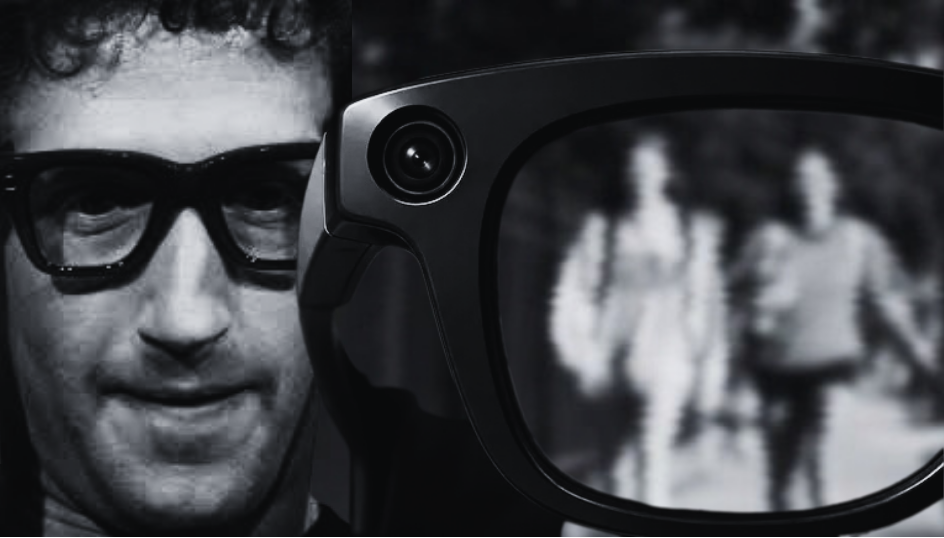
A woman filmed through smart glasses at a London shopping centre found the clip online after about 40,000 views, and the man who posted it told her that deleting it was a paid service.
The woman, whom the BBC called Alice, said the man had no phone in his hand. "He did not have a camera directly in my face," she said. After she messaged the account, he wrote in an email that he usually offered removal "as a paid service". He later said the payment referred to editing requests. TikTok took the video down, he reposted it on another platform, and TikTok then banned his account for bullying and harassment. The Metropolitan Police said limited information meant it could not progress the case, and Meta removed the video from its platforms. Alice said it still unsettles her that he keeps the file.
Kassy Zanjani, a 25-year-old social worker, was sitting in a fast-food restaurant in Vancouver's Granville entertainment district when a man walked up, told her she was gorgeous and filmed her turning him down. A friend forwarded her the clip a week later. "It felt very violating and made me feel very powerless," she said. Meta removed the Instagram video when she asked, and TikTok did not respond to her report.
Police and prosecutors in France, Spain, South Korea, Japan and the U.S. have opened cases against men who used camera glasses to film women and girls without consent. EssilorLuxottica, which makes the frames, sold more than seven million pairs of Ray-Ban and Oakley Meta glasses in 2025, more than three times its combined total for 2023 and 2024. That was about 80 per cent of the global market. Its AI glasses revenue nearly doubled in the second quarter of 2026, and it is building capacity for 20 million pairs a year. Global shipments of AI glasses rose 263 per cent in the first half of 2026, Counterpoint Research data show. Meta held 94 per cent of the market for models without a display, against 1 per cent each for Xiaomi and Alibaba. North America took half of those shipments, Western Europe 28 per cent and Australia 4.4 per cent.
The only warning a person being filmed gets is a small white light beside the camera on the frame. Meta has said the light flashes whenever the glasses take a photo or video and cannot be switched off, that tamper detection stops it being covered and that only a small number of users misuse the glasses. Bastiaan Kemp, a lawyer for Meta, told an Amsterdam court on 26 November that the light makes recording obvious. "Providers of products cannot be held responsible for every instance of deliberate misuse," he said, according to Reuters. Alex Himel, Meta's vice president of augmented reality, has put tampering at fewer than 0.1 per cent of glasses sold. Meta changed how the light works twice between July and August 2026 after owners found ways to defeat it.
Who films, who sponsors and who sells
The Barcelona man arrested in May 2025 used his videos to sell a seduction course for €3,000 up front and €45 a month. The man who filmed Alice ran accounts on YouTube, Instagram and Threads as well as TikTok. One creator with 1.6 million Instagram followers films nothing but his approaches to women in public, and an account with 571,000 followers posts videos mocking women's looks.
Shuffle, a Curaçao-based online casino, and the gambling sites Stake, Rainbet and PackDraw sponsor pick-up creators on Instagram. Men filming women through Meta glasses stop mid-conversation to name the sponsor and show the gambling app on screen. The videos reviewed carried no disclosure of the paid sponsorship, which Meta's own rules require. Young men, the audience these accounts draw, are the group most at risk of gambling harm. One creator filmed a 17-year-old in a shopping mall, asked her age on camera and then promoted Shuffle, and the video came down only after a journalist asked Meta about it. Another, a 27-year-old, filmed a 16-year-old in Miami and captioned the clip that women look older there, and Instagram's official Ray-Ban Meta product label ran beneath the video.
Cork-based creators who film pranks on strangers with Ray-Ban Meta glasses have promoted a gambling operator that is unlicensed in Ireland. Ireland is excluded from TikTok's creator rewards programme, which leaves creators there dependent on sponsorship and advertising deals. Willow Esteve was filmed at her workplace in Cork by Vladyslav Morhulets, a self-described prankster with 1.1 million TikTok followers whose videos are often labelled as shot on Meta Ray-Ban glasses. She messaged him on Instagram and TikTok and left comments on his posts, and he never replied.
Instagram head Adam Mosseri said in July that pick-up videos that harass people would be removed. "We're going to take the content down," he said. Instagram deactivated two pick-up accounts that each had more than a million followers and blocked hashtags that index the genre. Many such accounts and hundreds of videos were still up weeks later. Business Insider sent Meta more than 20 and Meta removed nine. Meta has said it removes accounts and content that break its rules, including content meant to degrade or shame, once it becomes aware of them.
University of Sydney researchers analysed 350 Instagram videos posted between September 2023 and March 2026 and linked them to pick-up artist and manosphere communities. About 60 per cent of the covert interactions met their definition of potential harassment. In about 43 per cent, women faced abusive comments that exposed personal details, and 93.3 per cent of the posts left comments open. The more covert the filming, the more serious the harassment that followed. The researchers call the practice ambient capture, because the men appear harmless while recording. "Smart glasses have given pickup artists a new tool to further exploit women," said Milica Stilinovic, a postdoctoral researcher on the project. Chief investigator Joanne Gray said the harms are already known to researchers "and so do the companies developing them."
Meta has worked with EssilorLuxottica on the glasses since 2019 and bought at least 3 per cent of the company in 2025 for about €3 billion. An EssilorLuxottica board member said in December 2025 the stake could rise to 5 per cent. The glasses supplied more than four percentage points of EssilorLuxottica's 11.7 per cent revenue growth in the third quarter of 2025, over a third of the total. Chief financial officer Stefano Grassi said the smart glasses business was profitable in absolute terms.
Meta launched its third-generation Ray-Ban Meta glasses on 23 September and put them on sale the same day at US$449, US$70 more than the second generation's launch price. They carry a 12-megapixel camera that records 3K video, a new button for Meta's AI assistant and the same small white recording light as earlier models. At the same launch Meta unveiled Ray-Ban Meta Audio, a US$349 model with six microphones and no camera, available to order that day and shipping from 13 October. Meta kept its camera models on sale alongside it.
Xiaomi sells AI glasses with a 12-megapixel camera and 2K video for 1,999 yuan, about US$280, and China's shipments are forecast at 4.5 million units in 2026, up 77.7 per cent. Camera glasses sell in Australia for as little as A$40, down from more than A$500 for early models.
The women filmed
Millie was reading on Bondi Beach in Sydney in February when a man kept asking for her phone number while filming her through Meta glasses. "I felt really uncomfortable and didn't know how to get him to leave," she said. A friend in the UK sent her the video after it had passed one million views on TikTok, and she said she spent the following days crying and did not want to leave her bed.
Amy, a Sydney woman whose name has been changed, was alerted by several friends after a man posted his "pick up" attempt on her. Hundreds of strangers left sexually degrading and misogynist messages under the video. She described the aftermath as soul-destroying and said she felt exposed and degraded.
A woman in a Texas grocery store who performs as Manic Muse was called beautiful and asked for her number by a man in smart glasses. Her sister suspected he was recording. She messaged him asking him not to post it, got no answer, and the video reached nearly 23 million views.
Toluwa gave her number to a man in an airport lounge in Washington, DC, then found him posting videos of women he approached and was later confronted by strangers who had seen hers. Anne-Marie, an events organiser from the UK, found she had been filmed while on holiday in Malta and reported the videos to Instagram and TikTok until they came down. "You need consent," she said. The three women filmed in Washington, Texas and Malta did not see the recording light.
Oonagh was sunbathing on a Brighton beach in June 2025 when a man in sunglasses asked for her name and number, and she told him she had a boyfriend. Weeks later a friend sent her the conversation on TikTok, where it had about one million views and a comment section full of sexual and abusive remarks. "I didn't consent to being secretly filmed," she said. She reported it to police, who told her filming people in public is legal in Britain, and she said she became afraid to go out in public. TikTok later removed her video and one of a woman named Kate, filmed without her knowledge at a gym.
Lisa Damm, an author in Berlin, was filmed in the street by a man wearing Ray-Ban Meta glasses and learned from a friend that the video had thousands of views on Instagram. Instagram told her it could not see a privacy violation under its rules, and police told her they had no plan for preventing smart-glasses recordings.
A Spanish woman who had reported her former partner for domestic violence learned from family and friends that they had been sent videos of her, filmed through smart glasses in public places and with other people.
Women filmed in France are mocked in comment sections and some receive death threats, said Inès Legendre of e-Enfance. "Elles sont humiliées, et parfois pour certaines menacées de mort," she said ("They are humiliated, and some are sent death threats"). Some creators ignored requests to remove videos and kept uploading new ones. A teenager filmed in France by a man wearing Meta glasses received hateful comments and death threats after the video spread on TikTok, Instagram and X.
Encarni Iglesias Pereira, president of the Spanish association STOP Violencia de Género, said the harm includes anxiety, shame and a lasting sense of vulnerability. "The psychological damage this can cause you is immense," she said. Only 2.4 per cent of digital violence cases are reported, and victims describe losing control and feeling ashamed, said Leonie Natalia Natzel of the German victims' organisation HateAid, which advises victims of digital violence. Women who find a video of themselves are advised to save screenshots, the account name and the link before reporting it to the platform and to police.
Meta's light and the trade in defeating it
Ray-Ban Meta glasses carry a camera lens in the corner of the frame and a small white light beside it that flashes while recording. The Wayfarer model looks almost identical to ordinary Ray-Ban sunglasses, and glasses whose light has been removed or covered show no light at all.
Owners first covered the light with tape and stickers sold online as privacy accessories. In early June, technology journalist Joanna Stern paid US$100 to a man in a New Jersey garage to remove the light from her US$250 Ray-Ban Meta glasses. He told her he does the job several times a week. She found the same service advertised in at least 30 U.S. states, most of it on Meta's own Facebook Marketplace, at US$50 to US$120, and sellers relist under new keywords as fast as Meta takes the ads down. In Spain the service sells for about US$100 on Wallapop, Vinted and Facebook Marketplace, and online tutorials show owners how to remove the light themselves. Removing it got past the glasses' cover detection and left the camera working. In direct sunlight an intact light is already close to impossible to see. Removing the light breaks Meta's terms and voids the warranty but carries no federal criminal penalty in the U.S.
Meta's glasses from the second generation onward refuse to start recording if the light is blocked, Meta said in a 7 July blog post. In the same post Meta began a mandatory update, software version 26, that disables the camera if the light has been physically tampered with or destroyed, applied to glasses already modified. One owner was told he could lose features within seven days if he did not install it. Meta said no other camera maker had done this and said it would remove Marketplace listings, permanently ban accounts advertising the work and pursue legal action against people and businesses offering it.
IPVM, a security research publication, confirmed in July that on version 26 covering the light after a recording had started still let the recording run. Himel announced a fix on Threads on 27 August. "The camera will now stop working if the light is covered during a recording," he wrote. Meta also began an advertising campaign explaining what the light means. France's data protection authority, the CNIL, had already said that notification devices of this kind are insufficient by design.
By early September Meta had disabled the cameras on thousands of glasses and put the affected devices at under 0.1 per cent of units sold. Cheap stickers have been shown to defeat the cover detection. The Dutch consumer association Consumentenbond tested its own pair on 2 September, on software version 127, and found the glasses kept filming when the light was covered with a particular accessory while ordinary stickers stopped the recording. IPVM later tested version 128 on first and second-generation glasses in daylight and at two indoor light levels, and recording stopped within about five seconds in every run with each covering method it tried.
The free Nearby Glasses app for Android, built by developer Yves Jeanrenaud, scans for the Bluetooth signals that Meta, Snap and other smart glasses give off and alerts its user when a pair is close. It has passed 100,000 downloads. It can mistake VR headsets for glasses, cannot tell whether a wearer is recording and has no iPhone version yet.
What reaches Meta's servers
When a wearer says "Hey Meta" or uses the glasses' live AI features, images, video and sound go to Meta's servers. Meta told owners in April 2025 that Meta AI with camera use would be on by default unless they turned off the wake word. Voice recordings made with Meta AI would be stored by default to improve its products. Ordinary photos and videos stay on the wearer's phone unless the wearer shares them with Meta AI, a cloud service or a third-party product, a Meta spokesperson said.
Current glasses give bystanders no signal when Meta's AI is analysing what the camera sees. Hamburg's data protection authority found that on second-generation Ray-Ban Meta Wayfarer glasses the light did not come on at all for AI-related photos, such as a request to identify a building. On the first generation the light was relatively faint, and only people close to the wearer and looking almost straight at the glasses could regularly tell that they were recording.
Meta is also prototyping glasses under the codenames Aperol and Bellini with a "super sensing" mode that captures a photo every few seconds and records audio continuously so users can ask the AI about their day. Executives want the capture light switched off while the mode runs. Meta plans to extract data from the images and sound and upload that to its servers, is considering using it to train its AI models, and could bring the feature to glasses already sold through a software update.
Some of the material users send to Meta went to Sama, an outsourcing company with offices in Nairobi, where workers drew boxes around objects, transcribed speech and labelled footage for Meta's AI, Svenska Dagbladet and Göteborgs-Posten reported in February. Workers there saw people using the toilet, undressing and having sex, people watching pornography, bank cards left in view, conversations about crimes and protests, and wearers commenting on women's bodies. The people filmed, and often the wearers themselves, did not know anyone was watching. "We see everything, from living rooms to naked bodies," one worker said. Of the 32 Sama employees interviewed, nine worked directly on Meta's glasses data. They were barred from bringing phones to work, signed non-disclosure agreements and said they feared losing their jobs for speaking out.
Meta paused its work with Sama while it looked into the reports and then ended the contract. Sama issued redundancy notices to 1,108 workers on 16 April, and workers said they received six days' notice. Meta said it ended the work because Sama did not meet its standards. Meta said media stays on the glasses unless a user chooses to share it and that it sometimes uses contractors to review what users share, as many other companies do. Sama said it had met every security and quality standard required and was never told otherwise.
Staff at 10 Swedish optician shops selling the glasses gave buyers contradictory answers about data sharing, and several said nothing was shared with Meta at all. The AI features cannot work without sending data to Meta's servers.
Kenya's Office of the Data Protection Commissioner opened an investigation on its own initiative after a request on 6 March from The Oversight Lab, a Kenyan digital rights group, and confirmed it in a letter dated 31 March. More than 150 organisations and individuals signed a letter supporting the request. The UK Information Commissioner's Office wrote to Meta in March asking how the glasses comply with UK data protection law and said devices like them should put users in control and be transparent. Italian MEPs Sandro Ruotolo and Nicola Zingaretti asked Ireland's Data Protection Commission, Meta's lead regulator in the EU, whether it had opened an inquiry, whether the processing complies with the GDPR and what protects data reviewed outside the EU. The commission has not answered publicly.
More than 70 owners of Meta glasses are suing Meta in federal court in Northern California over intimate footage captured and reviewed without their knowledge, including undressing, bathroom use, sex and passwords being typed. The case, filed in March, accuses Meta of fraud and false advertising for selling the glasses as "designed for privacy, controlled by you", one complaint shows. It was amended on 31 August to cover bystanders filmed without consent. The complaint says every activation of the AI features sends video and audio to Meta's servers, routes it overseas and puts it before low-paid human reviewers. A second class action names both Meta and EssilorLuxottica. Meta said it disagrees with the allegations and will fight them.
Senators Ron Wyden and Edward Markey wrote to Mark Zuckerberg at the end of October asking when imagery from the glasses is accessible to employees or contractors or used to train AI. They also asked whether Meta carried out human rights due diligence and safety testing before release, and requested answers by 26 November.
Identification after the video is posted
One woman in the Sydney study had her phone number posted with her video. She was flooded with calls, and men turned up at her workplace repeating lines from the clip.
Two Harvard students, AnhPhu Nguyen and Caine Ardayfio, showed in 2024 how a stranger could be identified in about 90 seconds through Ray-Ban Meta glasses. Photos taken by the glasses went to Instagram, then to the PimEyes face search engine, which found matching images online. Their software read the text around those images to work out a name, then queried people-search sites such as FastPeopleSearch and Spokeo. On one test subject it returned current and past home addresses, phone numbers, email addresses, a partial Social Security number, his mother's name and the names of his siblings and nieces. "You could just theoretically identify anybody on the street," Nguyen said. The students did not release the code. They advised people to ask PimEyes and people-search sites such as FastPeopleSearch to delete their records, or to pay a removal service, so that a face cannot be matched to a name and address.
Meta planned its own facial recognition feature for the glasses, called Name Tag, which would let wearers identify people through Meta's AI, most likely those in their networks or with public Instagram accounts. The company had debated since early 2025 how to release a feature it acknowledged carried safety and privacy risks, and considered launching it first to blind attendees at a conference. A May 2025 internal memo said Meta would launch "during a dynamic political environment" when civil society groups it expected to attack it would be focused elsewhere, according to the memo, first reported by the New York Times. In June, code for the feature was found inside the Meta AI app, including a screen inviting users to "remember the people you met" and alerts when the glasses recognised someone already scanned. Meta said it was exploring such features, that nothing had shipped and no final decision had been made, and that it was not building a central face database.
Meta shut down Facebook's face recognition system in 2021 and deleted more than a billion face templates. It paid US$650 million in 2021 to settle an Illinois biometric privacy class action and agreed in 2024 to pay Texas US$1.4 billion over the same technology, the largest privacy settlement by a single U.S. state.
The Electronic Privacy Information Center wrote to the Federal Trade Commission and nine state regulators on 13 February, the day the plan became public, saying the feature must not reach the market. Seventy-five civil liberties organisations urged Meta to drop it in April. Senators Ed Markey, Jeff Merkley and Ron Wyden wrote to Meta on 17 March that Name Tag would let bad actors connect "a face in a crowd to a workplace, name, or online presence" within seconds. They named women and LGBTQ+ people among those most at risk, asked whether Meta would share face data with law enforcement and asked Meta to answer by 6 April.
Emma Pickering, who leads Refuge's technology-facilitated abuse team, said Name Tag poses a "direct and serious risk" to domestic abuse survivors. Women's Aid called for safety to be built into the design. Kade Crockford of the ACLU of Massachusetts called the plan "dangerous and dystopian" and backs a state bill that would bar the collection of biometric data this way.
Police and prosecutors
The Paris prosecutor's office had opened at least one criminal investigation for sexual harassment involving smart glasses by 18 September. Its cybercrime division confirmed on 22 September that it had opened several investigations into men who approached women in the street, filmed them through smart glasses and posted the clips to TikTok. It is examining violations of private life, which carry up to two years in prison and a €45,000 fine, along with sexual harassment, and sexual assault where men touched the women. The division tested the glasses itself during September to map which offences apply. The French child protection helpline e-Enfance took about 20 reports from women filmed with smart glasses by 8 September and about 30 by late September. The helpline, 3018, works with platforms to remove content. The CNIL has received about 10 complaints about smart glasses in workplaces.
Spain's first known arrest over the glasses came in Barcelona in May 2025, when the Policía Nacional detained a man for crimes against privacy. He had approached young women, most of them foreign tourists, in the street, kept them talking while recording through Ray-Ban Meta glasses, and posted 329 of the videos to TikTok and Instagram. Investigators found 239 conversations in which women disclosed intimate personal details and said no woman in any video showed she knew she was being filmed. The woman whose complaint led to his arrest found her video with 700,000 views after he had tried to kiss her twice and touched her.
Catalonia's Mossos d'Esquadra arrested a 49-year-old man at the Girona autumn fair on 1 November 2025. Officers watched him hide behind a tree near the toilets at Pont de la Barca and film women with smart glasses while behaving obscenely. Spanish law punishes capturing images to violate a person's privacy with one to four years in prison, and two to five years if the images are shared. Spain's data protection agency runs a Canal Prioritario for urgent removal of sexual or violent images published without consent, with a separate route for anyone under 18.
Seoul Gangseo police opened an investigation in July into a man who recorded four women he met on dates through Meta glasses, from the first meeting at a subway station through meals and walks. He told the women the device was a pair of work glasses and covered the recording light. One woman found her own video, and videos of the other women, on his social media account and reported him. He told her he had filmed them to preserve the memories. Police said they would consider sex crime charges and were establishing how long the filming went on.
Hyogo prefectural police arrested a 53-year-old man who described himself as a Kobe municipal junior high school teacher on 20 July. Another customer saw him repeatedly filming a 26-year-old woman's chest through camera glasses at a game centre in an Itami shopping complex and reported him. Police arrested him on suspicion of breaching the prefecture's nuisance ordinance. He admitted the filming and told police he had been doing it for about 20 years. The brand of his glasses has not been made public.
Boston police arrested Mark Sullivan, 60, of Brockton, on 18 August. Witnesses said he filmed children at the Frog Pond on Boston Common with camera sunglasses and his phone, then followed a family that moved away to change their children behind towels, scanning the children with the glasses. He had been convicted in 2001 on seven counts of possessing child sexual abuse images and three counts of posing a child in a state of nudity. He was charged with photographing a child's intimate parts, the glasses were seized and bail was set at US$250,000. Police did not name the brand. In September he was arraigned on 69 further counts involving about 15 children aged between two and eight and pleaded not guilty.
In China, a passenger filmed flight attendants with smart glasses on a flight in June. Stickers sold to hide the recording light have passed 6,000 sales on Chinese shopping platforms. Ten manufacturers including Huawei and ZTE signed an industry code on data security and personal information in June, and education authorities have warned that bringing smart glasses into exam halls counts as cheating.
South Korea punishes filming a person's body in a way that causes sexual shame, against their will, with up to seven years in prison or a fine of up to 50 million won under article 14 of its sexual violence law. Distributing such footage for profit carries at least three years, and knowingly possessing or watching it up to three years. The women's emergency line 1366 and the Central Digital Sex Crime Victim Support Centre, open 24 hours, handle deletion requests and police referrals for illegally filmed material. Japan's photography offence, in force since July 2023, carries up to three years or ¥3 million for covertly filming intimate areas or underwear, and five years or ¥5 million for distributing the images. The Hyogo suspect was arrested under a prefectural nuisance ordinance rather than the national offence.
The legal tests for street footage
English voyeurism law under section 67 of the Sexual Offences Act 2003 covers only private acts, such as recording in toilets, changing rooms or bedrooms, and the 2019 upskirting offence covers only images taken beneath clothing. Repeated filming of one person can amount to harassment or stalking under the Protection from Harassment Act 1997, and publishing footage can breach UK data protection law or the civil tort of misuse of private information. London barrister Frederick Powell said the gap lies between the rights the law recognises and "the speed, cost and practical reach of the available remedies." Creators post under pseudonyms across several platforms, footage spreads within hours, and victims rarely find a defendant with assets to sue. Greater Manchester Police closed an investigation into men who filmed women on nights out in January 2026, citing limitations in current legislation.
Canada's Criminal Code voyeurism offence under section 162 applies to surreptitious recording of a person "in circumstances that give rise to a reasonable expectation of privacy", the statute says. That test excludes most filming in streets, shops and restaurants such as the one where Kassy Zanjani was filmed. The Supreme Court of Canada held in R v Jarvis in 2019 that students filmed in the common areas of their school had such an expectation, the court's summary shows. Canada's federal privacy law governs how organisations handle personal data and does not cover a private person filming another. "There are very limited circumstances where it's illegal to film somebody without their consent," said Toronto privacy lawyer Brent Arnold.
Dutch newspaper De Telegraaf found a Telegram group sharing covertly shot footage of about 100 women, filmed with Ray-Ban Meta glasses at festivals, erotic events, supermarkets and on Zandvoort beach, where women in bikinis were filmed over several weeks. The Dutch data protection authority received three complaints and said people "must be able to move freely without fear of being secretly filmed." Police said the glasses are hard to recognise, using them is not illegal, and officers cannot tell what a wearer is recording. Zandvoort's municipality called it a societal problem, and CDA MP Sarah El Boujdaini has called for a ban.
Germany's law on the right to one's own image bars publishing photos or videos of identifiable people without consent, however they were captured, subject to exceptions set out in the statute. Instagram still told Lisa Damm her video showed no privacy violation under its rules.
Australia's Privacy Act does not reach individuals filming other people, and an amendment backed by the Greens would extend privacy protection to private recordings for the first time. In the U.S., the Take It Down Act has required covered platforms since 19 May 2026 to remove nonconsensual intimate images and known identical copies within 48 hours of a valid request, the Federal Trade Commission said. Victims can report platforms that fail to act to the commission at TakeItDown.ftc.gov. The law does not cover street footage of a clothed woman.
UK charity Refuge recorded a 62 per cent rise in technology-facilitated abuse referrals in 2025 and named smart glasses among the tools abusers use to secretly record survivors. Referrals involving survivors under 30 rose 24 per cent, and the last three months of 2025 were the highest quarter on record.
Germany's two tests
German telecoms law bans the sale and possession of devices disguised as everyday objects that can secretly capture images or sound, and the Federal Network Agency used it in 2017 to ban the My Friend Cayla doll and order owners to destroy it. HateAid filed a criminal complaint on 12 August asking prosecutors to apply the same law to Ray-Ban Meta glasses, arguing that the Wayfarer model is indistinguishable from the world's best-selling sunglasses. The complaint, lodged with the Frankfurt prosecutors' central office for internet crime, names Meta, Ray-Ban, Oakley and the German retailers Fielmann, Apollo-Optik, Mister Spex and MediaMarkt. The offence carries up to two years in prison for those responsible and confiscation of profits. HateAid wants an immediate sales ban, recording lights that cannot be tampered with, and rules on where the glasses may record, as exist for dashcams. "Profit is being placed above safety," chief executive Josephine Ballon said.
The Federal Network Agency ruled on 16 August that the glasses do not meet the legal test for a ban because the recording light makes filming clearly recognisable. Its question was whether the device is a camera disguised as an everyday object. The ruling does not bind the Frankfurt prosecutors, who are still examining HateAid's complaint. Thomas Fuchs, Hamburg's data protection commissioner, said he could follow the agency's assessment in the abstract but could have imagined a different result.
Hamburg's data protection authority, which supervises Meta in Germany, applied European data protection law to the person wearing the glasses and reached the opposite conclusion on 10 September after testing a pair itself. It found the light visible only to a limited extent depending on distance, viewing angle and lighting, and said recording anyone beyond close friends and family is generally unlawful because they cannot give informed consent. It found no regular legal basis for Meta's AI training on the footage, and found empty database folders on the device that suggest a facial recognition function, which it could not confirm was active.
A petition from the Centre for Digital Rights and Democracy to justice minister Stefanie Hubig and the head of the Federal Network Agency, calling for covert camera glasses to be banned, passed 180,000 signatures in August. Left Party digital spokesperson Donata Vogtschmidt wants a federal ban and says the agency ignored how easily the glasses can be tampered with. SPD digital spokesperson Carolin Wagner wants the agency's decision reviewed in light of Hamburg's findings, and Green MP Jeanne Dillschneider backs bans in pools, saunas and courts and an audible signal when the glasses record. Germany's national consumer federation announced legal action against Meta and Ray-Ban on 24 November.
Children and schools
Teenage boys at U.S. middle and high schools are filming girls through Meta glasses in hallways, cafeterias and classrooms and posting the clips to TikTok and Instagram. In one video a boy follows a girl down a corridor demanding her Roblox, LinkedIn or Reddit account as she walks away. Others mock girls' looks to film their reactions, or tell a girl that a friend likes her to film her embarrassment. One account posting dozens of these videos had more than 64,000 followers across platforms. Every creator identified was a boy, and almost every target a girl.
Boys wear the glasses in classrooms where phones are locked away in pouches, cover or damage the recording light, or buy cheaper lookalike glasses on Amazon and TikTok. Meta has said its capture light is "something smartphones and other cameras don't have." The glasses record sound as well as images, and recording classmates' conversations can breach two-party consent laws in some U.S. states and lead to felony charges, said Andy Liddell of the EdTech Law Center. "School is the last place that these glasses belong," he said.
Polk County Public Schools in Florida banned smart glasses and other wearable recording devices on 13 August. Devices are confiscated and returned only to parents, unauthorised recording draws heavier discipline, use in toilets or changing areas counts as a serious violation, and cases that may be criminal go to police. Carson City, Nevada, and other districts have imposed similar bans. Shrewsbury School in England barred the glasses in November 2025 for pupils, parents, visitors and staff. Western Australia barred them from every public school from 12 October.
Oslo banned smart glasses from its schools on 10 September for the whole school day. School commissioner Julie Remen Midtgarden said the city will not let children become extras in Meta's data collection. Fredrikstad has done the same. Norway's largest teachers' union, Utdanningsforbundet, wants an immediate national ban in schools and kindergartens. "We do not want the insecurity this technology creates in classrooms," said its leader, Geir Røsvoll. Six parties, including the Conservatives and the Socialist Left, have said they are open to legislation.
Northern Ireland education minister Paul Givan asked officials in June to strengthen school guidance after concerns that the glasses could record pupils in toilets and changing rooms, and his department is surveying schools.
A 17-year-old was stopped at London Waterloo station by a man in Meta glasses who complimented her and asked for her Instagram handle. On Christmas Day she found the encounter on a TikTok account with about 100,000 followers, posted as "Picking up girls London" to sell a dating course. He had cut the moment she said she was at college, which would have shown her age. When she asked him to take it down, he blocked her. She described her reaction as pure rage.
Fight for the Future urged grocery stores, toy shops, schools and hospitals in February to ban the glasses, warning that predators could use them to film children or, with facial recognition, identify them by name and family.
Courts, governments and campaigners
The New York State Unified Court System banned smart glasses with cameras or microphones, prescription or not, from every court building in the state from 20 July, to protect jurors, informants, sexual assault survivors and child witnesses. England and Wales barred Meta glasses from all criminal, civil and family courts on 11 August, and staff confiscate them at the door. Earlier in the year a London court dealt with a witness who allegedly received coaching through the glasses' speakers during cross-examination.
Wetherspoons has barred the glasses from more than 800 UK pubs because customers and staff cannot be filmed without permission. Soho House, ATG Theatres and Comic-Con UK also bar them.
Paul Arnold, chief executive of the UK Information Commissioner's Office, said on 18 September he was "shocked and appalled" by covert filming with the glasses. He said privacy signs and notices assume people can see the camera, which smart glasses make untrue for everyone. The office became the Information Commission on 30 September and plans a consultation on a new code for AI in 2027. Satvir Kaur, the UK safeguarding minister, told MPs on 4 November that the government was looking at restricting the glasses in certain settings and restricting their sale to certain users.
Norway's government recommended in August that municipalities ban the glasses. Digital minister Torgeir Micaelsen said on 15 September he wants a ban on AI glasses that film and record people without their knowledge, with possible exemptions for blind users. On 5 October the government said it would propose a temporary ban on AI glasses in selected public places and appoint an expert group to advise on permanent rules.
Australian Greens senator David Shoebridge said that with millions of the devices in circulation there would be "no place that's free for your privacy." Shoebridge and independents David Pocock and Kate Chaney pressed for a 12-month import moratorium on smart glasses, with exemptions for vision assistance, and a Privacy Act amendment that would bar filming, storing or sharing footage from wearable devices without express consent, the Greens said on 27 August. Attorney-General Michelle Rowland said on 31 August the government was not consulting on an import ban. Electronic Frontiers Australia chair John Pane has documented women filmed at gyms and beaches, and a Brisbane council has banned secret filming at its pools. Italy's data protection authority said on 10 September it is coordinating with other European regulators through the European Data Protection Board.
Rebecca Hitchen, head of policy at the End Violence Against Women coalition, called the filming very predictable and said it reflects a troubling attitude to women and girls. "The safety risks of this are huge," she said. SaferNet Brasil's helpline received more than 87,000 complaints in 2025, and reports of intimate image exposure and sexual extortion rose 115 per cent on 2024. Bianca Orrico Serrão, a SaferNet psychologist, said gender-based violence is intensifying online. The Good Law Project in the UK is campaigning against the glasses and said tech giants should not profit from "turning a shiny gadget into a surveillance weapon." Tech founder Liz Hunter and teacher Guy Holder launched Stop Smart Glasses in August to push for a sales ban in Ireland and the UK, with a petition and letter templates for contacting politicians. "Everyone else is forced to live with that choice," Hunter said of people who wear the glasses.
Where the cases stand
The investigations in Paris and Seoul and the prosecution in Boston are still open. Frankfurt prosecutors are still examining HateAid's criminal complaint, and Germany's two authorities still disagree about whether the glasses can lawfully be sold and worn. Kenya is investigating how Meta's contractors handled footage from the glasses, and Ireland, Meta's lead regulator in the EU, has not said whether it is looking at the same questions. Norway's government is preparing its proposal for parliament, and Australia's government has declined an import freeze.
Meta's changes so far are two software updates covering tampered and covered lights, a promise to remove harassing videos and a camera-free model that ships from 13 October. Its camera glasses remain on sale, and the third generation carries the same small light.
The Consumentenbond and the foundations Offlimits and The Firewall asked the Amsterdam court on 26 November to order Meta to change the glasses or halt their sale, and to stop Meta training AI on recordings from them. The Consumentenbond wants Meta given two weeks to change the glasses and their default settings, with a sales ban as the fallback and an exemption for people with a medical need such as blind users. Offlimits and The Firewall want sales stopped for as long as the glasses can film people without their noticing. The court said it would rule by 24 December.
An earlier version of this report was first published on 24 September 2026 as Meta glasses used to film women and girls without consent from Seoul to Barcelona as police cases mount worldwide.