
Switzerland's Federal Office for Cybersecurity (BACS) has confirmed the country's first cyberattacks carried out with AI agents, against companies and operators of critical infrastructure in at least two sectors.
The office's notice of 24 November said that in every attack known to it the agents had compromised the victim's IT systems. Florian Schütz, its director, gave fuller figures to the public broadcaster SRF the following evening: five confirmed cases, all reported in the previous few days, with systems successfully hacked in four. Three of the targets were operators of critical infrastructure, and small and medium-sized companies that reported incidents voluntarily had also been hacked. Schütz said there had been no major outages and that it was unclear who was behind the attacks. The office will not name the victims, he said, because those affected have the right to speak for themselves.
Operators of critical infrastructure have had to report cyberattacks to the office within 24 hours since April 2025, and it received 200 such reports in the first half of 2026, along with 27,128 voluntary reports, it said in August. The same release said there had so far been no targeted cyber sabotage against critical infrastructure. BACS now describes the five AI-agent cases as a shift in the threat and expects more rapid and successful attacks.
Weak passwords and known flaws
BACS says the attackers used what it calls agentic offensive frameworks: AI agents that search for vulnerabilities, select attack tools, evaluate the results and plan and carry out the next steps on their own. Security specialists use the same software for penetration testing, probing networks with their owners' permission.
In the Swiss cases, according to the office, the agents exploited default or easily guessed passwords and known vulnerabilities in software and in systems connected to the internet. BACS said they often need a fraction of the time a human would take to find such systems and break in. When they meet a defence they switch to other known attack methods, leaving organisations much less time to spot an intrusion and respond. "If there is no vulnerability, even an AI agent cannot get into a system," Schütz told SRF.
BACS has not said which tools were used in the Swiss intrusions or which vulnerabilities they exploited. Its notice gives no breakdown by sector and no account of how the office established that AI agents were involved.
Tools within reach
BACS said the number of AI agents accessible over the internet, citing ARTEX and CyberStrikeAI as examples, had almost doubled since October, which it read as a sign that the publicly available tools are spreading. The office did not publish the underlying count or say how it was measured. The figure covers agents reachable online, which is distinct from the number of attackers using them or the intrusions they have carried out.
ARTEX was published on GitHub in July by a developer using the name Autumn-27, who wrote on 8 October that it had been built for learning and authorised testing and had no part in the attacks attributed to it. The FBI issued a flash alert on the tool on 13 November.
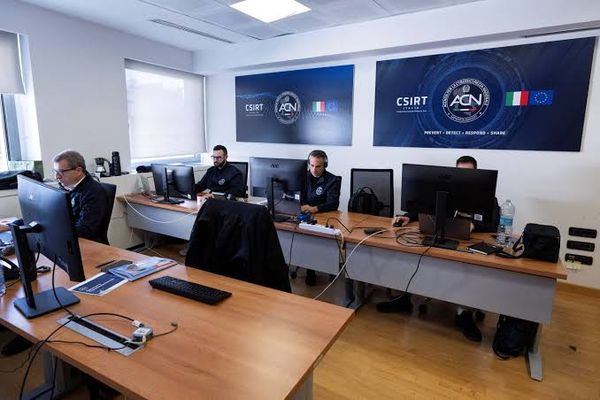
Italy's CSIRT Italia named both ARTEX and CyberStrikeAI on 23 November among four tools used in what it described as mass-compromise campaigns in Italy, in which agents compromised a large number of systems within a few hours. BACS made no link between its cases and the Italian campaigns.
Small companies and the 24-hour deadline
BACS told organisations to install critical security updates for internet-facing systems as soon as possible and within 24 hours of release at the latest. It also asked them to cut the number of systems exposed to the internet and restrict access to them by location or approved address lists. Every internet-reachable internal service, such as webmail and VPN, should be protected with multi-factor authentication or passkeys without exception. Its list adds least-privilege access and regular penetration tests, along with detection of departures from normal behaviour and data volumes. The office shares technical indicators for detecting the AI tools with critical-infrastructure operators.
Raphael Reischuk, a co-founder of Switzerland's National Test Institute for Cybersecurity who works for the consultancy Zühlke, told SRF he expected a larger wave of attacks and that too many Swiss companies felt safe. Many smaller firms lack the resources to keep their systems up to date, he said, and he called on the federal government to examine jointly funded support for them, as exists for drinking water and electricity. Schütz said the government already offers help to affected companies and is obliged to assist when critical infrastructure is involved.