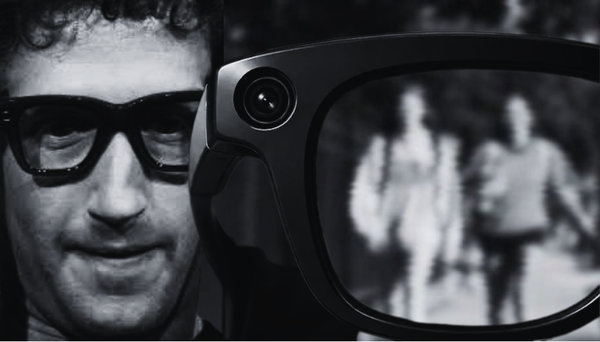
Dutch groups asked an Amsterdam judge on 26 November to stop Meta's camera glasses filming people without consent or halt their sale, after Meta and its eyewear partner rejected those demands in October.
The judge has not ruled and will do so by 24 December. Two cases were heard together in summary proceedings, a fast-track procedure for interim orders, and both concern the Netherlands only. The claimants say wearers use the glasses to film people in changing rooms, on playgrounds and on beaches without their noticing, and that Meta processes the footage without a legal basis. Meta and EssilorLuxottica, which makes the frames, dispute both claims.
The Consumentenbond, the main Dutch consumer association, sued five Meta companies, including the Amsterdam-based Facebook Netherlands B.V. Its summons asks first for a ban on training AI on recordings of identifiable people, a ban on processing them without a lawful basis under the GDPR, measures against covert recording and automatic deletion of recordings within 24 hours. If Meta cannot make changes within two weeks, the association asks the judge to stop sales and order Meta to email every Dutch buyer offering a refund.
Offlimits, a foundation that works against online sexual abuse, and The Firewall, a citizens' foundation, sued four Meta companies and Luxottica Group S.p.A., the EssilorLuxottica subsidiary that distributes Ray-Ban and Oakley glasses in the EU. Their summons asks for an immediate stop to Dutch sales of glasses that can record people without consent and a change to glasses already sold so that they cannot. It also seeks bans on AI training and on transfers of Dutch residents' data to countries outside the European Economic Area without adequate protection.
Both summonses ask for dwangsommen, penalty payments that a company would owe the claimants only if it breached a court order. Offlimits and The Firewall ask €100,000 for each day of each breach, with no cap. The Consumentenbond asks €250,000 a day, capped at €100 million. The claimants seek no damages, and Offlimits' summons describes its request as an order to stop conduct.
Bastiaan Kemp, a lawyer for Meta, asked the court to reject the claims. "Providers of products cannot be held responsible for every instance of deliberate misuse," he told the court. He told the court that a light on the frame makes recording obvious and that the demands would amount to a recall while similar devices from other manufacturers stayed on sale. A lawyer for EssilorLuxottica said the company neither processes footage nor has access to it.
Letters to Meta since 2021
Ireland's Data Protection Commission, Meta's lead privacy regulator in the EU, and Italy's Garante wrote to Facebook in September 2021, days after its first camera glasses went on sale. They asked it to show that the small light on the frame was an effective way to warn people they were being filmed. In February 2026 two Swedish newspapers reported that contractors in Kenya were reviewing recordings from the glasses. The UK and Irish data protection regulators then wrote to Meta asking how it handled the data. Two Italian MEPs asked the Irish commission whether it was investigating, and the commission had yet to reply publicly.
Meta bought just under 3 per cent of EssilorLuxottica in July 2025 for about €3 billion. The companies have worked together on the glasses since 2019 and extended the partnership in September 2024. They sold more than seven million pairs in 2025, about 80 per cent of the global market, and the Offlimits summons cites a forecast of about 14 million in 2026.
Meta changed the glasses' firmware in July 2026 so that the camera is disabled when the light has been physically tampered with. IPVM, a security research publication, found in tests that earlier firmware checked the light only when a recording started. Alex Himel, Meta's vice-president for augmented reality, then wrote on Threads that the camera "will now stop working if the light is covered during a recording". He has put tampering at fewer than 0.1 per cent of glasses sold.
The Consumentenbond and, separately, Offlimits and The Firewall sent Meta formal demand letters on 29 September. Offlimits and The Firewall also wrote to Luxottica and set a deadline of 12 October. Meta said on 9 October that it was willing to talk, declined a meeting on 12 October and said that evening that it would not comply, according to their summons. Luxottica replied a day after the deadline, refusing to comply or to meet. Meta told the Consumentenbond on 12 October that it was willing to negotiate within two weeks, and the association's summons says those talks had not taken place by the time it was served.
The claimants filed on 13 October. The same day the European Data Protection Board, which groups the EU's national privacy regulators, adopted a statement saying smart glasses should make recording obvious, for example with bright lights, audio signals or distinctive designs.
The light on the frame
The Consumentenbond last tested a Ray-Ban Meta Wayfarer running software version 127 on 2 September. It reported on 10 September that a plain sticker over the light stopped recording, but that a specialised privacy accessory sold online let the glasses keep filming. It found the light sometimes hard to see in bright sunlight, particularly at a distance. Its published report gives the number of test runs and conditions for neither finding.
IPVM later tested firmware version 128 on first and second-generation glasses in daylight and at two indoor light levels. Recording stopped within about five seconds in every run, whether the light was covered before or during recording, with each of the three coverings it tried. Both tests leave open which firmware the glasses on sale in the Netherlands now run.
Hamburg's data protection authority found the light on an unaltered pair hard to see outdoors in direct sunlight, and the Consumentenbond's summons relies on that finding separately from the tampering tests. It argues that the light cannot warn a bystander before filming begins.
Recording, publication and Meta's servers
A person who wears the glasses and films someone becomes responsible under the GDPR depending on how the footage is used, the data protection board said. Sharing it on a public social media account can make the wearer a data controller, while purely personal use may fall under the household exemption. Platforms that host the videos act on removal requests under their own rules and the EU's Digital Services Act, which the Offlimits summons cites.
Meta told the claimants that recordings stay on the glasses or in the Meta AI app until the user shares them, the Consumentenbond's summons says. Meta also said it does not use data from wearables, or images and video from the app, for AI development in the EU. The association disputes that, citing Meta's terms and the Hamburg authority's findings. It says sharing voice recordings for product improvement is switched on by default. EU users had no way to opt out of sharing visual data until 25 September 2026, and the option that then appeared has sharing switched on at installation, the association says. People filmed by a wearer have no such setting, the association says.
Alice's video
A woman the BBC called Alice was walking into a London shopping centre when a man wearing smart glasses approached her. She said she had no idea she was being filmed until a friend found the video online, where it had about 40,000 views. She messaged him that the video humiliated her and asked him to remove it. He replied that he would take it down only as a "paid service", and later told the BBC the phrase referred to editing requests. "It made me feel exploited, powerless," she said. She never considered paying.
The man ran accounts on YouTube, Instagram and Threads as well as TikTok. TikTok banned his account for bullying and harassment. Police opened an investigation but could not progress it for lack of information.
De Telegraaf found footage of at least 100 women filmed over several weeks with Meta glasses at festivals, supermarkets, erotic parties and on Zandvoort beach, shared in a closed Telegram group. The Offlimits summons puts the group's membership above 32,000. Noord-Holland police said in August that the glasses are hard to recognise and that using them is not a crime. "We do not enforce against it, because we cannot," a spokesperson told the regional broadcaster NH Nieuws.
Meta told the court that Offlimits had received only a few reports of misuse in the Netherlands. Offlimits replied that many victims do not know they were filmed. Its summons says it handled more than 12,000 requests for help in 2025, without saying how many involved the glasses. A lawyer for Offlimits told the court he had worn a pair on the street. "I felt like a sneaky peeper, but I was not recognised as one," he said.
Regulators and retailers
The Autoriteit Persoonsgegevens, the Dutch data protection authority, said on 22 September that filming with camera glasses and sharing the footage is prohibited in many situations, and urged manufacturers to make recording visible and resistant to tampering. After testing six models, it advised consumers on 19 November not to buy AI camera glasses for general use and told venues to ban them in their house rules. It also said shops may keep selling them. Meta Platforms Ireland Limited, which the Consumentenbond names as controller for Meta's European service, falls under the Irish commission as lead regulator for cross-border processing under the GDPR.
The Dutch cabinet considers a ban legally unnecessary because existing rules already cover camera glasses, state secretary Van Bruggen said in September in response to the House of Representatives. Hans Anders, an optician chain, suspended sales of the glasses in the Netherlands and Belgium in early October, a day after the online retailer Wehkamp removed them, citing privacy concerns. Bol, Pearle and A.S. Adventure were still selling them in Belgium at the time.
What the ruling could change
Dutch criminal law penalises covertly making images of people with a technical device whose presence is not clearly disclosed, under article 139f for homes and other non-public places and article 441b for public places. The public-places offence applies to a device "daartoe aangebracht", installed for that purpose, the 2003 law states. A 2017 article in the criminology journal Proces identified that requirement as an obstacle when assessing covert filming on beaches.
Both cases rely on article 3:305a of the Dutch Civil Code, which lets foundations and associations seek orders on behalf of a group, and they moved from filing to hearing in about six weeks. The orders sought concern Meta's products and data processing in the Netherlands. Removing videos already online, identifying the men who filmed them and compensating the people in them would still require individual complaints to platforms, the data protection authority or police, or separate damages claims.
Each summons carves out assistive use. The Consumentenbond's would exempt a version available only on a doctor's advice, used as a medical aid, whose camera conveys information through sound and cannot take or store photos or video. The Offlimits fallback exempts glasses that visually impaired users need on medical advice and that cannot record. Meta has cited features for people with visual or hearing impairments in its defence.
Meta has argued that any ban is for politicians or the regulator to decide, and that Facebook Netherlands B.V., its only Dutch-registered defendant, is the wrong party because it neither offers nor operates the glasses in the EU. The Consumentenbond relies on article 79(2) of the GDPR, which allows people to sue a data controller in the country where they live, to bring the Irish and U.S. companies before the Amsterdam court.