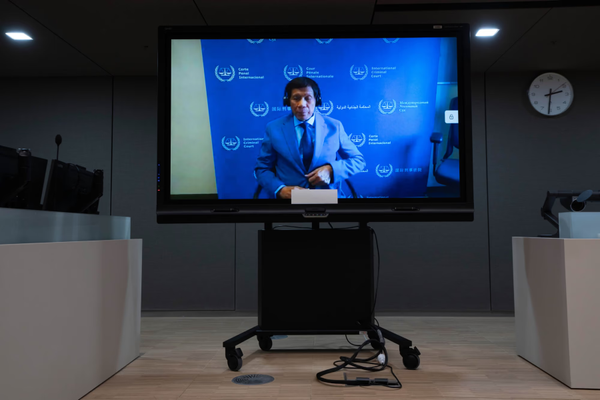
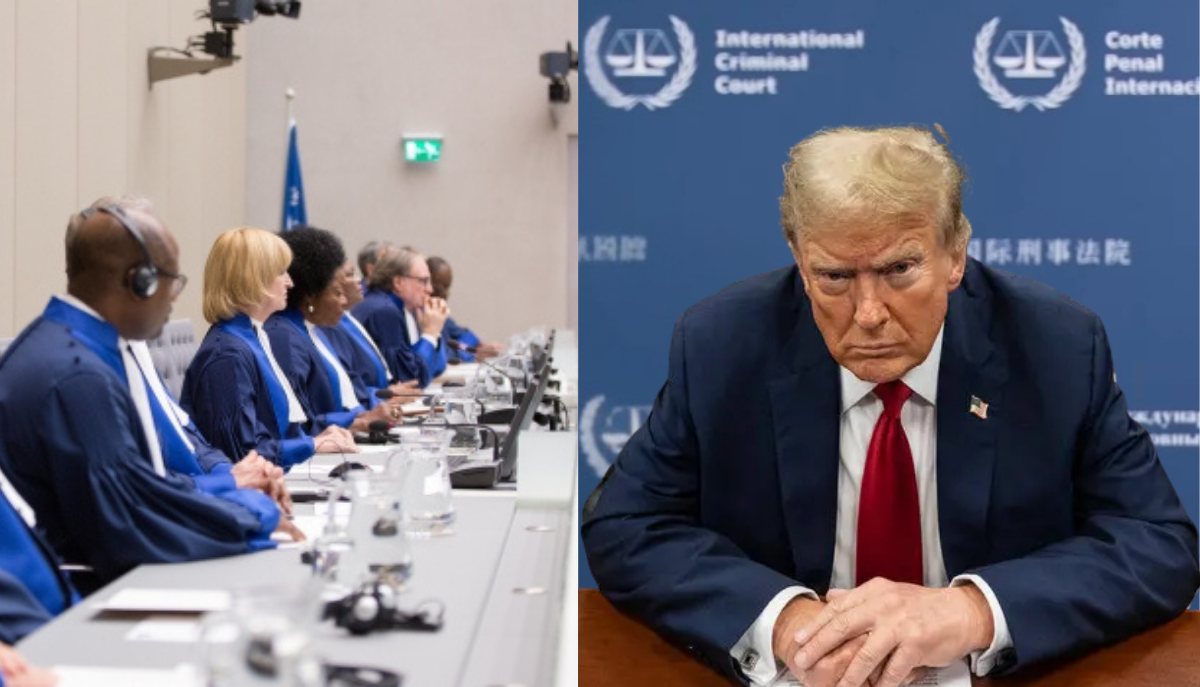
Three judges of the International Criminal Court, Kimberly Prost of Canada, Solomy Balungi Bossa of Uganda, and Reine Adelaide Sophie Alapini-Gansou of Benin filed a lawsuit against Donald Trump and his administration on 24 June in the United States District Court for the Southern District of New York, arguing that U.S. sanctions imposed on them over their judicial rulings are unlawful, unconstitutional, and intended to coerce and intimidate independent judges in the exercise of their official duties.
The three judges
The three ICC judges were placed on the same U.S. Treasury sanctions list used for individuals designated in connection with terrorism and transnational organised crime. The sanctions were imposed in response to the judges' participation in ICC decisions opposed by the Trump administration, including authorising an investigation into alleged war crimes involving U.S. personnel in Afghanistan and issuing arrest warrants for senior Israeli officials over the war in Gaza. According to the lawsuit, the measures were intended to punish those judicial decisions, deter future rulings, and undermine the independence of the Court through financial coercion and intimidation.
“tantamount to the financial death penalty.”
The lawsuit names Donald Trump and the federal agencies responsible for imposing and enforcing the sanctions. It argues that the measures were intended to punish the judges for prior rulings, intimidate them, and pressure them to consider the threat of financial ruin when carrying out their judicial duties. The complaint characterizes the sanctions as “tantamount to the financial death penalty.”
The judges argue that the sanctions exceed the authority granted under the International Emergency Economic Powers Act, because no legitimate national emergency or extraordinary foreign threat justifies targeting sitting international judges. The complaint also alleges that the designations violate the Administrative Procedure Act because they were arbitrary and capricious. In addition, it claims that freezing the judges’ assets without prior notice or an opportunity to contest the action violated their constitutional right to due process.
What the sanctions do
A sanctions designation freezes any property or assets a listed person holds in the United States and prohibits U.S. individuals and companies from conducting business with them. The executive order also lets the government list people with no prior notice, on the theory that warning them would let them move money first. Because much of the global financial system relies on U.S. dollar clearing, the practical impact extends well beyond U.S. borders.
Judge Kimberly Prost said the sanctions caused her credit cards to stop working overnight, locked her out of accounts with Amazon, Google, and Apple, and prevented her from exchanging currencies because the transactions passed through the U.S. financial system.
Judge Kimberly Prost described the measures as "an attack on the independence of the judiciary."
The lawsuit argues the sanctions have also produced a wider chilling effect, with companies outside the United States complying to avoid the risk of violating U.S. restrictions. It cites an incident in which a New Zealand company attempting to book a hotel for Judge Prost triggered a compliance alert based solely on her name. It also states that the daughter of another sanctioned ICC judge, who was living in the United States, had her visa revoked. The lawsuit further challenges the executive order's provision allowing individuals to be sanctioned without prior notice, arguing that the government justifies the practice on the grounds that advance warning could enable targets to move their assets before restrictions take effect.
The rulings that drew US intimidation
The administration has not obscured the basis for these designations. Judge Prost and Judge Bossa sat on the appeals panel that, in March 2020, unanimously authorized the ICC prosecutor to investigate alleged crimes committed in Afghanistan since 2003. When the State Department announced Judge Prost’s designation in August, it stated directly that she was being sanctioned for her role in authorizing that investigation.
The Afghanistan inquiry covered all parties to the war, including the Taliban, Afghan government forces, and U.S. personnel. In court filings, the prosecutor found a reasonable basis to believe that members of the U.S. armed forces tortured at least 61 detainees in Afghanistan, primarily in 2003 and 2004. The filings also alleged that CIA personnel subjected at least 27 additional detainees to torture, cruel treatment, outrages upon personal dignity, or rape in Afghanistan and at secret detention sites in Poland, Romania, and Lithuania.
The United States rejects the court’s jurisdiction over its nationals. The prosecutor later deprioritized the U.S. strand of the investigation in order to focus on the Taliban and Islamic State, leaving the allegations concerning U.S. personnel dormant. But the vote authorizing the inquiry is what drew the sanctions against Judge Prost and Judge Bossa.
Judge Alapini-Gansou sat on the pre-trial chamber that issued arrest warrants in November 2024 for Israeli Prime Minister Benjamin Netanyahu and former defence minister Yoav Gallant. The chamber found reasonable grounds to believe they bore criminal responsibility for the war crime of starvation as a method of warfare and for crimes against humanity, including murder, persecution, and other inhumane acts, arising from the alleged deprivation of food, water, medicine, and fuel to civilians in Gaza between October 2023 and May 2024. It also found grounds to allege the war crime of intentionally directing attacks against civilians.
The same chamber issued a warrant for Hamas commander Mohammed Deif in connection with the 7 October 2023 attack on Israel. Israel rejects the charges, says it targets militants, and blames Hamas for civilian deaths. Gaza’s health ministry puts the death toll from the war above 73,000, a figure UN agencies have treated as broadly reliable and likely an undercount.
Judge Alapini-Gansou had also helped authorize the Palestine investigation in 2021. She later sat on the panel that issued the March 2023 arrest warrant for Russian President Vladimir Putin over the alleged war crime of unlawfully deporting and transferring Ukrainian children from occupied territory to Russia. Ukraine says more than 19,000 children were taken. Russia describes the transfers as humanitarian, rejects the court’s authority, and later saw a Moscow court issue its own warrant for Judge Alapini-Gansou’s arrest. She has now been targeted by both Russia and the United States for her work on the ICC.
Neither the United States nor Israel is a member of the ICC, and both reject the court’s jurisdiction over their nationals. The court can, however, act when alleged crimes occur on the territory of a member state. Afghanistan is a member state, and the State of Palestine was admitted in 2015. That territorial jurisdiction is what allowed the investigations to reach conduct by U.S. and Israeli nationals, and it is at the center of the dispute in which both these countries attempt to avoid accountability and international law.
The legal fight over emergency powers
Courts generally defer to the president on matters of foreign policy and national security, and the emergency-powers statute gives the executive broad discretion once an emergency has been declared. The judges are therefore not relying primarily on a free-speech theory. Their central argument is statutory: that the President exceeded the authority Congress granted, and that no genuine national emergency or extraordinary foreign threat justifies imposing economic sanctions on sitting judges of a foreign court. They also point to the statute’s exemptions for personal communications and informational materials, provisions they argue the government has disregarded.
In May, the family of UN special rapporteur Francesca Albanese, who was sanctioned under the same executive order, won a preliminary injunction after a federal judge in Washington found her designation likely violated the First Amendment. The judge wrote that Albanese “has done nothing more than speak.” But on 15 June, the D.C. Circuit stayed that order and allowed the sanctions to resume, with two judges indicating that a foreign national living abroad likely has no First Amendment claim.
The ICC judges have even weaker ties to the United States than Albanese, who owns property there and has a U.S.-citizen child. By grounding their lawsuit in the limits of the sanctions statute rather than in speech rights, they avoid relying on the argument the appeals court has already called into doubt. Even so, the deference courts give the executive in sanctions cases makes any victory uncertain.
Sanctions aimed at a sitting bench
Sanctioning a judge is not the same as sanctioning a government official, a trafficker, or a war criminal. The conduct being punished is the act of judging itself. The complaint argues that the measures are designed to force judges to weigh the risk of blocked accounts, professional isolation, and personal financial ruin against the law when deciding cases, including cases still before them. It also alleges that the sanctions reach into live proceedings by barring parties from submitting evidence and legal argument to the listed judges.
The United States uses this same authority to target war criminals, traffickers, corrupt officials, and others accused of violating the law. Here, it is being directed at judges for enforcing the law. The president wielding that authority, Donald Trump, is himself a convicted felon, found guilty in 2024 on 34 felony counts of falsifying business records, a verdict he is appealing.
The issue is not merely the hardship imposed on three individuals. If judges can be made to pay personally for their rulings, judicial independence gives way to political intimidation. That is why bar associations and legal scholars have treated the designations as an attack on the institution of the court, not a dispute over three frozen bank accounts.
The sovereignty defence
The administration’s position is public and consistent, even though it did not respond to requests for comment on the lawsuit. Secretary of State Marco Rubio has described the ICC as a “national security threat” and accused it of being used for lawfare against the United States and Israel. The administration’s core claims are straightforward, neither the United States nor Israel is a party to the Rome Statute, the court should not assert jurisdiction over their nationals, the ICC is politicized, and the president has broad authority to respond to foreign threats.
Jurisdiction over the nationals of non-member states is contested in international law, and a state may reject the court's reach over its citizens. But that is an argument against the court's jurisdiction, to be made in court or through diplomacy. Disagreeing with a ruling and punishing the individual judges who issued it are not the same act. The first is a legal and political objection. The second is illegal and uses emergency economic powers to intimidate and coerce judges and the international court.
The precedent for authoritarians
The tactic of intimidation against the international court used by the United States sets a dangerous precedent. If the world’s most powerful state can place foreign judges on a financial blacklist because of their rulings, other states can copy the method, and rival powers can answer in kind. Russia has already issued a warrant against Judge Alapini-Gansou.
It is a model for dismantling international accountability through personal retaliation. A system in which powerful states sanction the judges who investigate them, or the judges who investigate their allies, is a system in which accountability for war crimes, genocide, and crimes against humanity depends less on law than on coercive power. The question becomes not whether the evidence supports prosecution, but whether the court can survive the punishment imposed for looking.
The ICC was created to deny heads of state, ministers, commanders, and militia leaders the comfort of impunity. Its purpose is to make clear that official power does not place a person beyond legal judgment. Personal sanctions on its judges move in the opposite direction. They attach a warning to the act of judging the powerful and criminal, rule against the wrong state, or authorize the wrong investigation, and the machinery used against criminals may be turned against the court itself.
Reaction abroad and at home
The court has described each round of sanctions as a “flagrant attack” on judicial independence. The Assembly of States Parties, the 125 governments that stand behind the ICC, condemned the measures by consensus in December 2025. European Commission President Ursula von der Leyen said the European Union fully supports the court and that it must be free to act without pressure. Slovenia, whose judge Beti Hohler was also sanctioned, pressed for EU blocking measures. Human Rights Watch and Amnesty International condemned the designations as an assault on the court and its officials.
Canada’s response has been more timid, despite its role in helping found the ICC and the fact that Judge Prost is a Canadian citizen. Foreign Minister Anita Anand said she had “utmost confidence” in Prost, but stopped short of directly naming the sanctions. Canada’s UN ambassador, Bob Rae, called the move disgraceful, then deleted the post. The Canadian Bar Association has urged the government to use the Foreign Extraterritorial Measures Act to protect Prost from the domestic effects of the U.S. measures. The State Department, Treasury Department, and White House did not respond to requests for comment on the lawsuit.
The case is not, in any serious sense, about three judges’ credit cards or frozen accounts. It is about whether a government can convert sanctions into a tool of intimidation and coercion, using economic power to circumvent international law and pressure the international court itself.
The message is unmistakable: the United States, Israel, Russia, and other powerful states can expect impunity if they are strong enough to punish the institutions that uphold human rights and international law. It tells the law-abiding world that the rules apply to anyone but them. "Rule against us, investigate our officials, or proceed against our allies, and pay for it."
The court these judges serve was created to make that kind of pressure impossible. Their lawsuit asks whether US law, already weakened by years of impunity and political corruption, will permit this abuse of power as well.