
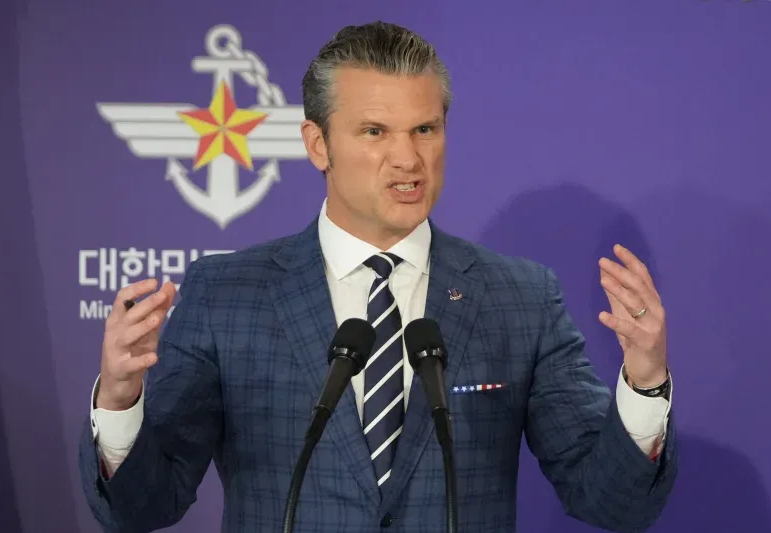
Pete Hegseth posted a warning on X on 7 November 2025, hours after a missile killed three civilians on a boat in the Caribbean Sea. "To all narco-terrorists who threaten our homeland: if you want to stay alive, stop trafficking drugs," he wrote. "If you keep trafficking deadly drugs, we will kill you."
Airwars has logged every announcement since the campaign opened on 2 September 2025 and counts at least 227 people killed on 69 boats in 12 months, 50 of the vessels in the eastern Pacific Ocean and 19 in the Caribbean Sea. Twenty-six of the dead have been publicly named. "None have been formally charged with any crime, and no attempts to detain any have been documented," the tracker states.
Every one of the 227 was a civilian in law. Article 50(1) of Additional Protocol I to the Geneva Conventions states the rule in a sentence: "In case of doubt whether a person is a civilian, that person shall be considered to be a civilian." The presumption is customary international law and binds every state in international and non-international conflict alike. Outside an armed conflict it does not even arise, because the category of combatant does not exist and everyone is a civilian, which is the position the lawyers who have examined this campaign say applies to it.
The War Department reached the same place by its own route. Its Law of War Manual said until 2023 that no presumption of civilian status exists, a position Ryan Goodman took apart in Just Security in February 2022. The July 2023 revision reversed it, and the manual now requires that commanders "must presume that persons or objects are protected from being made the object of attack unless the information available at the time indicates that the persons or objects are military objectives".
Rebutting that presumption takes information the government has not produced. Southern Command has published no name, no charge and no evidence for any of the 69 boats.
The Washington Office on Latin America attributes 14 of the strikes, killing 50 people, to Hegseth's personal authorisation, alongside 30 authorised by Gen. Francis Donovan that killed 95 and 19 authorised by Trump that killed 76, in the period to 14 July 2026. No government document confirms that division.
Strikes resumed on 23 August 2026 after a gap of more than two months, killing two in the eastern Pacific, and a strike on 25 August killed four in the Caribbean Sea. Donovan announced both under a renamed Joint Task Force Western Hemisphere and released a single photograph taken in the seconds before the second impact.
Hegseth announced most of the rest himself, in posts that follow one template. "Today, at the direction of President Trump, the Department of War carried out a lethal kinetic strike on a vessel operated by a Designated Terrorist Organization," ran the 7 November post. "The vessel was trafficking narcotics in the Caribbean and was struck in international waters."
The second missile
Two civilians were alive in the water after the opening strike of the campaign on 2 September 2025. A second missile killed them.
The Washington Post reported on 28 November 2025 that Hegseth had told commanders to kill everybody on the boat. The department denied it and the newspaper has not retracted. Adm. Frank Bradley told lawmakers on 4 December 2025 that he had assessed the two survivors as legitimate military targets and that Hegseth issued no order to kill everyone aboard. Hegseth said he watched the first strike, missed the briefing on the second and called it the fog of war. He told reporters the story was fake.
Rep. Ted Lieu said on 2 December 2025 that Hegseth "threw Admiral Bradley under the bus" over the account of the second strike. "Killing shipwreck survivors is a war crime," Lieu said. "He is a coward, he must resign." Sen. Jacky Rosen said the same day: "Pete Hegseth, [allegedly saying] 'kill them all,' if he said that, that is clearly murder. Or, if we're at war, it's illegal. And if we're not at war, then it's murder. And he needs to resign."
Rep. Jim Himes, ranking member of the House Intelligence Committee, watched the unedited video and said: "What I saw in that room was one of the most troubling things I've seen in my time in public service." Sen. Chris Murphy, who also saw it, wrote: "Bottom line: there is no legal or national security justification for what they're doing. Not even close."
Rep. Mike Rogers, the Republican chair of the House Armed Services Committee, closed his committee's inquiry on 10 December 2025 after a classified briefing. "It's done. I've got all the answers I needed," he said. Sen. Roger Wicker ended the Senate inquiry eight days later after three classified briefings. "I am satisfied with all the information I have received on this matter," Wicker said. "I have seen no evidence of war crimes."
Rep. Jamie Raskin and Rep. Ted Lieu wrote to Attorney General Pam Bondi on 22 December 2025 asking her to open a criminal investigation. "Two survivors were clinging to the smoldering wreck," they wrote, when the commander "ordered a second strike ... The two men were blown apart in the water." They quoted the department's own manual back to it: persons incapacitated by shipwreck "are in a helpless state, and it would be dishonorable and inhumane to make them the object of attack". The Justice Department has announced no investigation.
Hegseth endorses murder
Mathew Golsteyn, an Army major, was facing a murder charge in February 2019 over the killing of a captured Afghan man. Hegseth, then a Fox News host, defended him on air on 13 February 2019.
"If he committed premeditated murder, then Duncan did as well, then I did as well," he said. "What do you think you do in war?" He added: "Put us all in jail."
Hegseth interviewed Golsteyn on his programme, lobbied Trump directly and said on air through 2019 that the military justice system had been politically corrupted.
"They're not war criminals, they're warriors," he said in May 2019. Trump cited Hegseth and Fox News in explaining his decision to review the cases.
Trump pardoned Clint Lorance, an Army lieutenant serving 19 years for the second-degree murder of two Afghans, and pardoned Golsteyn before his trial, and restored the rank of Edward Gallagher, a Navy SEAL acquitted of murder and convicted of posing with a corpse, on 16 November 2019. "You train someone to go and fight and kill the enemy, then they kill the enemy the way someone doesn't like, and then we put them in jail," Hegseth said at the time.
Hegseth stood at a press briefing on 13 March 2026, by then secretary of war, and said of operations against Iran that there would be "no quarter, no mercy for our enemies". Daniel Maurer, a retired Army lieutenant colonel and judge advocate, published a hypothetical legal memorandum to Hegseth in Just Security the following day setting out what the phrase means in law. Article 23(d) of Hague Convention IV forbids declaring that no quarter will be given. Article 40 of Additional Protocol I to the Geneva Conventions forbids ordering that there shall be no survivors. Section 2441 of title 18 makes the conduct a war crime punishable by life imprisonment or death. Maurer's memorandum treats the declaration as a speech offence complete on utterance, whether or not anyone acts on it, and recommends an immediate public retraction and a notice down the chain of command that the words describe prosecutable conduct.
The civilians
Chad Joseph called his wife on 12 October 2025 to say he had found a boat travelling to Las Cuevas, the fishing village in Trinidad where they lived, and that he would be home in a couple of days. He was 26, a fisherman and farm worker who had gone to Venezuela for work. He had a wife and three young children. Rishi Samaroo, 41, sent his sister a photograph of himself in a life jacket the same day and told her he would be back soon to help care for their elderly mother. He had been working on a Venezuelan farm with goats and cows, making cheese.
A US missile destroyed the boat on 14 October 2025, killing at least six civilians aboard. Neither man's body was recovered.
"I don't want to believe it. Not my child," Lenore Burnley, Joseph's mother, said. "Chad was a loving and caring son who was always there for me, for his wife and children, and for our whole family. I miss him terribly."
"Rishi used to call our family almost every day, and then one day he disappeared, and we never heard from him again," said Sallycar Korasingh, Samaroo's sister. "If the US government believed Rishi had done anything wrong, it should have arrested, charged, and detained him, not murdered him."
Kamla Persad-Bissessar, prime minister of Trinidad and Tobago, told a Caricom heads of government meeting in Saint Lucia on 9 July 2026 that her government had found nothing to support the families. "All our investigations, our local law enforcement, everything, nothing has given us any evidence of the alleged murders," she said. "Our legal advice has not been that they are murders and I can only act within the rule of law based on the legal advice that we have received."
Alejandro Carranza told his eldest daughter Zaira he was going fishing and would be out of contact. He was 42, a fisherman from Santa Marta on Colombia's Caribbean coast, father of four and the only earner in his household. He lived in a house with dirt floors. Friends called him coroncoro, after a small catfish. He disappeared on 14 September 2025 and his family learned he was dead from television coverage of the strikes.
"Why did they just take his life like that?" said Katerine Hernandez, his wife. "The fishermen have the right to live. Why didn't they just detain them?"
Leonardo Vega, president of the local fishing association, said the account of a trafficker did not match the man he knew.
"When I heard Alejandro hadn't come back, my first thought was that he might have been caught in the bombing," he said. "This is not the life of a drug trafficker."
Colombian media reported a 2016 accusation of weapons theft against Carranza that prosecutors never took to trial. "If he wasn't convicted, then logically he isn't a delinquent," said Norma Vera, a human rights campaigner in the city.
Luis Ramón Amundarain, 36, a motorcycle taxi driver and fisherman from Güiria in Venezuela's Sucre state, travelled to Trinidad on 28 September 2025 looking for money to pay for his youngest daughter's dermatology treatment. He was killed on 3 October 2025.
"He left because we needed to take our daughter to a dermatologist and we didn't have the money," his wife told El CLIP, the Latin American investigative centre that identified him.
"Ramón was a fisherman. We don't even own a house, and they call him a narco-terrorist." She said of Trump: "That's what Donald Trump never stopped to think about. He's killing a father, and he doesn't even know why he got on that boat."
Juan Carlos Fuentes, 43, a bus driver and mechanic from the Guarama neighbourhood of the same town, crossed with him. His Yutong bus had broken down, he had gone looking for work washing cars and he took a run to pay for the repair.
"Juan Carlos was no narco-terrorist, no matter what they said," his wife told the same investigation.
Eduard José Hidalgo, 46, an artisanal fisherman, was deported from the United States on 3 December 2025, refused a first trip after he landed and was then pressed into making runs by a criminal group. A strike killed him on 23 February 2026.
Twenty journalists from El CLIP, Casa Macondo, Verdad Abierta, Alianza Rebelde Investiga, the Trinidad and Tobago Guardian and Airwars published the identifications in May 2026 under the title "Los Bombardeados: sin derecho a la defensa", and reported that relatives in several countries were afraid to speak. The civilians they found were fishermen, labourers, taxi drivers and couriers paid between $300 and $500 a trip, most on a first run, none of them leaders of anything.
Ricky Joseph, 35, a fishing boat captain from Savannes Bay in Saint Lucia, was killed in a Caribbean strike on 13 February 2026.
"I started calling people and asking if they had seen him. I kept trying to reach him. I sent messages," said Lucille Charles, his partner. "I kept telling myself he would come back, but then I began to feel that something had happened to him." She said of the trafficking allegation: "I never knew him to be involved in anything like that."
Eight Mexicans were killed in two eastern Pacific strikes on 16 and 17 February 2026, seven of them from the village of Cruz de Huanacaxtle in Bahía de Banderas, Nayarit. Their families were told of the deaths by staff from Mexico's foreign affairs ministry, and federal authorities had confirmed nothing publicly by the following weekend.
Other victims include 18 Venezuelans, 13 Mexicans, three Colombians, three Ecuadorians, two Trinidadians and two Saint Lucians. Among the Ecuadorians are Pedro Ramón Holguín Holguín, 40, a seafood trader, and Carlos Manuel Rodríguez Solórzano, 34.
The evidence
MQ-9 Reaper drones have flown the strikes out of Rafael Hernández airport at Aguadilla in Puerto Rico since September 2025. Open-source trackers identified nine of the airframes by tail number, among them 14-4242, 17-4348 and 20-4408. The weapon is the AGM-114 Hellfire, built to kill armour and vehicles. Between 21 and 24 December 2025 the aircraft began flying with 10 Hellfires apiece on four-rail launchers not previously seen on US Reapers, against a usual load of two to four, according to The War Zone, which tracked the flights.
Munitions for a single strike cost between $267,870 and $1,071,480, by WOLA's calculation. Southern Spear cost $647 million between September 2025 and March 2026, and the boat strikes together with the wider Venezuela deployment cost $4.7 billion from August 2025 to March 2026.
No US authority has announced the recovery of a body from any of the 69 boats. Three people were taken from the water alive and handed to Colombia, Ecuador and Costa Rica. No autopsy has been performed, no inquest opened and no death certificate issued for any of the 227 in any jurisdiction. Relatives learned what had happened from television, from neighbours or from a telephone call by a foreign ministry official.
Southern Command's evidence for each killing is a short clip or a still photograph posted to social media, under a sentence saying intelligence confirmed the vessel was trafficking. The unedited video of the 2 September strike was shown to congressional leaders in a classified setting in December 2025 and has never been released. Hegseth told them he was weighing whether to put it out.
The civilians left in the water
Twenty-eight civilians survived the initial strike on their vessel, according to counts kept by Airwars and WOLA. Three were recovered. Two were killed by a second missile. The remaining 23 were never recovered and are presumed dead.
Article 98 of the UN Convention on the Law of the Sea obliges every state to require the master of a ship flying its flag to render assistance to any person found at sea in danger of being lost.
Jonhatan Obando, a Colombian, and Andrés Fernando Tufiño, an Ecuadorian, were pulled from the water injured on 16 October 2025 and returned to their home countries within days. Ecuador released Tufiño after finding no evidence he had committed a crime. Ecuadorian officials told the Washington Post that US forces handed over nothing to support a prosecution: no seized drugs, no phone or GPS records, no videos. A third survivor, recovered on 19 March 2026, was passed to Costa Rican authorities. WOLA reported that US officials were directed to send survivors to their home countries or to third countries, which keeps the evidence out of a US courtroom.
The lie
Section 1057 requires a report to the congressional defence committees, not later than 1 May each year, on civilian casualties caused by US military operations in the preceding year. The report covering 2025 reached Congress on 10 August 2026, more than three months past the statutory date, and recorded that the strikes killed no civilians at all.
Two US government officials told The Intercept the document was worthless. One called it "a total whitewash" and said of the boat strike entries:
"They have absolutely no credibility." The other called the report "a fucking joke".
The department's standing methodology, set out in earlier editions of the same report, assesses whether it is more likely than not that civilians were killed or injured, and excludes from the count "members of the civilian population who have forfeited the protections of civilian status by engaging in hostilities". A finding of zero counts no bodies. It records a status decided before any strike took place.
Trump notified Congress on 1 October 2025 that the United States was in a non-international armed conflict with designated trafficking organisations. Absent an armed conflict there are no hostilities for a civilian to engage in, and the exclusion has nothing to operate on.
An Office of Legal Counsel memorandum written to justify force against Nicolás Maduro states at page 12 that the law of armed conflict "permits the death of ... civilians directly participating in hostilities such as by assisting in war-sustaining activities". Charlie Trumbull and Michael Schmitt wrote in Just Security on 6 February 2026 that the sentence carries no citation, has no basis in international law and departs from the department's own practice, which warned Islamic State oil tanker drivers away rather than treating them as targets. War-sustaining doctrine in the department's Law of War Manual reaches objects, not people.
Direct participation in hostilities has a three-part test in settled doctrine: a threshold of harm, direct causation and a belligerent nexus. Mark Nevitt, a retired Navy judge advocate now at Emory University School of Law, wrote that drug transport meets none of it, because the proceeds "flow back to enrich criminal enterprises, not fund arms to be used against U.S. military forces in the region", and that the cargo cannot be a war-sustaining object because "there is no war to sustain".
US Central Command's civilian harm assessment team went from 10 people to one in the months before the report was written, and the civilian protection centre of excellence went from 40 staff in January 2025 to nine by the end of that year, according to The Intercept, which also compared the report's Yemen figures with the Yemen Data Project's count and found the department recording 153 civilian deaths in Operation Rough Rider against at least 238 documented externally.
Rear Adm. Brian Bennett, the Joint Staff's deputy director for special operations, was asked at a classified briefing in the autumn of 2025 whether the 11 people killed in the opening strike could have been victims of human trafficking. "They could be," he said. A trafficking victim is a civilian on every reading of the law, including the department's own.
Seven government officials told The Intercept that the military acknowledged in classified briefings that it does not know exactly who it is killing. Rep. Sara Jacobs said officials told her they do not need to positively identify the individuals on a vessel before striking it. Kingsley Wilson, the department's press secretary, said in December 2025: "Our intelligence absolutely confirms who these people are." Rep. Chrissy Houlahan, who sits on both the armed services and intelligence committees, said: "If there is intelligence that 'absolutely confirms' this, present it." No such intelligence has been produced to Congress or in public.
Sen. Tim Kaine said on 3 August 2026, a week before the report went to Congress, that he had read the classified execute order signed by the president, the Justice Department's legal memorandum and the briefings given to the Senate Armed Services Committee, and that the strikes had exceeded the president's own targeting parameters and "killed individuals who are not involved in narcotrafficking".
Those people, Kaine said, "are murder victims".
Where the cocaine goes
Hegseth's posts describe a campaign to stop what he calls "the poisoning of the American people". Cocaine accounts for about 90 per cent of the drugs leaving Venezuela and almost all of it is bound for Europe, a US official told NBC News. "Fentanyl is not coming out of Venezuela. Fentanyl comes from Mexico," said Christopher Hernandez-Roy of the Center for Strategic and International Studies. "These boats do not carry fentanyl. They are carrying cocaine," said William Baumgartner, a retired Coast Guard rear admiral. Vanda Felbab-Brown of the Brookings Institution said the targeted boats were almost certainly ferrying cocaine to Europe. A kilogram of cocaine sells for about $28,000 in the United States and between $40,000 and $80,000 in Europe.
Raskin and Lieu told the Justice Department in December 2025 that the boat destroyed on 2 September had been heading for Suriname rather than the United States.
Cocaine trafficking has not measurably fallen since the strikes began. WOLA reviewed seizure and market data through July 2026 and found the effect slight to non-existent, with traffickers moving to container ships, overland corridors and short coastal hops. Monthly cocaine seizure averages for September 2025 to January 2026 came to 6,178 pounds against 5,866 pounds in the same months a year earlier.
Susie Wiles, Trump's chief of staff, told Vanity Fair for a profile published on 16 December 2025 what the campaign was aimed at. "He wants to keep on blowing boats up until Maduro cries uncle," she said. "And people way smarter than me on that say that he will."
Sen. Chris Murphy said a war on the cartels and regime change in Venezuela are different undertakings, and called the second "totally illegal and nonsensical".
US forces struck Caracas on 3 January 2026 and took Maduro into custody. Within days Trump announced the extraction of 30 million to 50 million barrels of Venezuelan oil, ordered a blockade of sanctioned tankers and announced the seizure of the Marinera and the M/T Sophia. Angelo Guisado of the Center for Constitutional Rights told the Inter-American Commission on Human Rights in March 2026 that the killings at sea were "poorly veiled cover to justify the illegal overthrow of the Venezuelan government, as admitted by White House Chief of Staff Susie Wiles".
What interdiction looked like before
The Maritime Drug Law Enforcement Act has governed US interdiction at sea since 1986. Coast Guard and Navy crews stop a vessel, hail it, fire warning shots, disable its engines, board it, confiscate the cargo and arrest the crew for trial in federal court. Former Coast Guard and Navy officers told WOLA that more than 1,000 vessels were stopped this way without deliberate loss of life. Coast Guard boarding data for 2024 and 2025 shows one vessel in five carried no contraband at all, a figure that describes the quality of the intelligence now used to decide who dies.
The Coast Guard seized nearly 510,000 pounds of cocaine in the 2025 financial year, more than three times its annual average of 167,000 pounds, and killed nobody doing it. Adm. Kevin Lunday, then acting commandant, announced the record on 6 November 2025.
Col. Paul Meagher, the Marine judge advocate general at Southern Command, warned his superiors in August 2025, before the first strike, that the planned attacks could amount to extrajudicial killings and expose US personnel to prosecution. His advice was overruled, including by the Justice Department's Office of Legal Counsel. Adm. Alvin Holsey, then head of Southern Command, announced his retirement about a year early in October 2025 after seeking more caution on the strikes.
UN & international law
Three UN special procedure mandate holders found on 4 November 2025 that the strikes were unlawful killings carried out on government orders without judicial or legal process. Morris Tidball-Binz, Ben Saul and George Katrougalos called on the United States to halt the attacks, investigate every strike since 2 September 2025 and provide reparations to victims' families. "Drug trafficking is a crime, not war," Saul said later.
Volker Türk, the UN High Commissioner for Human Rights, demanded a halt on 31 October 2025. "None of the individuals on the targeted boats appeared to pose an imminent threat to the lives of others," he said.
Lethal force outside an armed conflict is lawful only against an imminent threat to life, a threshold Türk found nobody on the boats had crossed. Inside a non-international armed conflict there is no combatant status to hold: only a member of an organised armed group with a continuous combat function may be targeted, and only while that function lasts. Fishermen, bus drivers and couriers paid between $300 and $500 for a first crossing hold no such function, and neither do people whom the Joint Staff concedes may have been trafficked onto the boat.
Designation decides nothing. Tess Bridgeman, Michael Schmitt and Ryan Goodman wrote that placing a group on a terrorist list carries asset freezes and criminal exposure and confers no authority to kill, that no armed conflict exists with any cartel, and that human rights law and ordinary criminal law therefore govern. Saul said that "the activities of organized crime groups will rarely qualify as terrorism" because organised crime usually lacks a political motive. Legal status turns on what a person was doing, not on the word a government applies to them. Two survivors clinging to the wreckage of the 2 September boat were shipwrecked persons under the Second Geneva Convention and hors de combat under any theory of the campaign, protected whichever body of law is said to apply.
Article 7(1) of the Rome Statute defines a crime against humanity as one of a list of acts, murder first among them, "committed as part of a widespread or systematic attack directed against any civilian population, with knowledge of the attack". Article 7(2)(a) defines such an attack as "a course of conduct involving the multiple commission of acts referred to in paragraph 1 against any civilian population, pursuant to or in furtherance of a State or organizational policy to commit such attack". Nothing in the definition requires an armed conflict, and nothing in it excludes victims who are also criminals. Charlie Trumbull, a former attorney-adviser in the State Department Office of the Legal Adviser, wrote in Lawfare on 16 December 2025 that the strikes meet those elements, setting them against the systematic prong and citing 25 strikes between September and December 2025 that killed 95 people, executed in common form and pursuant to policy. Trump said in October 2025 that he would kill people bringing drugs into the country. Hegseth wrote that the department would find and terminate every vessel trafficking drugs to the United States. Trumbull said the authority for the campaign "relies on the president just waving a magic wand and saying we are in an armed conflict".
Luis Moreno Ocampo, the ICC's founding chief prosecutor, said the victims' criminality is beside the point. "These are criminals, not soldiers. Criminals are civilians," he said. "A crime against humanity is a systematic attack against a civilian population, and there is no clarity why these people are not civilians, even [though] they could be criminal, and it's clearly systematic, because President Trump says they have planned and they organised this, so that should be the charge."
WOLA concluded in July 2026 that the strikes fit the definition of murder under section 1111 of title 18 of the US Code, which covers unlawful killing with malice aforethought inside the special maritime jurisdiction, and under Article 118 of the Uniform Code of Military Justice. The same analysis cites the assassination ban in Executive Order 12333, the conspiracy provision at section 956 of title 18, the protection of shipwrecked persons under the Second Geneva Convention and the War Powers Resolution, which Congress has never waived for this campaign. Ryan Goodman said: "It's difficult to imagine how any lawyers inside the Pentagon could have arrived at a conclusion that this was legal rather than the very definition of murder."
Article 6 of the International Covenant on Civil and Political Rights, to which the United States is a party, prohibits the arbitrary deprivation of life and, under the Human Rights Committee's General Comment 36, obliges a state to investigate any death it knew or should have known was potentially unlawful. Michael Schmitt and Marko Milanovic set out that duty in Just Security on 15 December 2025, alongside Rule 158 of the customary law of armed conflict, the grave breaches provisions of the 1949 Geneva Conventions and the War Department's own Directive 2311.01E, which requires reportable incidents to be investigated. No such investigation has been opened into any of the 227 deaths.
Who the Statute reaches
Article 25(3) of the Rome Statute sets out how an individual becomes criminally responsible for a crime within the court's jurisdiction. Sub-paragraph (a) reaches a person who commits the crime, "whether as an individual, jointly with another or through another person". Sub-paragraph (b) reaches a person who "orders, solicits or induces the commission of such a crime which in fact occurs or is attempted". Sub-paragraph (c) reaches a person who "aids, abets or otherwise assists in its commission", and sub-paragraph (d) a person who contributes to its commission "by a group of persons acting with a common purpose". Ordering is a mode of liability in its own right and does not require the person who ordered to be present.
Article 28(b) makes a civilian superior criminally responsible for crimes "committed by subordinates under his or her effective authority and control" where he knew or consciously disregarded information which clearly indicated that they were committing or about to commit them, and failed to take all necessary and reasonable measures to prevent or repress them or to submit the matter to the competent authorities for investigation. Hegseth has submitted nothing for investigation, and the department's civilian harm assessment staff was cut from 10 people to one and from 40 to nine on his watch.
Article 27 removes the defence of office. "This Statute shall apply equally to all persons without any distinction based on official capacity," it reads, and immunities attaching to official capacity "shall not bar the Court from exercising its jurisdiction". Article 29 provides that crimes within the court's jurisdiction "shall not be subject to any statute of limitations". Article 33 removes the superior orders defence where the order was manifestly unlawful, and the Nuremberg Principles of 1950 say the same.
Domestic law runs alongside. Hegseth is a civilian officeholder and cannot be tried by court martial, but section 1111 of title 18 of the US Code reaches murder committed inside the special maritime and territorial jurisdiction, which section 7(1) defines to include the high seas where all 69 boats were, and the War Crimes Act at section 2441 reaches grave breaches. Section 3281 provides that "an indictment for any offense punishable by death may be found at any time without limitation". Daniel Maurer wrote that liability under those statutes extends beyond the crews who fired to the chain of command, to planners and supervisors and to anyone who aided, abetted, counselled, commanded or procured a strike.
Sarah Harrison, a former associate general counsel in the War Department's office of general counsel, said the exposure runs the length of that chain.
"Every single strike exposes those in the chain of command to the risk of criminal liability under murder statutes and international law prohibiting extrajudicial killings," she said.
Todd Huntley, a former staff judge advocate to joint special operations task forces, said the people who fired could be charged.
"Those directly involved in the strike could be charged with murder under the UCMJ or federal law," he said. On whether following orders would protect them, he said: "This is about as clear of a case being patently illegal that subordinates would probably not be able to successfully use a following-orders defense."
The War Department's own Law of War Manual names an order to fire on shipwrecked persons as the textbook example of a clearly illegal order that a service member must refuse, and Rule 916(d) of the Manual for Courts-Martial denies the defence to anyone who followed it.
Dru Brenner-Beck, writing in War on the Rocks on 19 January 2026, set out where a case could be brought. Article 12(2)(a) of the Rome Statute extends a state party's territorial jurisdiction to crimes committed aboard vessels registered to it, so Venezuela, Colombia and Ecuador could each refer strikes on their vessels to the ICC prosecutor, or the prosecutor could open an investigation without a referral. Crimes against humanity require no armed conflict, while war crimes do, and the US raid on Caracas on 3 January 2026 may have supplied that element for everything that followed. Any state with legislation on crimes against humanity could prosecute under universal jurisdiction, and states whose nationals were killed could prosecute on passive personality grounds. Brenner-Beck names Trump and Hegseth among those who could face charges, and writes that US nationals can be held liable under international law regardless of the fact that the United States never ratified the Rome Statute.
Moreno Ocampo said a prosecution could sit in more than one place.
"This could be clearly crimes, war crimes and crimes against humanity. And they could be prosecuted by Venezuela or Colombia if the killing happened in the international sea," he said.
He added that the United States has jurisdiction over its own personnel and that a later administration could use it.
What stands in the way
Juan Pappier, a deputy director at Human Rights Watch, said a case against the president in a US court runs into "presumptive immunity" for "official acts". He called the litigation "inevitably difficult" while adding that the administration's legal justifications "don't hold any weight whatsoever. They're a complete misrepresentation of international law." That immunity is a feature of US domestic law and has no counterpart at the ICC, where Article 27 applies the Statute equally to all persons whatever their office. The obstacles in The Hague are practical rather than legal: the court cannot try anyone in absentia and depends on a state to make an arrest.
A presidential pardon reaches any federal conviction, including one under the Uniform Code of Military Justice. Trump has granted them in these circumstances before, to Lorance and to Golsteyn on the arguments Hegseth made on television, and in December 2020 to four Blackwater contractors convicted over the killing of 14 Iraqi civilians at Nisour Square in Baghdad in 2007.
Congress passed the American Service-Members' Protection Act in 2002, which authorises the president to use all means necessary to free US personnel held by the ICC.
Every surviving witness has been sent to a third country. The Office of Legal Counsel opinion authorising the campaign and the unedited video of the 2 September strike are both still withheld, one of them the subject of a suit heard in June 2026 that has produced no records.
Colombia suspended intelligence sharing with US agencies on 11 November 2025, with Petro saying the fight against drugs "must be subordinated to the human rights of the Caribbean people". The United Kingdom had already stopped passing some intelligence to Joint Interagency Task Force South in Florida over the legality of the strikes. The Netherlands restricted sharing on 18 October 2025 over what it called politicisation of intelligence and the risk of complicity in rights violations. Canada told US counterparts it did not want its intelligence used to select targets.
The accountability record
Lenore Burnley and Sallycar Korasingh sued the United States in the District of Massachusetts on 27 January 2026 under the Death on the High Seas Act and the Alien Tort Statute, the first wrongful death case brought over the campaign. They filed an amended complaint on 26 June 2026. The ACLU, the Center for Constitutional Rights, the ACLU of Massachusetts and Jonathan Hafetz of Seton Hall Law School represent the families.
"It was a murder. These were both homicides. Both men were killed without any due process," said Steven Watt of the ACLU.
Baher Azmy, legal director of the Center for Constitutional Rights, said:
"It is absurd and dangerous for any state to just unilaterally proclaim that a 'war' exists in order to deploy lethal military force."
The ACLU and the Center for Constitutional Rights have separately sued in the Southern District of New York for release of the Office of Legal Counsel opinion said to authorise the strikes. The request was filed on 15 October 2025, the suit on 9 December 2025 and arguments were heard on 24 June 2026. No records had been released as of 20 July 2026.
The Inter-American Commission on Human Rights heard the policy challenged on 16 March 2026, with the ACLU, the Center for Constitutional Rights, the International Crisis Group, UN experts and Reps. Joaquin Castro and Sara Jacobs appearing.
Jamil Dakwar of the ACLU said the hearing was "a vital first step for establishing international accountability for the lawless policy that claimed the lives of at least 156 people".
The War Department inspector general announced an evaluation of the strikes on 19 May 2026, including whether targeting rules were followed. No report has been published.
The Senate rejected a resolution limiting the strikes on 8 October 2025 by 51 votes to 48 and a Venezuela authorisation requirement on 6 November 2025. A war powers resolution passed the Senate 52 to 47 on 8 January 2026 and was then defeated on a final roll call of 50 to 50 on 14 January, with Vice President JD Vance breaking the tie. House votes on 17 December 2025 failed by 210 to 216 and 211 to 213, and a further resolution tied 215 to 215 on 22 January 2026.
YouGov polled 1,016 registered voters for the ACLU between 17 and 19 December 2025 and found 83 per cent want the legal justification released and 51 per cent describe the strikes as murder, including 20 per cent of Republicans.
Colombia, Ecuador, Mexico, Trinidad and Tobago and Saint Lucia are all parties to the Rome Statute. Venezuela ratified in June 2000 and its National Assembly voted on 11 December 2025 to withdraw. Under Article 127 a withdrawal takes effect one year after written notification and does not affect the court's jurisdiction over crimes committed while the state was a party.
Hegseth told the Americas Counter Cartel Coalition conference in Panama on 12 August 2026 that the court had no business with any of it.
"The international left, along with their enabling left-wing media, is plotting to unlawfully assert International Criminal Court jurisdiction over US and partner military personnel and operations," he said.
"There is no legitimate basis for the ICC's lawless power grab that they will entertain anywhere they can in the world. Our efforts in this effort are 100 percent lawful under the laws of armed conflict."
Pete Hegseth urged governments across the Americas to leave the International Criminal Court.