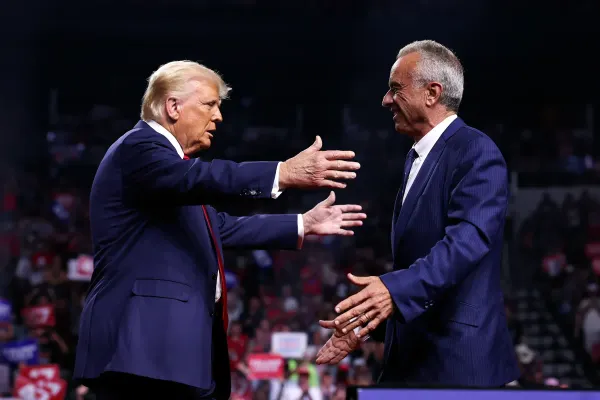
Paris Hilton told House Republican leaders on 17 November that 83 women serving in Congress are depicted in AI-generated rape media, 10 months after she first asked them at the Capitol to let victims sue.
Hilton’s team compiled the figures while preparing for her meetings at the Capitol. Her findings build on earlier research by the American Sunlight Project, which identified 25 women in Congress, approximately one in six congresswomen were targeted by sexually explicit deepfakes across 11 websites in December 2024. By November 2026, the reported number had more than tripled to 83, representing more than half of all congresswomen we targeted by AI-generated rape media.
Outside Congress, survivors have described what the abuse does to people with no staff, no press office and no lawyer. Elliston Berry, a Texas schoolgirl, spent eight and a half months trying to get her images off Snapchat. Molly Kelley, a Minnesota law student, learnt that a family friend had made the material of her and about 80 other women, and that he had broken no law she knew of.
The bill, the Disrupt Explicit Forged Images and Non-Consensual Edits Act, passed the Senate by unanimous consent on 13 January. Its House companion, H.R. 3562, has sat in the Judiciary Committee since May 2025. Unless the House passes the bill before the 119th Congress ends on 3 January, it expires, and the federal right to sue it would give victims of AI-generated rape media lapses with it.
AI-generated rape media is artificially generated sexual imagery, video or other media depicting rape, sexual coercion or nonconsensual sexual acts, including sexual depictions of identifiable individuals created or distributed without their consent. It is a form of digital sexual violence and exploitation.
The TAKE IT DOWN Act refers to "digital forgeries" of "intimate visual depictions", and the DEFIANCE Act to "intimate digital forgeries". AI-generated rape media is an editorial term with no standing in law. Labels such as "deepfake porn" name the software and borrow the vocabulary of consensual adult entertainment. The term used here names what is done to the person depicted, who never agreed to the sexual act shown, and treats the material as sexual violence and exploitation of that person. Where the material depicts a child it is child sexual abuse material, and is described as such.
What survivors told the Capitol
Hilton first spoke on the Capitol steps on 22 January, nine days after the Senate vote, beside the bill's House sponsors, Alexandria Ocasio-Cortez, a New York Democrat, and Laurel Lee, a Florida Republican. She described an intimate video of her released without her consent in 2004, when she was 19, and said the public had called it a scandal when it was abuse. She told the crowd the abuse she suffered then was now "the newest form of victimisation happening at scale", reaching daughters, sisters, friends and neighbours. Strangers have made more than 100,000 images and videos of AI-generated rape media depicting her, she said.
She came back on 17 November with women who have been targeted with AI-generated rape media and addressed Speaker Mike Johnson, Majority Leader Steve Scalise and Judiciary Committee chairman Jim Jordan by name. "Will you allow this to continue to happen to your colleagues?" she asked them, before asking the same of the women in their districts and of their daughters, wives and sisters. She said her team had studied how often women in Congress appear in such material and that, of the 156 women it counted, "83 have sexual deepfakes online right now".
She reminded them that 10 months earlier she had described what it feels like to have your body exposed without consent and asked Congress to act. She said the laws were not protecting women. "If this can happen to someone with my resources and my platform", she said, a young girl facing it alone would feel far more powerless. She asked the leaders to bring the bill to the floor and let Congress vote, and told them that if it failed this year all of the progress would be lost.
Ocasio-Cortez is among the women depicted. She told Rolling Stone in April 2024 that she had come across AI-generated rape media depicting her that February while scrolling through her X mentions in a car with aides. Her first thought was to get it off her screen, and the image stayed with her for the rest of the day. As a survivor of sexual assault, she said, it resurfaced trauma. She compared the intent behind it to physical rape, which she said is about "power, domination, and humiliation", and said women in leadership are targeted to teach them a lesson for being there at all. She told the magazine that children would kill themselves over the material.
Omny Miranda Martone, the founder of the Sexual Violence Prevention Association, helped write the bill and became a target because of it. Martone wrote that sexually explicit videos depicting them appeared after the bill was introduced in the Senate in January 2024 and resurfaced when it passed in July. The day after its House introduction, one arrived by email at the association with a message telling staff to fire them. Martone described the result as an overwhelming feeling of violation and fear and wrote that "retreating into silence is the only way to make it stop", before saying they would keep speaking.
Ocasio-Cortez said at the January press conference that "TAKE IT DOWN gave us removal, and DEFIANCE will give us recourse and restitution". Lee said on 17 November that once such images are shared, victims can face harassment, threats and lasting harm to their relationships, education and careers, all from material made without their consent. She said the bill would tell people who use AI to sexually exploit others that there will be consequences.
Eighty women in Minnesota
Kelley found out in June 2024 that a man her family had known well for years had taken ordinary photographs from the private Facebook pages of women in his life. He had fed them into an AI service to produce sexual images and videos of them. She later learnt he had done the same to about 80 to 85 other women, most of them in Minnesota and all of them women he knew. Because none of the women was a minor and he had not distributed the material, the authorities found no crime to charge. "He did not break any laws that we're aware of", Kelley told CNBC.
Three of the women described the consequences to the Minnesota House Commerce Committee on 19 February. Kelley's doctors were worried about her health, and she stopped going to work in person because she did not know where the images had travelled. Jessica Guistolise was afraid to leave her house for weeks, had to tell her employer's human resources staff about the material and expects to tell every future employer. She told legislators: "The internet is forever. The damage done is irreversible."
Megan Hurley, a massage therapist, missed two months of work, no longer felt safe alone at her workplace and fears that someone could run a reverse image search on the material to find her there. She gave the images to her local police and the FBI, and the committee was told of no outcome.
Hurley said the technology let anyone make convincing material of a person's family, children and grandchildren from a phone. She said she found it "abhorrent there are companies out there making money in this manner". Kelley said the campaign that followed had taken every spare moment she had. It produced HF 1606, the Minnesota law described below, which a federal appeals court has since barred the state from enforcing against xAI.
Children and their classmates
Francesca Mani was 14 when she was called to the counsellor's office at Westfield High School in New Jersey on 20 October 2023 and told that classmates had made AI-generated sexual images of her and other girls. The material depicted children, which made it child sexual abuse material. She told a Senate Commerce field hearing in June 2024 that she was first "shocked, then powerless and angered by the absence of laws" and school policies to protect the girls, who she said were on their own.
She was told the images had been deleted and never saw them herself. She asked Congress to make creating such material without consent illegal and to teach students how to use AI without being harmed by it.
Berry was 14 when a classmate in Aledo, Texas, took a photograph from her Instagram account in October 2023, ran it through an AI app and circulated child sexual abuse material depicting her and other girls on Snapchat. She told the same hearing that her school said the matter was out of its control and that she was expected to act as though all was well. The person responsible faced no consequences she knew of. Removing the images from Snapchat took eight and a half months, and removal did not wipe copies already saved on other people's phones. "Every day, I will live in fear that these images will resurface", she said.
Elijah Heacock, 16, of Glasgow, Kentucky, died by suicide on 28 February 2025 after receiving AI-generated child sexual abuse material depicting him and a demand for US$3,000 to stop it being sent to his friends and family. His parents, Shannon Heacock and John Burnett, found the messages on his phone while he was still in hospital and said they had never heard of sextortion before. Kentucky made sextortion a felony the following month.
Thorn, a child-safety group, surveyed 1,200 people aged 13 to 20 for a study published in March 2025. One in 17 had had what it called deepfake nudes made of them and one in eight knew someone who had. The National Center for Missing and Exploited Children received more than 1.5 million reports with a link to generative AI in 2025. The center said 1.1 million of them, submitted by Amazon, contained no actionable information. The rest included more than 30,000 reports of users trying to generate child sexual abuse material by uploading images and writing prompts, and more than 145,000 of users altering existing abuse files with AI tools.
Women in public life
The American Sunlight Project, a research group founded by the disinformation researcher Nina Jankowicz, built a search engine that looked for members of the 118th Congress by full name, abbreviation and nickname across 11 well-known sites dedicated to the material. It found more than 35,000 mentions of nonconsensual intimate imagery depicting 26 members, 25 women and one man, and calculated that women were 70 times more likely than men to be targeted. Party and state made no difference to the likelihood. Younger members were more likely to appear.
Researchers withheld the members' names so as not to send readers looking for the material, and notified each office. Imagery of most of the members was removed from the sites soon afterwards, and the authors said they could not explain why. Jankowicz learnt through a Google Alert in 2023 that she had been depicted in AI-generated rape media. She told The 19th: "It's not a future harm." She has said the material was made to demean and discredit women in public view and described its effect on her working life to PBS: "it's exhausting. And that's exactly the point."
Hilton's figure of 83, if accurate, would mean 53 per cent of the women in Congress, more than three times the share the 2024 study found. The two counts cover different Congresses and an unknown overlap of sites.
A survey for UN Women reached 641 women journalists, activists and human rights defenders in 119 countries between August and November 2025. It found that six per cent had been depicted in deepfakes, the survey's term, and 12 per cent had had personal images, including intimate ones, shared without consent. Some 41 per cent had self-censored online to avoid abuse, and 42 per cent of the journalists reported offline attacks arising from online abuse, more than double the 2020 share.
A 31-year-old journalist in Rio de Janeiro, identified only as Julie, was swarmed in early 2026 by X accounts posting AI-generated rape media of her made with Grok after years of attacks over her political views. She told Tech Policy Press that she began having intrusive thoughts in lifts full of men and felt watched everywhere. She said the attack showed her she had lost control of her own body, and added: "I realized that I never really had it." X removed the posts but left no trail to the accounts. Police treated her as overreacting because the images were fake, and friends blamed her for posting photographs online.
Grok's 11 days
The Senate vote in January came two weeks after xAI added an image-editing feature to its Grok chatbot on X. The Center for Countering Digital Hate analysed a random sample of 20,000 of the 4.6 million images Grok posted between 29 December 2025 and 8 January 2026. It estimated that 3,002,712 were what it classed as photorealistic sexualised images of people, about 190 a minute, and that 23,338 appeared to depict children. The group could not tell how many were edits of real photographs and how many were generated from text prompts. Where those images depicted real people sexually and without their consent, they are AI-generated rape media under the definition used here.
People identified in the sampled images included Taylor Swift, Selena Gomez and Ebba Busch, Sweden's deputy prime minister. Indonesia, Malaysia and the Philippines blocked Grok in the same fortnight.
Ashley St Clair, a writer who has a child with Elon Musk, found the material depicting her after a friend alerted her on the first Sunday of January. She said Grok told her it would stop producing the images when she asked, then produced more explicit ones at users' requests, including some made from photographs taken when she was 14. She said the more she spoke out, the more material depicting her appeared, including an image placing her, a Jewish woman, in a bikini covered with swastikas.
She refused to raise the matter with Musk privately, telling NBC that doing so would use resources unavailable to the other women and children targeted. On CBS she said the abuse "can be stopped with a singular message to an engineer".
St Clair sued xAI in New York on 15 January on nine counts including negligence and design defect. Her complaint says Grok kept producing AI-generated rape media depicting her after it told her it would stop. xAI moved the case to federal court in Manhattan and sued her in Texas, alleging she breached its terms of service.
A woman suing as Jane Doe filed a proposed class action in northern California on 23 January. She alleges that xAI failed to build safeguards that would have stopped Grok producing thousands of pieces of AI-generated rape media on X. The same week 35 state attorneys general wrote to xAI demanding that it stop Grok creating nonconsensual explicit images and child sexual abuse material. Minors from Tennessee sued in March, alleging that Grok was used to turn their childhood photographs into child sexual abuse material. A second California class action, Jane Doe I v X.AI Corp, filed on 18 August as case 3:26-cv-08567, accuses the company of knowingly profiting from Grok's ability to produce child sexual abuse material.
What xAI knew
Twelve of more than 30 current and former xAI workers who spoke to Business Insider in September 2025 said they had encountered sexually explicit material while training Grok, including user requests for AI-generated child sexual abuse material. Grok had been built with "sexy" and "unhinged" modes and a "spicy" setting for images and video. Musk had posted in August 2025 that spicy content helped earlier technologies such as VHS succeed. xAI's published policy at the time forbade sexualising children but contained no rule against sexual images of adults, NBC reported in January.
The Washington Post reported on 2 February, citing more than half a dozen former employees of X and xAI, that the company had rolled back guardrails and ignored internal warnings about sexual material to increase Grok's popularity. X's safety teams had warned management in meetings and messages that the tools could be used to create sexual images of children and real people, according to the report. Workers on the human data team were asked in spring 2025 to sign a document accepting that they would handle sensitive, violent and sexual content that could cause psychological distress.
xAI restricted image editing on X to paying subscribers on 9 January, when the cheapest tier cost US$8 a month. Free users could still edit images on the standalone Grok website and app, the Associated Press confirmed that afternoon. A spokesman for Keir Starmer, the UK prime minister, called the restriction "insulting to victims of misogyny and sexual abuse" and said it turned the feature into a premium service. St Clair said limiting it to paying users was placing an undue burden on the victims to report to the police.
On 14 January xAI said Grok on X would no longer edit images of real people into revealing clothing. St Clair said later that month that the standalone app was still producing material depicting her, including images of her being burned.
xAI sued one of its own users in Texas in July. Its complaint accuses Terry Wayne Harwood, a 67-year-old South Carolina man, of uploading ordinary photographs of adults and children to two accounts between 8 December 2025 and 18 February 2026. It says he kept rewording prompts Grok had refused until it produced sexual images of them without their consent, which xAI's complaint describes as including child sexual abuse material. The complaint also states that xAI suspended more than 52,000 accounts in 2026 and made more than 73,000 reports to the National Center for Missing and Exploited Children, which the company says contributed to at least 244 arrests.
Minnesota passed HF 1606, which bars websites and apps from letting users generate nude images of real people, a practice the statute calls nudification. Each violation carries a penalty of up to US$500,000. xAI sued Attorney General Keith Ellison in late July, saying it accepted the state's interest in stopping nonconsensual nude images but that the law banned protected expression.
President Donald Trump's Justice Department intervened on xAI's side. In a statement of interest filed on 18 August it said Minnesota's definitions reached further than federal law. It also argued that the ban threatened national security, citing a December 2025 executive order in which Trump directed challenges to state AI laws. The department contended that by targeting the tool itself the law could chill the development of image generators in ways that would harm U.S. competitiveness and national security. It had already joined xAI in April against a separate Colorado law on algorithmic discrimination, the department's first intervention against a state AI regulation.
Judge Donovan Frank of the federal court in Minnesota refused to block the law on 31 July and again on 4 September, finding that xAI had not shown irreparable harm. His ruling said the technology had produced "a flood of sexualized images" and cited the testimony of Kelley, Guistolise and Hurley. The Eighth Circuit Court of Appeals overrode him on 2 October. In a one-sentence order that gave no reasons, it barred Ellison from enforcing the law against xAI while the appeal proceeds, in case 26-2806. Ellison's office said it disagreed with the decision and would defend the law. xAI told the appeals court that its Grok Imagine tool has protections against producing sexualised images of real people.
Virginia and Oregon became the first states to sue over Grok on 23 November. Attorneys General Jay Jones of Virginia and Dan Rayfield of Oregon filed separate consumer-protection complaints in state courts against SpaceX, which acquired xAI in February and has since renamed it SpaceX Super Intelligence, together with X Corp. They allege the companies marketed Grok as safe while its image generator produced sexualised images of women and children, and seek civil penalties and stricter safeguards. Virginia's complaint accuses SpaceX of failing to stop Grok "from generating sexualized images of people, including children, without their knowledge or consent".
Who pays for the material
The Institute for Strategic Dialogue, a London-based research group, identified 181 websites that turn photographs of real people into AI-generated rape media, which the report calls nudify tools, in a March 2026 survey funded through the UK AI Security Institute. The sites drew about 40.1 million unique visitors a month, and the busiest drew nine million. Only two of the 163 sites reachable from the UK verified users' ages, the report found.
Telegram hosted at least 50 bots that claimed to produce the material when WIRED reviewed the platform in October 2024. Telegram's own counters showed more than four million monthly users across them, two bots each listing more than 400,000, and at least 25 linked channels had more than three million members combined. Almost all of the bots required users to buy tokens, with money or cryptocurrency. Telegram deleted the 75 bots and channels named after WIRED contacted it. The Centre for Information Resilience reported in 2026 that newer bots were built to survive takedowns and rewarded users for publishing what they made.
Researchers at Stanford University and the University of California San Diego studied MrDeepFakes, then the largest marketplace, for a paper presented at the USENIX Security Symposium in August 2025. By November 2023 the site hosted 43,000 videos of AI-generated rape media depicting 3,800 people, viewed more than 1.5 billion times, and 95.3 per cent of its most common targets were women. In 830 paid request threads, the researchers identified three motives among buyers: nonconsensual sexual gratification, power and masculinity, and contributing to the community. Despite the site's rules, 2.4 per cent of uploaded videos depicted rape, abuse or humiliation. The same researchers found that many generator sites ran affiliate programmes paying promoters up to 50 per cent commission.
Indicator, a publication that investigates digital deception, estimated in July 2025 that 85 such sites averaged 18.5 million visitors a month and could earn up to US$36 million a year. In January 2026 the Tech Transparency Project found 55 apps that generate the material, which it called undressing apps, on Google Play and 47 on Apple's App Store. They had more than 705 million downloads and about US$117 million in revenue, according to ISD, which found many still listed in March and none by June.
The companies that keep the sites running
Cloudflare, a U.S. company, served 104 of the 181 sites ISD identified, or 58 per cent. Vercel hosted 28 and Namecheap registered 65 of the domains. Owners' details were hidden in 80 per cent of domain registrations. The sites referred to Square 39 times, Stripe 27 times, PayPal 20 times, Visa 19 times and Mastercard 14 times, though ISD wrote that the references fell short of proving active merchant accounts. Some card checkouts settled in cryptocurrency behind the scenes. Some sites and most of the Telegram bots that produce the material took Telegram Stars, a currency bought through Apple's and Google's app stores, which ISD found lets buyers avoid the checks attached to card payments.
Meta sued Joy Timeline HK, the Hong Kong company behind the CrushAI apps, in June 2025 after the company repeatedly evaded ad review, and after researchers counted at least 8,010 CrushAI ads on Meta's platforms in two weeks. ISD counted more than 600 identical ads for such services shown to UK users on Facebook and Instagram between April and July 2025.
MrDeepFakes shut on 4 May 2025 after an unnamed service provider cut it off. San Francisco City Attorney David Chiu sued the operators of 16 sites producing AI-generated rape media in August 2024, after they drew 200 million visits in six months. By June 2025 he had taken 10 offline or out of California and won a permanent injunction against one operator, Briver LLC.
The commercialisation of sexual violence
Philosopher Heather Marsh, has built a theory of power across her Binding Chaos series of books. In it the self is made of interactions with others, and power is what one side takes from the other in an unequal exchange. In The Creation of Me, Them and Us, she gives a name to what is being sold here. Sexualised sublation, she wrote, is "Interactions of humiliation or sublation promoted as sex to disguise their nature." Sublation in her usage is an exchange in which one person's will absorbs the other's. The dominant side gains, and the other loses ownership of their own body, attention and reputation.
Rape, Marsh wrote, is "a denial of bodily autonomy in an attempt to sublate another person", and the person violated is then treated as the holder of the guilt and punished for their own victimhood. Ocasio-Cortez described the same purpose when she said the intent behind the images of her was power, domination and humiliation. Jankowicz said the material was made to demean women in public view and that the exhaustion it caused was the point. Guistolise, who had posed for none of the images, still had to explain them to her employer's human resources staff and expects to explain them to every employer after that.
Trafficked and drugged victims and ever-younger children now make up much of what pornography shows, Marsh wrote in the same book. She wrote that it had become impossible to ignore that "a large subset of porn was primarily marketing violation and sublation, not sex." The paid request threads on MrDeepFakes show that market at work. Buyers named the woman they wanted, paid for the video and listed power and masculinity among their reasons, alongside sexual gratification.
Abstracting Divinity, published in June 2024, explains where that gratification comes from. Marsh calls the energy that passes between people in every interaction anima. Secondary anima, she wrote, is "Anima obtained through fear or other stress responses of another, or destruction." It brings highs, crashes and cravings in place of joy, and a person who feeds on another's suffering needs more with each attack.
Entertainment across most of the world presents destruction, violation and sublation as sources of excitement ahead of connection, Marsh wrote, and so develops an appetite for secondary anima. Industries sold as video games, sex and comedy ought to be sorted by whether they offer connection, sublation or violation. "That is what they are really selling," she wrote. Rape presented as entertainment is labelled pornography or sex, according to the book, while its audiences are often indistinguishable from those for gore. Women terrorised, raped and murdered on screen give viewers the excitement real victims would give them in a setting freer of guilt, she wrote.
AI-generated rape media puts real women into that setting without their knowledge. Grok posted its sexualised images publicly on X, and Hurley fears that a stranger could trace the images of her to her workplace.
In How to Dismantle a Dictatorship, published in 2025, Marsh lists pornography that trains violence against women and children among the instruments of autogenocide. She uses the word for a genocide the public is coerced to commit on itself and on one another, carried out through social policy, poverty, addiction, entertainment and social media in place of firing squads. Because the harm is delivered remotely, she wrote, those who design it can reject the guilt, and its own victims often defend it as freedom.
A man beaten by a group of men may start an uprising, Marsh wrote, while a woman beaten the same way is posted on pornography sites with the claim that she enjoyed it. "Violence is called sex and love if it happens to women or children," she wrote.
National security was the argument the Justice Department used in August to support xAI against Minnesota's ban. Marsh listed the same move among the defences raised when the powerful are accused: "the economy, the law and national security are invoked to demand different rules" for acts that would otherwise be treated as crimes. Hosting companies, payment processors and app stores kept the sites ISD mapped in business. House leaders have held the one federal bill that would let victims sue the people responsible for 10 months without a vote.
Women and children hold the lowest place in what Marsh calls the negative image, the role given to people made to absorb a group's blame. When guilt is not assigned to those with power, she wrote, both guilt and punishment are assigned to the negative image. Kelley, Guistolise and Hurley described that cost to Minnesota legislators in lost work, medical worry and weeks spent afraid to leave home.
The removal burden
The TAKE IT DOWN Act, championed by Melania Trump and signed by President Trump on 19 May 2025, made knowingly publishing nonconsensual intimate images, real or AI-generated, a federal crime. Since 19 May 2026 it has required covered platforms to remove reported images and known identical copies within 48 hours of a valid request, which the victim or someone acting for them must submit. It gives victims no right to sue for damages.
Breeze Liu, a former venture capitalist, found in 2023 that a video recorded without her consent had spawned AI-generated rape media across 832 links. Most sites, including Microsoft's Azure cloud service, were slow to act. Microsoft began removing the material only after Liu and her colleague Andrea Powell confronted a senior member of its safety team at a content moderation conference, and Liu said some of it remained online. Liu built and largely self-funded a company, Alecto AI, to help other victims find and remove such material for free.
Berry's mother, Anna McAdams, contacted Snapchat repeatedly for more than eight months. The images came down within 24 hours of a call to the company from Senator Ted Cruz of Texas. Jankowicz said a copyright claim against the original poster of AI-generated rape media depicting her failed to stop copies spreading across the internet. The 2024 congressional study found that material taken down after researchers alerted members' offices could still be reposted and that Google continued to index some search results. Its authors said ordinary victims would be unlikely to get removals as quickly as members of Congress did.
The Federal Trade Commission, which enforces the TAKE IT DOWN Act's platform rules, opened a complaint site, TakeItDown.ftc.gov, on 19 May. The next day it sent warning letters to 12 unnamed websites offering what it called nudify tools, saying they appeared to offer no way for victims to request removal and faced civil penalties of up to US$53,088 per violation. Chairman Andrew Ferguson had written to more than a dozen large technology companies the week before.
What the bill would let victims do
The DEFIANCE Act amends a civil remedy Congress created in 2022, codified at 15 U.S.C. 6851, which already lets people sue over the disclosure of authentic intimate images. The Senate-passed text, S.1837, adds "intimate digital forgeries": sexual depictions of an identifiable person made with software or AI that a reasonable viewer could not tell from a real image. An image carrying a label or disclaimer saying it is fake still falls within the definition.
A person depicted could sue anyone who knowingly produced a forgery, possessed one intending to disclose it, disclosed it, or solicited or received it, provided the defendant knew or recklessly disregarded that the person had not consented. A claim against someone who only produced a forgery also requires proof that the defendant knew of, or recklessly disregarded, harm or a reasonable likelihood of harm. The man who made material of Kelley, Guistolise and Hurley without sharing it would fall under that production clause. Guardians could sue for minors and for people who are incapacitated or have died.
Victims could choose liquidated damages of US$150,000, rising to US$250,000 where the conduct related to actual or attempted sexual assault, stalking or harassment. They could instead claim actual damages including the defendant's profits, and the text shifts the burden so that the plaintiff proves only gross revenue and the defendant must prove its deductions. Courts could add punitive damages and legal costs, order material deleted or destroyed, let plaintiffs proceed under a pseudonym and keep the images in the court's custody. Claims could be brought up to 10 years after a victim discovers the violation or turns 18.
States keep their own laws, and may pass stronger ones, under a savings clause. The text makes no mention of Section 230 of the Communications Decency Act, the 1996 provision that generally shields online services from liability for material their users post, and sets out no new procedure for identifying anonymous defendants. A victim such as Julie, whose attackers left no trail, would still have to unmask them through ordinary subpoenas before suing.
Johnson, Scalise and Jordan
A coalition led by Encode and the Sexual Violence Prevention Association addressed a letter in December 2024 to Johnson, Scalise and Jordan, warning that every day of delay meant more victims. Hilton named Johnson at the Capitol in January and all three in November. The association delivered fresh letters to Johnson and Scalise on 17 November asking for a floor vote.
H.R. 3562 has 70 cosponsors from both parties, and Microsoft, Snap and OpenAI back it. No senator objected when it passed in January. Ocasio-Cortez said on 17 November that the bill had sat untouched in the House for 10 months waiting for a floor slot. It had passed the Senate unanimously twice, in 2024 and in January, and she asked why it had never been brought to a vote. Johnson's office did not respond to a CBS News request for comment on why it had stalled. She said advocates had been talking to the White House and were optimistic about its view of the bill.
Politico reported in July that some House Republicans were reluctant to hand Ocasio-Cortez, a possible 2028 presidential candidate, a legislative win. Jordan told Politico the bill was a "very important piece of legislation" and that he was talking to Lee about it, and gave no timetable for committee action. Johnson told reporters that week he supported the bill but was unsure of its status in committee. In September he called it "good policy" but said the House had not built consensus behind it. Ocasio-Cortez has said the question of the delay should be put to Jordan.
Jordan's committee also held an earlier bill on the same abuse. Representative Joe Morelle, a New York Democrat, wrote to him in February 2024 urging action on the Preventing Deepfakes of Intimate Images Act after AI-generated rape media depicting Taylor Swift spread on X.
Democrats won control of both chambers in the 3 November midterm elections. On 10 November House Republicans elected Jordan, who still chairs the Judiciary Committee, to lead them in the minority from January, by 106 votes to 73, after Johnson said he would not stand.
Senator Dick Durbin of Illinois, the bill's Senate sponsor, tried in September 2025 to attach its terms to the annual defence authorisation bill. The Senate passed the bill on its own four months later. Senator Lindsey Graham of South Carolina, its Republican Senate co-lead, died on 11 July.
What survivors are asking for
Hilton has asked for one thing: a House vote before the session ends. Mani asked Congress to make the creation of the material illegal and to teach children about it. Berry said her aim was to stop any other student going through what she did. Hurley told Minnesota legislators that, under the law as it stood, she and the other women had no path to justice. Martone wrote that without the DEFIANCE Act they had no way to protect themselves.
Johnson can bring S.1837 to the floor without committee action because it is held at the desk in the House. Jordan can mark up H.R. 3562 in the Judiciary Committee he chairs until January. The House has scheduled neither before 3 January.
If the bill expires on 3 January, the right to sue it would create will exist for no victim. Ocasio-Cortez and Lee would have to reintroduce it from the start in a House controlled by Democrats, with Jordan leading the Republican minority. Until a bill is passed, a woman in Kelley's position has no federal damages claim against the man who made AI-generated rape media of her, and Minnesota cannot enforce its own ban against xAI while the company's appeal runs.
Subscribe or follow #OpDeathEaters to support our investigations and campaign.
Bluesky: Follow @opdeatheaters.bsky.social
#OpDeathEaters #3E #EndImpunity