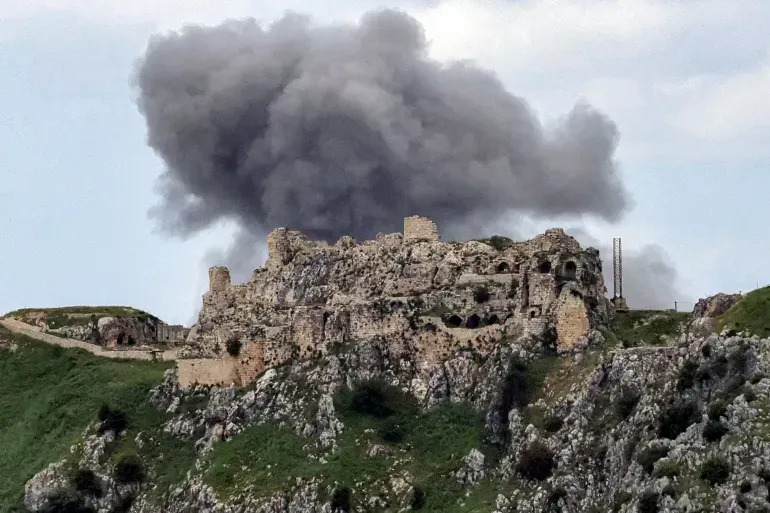
The man who ordered Israel's deepest military incursion into Lebanon in 26 years is himself the subject of an outstanding International Criminal Court arrest warrant. Prime Minister Benjamin Netanyahu sent ground forces across the Litani River and onto the Beaufort Castle ridge on 31 May, capturing a 900-year-old Crusader fortress that Israeli troops last held before withdrawing from Lebanon in 2000. The advance came as a tentative US-Iran agreement sat unsigned, and as the UN human rights office repeated that Israeli attacks on Lebanon may amount to war crimes.
Lebanese officials reported Israel was pursuing a scorched-earth policy they called illegal. Netanyahu said he had told the military to deepen and expand Israel's grip on places once controlled by Hezbollah. Israeli forces now occupy around 2,000 square kilometres of Lebanese territory, roughly one-fifth of the country.
The offensive and its human toll
Israeli forces have killed at least 3,433 people in Lebanon since the current escalation began on 2 March, and wounded 10,395, according to the Lebanese Health Ministry. The toll includes 211 children, 292 women and 116 health workers. Tens of thousands of Israelis have been forced from their homes in the north by Hezbollah rocket fire.
The fighting reignited after Hezbollah fired projectiles into northern Israel, which the group called a defensive act, days after US and Israeli strikes on Tehran on 28 February killed Iranian Supreme Leader Ali Khamenei. Israel answered with a large-scale air and ground campaign and has continued striking despite repeated ceasefire announcements.
The single worst day was 8 April. Hours after Pakistan brokered a two-week ceasefire in the Iran war, Israel struck approximately 100 targets across Lebanon in about 10 minutes, killing at least 357 people and wounding 1,223. Lebanese officials called it Black Wednesday and accused Israel of carrying out a massacre. Israel named the operational order Eternal Darkness and said it had hit only Hezbollah targets. Netanyahu said the Iran ceasefire did not extend to Hezbollah. Hezbollah lawmaker Hassan Fadlallah called the strikes a grave breach of the truce and warned of consequences for the entire agreement.
The scope dispute that drove the April crisis runs deeper than a diplomatic misunderstanding. Diplomats briefed CBS News on 9 April confirmed that Trump had initially included Lebanon in the Iran ceasefire, and that Israel had also initially agreed to those terms. The United States changed its position after a phone call between Trump and Netanyahu. Pakistan's Prime Minister Shehbaz Sharif, who brokered the truce, stated publicly that it covered Lebanon. Iran said the same. More than 20 states and the UN condemned the 8 April attacks. Qatar declared full solidarity with Beirut.
Within days, Netanyahu agreed to a separate, US-mediated channel with Lebanon that opened on 16 April, even as Israeli planes kept bombing. The ceasefire it produced, which took hold on 17 April, had done little to stop Israeli strikes by the time ground forces seized Beaufort Castle six weeks later.
What international law says
The Geneva Conventions require every armed force to distinguish fighters from civilians, weigh expected civilian harm against military gain, and give warning before strikes. The UN human rights office says Israeli forces disregarded all three in multiple documented cases.
The Office of the UN High Commissioner for Human Rights documented strikes that flattened multi-storey residential buildings and killed entire families. In a report covering the first three weeks of this year's escalation, it cited an Israeli strike on 8 March on a residential building in Sir el-Gharbiyeh, in Nabatieh governorate, that killed 13 civilians: five women, five men, two boys and a girl. OHCHR spokesperson Thameen al-Kheetan said Israeli forces in several cases gave warnings that were useless, or gave none at all. Deliberately attacking civilians or civilian objects amounts to a war crime, he said.
Israeli fire has killed at least 16 health workers, including a double-tap strike in the town of Majdal Zoun that killed five people, three of them rescue workers who had come to help the wounded from the first strike. Displaced families sheltering in tents along the Beirut seafront were also struck.
Israel's orders for residents of more than 90 towns in southern Lebanon to leave may amount to forced displacement, which the laws of war forbid except in narrow circumstances, the UN office said. Human Rights Watch reached a similar conclusion in March, accusing Israeli officials of signalling an intent to displace residents, destroy homes and strike civilians. Forcible displacement, wanton destruction and deliberate attacks on civilians are war crimes, the group said. It warned that governments continuing to supply Israel with arms risk legal complicity, and urged Lebanon to accept the ICC's jurisdiction.
Children across the south have lost another academic year. The displaced lack adequate healthcare, food and clean water. UN experts have also said Israeli strikes have poisoned Lebanon's air and water.
This is not the first ceasefire Israel has been accused of violating in Lebanon. The UN says that after the November 2024 ceasefire that was meant to end the previous war, Israeli forces committed more than 10,000 air and ground violations. By April 2025, the human rights office had counted at least 71 civilians killed by Israeli forces since that truce took hold. The war that started again on 2 March is, in part, an accounting of that impunity.
Israel rejects the accusations, and it claims that Hezbollah reopened hostilities on 2 March, that its targets are command centres, missile launchers and weapons stores, and that the group embeds those assets in civilian neighbourhoods. The UN human rights office also found that Hezbollah fired unguided rockets into Israeli residential areas, conduct it said may likewise breach international humanitarian law.
Israel and Russia brothers in Crime
The ICC issued an arrest warrant for Netanyahu on 21 November 2024, naming the war crime of starvation as a method of warfare and the intentional targeting of civilians, alongside crimes against humanity of murder and persecution, all tied to Gaza between October 2023 and May 2024. He is listed as at large. Human Rights Watch calls him a fugitive from justice. Every ICC member state, EU members and Canada, among them, has a legal obligation to arrest him if he lands on its territory. Hungary declined to do so when it visited in 2025 and has since moved to quit the court. The Lebanon allegations, if a prosecutor ever charges them, would sit on top of a warrant that already stands.
The warrant puts Netanyahu in familiar company. The same court ordered the arrest of Vladimir Putin on 17 March 2023 over the unlawful deportation of Ukrainian children. Both men lead states that reject the court; Russia quit the Rome Statute in 2016, and Israel never joined, and both dismiss the warrants as illegitimate while remaining at large and continuing to commit international crimes and kill countless civilians.
The parallel is difficult to miss and even more difficult to deny or hide. Moscow has denied for years that its forces target Ukrainian civilians and insists it strikes only military sites, even as its missiles hit apartment blocks, hospitals and the power grid. Israel uses the same lines in Lebanon, claiming it hits only Hezbollah, while the UN records strikes that flatten family homes.
Writing in Verfassungsblog, scholars noted that leading Western states, Germany and France among them, welcomed the 2023 warrant for Putin but have questioned or rejected their duty to enforce the 2024 warrant for Netanyahu, in what the analysis called legally identical circumstances. They warned of an emerging democratic exception to the court's reach, the idea that a state counted as a democracy earns exemption. That is a political distinction, not a legal one.
Kenneth Roth, the former head of Human Rights Watch, put it plainly: "it is not the rule of law when it applies to adversaries but not to friends"
A direct reference to US backing for the international warrants, so long as they don't target Israel.
Senator Bernie Sanders said the same: "Those who call Putin a war criminal while shielding Netanyahu are applying one standard to an enemy and another to an ally."
The sabotaged US - Iran deal
US and Iranian negotiators reached a tentative 60-day memorandum of understanding on 28 May to extend the Iran war ceasefire and open fresh talks on Tehran's nuclear programme, two US officials told Axios. Trump had not signed it as of 1 June. Iran had not confirmed its acceptance.
The first item on the table under the proposed framework is Iran's stock of highly enriched uranium, 440.9 kilograms purified to 60 percent, a short technical step from weapons grade, according to the International Atomic Energy Agency. The MOU would also include language reopening the Strait of Hormuz and lifting the US naval blockade on Iranian ports.
Before the war started, Oman mediated direct US-Iran nuclear talks in Muscat in February 2026 that produced what both sides called real progress toward identifying common ground. Those talks ended when US and Israeli forces struck Iran on 28 February. After the war began, Pakistan took over as the primary mediator. Rounds in Islamabad on 11 and 12 April reached an agreement on most of a 10-point framework, then collapsed over the Strait of Hormuz and the nuclear file. The US answered with the naval blockade. The 28 May memorandum is the first sign since then that a deal might hold.
Iran has tied any agreement to a halt in Lebanon. Tehran demands an end to the fighting there as part of any wider deal. The MOU draft reported by Axios included language stating that the war between Israel and Hezbollah would end. That specific provision has been a point of tension between Trump and Netanyahu.
Fawaz Gerges, a professor at the London School of Economics, said Israel's expanding offensive threatens to derail any deal between the US and Iran. Unless Trump pressures Netanyahu, Gerges said, he doubts the Iranian side will sign.
That pressure was visible in real time on 1 June, and it got ugly. Earlier in the day, Netanyahu ordered strikes on Hezbollah-controlled areas in southern Beirut. Iran's foreign minister Abbas Araghchi wrote on X that the ceasefire with Iran "constitutes, without any ambiguity, a comprehensive ceasefire across all fronts, including Lebanon." Iran's Tasnim news agency reported that Tehran had suspended its participation in talks with the US over the situation in Lebanon. The MOU that negotiators had spent weeks assembling was on the verge of collapse before Trump had even signed it.
Trump called Netanyahu. What followed, according to two US officials and a third source briefed on the call who spoke to Axios, was one of the worst exchanges between the two men since Trump returned to office. Trump knew Hezbollah had been shooting at Israel and accepted Israel had a right to defend itself, but believed Netanyahu had escalated beyond any proportionate response. He objected specifically to Israel knocking down entire buildings to kill a single Hezbollah commander. One official said Trump told Netanyahu that following through on the Beirut threats would further isolate Israel around the world.
Summarising Trump's remarks to Netanyahu, a US official reported: "You're fucking crazy. You'd be in prison if it weren't for me. I'm saving your ass. Everybody hates you now. Everybody hates Israel because of this."
A second source briefed on the call said: Trump was "pissed" and at one point yelled: "What the fuck are you doing?"
Two sources said Trump was pointing to his repeated public calls for Israeli President Isaac Herzog to pardon Netanyahu, who is in the middle of a corruption trial. Trump has publicly positioned himself as the reason Netanyahu has not faced a worse legal reckoning.
The second US official said Trump "steamrolled" Netanyahu. Netanyahu's response, per that official: "OK, OK, just make sure everything is taken care of."
What Netanyahu said publicly was the opposite. After the call he released a statement saying he'd told Trump that Israel would attack targets in Beirut if Hezbollah did not stop attacking Israel, and that in the meantime Israel would continue its operations in southern Lebanon.
"Our position remains the same," Netanyahu wrote.
At 2:27 p.m. EDT, Trump posted on Truth Social. There would be no troops going to Beirut. Any troops en route had been turned back.
"Likewise, through highly placed Representatives, I had a very good call with Hezbollah, and they agreed that all shooting will stop," Trump wrote. "That Israel will not attack them, and they will not attack Israel."
Hezbollah formally accepted. A statement from the Lebanese Embassy in DC confirmed the group had agreed to the US proposal. An adviser to Lebanese Parliament Speaker Nabih Berri confirmed that Hezbollah had signalled its readiness. Lebanese President Joseph Aoun's office described the terms: Israeli strikes on Dahiyeh stop in exchange for Hezbollah holding fire, to be expanded across Lebanon. Qatar, which had worked with the US over the weekend to push for de-escalation, was still acting as a backchannel.
Within hours, the strikes continued anyway. Lebanese state media reported Israeli airstrikes across the south through the night. Netanyahu said the military would "continue to operate as planned in southern Lebanon." Defence Minister Israel Katz denied there was a ceasefire in Lebanon at all. CNN reported that Israel had postponed rather than cancelled the Beirut operation at the US request. Trump called the fighting a "glitch" and said a deal with Iran could come within the week.
Trump called the Israel-Hezbollah fighting a "glitch" and said a deal with Iran could come within the week. The morning brought a harsher reality, Esmaeil Qaani, commander of the IRGC's Quds Force, issued a statement saying continued Israeli operations in Lebanon and Gaza would lead the Axis of Resistance to extend the Hormuz blockade to the Bab el-Mandeb Strait, the chokepoint connecting the Red Sea to the Gulf of Aden through which roughly 10 per cent of global trade normally passes.
The Axis would "take steps to activate other fronts, and equate the traffic situation of the Bab el-Mandeb Strait with the Strait of Hormuz," Qaani said, in comments posted on Telegram by Iranian state television.
Hormuz transits have already collapsed to roughly 4 per cent of pre-war baseline. Shipping that abandoned Hormuz has been rerouting around the Cape of Good Hope; the Bab el-Mandeb is currently running at 154 per cent of normal throughput as a result. There is no third route. Trump posted that Iran talks were continuing "at a rapid pace." Iran has not confirmed that.
What states can do
UN experts have called on all states to suspend arms transfers to Israel while credible evidence of serious violations stands. Human Rights Watch has warned that continued military support risks legal complicity. That puts arms-export decisions in European capitals and in Ottawa directly in the frame.
Canada can act under its Special Economic Measures Act and the Justice for Victims of Corrupt Foreign Officials Act, both of which can target individuals tied to grave abuses. The EU runs its own global human rights sanctions regime. Lebanon is not a party to the Rome Statute. Rights groups want Beirut to accept the court's jurisdiction, a step only Lebanon can take.
The UN has launched a 308-million-dollar flash appeal for Lebanon. The Beaufort Castle ridge now flies an Israeli flag, the same fortress Israel occupied for nearly two decades before withdrawing in 2000. Defence Minister Israel Katz said the soldiers "will remain there as part of the security zone in Lebanon." The last time Israel said that, it took 18 years to leave.