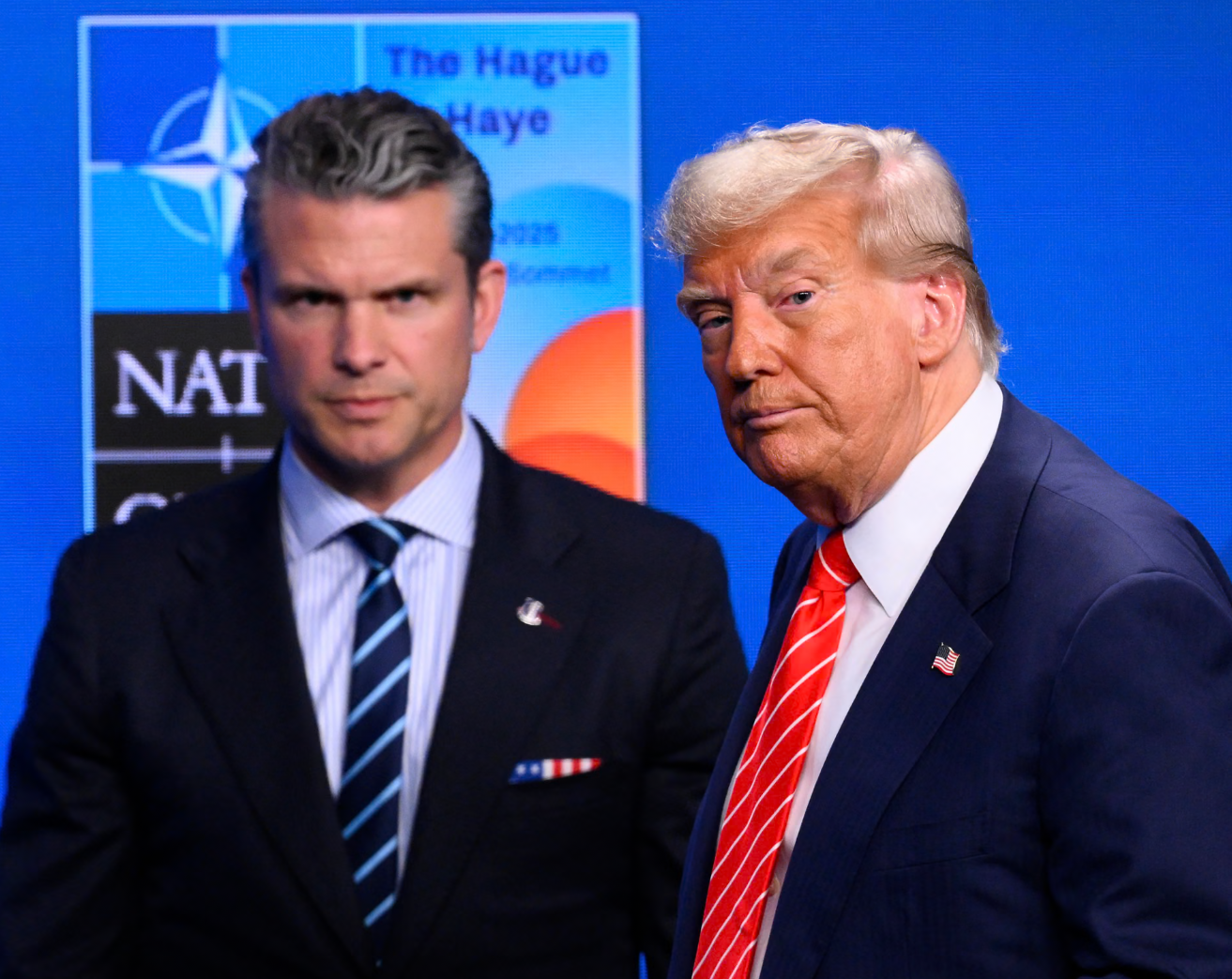
Pete Hegseth, the U.S. defence secretary, is delaying the transfer of about 60 Patriot interceptors that Ukraine's allies have already paid for.
State Department notices, an executive order and statements from U.S. and Ukrainian officials document a series of decisions dating back to early 2025. The Trump administration has twice cut off the intelligence Ukraine uses to warn civilians of missile strikes, ended the main U.S. programme for repairing Ukraine's power grid and stalled a Patriot production licence that President Donald Trump promised in July. Military satellite terminals used by Ukrainian drone units were throttled in October on an instruction that three U.S. officials traced to a White House official. The same month the administration eased sanctions on Russian diesel while demanding that Ukraine stop hitting Russian refineries.
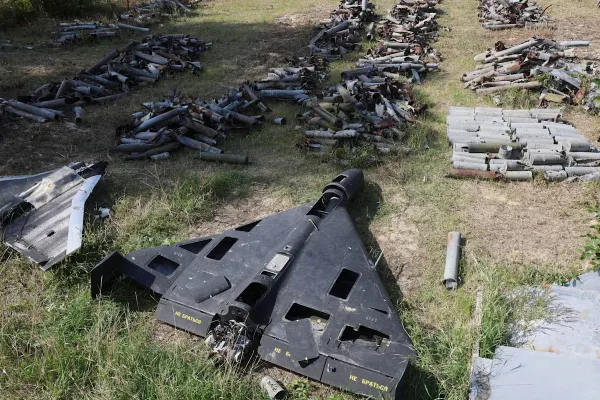
Ukraine shot down 26 Russian ballistic and hypersonic missiles between the start of September and 24 November, according to Ukrainian Air Force counts. Frontlinedatalab, an open-source research group, estimates that Russia launched about 248 ballistic and 83 hypersonic missiles over the same 83 days. The UN Human Rights Monitoring Mission in Ukraine recorded 372 civilians killed and 1,981 injured in October, a 95 per cent rise in casualties on October 2025.
Canada is one of the governments paying for U.S. weapons that the Trump administration must then release. Its contributions to the NATO-run Prioritised Ukraine Requirements List (PURL) reached about C$892 million by December 2025, and Canadian money helped fund the 500 PAC-3 interceptors the State Department approved for sale to Ukraine on 30 October.
Prime Minister Mark Carney said in Istanbul on 23 October that the Starshield slowdown had "real consequences, human consequences, direct casualties", and that Canada was diversifying away from systems it depends on in other countries. David McGuinty, the defence minister, announced C$80 million for sensor systems on 17 November to help Ukraine defend against missile and drone attacks, part of more than C$8.5 billion in Canadian military assistance since February 2022.
A Pentagon spokesperson said there had been "no change in the Department of Defense's policy regarding support for Ukraine". A Pentagon official said on 25 November that the department was pursuing parallel efforts to expand Patriot production with European partners and Ukraine. Marco Rubio, the secretary of state, said on 20 October: "There's nothing being deliberately denied to Ukraine." Trump has said that he and Elon Musk had nothing to do with the satellite restrictions.
Two Ukrainian officials described the Patriot delays and the Starshield restrictions as a coordinated effort to weaken the Ukrainian government's position and make it more willing to give up territory to Russia. President Volodymyr Zelenskyy said on 19 October that the Pentagon was holding up some vital supplies and that "there are political agreements that have not been implemented at the working level."
The U.S. war with Iran, which began in February, has drained the same interceptor stocks Ukraine draws on, and the Biden administration had refused Ukraine's first request to build Patriot missiles under licence. On 30 October the State Department approved a US$2.1 billion sale of 500 PAC-3 interceptors to Ukraine, paid for with Canadian, German and Norwegian contributions and EU loan money. Zelenskyy said those missiles could take years to arrive.
The 60 missiles in European stores
Eight PAC-3 interceptors, the variant Ukraine relies on to destroy ballistic missiles by direct impact, were scheduled for September, 10 for October, 10 for November and 12 for December. Some of the missiles are held in European arsenals. None of the four batches had been approved, and about 20 older PAC-2 interceptors allocated to Ukraine were also waiting. A contract for NASAMS missiles, built by RTX and Norway's Kongsberg, had been approved and the missiles were on their way, two Ukrainian officials said.
Any government holding U.S.-origin weapons must obtain written consent from the State Department before transferring them to another country, and the Pentagon signs off on deliveries from its own stocks and contracts. Under PURL, set up in 2025, Canada and European governments buy U.S. weapons for Ukraine, and the scheme now supplies about 95 per cent of Ukraine's Patriot interceptors.
Zelenskyy said on 28 October that Ukraine had received an average of 12 Patriot interceptors a month from the United States through 2026 and had used 35 that October. Hegseth had signed off on a package of 12, and Ukraine was still waiting for approval of 23 more it had found in other countries. Two days earlier Zelenskyy said Ukraine had been waiting almost a month for Hegseth's signature on Patriot and NASAMS transfers. He had asked Trump in New York to approve a winter package of interceptors and offered in return to halt strikes on Russian refineries, and Trump said the United States needed its own missiles and had limited supplies.
A senior Ukrainian official said on 19 October that Hegseth had the Patriot contracts on his desk and was not signing them. Ukrainian military officers corroborated the account, and one called it "a political refusal to sign". An unnamed U.S. government official called the claims untrue. A source familiar with the stocks said four days earlier that Ukraine had run out of Patriot interceptors.
Gen Alexus Grynkewich, NATO's supreme allied commander in Europe, gave a different account in Riga on 30 October. He said nothing paid for by European allies under PURL had been delayed and that every third-party transfer requested of the U.S. government had been approved. A NATO source said a day earlier that PAC-2 missiles were still arriving under PURL while PAC-3 deliveries were being held back, and that the issue was under discussion at a high political level. Hegseth told reporters around 20 October that U.S. forces had to be equipped first.
The grid programme and the first pause
The State Department ended the U.S. Agency for International Development's Ukraine Energy Security Project in the last week of February 2025, two USAID officials said. The project had spent US$920 million since 2018 and was USAID's largest non-humanitarian programme in Ukraine, according to ACAPS, a humanitarian analysis group. Its termination removed technical support for keeping electricity, heat and water running, and nine terminated USAID humanitarian programmes worth US$208 million had provided medical care for 3.6 million children and pregnant women. The U.S. share of humanitarian funding for Ukraine fell from 23.8 per cent in 2024 to 10.8 per cent in 2025, and heating assistance reached about 400,000 fewer people.
Trump and Vice-President JD Vance berated Zelenskyy in the Oval Office on 28 February 2025. Trump suspended military aid days later, and on 5 March the administration stopped sharing intelligence with Ukraine. Both resumed on 11 March, after Ukraine agreed in Jeddah to a proposed 30-day ceasefire.
Hegseth ordered a halt to shipments of dozens of Patriot interceptors and other munitions on 1 July 2025, after a stockpile review led by Elbridge Colby, the under secretary for policy. The weapons included more than 250 GMLRS rockets and more than 100 Hellfire missiles, and Russia had just carried out its largest air attack of the war.
Trump met Putin in Anchorage on 15 August 2025. Putin signed a decree the same day that opened a path for foreign investors, ExxonMobil among them, to recover stakes in the Sakhalin-1 oil project. In November the administration gave Ukraine until Thanksgiving to accept a 28-point plan drafted by Steve Witkoff, Trump's special envoy, with Kirill Dmitriev, Putin's investment envoy. It required Ukraine to withdraw from the parts of Donbas it still held and proposed a U.S.-Russian investment vehicle funded with frozen Russian assets.
Iran and the PURL money
Trump signed Executive Order 14383 on 6 February 2026, directing that arms sales prioritise partners that have invested in their own self-defence and that sales build U.S. production. The United States and Israel went to war with Iran the same month, and Patriot and THAAD interceptors became the munitions in heaviest demand.
The Pentagon told Congress on 23 March that it intended to redirect about US$750 million provided by NATO allies through PURL to replenish U.S. stocks, two U.S. officials said. A Pentagon notice to Congress showed that some European PURL money had already paid for items Congress had meant to fund from U.S. appropriations. Congress had barred the Pentagon in December 2025 from diverting Ukraine-bound weapons on its own authority.
Boris Pistorius, the German defence minister, said on 7 November that Germany had no more Patriot systems it could spare without weakening its own defence. On 17 November he announced a joint package with Norway under PURL, with US$300 million from Germany, focused on PAC-2 and PAC-3 missiles.
The licence promised in Ankara
Ukraine first asked to make Patriot interceptors under U.S. licence in the final months of the Biden administration. Three Ukrainian officials said that Lloyd Austin, then defence secretary, and Jake Sullivan, then national security adviser, turned the proposal down without explanation.
Trump told Zelenskyy at a news conference at the NATO summit in Ankara on 8 July 2026 that the United States would grant the licence, adding that Ukraine would then have no grounds to complain about supplies. On 31 July he said no final decision had been made. Zelenskyy said on 25 September that Trump had taken a final decision to grant the licences.
The Pentagon then sent the request for further review in late October. Two sources said on 14 November that the licence was stalled at the Pentagon. It was still held up there on 24 November.
From the diesel deal to the Starshield cap
Trump announced on 9 October that he had agreed with Putin by telephone to let Russian diesel back onto world markets. The Treasury issued a general licence for Russian diesel through 7 April 2027, and the deal secured more than 800,000 tonnes for October and November. Ukrainian negotiators had travelled to talks in Miami on 9 and 10 October expecting an energy ceasefire that bound both sides, and the deal placed no reciprocal demand on Russia to stop striking Ukrainian power plants. Margarita Balmaceda, a professor at Seton Hall University, said the deal would do little to ease fuel shortages, which she linked mainly to tension around the Strait of Hormuz.
"I think it's time for Ukraine to get a new president," Trump told reporters at the White House the next day, 10 October, and said Zelenskyy should stop hitting refineries. Russian ballistic missiles and jet-powered drones struck Kyiv's power grid that day, and a Russian airstrike in Zaporizhzhia killed 20 civilians, three of them children.
Ukraine received no warning from its Western partners before a Russian ballistic missile attack on the night of 12 October, Zelenskyy said, days after the administration appeared to threaten to cut intelligence unless the refinery strikes stopped. He later said the United States had blocked its ballistic missile warnings for three days before restoring them. Russia fired 16 ballistic missiles at Kyiv and the surrounding region on 19 October, and Ukraine again received no advance warning. U.S. officials blamed weather and Rubio cited a software malfunction.
Starshield terminals in Ukraine lost connection when moving faster than about 160 km/h from the night of 13 to 14 October, cutting off drone units that use them to steer interceptor drones against Russia's jet-powered attack drones. Starshield is the military version of SpaceX's Starlink, and the Pentagon is its biggest customer. Three U.S. officials told Reuters that defence leaders had received an order from a White House official to slow the service. A senior U.S. official said: "No such request was ever made by the president."
The Telegraph reported on 16 October, citing four sources, that Musk had asked Trump to limit the service and Trump had agreed, and that Musk was worried about a backlash from European consumers. The Wall Street Journal reported that Musk personally ordered the cap and discussed it with Trump by telephone, and that SpaceX then coordinated its public statements with Trump's staff. Musk wrote on 14 October that Starshield belonged to the U.S. government and that any limit was decided by the military and ultimately by the president.
Musk then wrote on 24 October that Ukraine's military had used civilian Starlink for offensive drone strikes against the terms of service. "That loophole was closed last week," he wrote. Serhii Beskrestnov, Zelenskyy's adviser on defence technology, said civilian Starlink terminals in Ukraine had been capped at 70 to 90 km/h since the winter and had never worked over Russia. Zelenskyy said the same day that Starlink and Starshield speeds had been restored.
Ukrainian units recorded systematic speed restrictions on Starshield again along the front line and over occupied territory in the days before 12 November, Zelenskyy said, while Witkoff and Kushner were meeting Putin. Senior Ukrainian officials said they believed the slowdowns were meant to strengthen Russia's hand in peace talks that had ended in Abu Dhabi the day before. Mette Frederiksen, the Danish prime minister, said she would raise the outages with the U.S. government.
Trump signed an executive order on 16 October waiving sanctions in the Graham Sanctioning Russia and Iran Act, 28 days after he signed the law. Ukraine resumed refinery strikes the same week, and Trump said in a television interview that the attacks were a disgrace that raised world oil prices. His pressure came weeks before the midterm elections.
Business with the Russian government
Witkoff said in 2025 that Russia, Ukraine and the United States could "become business partners", and his negotiations with Dmitriev, head of the Russian Direct Investment Fund, mixed talk of a settlement with business opportunities. Russian envoys pressed a package of energy, mineral and infrastructure deals when Witkoff and Jared Kushner, Trump's son-in-law and envoy, met Putin on 5 September 2026.
Kushner and Dmitriev held talks about bringing a U.S. investor into the sanctioned Nord Stream gas pipelines and restarting Russian gas supplies to Europe after the war, five people familiar with the talks said on 8 October. A White House official said any deals would have to be negotiated with the Development Finance Corporation and the Treasury and had to benefit U.S. taxpayers and companies. Stephen Lynch, a Miami investor and Trump donor, has sought a U.S. licence since November 2024 to bid for Nord Stream 2.
The two governments also discussed reviving U.S. oil company ventures off Sakhalin after the war and using U.S. majors to move Russian crude through the Druzhba pipeline for sale in Europe. The administration has reviewed whether to lift sanctions on Dmitriev's fund, which the Biden administration imposed in February 2022. Photographs from the Russian presidential press pool after one of Witkoff's meetings with Putin showed the words "Business Deals" on his notepad.
Trump greeted Putin as his friend in Shenzhen on 19 November, at their first face-to-face meeting in more than a year, and the two spoke for about 40 minutes before a three-way summit with Xi Jinping. The leaders' joint statement, published by Chinese media, hinted that the United States might start lifting some energy sanctions on Russia.
Witkoff and Kushner have since told European officials that business tie-ups were no longer central to the U.S. approach after Russian negotiators in Abu Dhabi showed little interest, according to five officials briefed on the change. One official said the economic strategy was "on the back burner" and that U.S. negotiators had moved to a traditional approach based on land for peace.
SpaceX sells Starshield service to the Pentagon, which pays for the terminals Ukrainian units use. The Federal Communications Commission gave it conditional approval on 25 November to launch up to 1 million satellites for orbital data centres, the first U.S. licence of its kind.
Missiles that got through
Ukrainian air defences destroyed eight ballistic or hypersonic missiles in September, 11 in October and seven in November up to 24 November. Col Yurii Ihnat of the Air Force said on 2 November that Russia had launched about 150 ballistic missiles in October alone, and the Air Force said in early November that it was short of PAC-3 interceptors. Ukrainian officials said empty Patriot launchers meant almost every Russian ballistic missile now reached its target.
Russia launched 36 missiles on ballistic trajectories at Ukraine on the night of 7 November, and air defences stopped four of them, Zelenskyy said. Preliminary findings showed North Korean KN-23 missiles hit an energy facility. On 21 November Russia fired 27 ballistic missiles, 84 cruise missiles and 404 drones, mostly at Kyiv's power and transport network, and a two-missile salvo struck central Kryvyi Rih, Zelenskyy's home town, killing two people and injuring more than 60.
Five Russian missiles hit homes and rail infrastructure in Kyiv on 1 September, killing nine people, and an attack on a residential district on 8 September killed five and injured 35. Ukrainian officials said three of the 21 ballistic missiles fired at Kyiv on the night of 21 to 22 October carried cluster warheads.
The UN mission recorded 2,957 civilians killed and 17,218 injured between January and October 2026, 63 per cent more casualties than in the same period of 2025 and more than double the figure for 2024. Long-range missiles and drones caused 55 per cent of the casualties in October, and October was the deadliest October for civilians since the full-scale invasion.
The administration's January target
Witkoff and Kushner told European and Ukrainian negotiators that they wanted a settlement by early January 2027, before Democrats take control of Congress after their midterm gains. U.S. negotiators have also told Ukraine and its allies privately that the United States will station no troops and build no bases in Ukraine as part of any security guarantee, people familiar with the talks said in late November. Dmytro Kuleba, Ukraine's former foreign minister, said in an interview on 2 November that Hegseth's withholding of his signature on the Patriot and NASAMS transfers showed the U.S. was tightening the screws on Ukraine in the negotiations.
Zelenskyy asked allies in an interview published on 24 November to cover Ukraine's interceptor needs at least through December, and said he hoped to find a new approach to the incoming Congress in January or February. Senators Tim Kaine and John Cornyn have drafted a bill to amend section 3 of the Arms Export Control Act so that allies could buy and transfer certain U.S. weapons to Ukraine with advance approval. It would remove the case-by-case consent that now sits with the administration. The 12 PAC-3 interceptors scheduled for delivery in December are among the four batches still awaiting Hegseth's signature.