In eight weeks, the governments of the Western alliance have produced the sharpest public criticism of Israel since 1948. On 14 April, Italy suspended its defence cooperation agreement with Israel. On 11 March, Spain permanently withdrew its ambassador from Tel Aviv. On 31 March, Mark Carney called Israel's deployment into Lebanon "an illegal invasion". On 19 March, Germany withdrew from its pledge to intervene on Israel's behalf at the International Court of Justice. On 10 April, South Korean President Lee Jae-myung shared video of Israeli soldiers throwing a body from a West Bank rooftop and compared wartime killings to the Holocaust and to Japan's colonial-era atrocities. On 21 April, EU foreign ministers met in Luxembourg to vote on suspending the EU-Israel Association Agreement, with Spain, Slovenia and Ireland pushing for action. The Israeli Foreign Ministry fought publicly with each of them.
72,549 Palestinians have been killed by Israel in Gaza since 7 October 2023 according to the Palestinian Ministry of Health as of 18 April 2026, and 773 of those have been killed since the 10 October 2025 ceasefire. The EU foreign ministers' Luxembourg meeting ended without a suspension vote, blocked by Germany and Italy. Most EU member states still export weapons to Israel. ICJ provisional measures remain unenforced. Israel approved 34 new West Bank settlements in the first week of April. That gap between words and measures is the story.
Italy
Until three weeks ago, Giorgia Meloni was one of Israel's closest allies in Europe. She flew to Tel Aviv after 7 October 2023 to offer unqualified support. She blocked EU sanctions. She refused to recognise a Palestinian state. On 14 April 2026, she announced Italy was suspending the automatic renewal of its defence cooperation memorandum with Israel, telling reporters on the sidelines of a wine festival in Verona: "In view of the current situation, the government has decided to suspend the automatic renewal of the defence agreement with Israel." The notice was delivered the same day in a letter from Italian Defence Minister Guido Crosetto to his Israeli counterpart Israel Katz. The memorandum was originally signed in 2003 under Silvio Berlusconi and ratified in 2005, covering cooperation on defence industry, import, export and transit of military equipment, training, and research. It renewed automatically every five years unless either side gave notice. The next renewal would have happened on 13 April 2026.
The trigger was Israel's invasion of Lebanon, specifically the 100-strike, ten-minute Israeli assault on 8 April that killed hundreds, and a separate incident days earlier in which IDF forces fired warning shots at an Italian UNIFIL convoy in southern Lebanon. Foreign Minister Antonio Tajani, who is also deputy prime minister, was in Beirut when Rome summoned the Israeli ambassador over the UNIFIL incident. Tajani accused Israel of "unacceptable attacks against civilian populations". Israel summoned Italy's ambassador Luca Ferrari in response. Israeli Foreign Minister Gideon Sa'ar dismissed the Italian move, telling the Times of Israel that the memorandum "never contained any substantive content" and that Israel's security would "not be harmed".
The wider context matters. In September 2025, Meloni had told the UN General Assembly that Italy would back some EU sanctions against Israel, saying Israeli actions in Gaza had "crossed a line, violating humanitarian norms, causing a slaughter of civilians". In late March 2026, Italy refused to allow US combat aircraft headed to the Middle East to land at Sigonella in Sicily, an event that drew Donald Trump to tell Corriere della Sera on 14 April: "I'm shocked by her. I thought she had courage, but I was wrong." Meloni replied the same day: "I express my solidarity with Pope Leo. Frankly I would not feel very comfortable in a society where religious leaders do what political leaders say." Amnesty International Italy's Riccardo Noury welcomed the defence suspension and warned that any continuing military cooperation with Israel risked making Italy complicit in violations of international humanitarian law.
Seven days later, the limits of that shift were visible. At the 21 April Luxembourg meeting, Amnesty International named Germany and Italy as the two states that "played a key role in blocking" the Association Agreement suspension. Italy suspended a memorandum of understanding while helping protect the trade framework that gives it practical effect. The two positions are not contradictory in Italian domestic politics, but they are difficult to reconcile in international law.
On 14 April, the European Citizens' Initiative to suspend the EU-Israel Association Agreement passed the one million signatures threshold. French citizens led with 379,000 signatures; Italians and Spaniards followed with 243,485 and 121,037 respectively. Once the signatures are certified, the European Commission is required to conduct a formal review. Suspending the Agreement requires a qualified majority for a partial suspension and unanimity for a full one. On current form, neither is achievable.
Spain
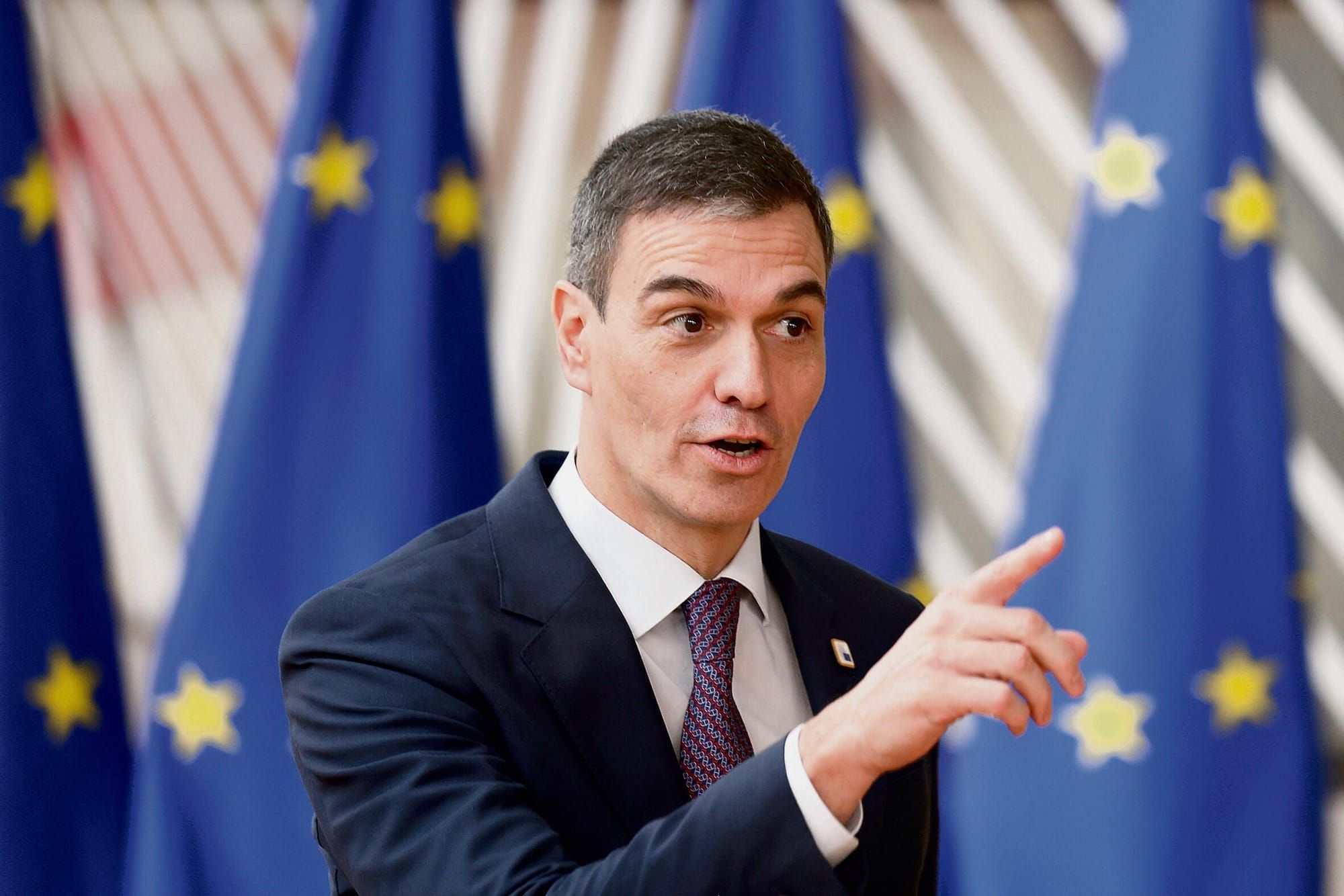
Spain was the furthest along before any of this started. Pedro Sánchez's government imposed a total arms embargo on Israel by parliamentary vote on 8 October 2025, 178 votes to 169. The preamble of the law says Israel's response to 7 October has "ended up becoming an indiscriminate attack against the Palestinian population that the majority of experts have called genocide". The decree bans exports of defence equipment, products and technology, and bans imports of the same from Israel. It's the first full legislative embargo by a major European economy. Spain closed its ports to ships carrying weapons to Israel and refused to allow US or Israeli military operations to use Spanish military bases or airspace during the Iran war. Spain formally recognised a Palestinian state in May 2024. On 11 March 2026, after the Council of Ministers had deliberated on 10 March, Spain permanently terminated the appointment of Ambassador Ana María Salomón Pérez. She had been recalled in September 2024 for consultations after the initial diplomatic row over Spanish measures. The Spanish embassy in Tel Aviv will now be led by a chargé d'affaires. Israel has had no ambassador in Madrid since 2024.
In his 4 March televised address, delivered the day after Trump threatened to sever trade with Spain, Sánchez revived the "No to war" slogan used against the 2003 Iraq war. "One illegality cannot be met with another, because that is how humanity's great disasters begin," he said. Pointedly, without naming Trump: "We are not going to be complicit in something that is bad for the world and contrary to our values and interests, simply out of fear of reprisals from anyone." He described Israel as a "genocidal state". Sa'ar called Spanish measures "antisemitic" and barred two members of Sánchez's cabinet from entering Israel.
Trump on 3 March threatened to cut off all trade with Spain. On 10 April, Israel formally removed Spain from the US-led Civil-Military Coordination Center in Kiryat Gat, which oversees Gaza ceasefire implementation, on Sa'ar's finding of "blatant anti-Israel bias". Sánchez has refused to join Trump's "Board of Peace" plan for Gaza, denouncing it as a violation of international law. Spain has committed €150 million in humanitarian aid to Gaza since September 2025 and increased its contribution to UNRWA. At Luxembourg on 21 April, Spanish Foreign Minister José Manuel Albares told his counterparts: "I expect every European country to uphold what the International Court of Justice and the UN say on human rights and the defence of international law. Anything different would be a defeat for the European Union."
Canada
Mark Carney on 31 March 2026, speaking to reporters in Wakefield, Quebec, called Israel's Lebanon operation "an illegal invasion" and a "violation of their territorial sovereignty". He added: "The government of Lebanon has banned Hezbollah, is trying to take action against Hezbollah and their terrorist activities and their threats to Israel. That is the purported justification for this invasion. So we condemn it." He called for an immediate ceasefire. The framing was the sharpest public statement by a Canadian prime minister on an Israeli military operation since the state's founding, and stood in direct contrast to Stephen Harper's 2006 description of Israel's previous Lebanon invasion as "measured". Carney's statement followed Israeli Defence Minister Israel Katz's announcement that Israel intended to control a 30-kilometre buffer zone between the Israeli border and the Litani River, roughly a tenth of Lebanon's territory, after the fighting with Hezbollah ended.
Canada co-signed a joint statement with France, Germany, Italy and the UK calling on the Israeli ground invasion of Lebanon "to be averted" because of its "devastating humanitarian consequences". Canada suspended new arms export permits to Israel in March 2024, although pre-existing contracts continued. The Centre for Israel and Jewish Affairs said it was "deeply concerned" by Carney's comments. Canadians for Justice and Peace in the Middle East urged Carney to move from statement to sanction, noting that Canada had "done nothing to discourage Israel's actions".
The Carney government's position has limits. Canada endorsed the US-Israeli strikes on Iran when they began on 28 February 2026, which drew internal Liberal caucus criticism. Former foreign minister Lloyd Axworthy publicly objected to Canada backing strikes not authorised by the UN Security Council, noting the contrast with Canada's 2003 refusal to join the Iraq war. Canada has not invoked the Special Economic Measures Act or the Justice for Victims of Corrupt Foreign Officials Act against named Israeli officials responsible for settlement construction, aid obstruction, or settler violence, despite existing authorities to do so.
Germany
Germany's shift has been procedural rather than rhetorical but carries legal weight, and is complicated by a simultaneous blocking role at the EU level. On 19 March 2026, Foreign Ministry deputy spokesperson Josef Hinterseher told reporters that Germany would not intervene on Israel's behalf in the International Court of Justice case brought by South Africa under the Genocide Convention. In January 2024, Germany had publicly announced its intention to file an Article 63 intervention in Israel's support, calling South Africa's claims "baseless" and "a political instrumentalisation" of the 1948 Genocide Convention. The reversal is because Germany is now itself a party to a separate ICJ case, Nicaragua v. Germany, filed by Nicaragua in April 2024 alleging that German arms exports to Israel constitute a breach of international law including the Genocide Convention. "We are now ourselves a party to contentious proceedings before the ICJ and have consequently decided not to make use of this option," Hinterseher said.
On 13 April, Chancellor Friedrich Merz called Netanyahu directly and told him publicly that there "must be no de facto annexation of the West Bank". Finance Minister Bezalel Smotrich responded by invoking Holocaust imagery in a statement on Holocaust Remembrance Day, prompting Israel's own ambassador to Germany, Ron Prosor, to push back against Smotrich and call Merz "a great friend of Israel". The episode illustrated the degree to which Germany's rhetorical shift has outrun its policy shift. At Luxembourg on 21 April, Germany's foreign minister Johann Wadephul called Spain's suspension proposal "inappropriate" and said matters should instead be addressed through "critical, constructive dialogue with Israel". Germany and Italy provided the blocking weight that defeated the measure.
Asked in March whether the German government still held the view that the genocide allegation against Israel was "entirely without merit", the Foreign Ministry spokesperson said that allegation "was being addressed before the International Court of Justice" and that Germany would "wait for the outcome." That is not a retraction of the 2024 position, but it is a retreat from it. Germany suspended military exports that could be used in Gaza in August 2025. It remains among Israel's largest arms suppliers. A final ICJ ruling is not expected until 2028.
The ICJ interventions filed as of 12 March 2026 break down as follows. Supporting South Africa's broader reading: Namibia, Colombia, Libya, Mexico, Palestine, Spain, Turkey, Chile, the Maldives, Bolivia, Ireland, Belize, Brazil, Comoros, Belgium, Iceland and the Netherlands. Supporting Israel's narrower reading: the United States, Hungary, Fiji and Paraguay. Germany has now fallen out of the second column. Hungary's position may not survive the incoming Magyar government.
France
France's position is complicated. Emmanuel Macron condemned Hezbollah's decision to enter the conflict and expressed solidarity with Israeli civilians when Lebanon fighting resumed in March. He was simultaneously engaging Tehran diplomatically and positioning France as a constructive intermediary on the Iran ceasefire. On 31 March, France refused to allow US military aircraft carrying supplies for Israel to transit French airspace, the first such denial since the Iran conflict began. Israel's Defence Ministry responded by suspending all procurement from France and moving to terminate existing contracts. An Israeli official told the Jerusalem Post the French refusal was "the straw that broke the camel's back". Trump called it "very unhelpful".
On 20 April, France and Sweden jointly submitted an informal proposal to EU foreign ministers calling for tariffs on goods originating from illegal Israeli settlements in the occupied West Bank, the first time France has formally co-sponsored a sanctions instrument targeting Israeli conduct. The proposal asks the European Commission to assess "the legal and practical feasibility" of import restrictions and tariffs on settlement products. Foreign policy chief Kaja Kallas referred it to trade commissioner Maroš Šefčovič after the Luxembourg meeting. France is also assembling a multinational minesweeping task force for the Strait of Hormuz operating independently of the US naval blockade. On 17 April, Macron and Keir Starmer hosted an Élysée summit on Hormuz involving representatives of 51 countries. France's position is rhetorically hard on Israeli conduct in Lebanon and has now formally backed settlement goods restrictions, but remains behind Spain on comprehensive arms export measures.
The United Kingdom
British Foreign Secretary Yvette Cooper called Israel's 8 April Lebanon strikes "deeply damaging" and said Lebanon must be included in any ceasefire. In joint statements with France, Canada, Germany and Italy, the UK called for "immediate de-escalation" and for the Israeli ground invasion to be averted. The UK reduced some arms export licences to Israel and suspended certain categories in 2024. The restrictions have never amounted to a comprehensive embargo. Human Rights Watch's research notes that arms continue to flow to Israel from states issuing condemnations, and that "words without arms suspensions have no effect on the ground".
South Korea
On 10 April 2026, South Korean President Lee Jae-myung reposted video on X of Israeli soldiers pushing a body off a building in the West Bank. The video, verified by Al Jazeera, showed an incident in the town of Qabatiya in September 2024 during which three Palestinian men were thrown from a rooftop by Israeli soldiers. Lee wrote: "I need to look into whether this is true, and if so, what measures have been taken. Forced comfort women, Jewish massacres, and wartime killings are no different." The comparison to the Holocaust and to the forced sexual servitude of Korean women under Japanese colonial rule produced a furious response from Israel's Foreign Ministry, which accused Lee of trivialisation of the massacre of Jews "on the eve of Holocaust Remembrance Day". Lee clarified the following day that the video was from 2024, that investigations had been conducted, and that "a small relief, if any, is that it involved a corpse rather than a living person, but even a corpse deserves better treatment, this constitutes a violation of international law."
On 11 April he doubled down: "It's disappointing that you don't even once reflect on the criticisms from people around the world who are suffering and struggling due to relentless anti-human rights and anti-international law actions." South Korea has historically abstained on anti-Israel UN resolutions to protect bilateral economic and technology ties. Lee's refusal to retreat marks a departure that analysts read as part of a wider Indo-Pacific shift away from deferring to US framing on Israeli conduct.
Brazil, Turkey, Ireland, Norway and the Global South
Brazil condemned the 8 April Israeli attacks on Lebanon as a breach of the ceasefire and demanded Israel suspend military operations and respect Lebanese sovereignty. Brazil filed an Article 63 declaration of intervention in the ICJ genocide case on 19 September 2025, arguing that genocidal intent can be inferred from cumulative patterns of conduct: displacement, starvation, targeting of civilians over time. Turkey condemned Israel's Lebanon ground operation as "genocidal and collective punishment policies" and has maintained a de facto arms embargo since 2024, suspending exports and transit of weapons and dual-use items. Ireland, alongside Spain and Norway, recognised a Palestinian state in May 2024 and has been consistently active in the ICJ intervention slate. Slovenia banned all weapons trade with Israel in August 2025, the first EU member state to impose a total ban including transit and imports.
UN Women published the first comprehensive data documenting 38,000 women and girls killed in Gaza since 7 October 2023, an average of 47 deaths per day. A panel of UN special rapporteurs on 16 April called Israeli evacuation orders and the destruction of southern Lebanese housing "consistent with the pattern of domicide that was initiated during the genocide in Gaza". More than 100 international law scholars signed a letter stating the US-Israel war on Iran constituted a violation of the UN Charter and that the pattern of strikes raised serious concerns about war crimes.
The Luxembourg test
On 20 April, the day before EU foreign ministers were due to meet in Luxembourg, UN special rapporteurs issued an urgent statement calling suspension of the EU-Israel Association Agreement "not a matter of political discretion but a legal imperative" and the minimum measure required to align EU actions with international law. They noted that the EU's own internal review had already found Israel in breach of the agreement's Article 2 human rights clause, citing genocidal acts, crimes against humanity, and war crimes documented by multiple international bodies. "The EU cannot credibly claim to uphold human rights while sustaining preferential trade with a State whose conduct has been found by multiple international bodies as amounting to genocide, crimes against humanity, and war crimes," the rapporteurs said.
On 21 April, Spain, Slovenia and Ireland formally proposed suspension at the Foreign Affairs Council meeting in Luxembourg. Germany's foreign minister called the proposal "inappropriate". Italy held firm against it. No vote was taken. The proposal failed for lack of sufficient support. Foreign policy chief Kaja Kallas referred the France-Sweden settlement goods tariff proposal to trade commissioner Šefčovič for legal and practical assessment. The next ministerial meeting is May 11.
Amnesty International called the outcome "a moral failure" and said Germany and Italy had "played a key role in blocking the suspension." More than 75 NGOs, 400 former diplomats, one million European citizens, and the UN's own special rapporteurs had all called for suspension before the meeting began.
The irony of the Luxembourg outcome is precise. Italy suspended a 2003 memorandum of understanding covering joint training and equipment transit (a document Israel's own foreign ministry described as containing no substantive content) on 14 April, and then helped protect a 42.6-billion-euro annual trade framework seven days later. Germany told Netanyahu there must be no de facto annexation of the West Bank on 13 April, then told Spain its suspension proposal was "inappropriate" on 21 April.
The accountability gap
Ramzi Kaiss, a Human Rights Watch researcher, put the situation directly to Democracy Now: "The response from the international community has been limited by words of condemnation, but no effective action has been taken yet in order to stop these atrocities from happening."
72,549 Palestinians have been killed in Gaza since 7 October 2023. 773 of them have been killed since the 10 October 2025 ceasefire. UNRWA has lost 391 staff since October 2023 and has been blocked from bringing personnel and supplies into Gaza since March 2025, despite an October 2025 ICJ ruling ordering Israel to allow it to operate. Médecins Sans Frontières has been blocked from moving any medical supplies into Gaza since 1 January 2026. 4,000 Gazan children are on a medical evacuation list with no exit pathway. 37 international NGOs have been deregistered from operating in the Occupied Palestinian Territory. Israel authorised 34 new West Bank settlements in a single cabinet decision on 1 April. ICJ provisional measures requiring Israel to prevent acts of genocide and ensure humanitarian access remain unenforced.
No EU-wide sanctions have passed. The EU-Israel Association Agreement remains in force. The US veto at the UN Security Council prevents binding enforcement of any Gaza, Lebanon, West Bank or settlement resolution. Canada has not invoked SEMA or the Justice for Victims of Corrupt Foreign Officials Act against Israeli officials. The European Union has not activated its Global Human Rights Sanctions Regime against individuals responsible for aid obstruction or settler violence. The Corporate Sustainability Due Diligence Directive's human rights obligations have not been applied to companies sourcing from supply chains linked to the occupation.
The same European capitals that sanctioned Russia within days of its Ukraine invasion have now spent two and a half years finding procedural reasons not to act on Gaza. The message is not subtle. Some violations are intolerable. Others are merely unfortunate.
What readers can do
Write to your MP or MEP. Demand Canada invoke SEMA and JVCFOA sanctions against named Israeli officials responsible for aid obstruction, settlement construction, and settler violence. Demand EU member states support suspension of the EU-Israel Association Agreement under Article 2's human rights clause — the EU's own internal review has already found the legal threshold met. Demand your government formally support a UN Security Council referral of Gaza to the International Criminal Court, supplementing the ongoing ICC arrest warrants against Netanyahu and Gallant. Ahead of the May 11 EU Foreign Affairs Council, contact your member state's foreign ministry directly: the France-Sweden settlement goods proposal and the Association Agreement question will both be back on the table.