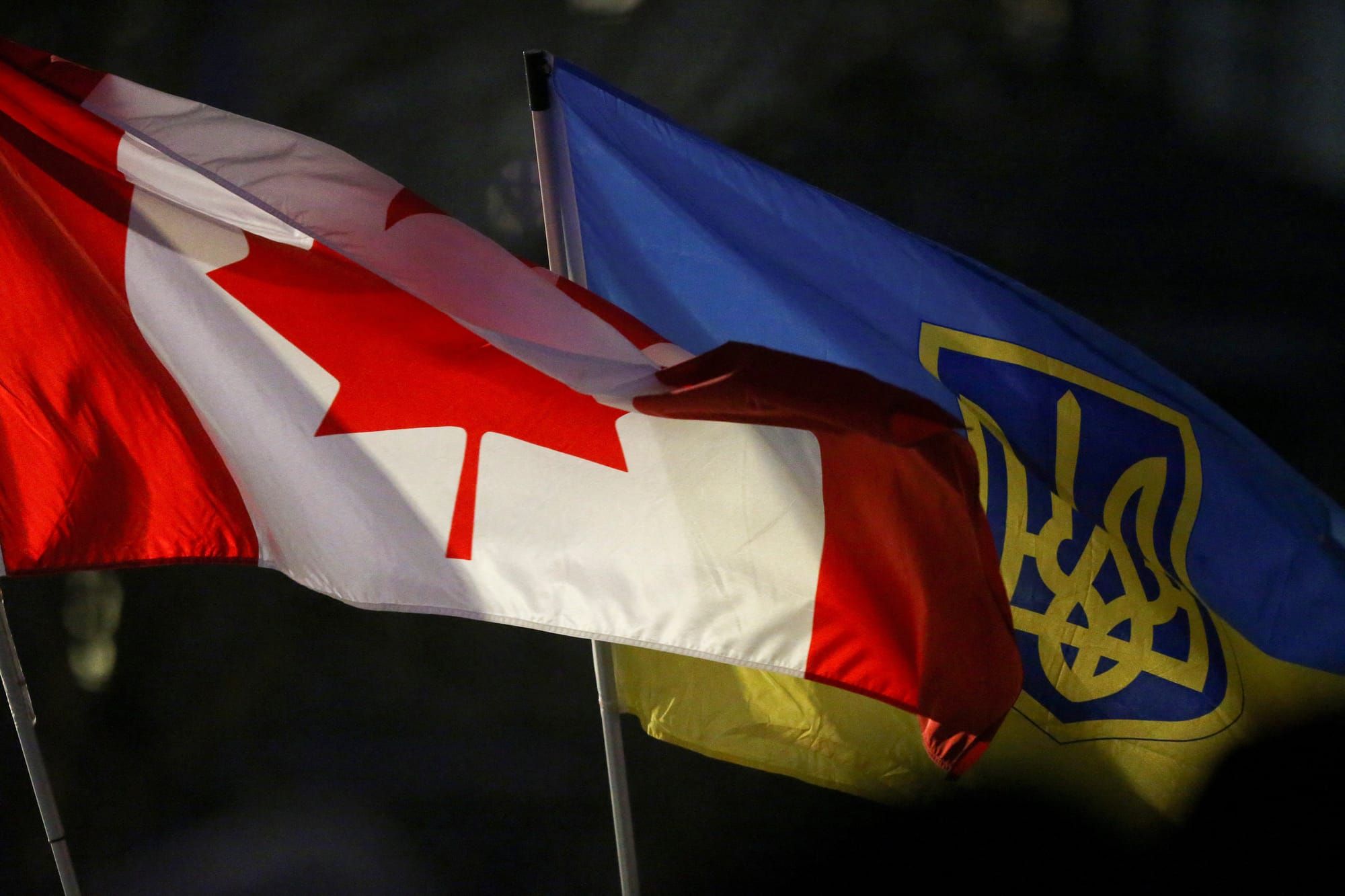
Canada added Russia's minister for emergency situations, Aleksandr Kurenkov, and seven other people to its sanctions list under the Special Economic Measures (Russia) Regulations on 4 September 2026 over the kidnapping of Ukrainian children.
Ukraine's state registry records 20,651 children taken from their homes since February 2022 and 2,573 returned. Global Affairs Canada cited both figures on 12 September when it announced a conference in Toronto on bringing the children back. Bring Kids Back UA, the presidential initiative that organises returns, counted 2,510 children home on 28 August.
Global Affairs Canada said the eight had facilitated the Russian government's violation of the rights of Ukrainian children. Its designation text uses the legal terms unlawful deportation and forcible transfer, and also cites indoctrination and militarisation. Ukraine's defence intelligence directorate lists Gurov and Milskaya in a section of its public database titled child kidnappers.
Mark Carney announced the listings in Calgary on 10 September, the day he and Volodymyr Zelensky signed a 100-year partnership declaration. He also announced up to 6 million dollars to return Ukrainian children and help them resettle. Global Affairs Canada added the names to its consolidated list that day, six days after the regulations were amended, without giving the posts the eight hold. Ukrainian and Russian media reported the names on 11 September.
People in Canada and Canadians abroad may not deal in property owned or controlled by a listed person, provide that person financial services or enter into transactions connected to their property. The ban applies to Canadians anywhere in the world, whether or not any of the eight holds assets in Canada. Breaches are criminal offences under the Special Economic Measures Act.
Maksym Maksymov, head of Bring Kids Back UA, said: "Every decision of this kind makes responsibility personal."
The eight names
Aleksandr Kurenkov was born in Moscow on 2 June 1972 and trained as a physical education teacher. He joined the FSB in 1999 and the Federal Protective Service in 2002, where he guarded former prime minister Viktor Zubkov in 2007 and 2008. Proekt reported that he spent eight years as Putin's aide-de-camp. He became deputy director of Rosgvardia under Viktor Zolotov. Putin nominated him as emergencies minister on 23 May 2022 and the Federation Council confirmed him on 25 May.
Grigory Gurov has led the Federal Agency for Youth Affairs, Rosmolodezh, since 14 September 2024. From 13 December 2022 until then he chaired the board of Movement of the First, the state youth organisation set up under a federal law Putin signed on 14 July 2022. Putin chairs its supervisory board. Gurov began in youth politics in Stavropol, worked in the presidential envoy's office in the North Caucasus from 2010 to 2016 and was deputy minister of science and higher education from August 2021 to December 2022.
Artur Orlov succeeded Gurov as board chairman of Movement of the First in September 2024. Ukraine's Centre for Countering Disinformation reported that he graduated from the Kazan tank school in 2010, served in Syria in 2016 and fought in Ukraine with the 6th Tank Regiment of the 90th Tank Division. He was made a Hero of Russia for fighting near Popasna in Luhansk region and was a finalist in Time of Heroes, a Kremlin programme that appoints veterans of the invasion to civilian posts.
Denis Chernobay chairs the council of the Movement of the First regional branch in occupied Donetsk. After the United Kingdom sanctioned the movement, Chernobay told RIA Novosti on 3 September 2025: "If they try to stop us, it means our work produces results. No sanctions will affect the development of young people."
Aleksandra Kulgina heads the Donetsk branch of Russian Student Brigades, according to RFE/RL's Russian service. No other outlet gave her post. UNITED24, citing Bring Kids Back UA, reported that she enrols children and young people from occupied Donetsk in Russian youth and labour programmes.
Vitaly Suk became director of the Oleshky children's home for children with developmental disabilities in Kherson region in October 2022, after the occupation administration dismissed its Ukrainian director. iStories reported that he previously managed a driving school.
Vladimir Khromov is an adviser in the office of Maria Lvova-Belova, Russia's presidential commissioner for children's rights. The International Criminal Court issued arrest warrants for Lvova-Belova and Putin on 17 March 2023 for the war crimes of unlawful deportation and unlawful transfer of children from occupied Ukraine, the terms used in the Rome Statute.
Elena Milskaya was born in Moscow on 20 December 1980. She chairs the board of trustees of the National Centre for Assistance to Missing and Injured Children and is president of the Archangel Michael Foundation for spiritual and educational programmes.
The Oleshky children's home
Oleshky, on the left bank of the Dnipro in Kherson region, had one of Ukraine's specialised boarding schools for children with disabilities. About 85 residents were still there in October 2022, iStories reported. The occupation administration dismissed the director, Tetiana Kniahnytska, on 10 October 2022 and appointed Suk.
Russian and occupation authorities moved the residents in groups, iStories reported. On 21 October 2022, 16 children went to a psychiatric hospital in Simferopol in occupied Crimea, and 12 more followed on 4 November. The other 56 went to the Nadiia rehabilitation centre in occupied Skadovsk on 11 November, the day Russian forces finished withdrawing from Kherson city. Some children were later sent to orphanages in Krasnodar Krai, and four were moved to the village of Novye Berega in Russia's Penza region in November 2023. Ukrainska Pravda reported that relatives and legal guardians did not consent to the transfers.
Ukrainska Pravda wrote in February 2025 that 84 residents with disabilities were taken from the home to occupied Crimea and Krasnodar Krai, that Suk actively helped the occupation authorities and that 11 children had come home in two and a half years. iStories counted 10 children returned by October 2024, most of them brought back by relatives, and at least six residents who died under occupation.
Milskaya and the minister
Proekt reported in August 2023 that Milskaya married Kurenkov at the Kutuzovsky registry office in Moscow in December 2019, and that his official biography gives no marital status. Canada's listing does not describe her as his spouse and states no relationship between any of the eight. RFE/RL's Russian service headlined its report on the listings as sanctions against the head of the emergencies ministry and his wife.
Milskaya has chaired the Archangel Michael Foundation since October 2014 and the National Centre's board of trustees since December 2014. She was chief executive of the Saint Basil the Great Foundation from 2017 to 2019. Proekt reported that within two months of Kurenkov becoming minister in May 2022, the National Centre signed an agreement with the emergencies ministry for 600 million roubles in direct budget funding over three years.
Volunteers from Milskaya's organisations helped remove children from Kherson region in October 2022, before Russian forces withdrew from the right bank of the Dnipro, Proekt reported. The children were taken to Crimea and to Anapa in Krasnodar Krai. A Kherson children's home director said soldiers threatened to "pack us up together with the children and take us away", according to Proekt. Proekt also identified children from Donetsk orphanages in August 2022 photographs of the Romashka camp in Rostov region and reported that they were later placed in orphanages in Uchaly and Kumertau in Bashkortostan.
Ukraine's defence intelligence directorate wrote in its entry for Milskaya that she "used the volunteers of the specified organization as a cover in the organized mechanism of mass kidnapping and illegal deportation of Ukrainian children" to Krasnodar Krai in October 2022.
Proekt reported that Milskaya oversees construction of 12 military-patriotic training centres for 14 to 18 year olds, announced in December 2022 and given 2.7 billion roubles in February 2023. Proekt also reported that the couple's properties include a house of about 1,000 square metres at Razdory outside Moscow, valued at about 600 million roubles.
Milskaya co-owned Balt-Magistral, a Kaliningrad freight company, until spring 2021, when she transferred her shares to her mother. LRT reported that LTG Cargo, the freight arm of Lithuanian Railways, received about 11.5 million euros from Balt-Magistral after the February 2022 invasion. Shipments stopped in June 2022.
Earlier designations
OpenSanctions records that the United States and Australia sanctioned Kurenkov on 20 April 2023, the European Union on 4 September 2023, Ukraine on 6 March 2024, New Zealand on 21 March 2024, the United Kingdom on 9 May 2024 and Switzerland on 26 March 2025. Canada's entry is dated 10 September 2026.
Milskaya was already on the sanctions lists of the United States, the European Union, Switzerland, Australia, New Zealand and Ukraine, according to OpenSanctions. Switzerland wrote in its listing that she was involved in "enabling the forced deportation of Ukrainian children to Russia".
The European Union sanctioned Movement of the First and Gurov on 23 February 2024 and wrote that the movement "is supporting materially actions which undermine and threaten the territorial integrity, sovereignty and independence of Ukraine".
Movement of the First and occupied schools
Movement of the First reported about 4.7 million members in February 2024. It has branches in occupied Crimea and in occupied parts of Donetsk, Luhansk, Kherson and Zaporizhzhia regions. Its activities include war games, drone training, meetings with serving soldiers and military-patriotic education for children from the age of six.
Ukraine's military intelligence directorate named Orlov on 18 August 2026 as one of 10 people it holds responsible for militarising children in occupied territory. The list also names two institutions, organisers of Yunarmia and organisers of the Zarnitsa 2.0 competition in May 2026, where children handled weapons and explosives and flew drones. Svitlana Bespalova, deputy education minister in occupied Crimea, and the director of School No. 5 in occupied Simferopol are also on it.
More than 582,000 children in nearly 2,000 schools in occupied territory are taught the Russian curriculum. From September 2026 occupied schools add compulsory military training and new ideology classes, according to the directorate. Putin's 2025 nationalities strategy aims for 95 per cent of residents to hold a Russian civic identity by 2036.
Nathaniel Raymond, executive director of Yale University's Humanitarian Research Lab, told RFE/RL: "It's less about taking them and more about indoctrinating them in place."
Canada's listings since February
Canada has imposed more than 3,500 sanctions over Russia's war against Ukraine since 2014, Global Affairs Canada said on 12 September, and had listed more than 600 vessels by March. On 19 February 2026 it sanctioned artificial intelligence research institutes, drone makers, battlefield surveillance suppliers, cyber security firms and cryptocurrency networks, and cut the crude oil price cap to US$44.10 a barrel from US$47.60.
On 26 March 2026 Canada listed 100 more shadow fleet vessels. On 8 May 2026 it listed 23 individuals and five entities over violations against Ukrainian children, including Lvova-Belova, taking the number listed over children past 80. On 12 June 2026 it listed seven individuals, 34 entities and 121 vessels in the defence industry, energy, nuclear services and cryptocurrency. On 6 August 2026 it listed one entity supplying military technology to Russia.
Money, aircraft and returns
Canada has committed more than 25.5 billion dollars to Ukraine since January 2022, including a 5 billion dollar loan under the G7 Extraordinary Revenue Acceleration mechanism, which is repaid from profits on immobilised Russian sovereign assets. More than 13 billion of the total is direct financial support, with 741 million in development assistance and 427 million in humanitarian aid.
Carney pledged more than 2 billion dollars during Zelensky's three-day visit in September 2026, more than half of it for defence. The package includes the 6 million dollars for returning kidnapped children, 2 million of it through UNICEF, and a commitment to send one third of Canadian drone output to Ukrainian units. Canadian commitments since 2022 now exceed 26 billion dollars.
Canada filed forfeiture proceedings in May 2025 against the Antonov An-124 owned by Volga-Dnepr and grounded at Toronto Pearson airport since February 2022. Anand said on 31 October 2025 that those who enable the war will face consequences. No court has ordered the aircraft forfeited, and it has not been transferred to Ukraine.
Canada and Ukraine co-chair the International Coalition for the Return of Ukrainian Children, launched in Kyiv on 2 February 2024, which has 51 member states and institutions. Canada, Ukraine and Norway will host Pathways to Peace, the second international conference on returning Ukrainian children, detained civilians and prisoners of war, in Toronto on 28 and 29 September 2026. The Toronto meeting follows the 2024 ministerial conference on the human dimension of Ukraine's peace formula, which produced the Montreal Pledge.
Ukraine's parliamentary commissioner for human rights had confirmed 1,878 civilians as unlawfully detained by Russia as of June 2026, and some civil society groups estimate the actual number at up to 20,000. By August 2026, 9,529 Ukrainian military personnel and civilians had returned from Russian captivity.
Findings on the removals
The UN Independent International Commission of Inquiry on Ukraine concluded on 12 March 2026 that the deportation and forcible transfer of Ukrainian children by Russian authorities amount to crimes against humanity. It verified the removal of more than 1,200 children from five Ukrainian regions to 21 regions of Russia and occupied territory, found that about 80 per cent had not been returned and found that Putin and Lvova-Belova had visible roles from the start. Erik Møse, who chairs the commission, said: "The deportation and forcible transfer of children is a grave violation of international law."
Ukrainian courts sentenced the businessman Mykola Dzhyhanskyi to 11 years in January 2025 for transporting children to occupied Crimea. By the end of 2025 Ukrainian prosecutors had served notices of suspicion on 17 people and filed 10 indictments in child deportation cases, most to be tried in absentia, JusticeInfo reported.
Applicable law and terminology
Article 49 of the Fourth Geneva Convention prohibits individual and mass forcible transfers and deportations of protected persons out of occupied territory, whatever the motive. Article 8 of the Rome Statute makes the deportation or transfer of the civilian population of an occupied territory a war crime. Article II of the Genocide Convention lists the forcible transfer of children of one group to another group as an act of genocide where it is committed with intent to destroy the group. Canada, the ICC, the UN commission and Ukraine's justice ministry use the terms from these 1948, 1949 and 1998 instruments, deportation and forcible transfer, in their own documents. Ukraine's defence intelligence, its prosecutors and Bring Kids Back UA call the same acts abduction and kidnapping.
Maria Zakharova, spokeswoman for Russia's foreign ministry, has said Russia's efforts "are aimed at rescuing children and evacuating them from the special military operation zone rather than kidnapping or deporting them", TASS reported. Russia has not published a register of the children it holds.
Funding for the documentation
Yale University's Humanitarian Research Lab has documented about 35,000 Ukrainian children taken from their homes and at least 210 facilities in Russia and occupied Ukraine where children were held. It has linked more than 2,100 children to programmes organised or funded by Rosneft, Gazprom, their subsidiaries and affiliated unions between 2022 and 2025. The lab expects to publish verified figures in October 2026.
The State Department announced a 25 million dollar programme to locate and return the children in March 2026, cancelled the grant competition on 21 August 2026 and said it would split the award into about 15 million for identification, return and evidence and 10 million for rehabilitation. "Following further review, the Department has decided to issue two distinct awards under this program to focus on distinct parts of programming efforts," the department said. Senators Thom Tillis and Richard Blumenthal and Representatives Marcy Kaptur and Brian Fitzpatrick wrote to secretary of state Marco Rubio on 3 September 2026 asking for a timeline.
Raymond told RFE/RL the lab is spending the last of its donations. Lab staff will lose their jobs in December unless new funding arrives.
Ukraine's national police list 2,369 children as missing. The prosecutor general's office records 740 children killed and 2,886 injured since February 2022.