
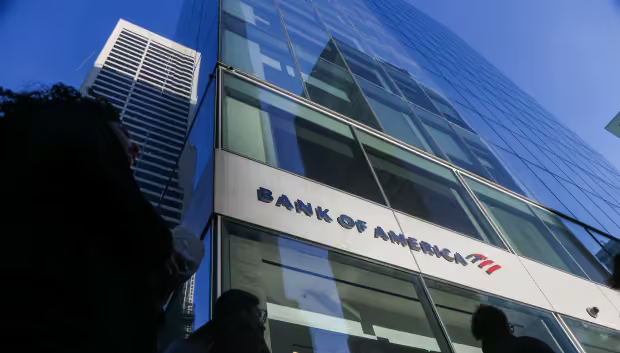
Judge Jed Rakoff granted final approval in Manhattan on 27 August to a $72.5 million class settlement between Bank of America and about 60 women who say the bank's services helped sustain Jeffrey Epstein's trafficking of them, 23 days after a Senate report accused the bank of moving his money without the checks federal law requires.
"No amount of money can make up for the wrongs that they suffered and the harms that they still feel," Rakoff said from the bench in the Southern District of New York, calling the payment substantial and the outcome "justice, even if partial".
The class covers women trafficked or abused by Epstein or by people working for him between 30 June 2008 and his arrest in July 2019. Epstein pleaded guilty in Palm Beach County to procuring a girl under 18 for prostitution on 30 June 2008, the first day of that window. Bank of America held the accounts through which Leon Black sent him money from 2012 to 2017, four years after the plea and eleven years after the bank's own compliance staff could first have read about it in a court file.
Boies Schiller Flexner, whose partner Sigrid McCawley led the case, was awarded 30 per cent of the fund, $21.75 million. Rakoff described the firm's work as delivering "actual justice, even if partial". The remaining $50.75 million leaves roughly $846,000 for each of the 60 class members if split evenly, with individual awards set by Simone Lelchuk, the claims administrator who mediated all three bank settlements and worked on the Epstein estate's own victims' fund.
The lead plaintiff, a Florida woman suing as Jane Doe, said Epstein abused her at least 100 times between 2011 and 2019 and that his payments ran through her Bank of America accounts.
Rakoff rejected objections from three accusers who told the court the release was drawn too broadly and forced them to surrender claims against parties other than the bank.
Bank of America agreed to settle in March and has denied throughout that it facilitated Epstein's crimes. The bank said in its filings that the case tried to stretch financial institution liability to cover ordinary customer services, and a spokesperson said the approval brings "further closure for the plaintiffs".
What the Senate found
Ron Wyden, ranking member of the Senate Finance Committee, published "Looking the Other Way" on 4 August, the product of a four-year inquiry that read suspicious activity reports and material pulled from several lawsuits. It found that more than $1.4 billion in suspicious transfers linked to Epstein passed through JPMorgan Chase, Deutsche Bank and Bank of America across two decades, and that all three flagged the bulk of it only after his arrest in July 2019.
"My small team of investigators did what Trump's attorney general and Treasury secretary said was impossible," Wyden wrote.
Leon Black paid Epstein more than $170 million between 2012 and 2017 through accounts at Bank of America, often in single transfers of $10 million to $20 million, the committee minority found, and none of the banks handling the money conducted the due diligence the law requires on it. Black has separately acknowledged paying Epstein $158 million for estate and tax advice, a figure his own commissioned review put on the record in 2021 before he stepped down as chief executive of Apollo Global Management. Black told the House Oversight Committee on 26 June that he knew nothing of the alleged abuse.
Bank of America also failed to file suspicious activity reports on time for millions of dollars in cash withdrawals that the report said carried no clear business purpose.
JPMorgan Chase banked Epstein from 1998 to 2013 and earned $8.1 million in fees from him between 2009 and 2014. The bank dropped him as a client in 2013, then reported more than 5,000 suspicious wire transfers worth over $1 billion in 2019, six years after the relationship ended and weeks after his arrest. JPMorgan said it began flagging suspicious transactions to the government as early as 2002 and that every report it made went to the authorities.
Deutsche Bank took Epstein on in 2013 and kept him until his death in 2019. The bank said it regrets its historical connection with him and has cooperated with regulatory and law enforcement agencies.
Tens of millions of dollars went to Ghislaine Maxwell through the accounts, the report found, alongside payments to women and girls and correspondent banking through high-risk jurisdictions including Russia. Senior bankers at all three institutions knew of the presence of young women or underage girls at Epstein's homes, the report alleges.
What the law required
The Bank Secrecy Act gives a financial institution 30 days from detecting a transaction with no apparent lawful purpose to file a suspicious activity report, under 31 U.S.C. 5318(g) and the implementing regulation at 31 C.F.R. 1020.320. Late filing is a violation in its own right, whatever the eventual disclosure contains.
Wyden's report names 13 bankers who handled the accounts. Exactly one has faced a consequence, and it came from a regulator in London: the Financial Conduct Authority banned Jes Staley from senior roles in UK financial services and fined him £1.8 million, reduced to £1.1 million after Barclays withheld his deferred shares. The Upper Tribunal dismissed his challenge on 26 June 2025, finding he had acted recklessly, lacked integrity and showed no remorse, and the FCA issued its final notice on 23 July 2025. The case turned on a letter that misdescribed his friendship with Epstein to the regulator, not on anything he did with Epstein's accounts.
Staley ran JPMorgan's private bank while Epstein was its client. The House Oversight Committee released the transcript of his interview on 26 August, the day before Rakoff approved the Bank of America settlement. Staley told the committee he passed confidential JPMorgan information to Epstein while Epstein sat in a Florida jail, and that he had "quite possibly" alerted him to the bank's sensitivity about his constant cash withdrawals. He has never been charged in any jurisdiction and denies wrongdoing.
The bankers named
Wyden's report sets out the 13 under a single sentence: "The conduct of individual bankers employed by JPMC, Bank of America and Deutsche Bank in relation to their handling of accounts held by Epstein and Leon Black merits investigation by federal prosecutors and financial regulators." None of the 13 has been charged with a crime in any jurisdiction, and the report refers their conduct for investigation rather than recording a finding against any of them.
Mary Erdoes, chief executive of JPMorgan's asset and wealth management arm and still in the post, was "in constant contact" with Epstein and approved continuing work with him after the bank dropped him as a client, the report said. Stephen Cutler, the bank's general counsel at the time, is described in it as the ultimate decider on retaining Epstein after the 2008 conviction. John Duffy, then chief executive of the US private bank, counselled Epstein on cash withdrawals from aviation accounts. Justin Nelson, now head of asset management coverage, met Epstein at least six times pursuing Leon Black's business.
Paul Morris was Epstein's relationship manager at JPMorgan and appears more than 13,000 times in the Justice Department files, the report said. He moved to Deutsche Bank and brought Epstein with him after JPMorgan cut the client off, and he is the only one of the 13 the report lists at two banks. Morris joined Bank of America's Merrill unit in 2016 and left it at the start of June this year, a departure the bank confirmed. He did not respond to a request for comment and has not been accused of a crime.
Paul Barrett, a JPMorgan banker until 2018, met Epstein repeatedly in pursuit of Black's business, and Epstein wrote of him that "Paul will do as I say". Barrett went on to run Citi's North American private capital business and left that bank on 24 April 2023, three days after the Wall Street Journal reported the meetings.
Mary Casey, now vice chair of JPMorgan's private bank, managed Epstein's accounts. David Brigstocke, then chief financial officer of asset and wealth management, emailed about there being fewer "nymphettes" at Epstein's home than at another client's. Jeff Matusow, a private banker, emailed colleagues on the day Epstein left prison in 2009 asking to be made a "buddy" on the accounts. Stewart Oldfield appears in the list with no conduct attached to his name, and Justice Department files place him at Deutsche Bank Trust Company Americas handling Epstein's business until 2019.
Jane Heller and Karen Weiss are the two Bank of America bankers on the list, both of them on Leon Black's accounts. Heller supervised those accounts and was "calling every day" for statements during the period Black was paying Epstein, the report said. Weiss managed the accounts and was "familiar with Epstein's background".
"The rest of the bankers named in this list have faced no known financial consequences or regulatory discipline and remain employed in extraordinarily lucrative positions at JPMC, Bank of America and elsewhere," the report said of the 12 other than Staley.
What the regulators did
Elizabeth Warren, ranking member of the Senate Banking Committee, wrote on 28 October 2025 to Federal Reserve vice chair for supervision Michelle Bowman, Comptroller of the Currency Jonathan Gould and acting FDIC chairman Travis Hill, asking each to investigate bankers who may have enabled Epstein's crimes and to confirm by 14 November that a case had been opened. None was announced.
Warren wrote to the same three agencies again on 25 February this year. Their replies, she wrote, "Your responses failed to confirm an ongoing investigation or even commit to opening one."
She set 12 March for a public announcement of one. The date passed without any of the three saying anything.
Wyden's report of 4 August asks the Justice Department, the Treasury, the Federal Reserve and the Office of the Comptroller of the Currency to investigate the banks and to impose penalties. It recommends that senior managers sign annual anti-money-laundering attestations, that bankers personally confirm due diligence on large transfers for ultra-wealthy clients, that penalties for late suspicious activity reports rise, that bonuses be clawed back where the Bank Secrecy Act is breached, that banks tell the Treasury when they drop a client over trafficking or laundering concerns and that accounts opened for people under 25 be screened. Each measure needs legislation, and no committee has scheduled a bill.
The Justice Department, first on Wyden's list, spent the same month resisting disclosure of its own Epstein holdings. It filed notice of appeal on 24 August against Judge Emmet Sullivan's order to lift redactions, one day after the deadline expired on a sworn declaration Sullivan had ordered Attorney General Todd Blanche to produce, and 11 days after Sullivan warned the department's lawyers he would hold them in contempt.
Scope of the release
The settlement extinguishes the class's claims without any finding of liability. Bank of America admits nothing, the evidence gathered in discovery stays under seal absent a court order releasing it, and the women trade the prospect of a public trial record for a payment.
A claim against Bank of New York Mellon was dismissed, the court finding the plaintiffs had not made out civil liability under the anti-trafficking statute. Wyden's investigators had traced roughly $378 million through that bank in 270 wire transfers, none of which the bank could tie to a legitimate business purpose, and BNY reported the activity to the Treasury only in 2019, more than a decade after the transfers. Wyden put nine categories of document requests to chief executive Robin Vince on 15 January. Rakoff's approval closes the last of the major bank cases, and no institutional defendant of comparable size is left in the litigation.
The $437.5 million recovered from three banks sits against the $1.4 billion the committee minority traced through their systems, and against the $8.1 million JPMorgan alone booked in fees from Epstein over five years.
Every substantial recovery for Epstein's victims in the United States has come from private class actions brought by their own lawyers. The Epstein Files Transparency Act obliges the Justice Department to publish its records and gives nobody a cause of action. The Bank Secrecy Act gives four agencies penalties they have not used here. The criminal law has produced a single conviction, Maxwell's, which Judge Paul Engelmayer declined to disturb on 25 August, calling her petition to overturn it lengthy and rambling and the prosecution that secured it "the epitome of a virtuous prosecution". She is serving 20 years and becomes eligible for release in 2037.