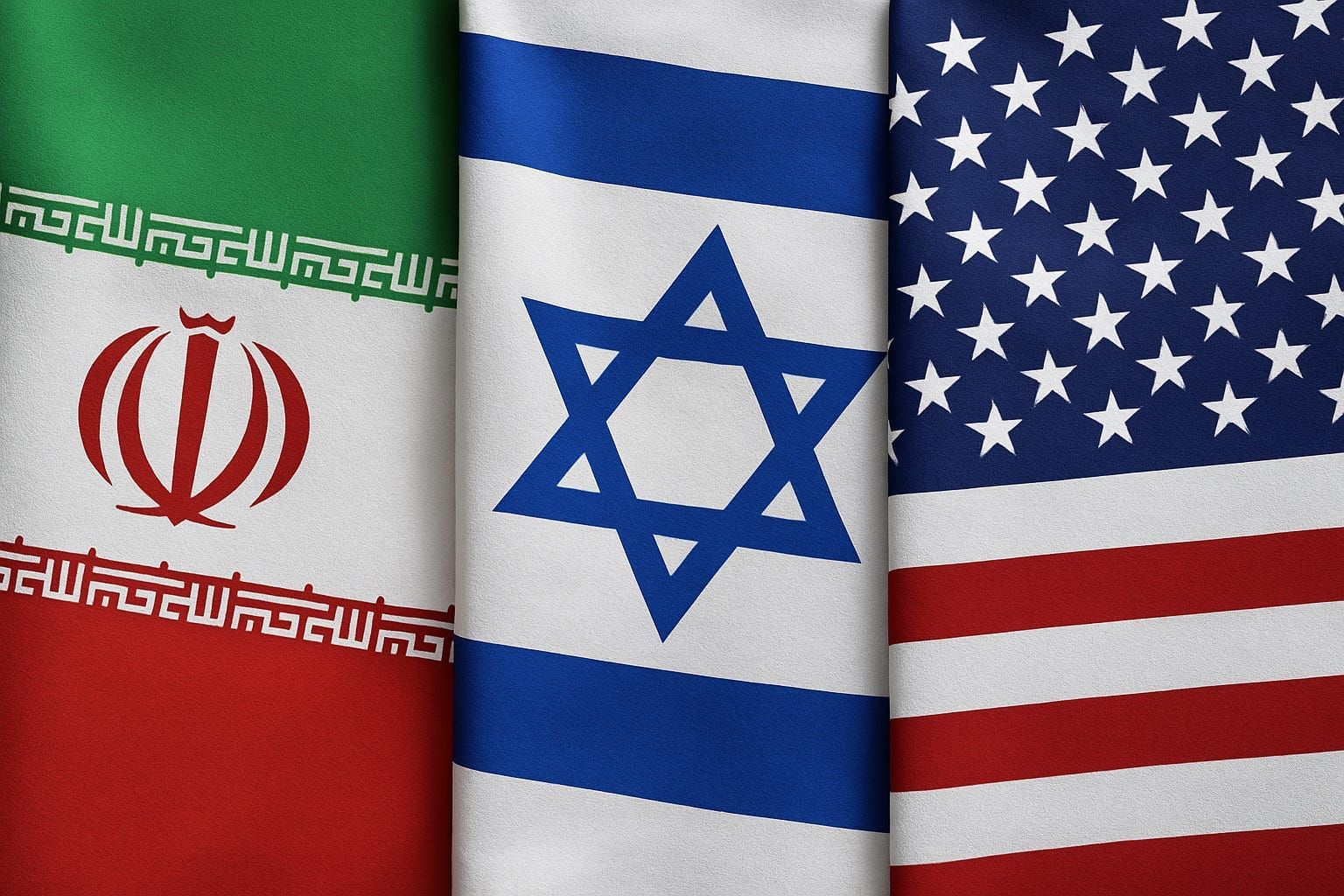
US President Donald Trump claims that an alleged deal with Iran was completed on Sunday and ordered the US naval blockade of Iranian ports lifted, hours after Pakistan's Prime Minister Shehbaz Sharif claimed the two countries had reached an agreement to end the 2026 war. Iran previously said it had not made a final decision.
In a post on his Truth Social platform, Trump said he was authorising the toll-free reopening of the Strait of Hormuz and, at the same time, the immediate removal of the US naval blockade.
"The Deal with the Islamic Republic of Iran is now complete," Trump wrote, telling the world's ships to start their engines and let the oil flow.
The post did not say whether Iran had agreed to let traffic move through the strait without charging a fee.
Sharif's announcement, posted on X, claimed both sides had agreed to stop military operations on all fronts including Lebanon, with an official signing ceremony set for 19 June in Switzerland.
He said "peace has never been this close as it is now," and credited mediation by Pakistan alongside Qatar, Saudi Arabia and Türkiye.
Mediators are calling the agreement the Islamabad Memorandum of Understanding.
Iran did not confirm any of it. Foreign ministry spokesperson Esmail Baghaei said reports of an agreement were speculative and that nothing had been finalised. "So far, Iran has not reached a final conclusion about the agreement," he said. Iran's Fars news agency, citing an informed source, reported that officials were still reviewing the political, legal and technical terms, with discussions continuing among experts and decision-makers. Qatari negotiators flew to Iran on Sunday morning to try to close the gaps, a source told Reuters.
The memorandum, as US officials and Iranian media have described it, is a first step rather than a settlement. It would reopen the strait and lift the blockade, then open about 60 days of talks on the harder questions: Iran's nuclear program, its stock of highly enriched uranium and the fate of US sanctions. A senior US official described it as performance-based, with no money released to Iran until it meets its commitments. An Iranian account of the draft included open shipping through Hormuz, US sanctions waivers, an Iranian pledge not to pursue nuclear weapons and the future dilution of enriched uranium.
The US imposed the blockade on 13 April, after talks in Islamabad failed to end the war. US Central Command said that as of 14 June it had redirected 142 commercial ships and disabled nine that did not comply, and US figures put the cost to Iran at about $500 million a day. Iran seized two cargo ships in response. Araghchi said earlier the strait would not return to how it ran before the war: Iran would charge service fees rather than tolls, calling the waterway one of its main instruments of deterrence.
The war began on 28 February, when the US and Israel launched joint airstrikes that killed Iran's supreme leader, Ali Khamenei, along with senior commanders. Iran answered with missile and drone strikes on Israel and on US bases in the region, and closed the Strait of Hormuz, the route for about a quarter of the world's seaborne oil. After roughly six weeks of fighting, Pakistan brokered a two-week ceasefire on 8 April. It frayed amid intermittent strikes, and the blockade followed.
Araghchi has called the February attacks unprovoked and illegal, and Iran's Supreme National Security Council said the strikes came during active negotiations. Baghaei said the US aggression, which Iran considers illegal, had set back the diplomacy. The opening strikes and the killing of a head of state fall under the UN Charter, which bans the use of force except in self-defence or with Security Council authorisation. No accountability mechanism has opened, and neither Iran nor the US is a party to the International Criminal Court.
Israel is not party to the US-Iran deal and has signalled it will not honour the Lebanon terms. Defence Minister Israel Katz said Israeli forces would stay in the parts of southern Lebanon they occupy. An Israeli strike hit Beirut on Sunday, which Trump rebuked, saying it should not have happened so close to a deal and calling for an end to attacks by Israel and by Hezbollah. Israeli officials have also pressed the US to block any unfreezing of Iranian assets.
Inside Iran, the prospect of a deal has drawn protest. Demonstrators rallied in several cities, including Mashhad, against concessions to the US, and both Araghchi and Parliament Speaker Mohammad Bagher Ghalibaf have faced criticism at home.
For European and Canadian readers, the nearest stake is the Strait of Hormuz, whose closure pushed energy prices up across the spring. Sanctions are the other open question. The European Union and Canada keep their own measures against Iran, and any move to unfreeze assets or ease restrictions would force decisions for the EU and Canada that the Islamabad memorandum does not settle. The signing is expected in Geneva, days before Trump and a US delegation attend a G7 summit in France.
Trump has already ordered the blockade lifted and the strait reopened. Iran has not said it agreed to either. The ships waiting off the Iranian coast, and whether they move without paying Iran a fee, will show which version of Sunday is real.