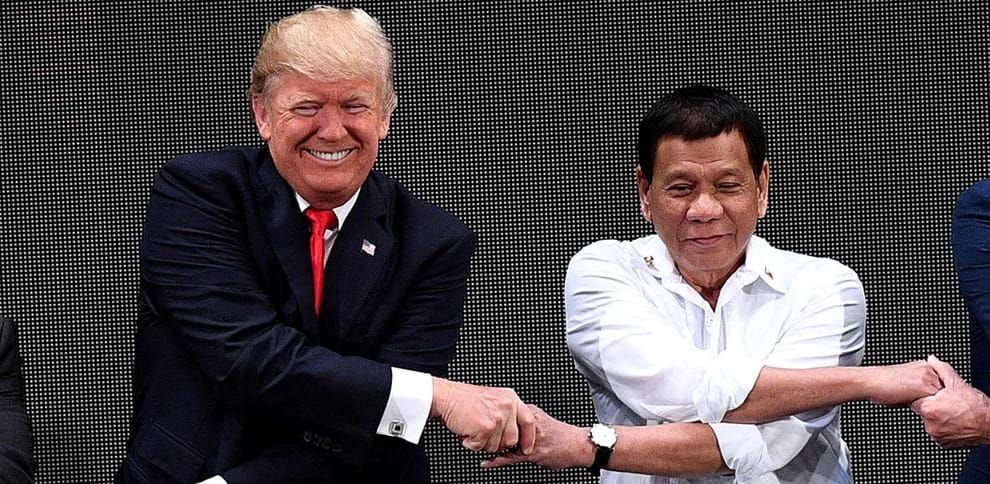
The International Criminal Court has scheduled the trial of former Philippine president Rodrigo Duterte to open on 30 November 2026 on three counts of crimes against humanity tied to his war on drugs.
Trial Chamber III fixed the date on 27 May after a status conference at The Hague, committing a former head of state to trial for killings carried out by his own police. Prosecutors have said the timetable, running from confirmation of charges to trial in roughly seven months, is among the fastest in the court's history. The case is moving even though the Philippines left the Rome Statute in 2019 on Duterte's own instruction.
The court's Appeals Chamber ruled on 22 April that it keeps jurisdiction over crimes committed while the country was a member, from 1 November 2011 to 16 March 2019. The judges held that a state cannot escape its obligations by quitting the treaty once prosecutors have begun examining crimes on its territory.
Pre-Trial Chamber I confirmed the charges the next day, on 23 April, finding substantial grounds to believe Duterte is responsible for the crimes against humanity of murder and attempted murder. The judges placed the killings within a widespread and systematic attack on a civilian population across that period.
The charges
Philippine police put the number of people killed in anti-drug operations at about 6,000. Rights groups put the toll far higher, up to 30,000 once killings by unidentified gunmen are counted. Duterte directed the campaign first as mayor of Davao City and then through six years as president, from 2016 to 2022.
The three confirmed charges track the phases of the campaign. The first covers murders in and around Davao City by the Davao Death Squad during Duterte's years as mayor. The second covers the killing of high-value targets after he became president. The third covers murders and attempted murders in village clearance operations during the presidency. Prosecutors put the confirmed incidents at the murder of at least 76 people and the attempted murder of two others, a set drawn from a far larger toll to carry the case.
Prosecutors expect to call between 60 and 70 witnesses, among them 31 insiders said to have direct knowledge of how the killings were planned, 17 crime-based witnesses and 12 witnesses on context. They identified 197 of Duterte's speeches as evidence. Korner told the prosecution to cut repetition and excessive material, setting 29 June for a provisional witness and evidence list and 31 August for the final one. Senior trial lawyer Julian Nicholls told the chamber the list would be narrowed.
Duterte, 81, has not appeared in person at any hearing. His defence team, led by British barrister Peter Haynes, claims his health is failing and has pressed the judges not to set a trial date. Presiding Judge Joanna Korner ordered a fresh medical assessment and made the opening contingent on a finding that he is fit to stand trial. The gap between confirmation of charges and trial runs to about seven months, shorter than the court's usual pace of up to a year. Korner said pressing reasons compelled the court to open as early as possible. Lawyers for the victims, led by Paolina Massidda, had asked for a start as early as September and opposed a registry proposal to wait until January 2027. The case is proceeding while the court is under two rounds of US sanctions imposed since June 2025.
A warrant for the police chief
On 11 May the court unsealed a second warrant, this one for Ronald dela Rosa, who ran the national police at the height of the killings and now sits in the Philippine Senate. Judges had signed it in secret on 6 November 2025, three days after the prosecutor applied for it.
The warrant charges Dela Rosa as an indirect co-perpetrator in the crime against humanity of murder. Judges found reasonable grounds to believe at least 32 people were killed under his authority between 3 July 2016 and the end of April 2018, within a common plan to kill people branded as criminals that ran from 2011 to 2019. He is one of eight alleged co-perpetrators the court has named in the Philippine situation, a group that includes sitting senator Christopher Go.
Dela Rosa was Duterte's first national police chief, serving from July 2016 to April 2018, after running the police in Davao City. He won a Senate seat in 2019 and was re-elected in 2025, placing third in the national count.
Dela Rosa did not surrender. He had dropped out of public view in November 2025 as word of a warrant spread, missing 31 Senate sessions, then resurfaced on 11 May to cast the deciding vote in a leadership change that installed Alan Peter Cayetano as Senate president. National Bureau of Investigation agents were waiting; video showed him running through the chamber's corridors, and Cayetano placed him under a contested protective custody.
On the night of 13 May gunfire broke out inside the Senate building as the chamber took up the impeachment of Vice-President Sara Duterte. The Senate sergeant-at-arms, Mao Aplasca, a police academy classmate of Dela Rosa appointed to the post on the day the senator reappeared, fired the first shots; an NBI agent fired back before withdrawing. A later police review found no NBI assault was under way when the shooting began. The Ombudsman suspended Aplasca for six months on 15 May. In the early hours of 14 May, around 2:30am, Dela Rosa slipped out of the building in a vehicle belonging to Senator Robin Padilla. His whereabouts are unknown.
The Supreme Court refuses shelter
The Supreme Court, many of whose members Duterte appointed, refused to shield him. On 20 May it denied his request to block the warrant by nine votes to five, with one justice on leave. Six of the nine who voted to deny were Duterte appointees.
In a concurring opinion, Associate Justice Alfredo Benjamin Caguioa wrote: "For too long, power has found ways to outrun justice." He wrote that the court should not rescue an official charged with mass murder and should not become a refuge for impunity.
The justice department and the solicitor general declared Dela Rosa a fugitive from justice and said Philippine law allows the government to surrender him to The Hague. The Marcos administration said it would enforce the warrant, though only after he had gone.
The search and the firearms
Police tracker teams are searching for him. The firearms office revoked his gun licences in late May, and on 11 June his camp turned over 20 of the 117 firearms registered in his name at a residence in Davao City. The NBI chief, Melvin Matibag, said all 117 should be surrendered and that investigators had a new lead on the senator's location; the criminal investigation group said he remains in the country.
On 3 June the civil society coalition Tindig Pilipinas, joined by families of drug war victims, filed an obstruction of justice complaint with the Ombudsman against Cayetano, Padilla and Aplasca, accusing them of using their offices to frustrate the arrest. The criminal investigation group separately found that Padilla's part in the departure was a planned manoeuvre rather than a chance lift and recommended charges. Cayetano has said there was no valid arrest because no Philippine court issued a warrant; Padilla has said no escape took place.
Both Duterte and Dela Rosa deny authorising extrajudicial killings. Duterte threatened drug suspects with death repeatedly during his time in office. Lawyers for the victims said the jurisdiction ruling shows that withdrawal from the Rome Statute does not protect state officials from accountability for international crimes.
Duterte remains in ICC custody at The Hague awaiting the 30 November opening. Dela Rosa, more than seven months after the warrant against him was signed, is still at large.