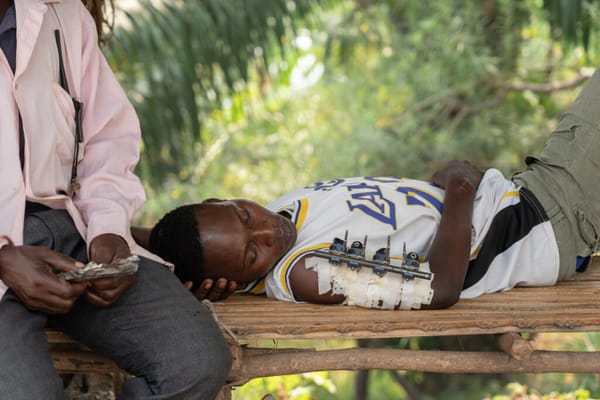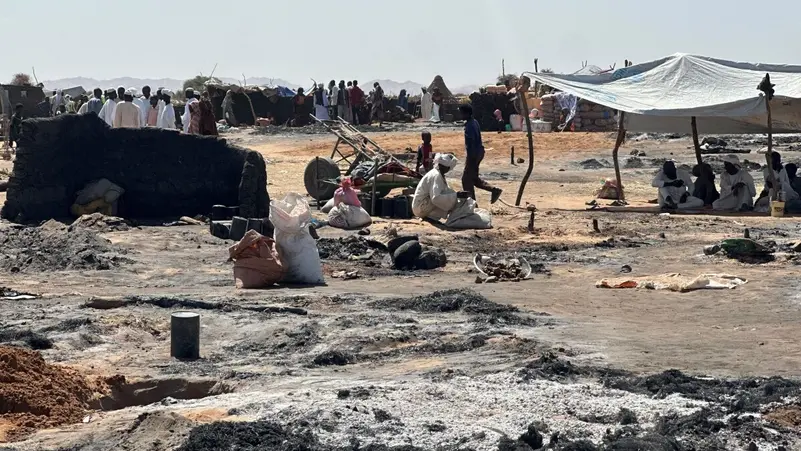
More than 200 civilians have been killed by drone strikes in Sudan's Kordofan region and White Nile state since 4 March alone, the UN's top human rights official reported, as the country's war enters its fourth year with no accountability in sight.
UN Human Rights High Commissioner Volker Türk said Sudanese army drones killed at least 152 civilians in West Kordofan, including at least 50 people when strikes hit a market and a hospital. Separate attacks on two additional markets killed at least 40 more civilians.
“It is deeply troubling that despite multiple reminders, warnings and appeals, parties to the conflict continue to use increasingly powerful drones to deploy explosive weapons with wide-area impacts in populated areas,” said the High Commissioner.
The strikes represent the latest phase of a conflict that former US envoys estimate has killed as many as 400,000 people. The war began in April 2023 and remains catastrophically under-covered relative to its scale, according to rights organisations and journalists monitoring the crisis.
From Khartoum to Kordofan
Sudan's military-led government returned to Khartoum on 11 January 2026 after the army recaptured the capital, but the city remains badly damaged following mass displacement, widespread looting and the near-collapse of basic services. Fighting has now shifted to Kordofan, where nearly daily drone strikes continue to cause civilian casualties.
The army's recapture of Khartoum did not end the conflict. The Rapid Support Forces — the paramilitary group that seized control of much of the capital in the conflict's early months — remain active across Sudan's territory. The displacement and destruction caused during the RSF's occupation of Khartoum has not been reversed.
Systematic Starvation Documented
Researchers at Yale University's Humanitarian Research Lab identified 41 farming communities in North Darfur that were systematically attacked by the RSF between March and June 2024. Legal experts said the pattern of village destruction and displacement provides strong evidence that the RSF used starvation as a method of warfare — a war crime under Article 54 of Additional Protocol I to the Geneva Conventions and one of the most serious violations of international humanitarian law.
The deliberate targeting of farming communities removes the means of food production and forces displacement, creating famine conditions as a direct consequence of military strategy rather than as incidental to combat. This pattern, documented by Yale's Humanitarian Research Lab, mirrors the methodology international courts have used to establish intent in genocide and crimes-against-humanity prosecutions.
The conflict is now approaching a recognised definition of genocide in Darfur under a body of UN and expert findings, though a formal ICC referral remains blocked by geopolitical divisions at the Security Council.
The Coverage Vacuum
Rights organisations and journalists have consistently identified Sudan as the world's most under-covered crisis relative to the scale of death and displacement. The current US-Iran conflict has further compressed the bandwidth available to international media, diverting editorial resources and diplomatic attention from a war that has killed potentially 400,000 people.
The International Crisis Group, Human Rights Watch and UN agencies have all warned that inadequate coverage creates conditions for impunity: governments, militaries and armed groups face less pressure when the international public is unaware of their actions.
EU and Canada: Diaspora and Accountability
The EU's arms embargo architecture and Sudan-specific sanctions remain in place but are widely considered insufficient to alter the behaviour of either the Sudanese Armed Forces or the RSF.
Canada has not formally designated Sudan as a situation requiring enhanced engagement under its feminist foreign policy framework, despite the scale of displacement and sexual violence documented across the country.
Sudan's diaspora communities across Canada and EU member states — particularly in Germany, the Netherlands and the United Kingdom — are active in advocacy demanding an ICC referral and an international accountability mechanism. Rights advocates said both Canada and the EU should support a Security Council referral of the situation in Sudan to the ICC, and that this demand should be made explicitly and publicly in both capitals.
The conflict's fourth anniversary this month represents a threshold moment: four years without accountability for an estimated 400,000 deaths constitutes one of the longest-running and most serious failures of the international human rights system since Rwanda.
What Readers Can Do
Contact your Member of Parliament or MEP to demand Canada and EU member states support an ICC referral for Sudan, and that Sudan's situation be raised at the UN Security Council with the same urgency applied to other active conflicts. Diaspora organisations in Toronto, Berlin, Amsterdam and other cities are organising advocacy campaigns that can be joined online.
1. Contact your representative directly
- Canada: Find your MP at ourcommons.ca and call or email their office. Ask them to support an ICC referral for Sudan and push for UN Security Council action on par with other active conflicts.
- EU member states: Find your MEP at europarl.europa.eu. Use the same ask.
A short, specific message works better than a long one. Try: "I'm asking you to publicly support an ICC referral for Sudan and call for UN Security Council discussion with the same urgency given to other active conflicts."
2. Join an existing campaign — no travel required
- Toronto: Search "Sudan diaspora Toronto" or check organisations like the Sudanese Canadian Society
- Berlin / Amsterdam: Look up Sudanese community organisations in your city; most have online petition drives and virtual advocacy events
3. Amplify online Share petitions, tag your representative on social media, and follow accounts covering Sudan (journalists, NGOs like Darfur Women Action Group or Human Rights Watch Sudan) to stay current and spread credible information.
4. Follow the vote Track whether your MP or MEP takes a public position. If they don't respond within two weeks, follow up, or share their silence publicly.