A funding shortfall of more than a billion dollars, diplomatic deadlock between Kinshasa and M23, and a pattern of sexual violence that international observers now describe as extreme, the crisis in the Democratic Republic of Congo is deteriorating faster than the response can keep pace
Thirty Dead in Bafwakoa
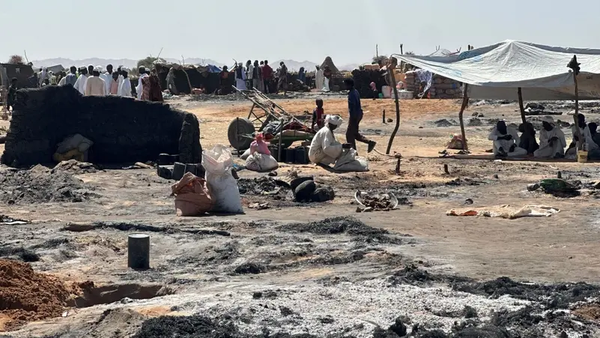
At least 30 people were killed in a single attack on the village of Bafwakoa in Ituri province this week, the latest in a sustained wave of violence that has claimed more than 100 civilian lives and left nearly 390 people abducted across the province since mid-March alone.
The killing arrived in a country whose humanitarian response is already at breaking point. The DRC’s $1.4-billion humanitarian appeal is roughly 30% funded. It is the reason medical teams cannot reach the wounded, the reason displacement camps run beyond capacity, and the reason that the organisations documenting these events are doing so with fewer people in fewer places than the scale of the crisis demands.
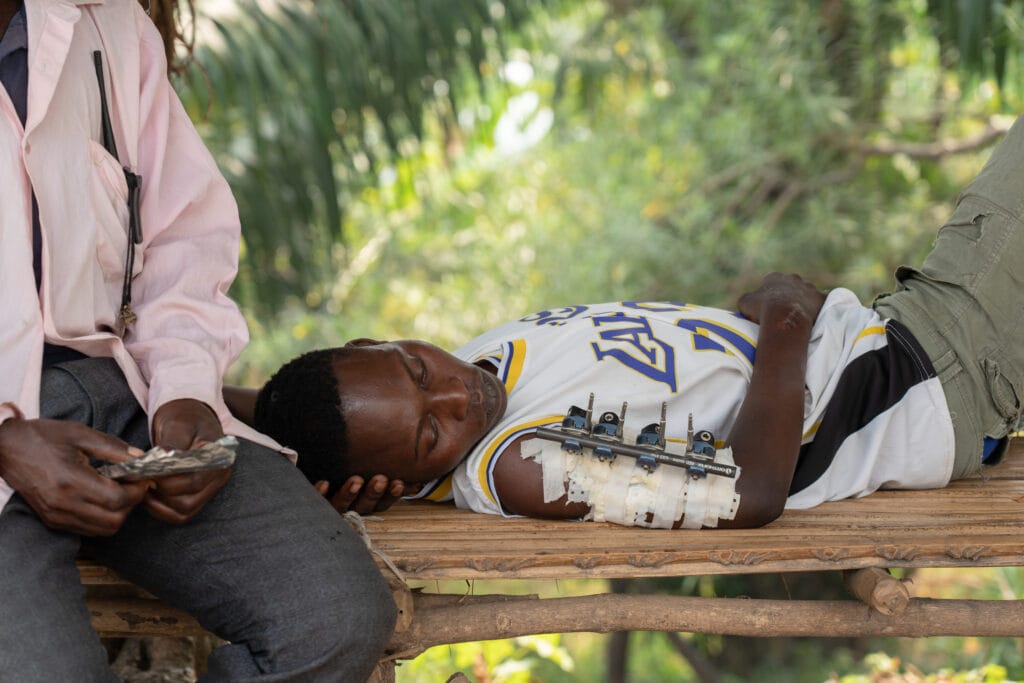
Médecins Sans Frontières, in a new report titled Risking Their Lives to Survive, documented what its teams are encountering on the ground many civilians presenting with machete wounds and gunshot injuries, children as young as four among the casualties, medical infrastructure destroyed or abandoned under threat. In February, MSF teams in Djugu territory treated pregnant women and infants following militia attacks in which firearms and bladed weapons were used on people who had no part in any armed confrontation.
Alira Halidou, MSF’s country director in the DRC, described a pattern that distinguishes Ituri from other acute crises, not simply violence, but its repetition.
“The crisis here is characterised by repeated displacement, in which violence forces civilians to pick up and start their lives over, again and again,” Halidou said. “What is worse is that the stories patients and communities tell us represent only the tip of the iceberg.”
That phrase is not rhetorical modesty. It is a precise observation about what happens to documentation when access is impossible, when journalists are absent, and when the communities most affected have been displaced so many times that the institutional memory of what happened to them has fractured along with everything else.
Hospitals as Targets
Healthcare infrastructure in Ituri is being systematically dismantled, not by neglect, but by deliberate targeting.
In Djugu territory, the Fataki general hospital suspended all operations and evacuated its patients in mid-March after armed groups issued direct threats against the facility. Thousands of people in the surrounding area lost their only accessible medical care at a stroke. Djugu’s Drodro health zone tells a longer story, nearly half of all healthcare centres in the zone have been partially or fully destroyed and relocated over the course of the conflict. Last year, during a comparable escalation of violence, a patient was killed in her bed during an armed attack on Drodro’s general hospital.
The deliberate targeting of medical facilities is not a grey area in international law. Article 19 of the Fourth Geneva Convention and the body of customary international humanitarian law that has developed around it protect civilian hospitals from attack under all circumstances. The conflict status of the parties, the nature of the operation, the identity of the perpetrators: none of these factors creates an exception. MSF’s explicit call on all armed parties to treat healthcare facilities as sanctuaries is a call to comply with obligations that already exist.
What the organisation’s reporting makes clear is that these obligations are being violated systematically, and that the pattern is cumulative. Each destroyed health centre, each evacuated hospital, each threat that causes a facility to suspend operations removes one more layer of the infrastructure on which survival depends. For communities in Ituri that have been displaced multiple times in the past decade, that destruction is not a temporary crisis. It is the latest iteration of a process that has been stripping away the conditions necessary for ordinary life for as long as most of the region’s youngest inhabitants can remember.
Rape at Extreme Scale
The international group of former world leaders known as The Elders warned this week that conflict-related sexual violence in eastern DRC has reached what it described as extreme levels. A woman is a victim of rape or sexual violence in the region every four minutes. A child, every half hour.
Those figures, stated plainly, are difficult to absorb. They should be.
The frequency reflects not only the scale of the conflict but the documented use of sexual violence as a deliberate tactic, a means of terrorising civilian populations, enforcing territorial control, and destroying social cohesion within communities that armed groups wish to displace or dominate. International courts have consistently recognised this pattern of conduct, when committed systematically as part of a widespread attack on civilian populations, as a crime against humanity.
The suspension of US funding for post-exposure prophylaxis kits in eastern DRC has compounded the immediate medical consequences. PEP kits provide rape survivors with the ability to prevent HIV transmission in the critical window after an assault. Their absence does not show up in headlines. It shows up in health outcomes, years later, in communities that already bear the weight of everything else documented here. Advocates working the policy circuits in Brussels and Ottawa have consistently identified the reinstatement of this funding as among the most directly consequential actions available to donor governments.
Rwanda, M23, and the Diplomatic Deadlock
UNSC Resolution 2773 demands an immediate ceasefire, the withdrawal of Rwanda Defence Forces from Congolese territory, and the dismantling of parallel administrative structures established by M23. Rwanda has not complied.
The International Crisis Group assessed this week that the diplomatic situation is unlikely to produce a breakthrough capable of stopping the fighting in the near term. Both the DRC government and M23 are accusing the other of failing to honour the Doha framework agreement, with each side offering conflicting interpretations of what the provisions on restoring “territorial integrity” actually require. A mineral deal and a Washington peace agreement signed in June remain at serious risk of collapse.
The practical consequence of this deadlock is not abstract. Every week in which the diplomatic process fails to advance is a week in which civilians in eastern DRC continue to bear the full weight of a conflict that external actors have political and economic incentives to manage rather than resolve. Rwanda’s continued material support for M23, documented by the UN Group of Experts, means that any ceasefire agreement that does not include Kigali’s genuine withdrawal is unlikely to hold regardless of what is signed.
The UN’s Panel of Experts has named individuals within the Rwanda Defence Force and M23 leadership and documented their roles in atrocities with sufficient specificity to support targeted sanctions designations. Sanctions regimes, under both EU frameworks and Canadian Magnitsky legislation, exist precisely for this purpose. They have not been applied here.
Supply Chains and Legal Exposure
Eastern DRC produces cobalt, coltan, and tin at a scale that makes it structurally embedded in the global technology and electric vehicle supply chains. That is not incidental context. It is the mechanism through which companies headquartered in EU member states and Canada carry direct legal exposure to what is happening in Ituri and North and South Kivu.
The EU’s Corporate Sustainability Due Diligence Directive is now entering its implementation phase. The Critical Raw Materials Act creates enhanced due diligence obligations for companies importing minerals from conflict-affected supply chains. For any company with DRC mineral sourcing exposure that cannot demonstrate it has conducted robust supply chain human rights due diligence, the scale and documentation of conflict-related violence in eastern DRC creates both legal and reputational liability.
Canada’s Fighting Against Forced Labour and Child Labour in Supply Chains Act, which entered force in 2024, applies equivalent obligations to Canadian companies. Canadian mining sector engagement with the DRC has historically been substantial. Whether the conflict dynamics and documented labour conditions in the country’s artisanal and industrial mining sectors trigger reporting and remediation obligations under that legislation has not been formally examined in public. It should be.
Certification and guidance frameworks, among them the Fair Cobalt Alliance and the Responsible Minerals Initiative, exist to support companies seeking to demonstrate ethical sourcing standards. Their effectiveness depends, in part, on the consumer and institutional pressure that makes supply chain transparency a business imperative rather than a voluntary commitment.
The Funding Gap Is a Political Choice
The 70% shortfall in the DRC humanitarian appeal is not the result of insufficient money in the global system. It is the result of political decisions by donor governments to direct funding elsewhere: to crises with greater media visibility, greater proximity to European borders, or greater alignment with strategic interests. The DRC has, for decades, occupied an anomalous position, counted among the world’s most severe humanitarian crises and among the least funded relative to the documented need.
The organisations working in eastern DRC are not asking for charity. They are asking for the resources to do work that the international community has repeatedly described, in formal UN resolutions and G7 communiqués and bilateral policy statements, as among its core humanitarian obligations.
MSF is treating thousands of survivors of sexual violence each month across North and South Kivu, independently of political conditions, requiring unrestricted funding to maintain that presence. The Panzi Foundation, founded by Nobel laureate Dr Denis Mukwege, operates one of the most rigorously documented and directly impactful survivor care programmes in the world, integrating medical treatment, psychological support, legal assistance, and economic reintegration. The ICRC, UNICEF, and the International Rescue Committee each maintain operations across the conflict zone that are constrained by exactly the funding gap described above.
The EU and Canada have established development and trade frameworks with the DRC that carry formal human rights conditions. Rights groups and UN agencies have called on both to increase their contributions to the humanitarian appeal and to use their Economic Partnership Agreements to create genuine accountability conditions: not as aspirational language, but as enforceable benchmarks with consequences for non-compliance.
What the Evidence Requires
The gap between what is documented and what is being done in response to eastern DRC is not, at this point, a gap of information.
The UN Group of Experts has named names. MSF has published field documentation that meets the highest standards of humanitarian reporting. The Elders have placed the scale of sexual violence on the record at the level of former heads of state. Human rights organisations operating under severe access constraints have nonetheless assembled an evidentiary record whose significance will only grow as accountability processes, however distant, eventually become possible.
History suggests that the distance between atrocity and accountability is usually measured in decades. It also suggests, consistently, that accountability depends entirely on whether the record was preserved when it mattered.
For advocates and engaged citizens in the EU and Canada, the most immediately available terrain is not in Ituri. It is in the committee rooms where humanitarian budgets are set, in the regulatory bodies where CSDDD compliance is assessed, in the parliamentary chambers where elected representatives are held to the gap between the values they articulate and the policy choices they make. Contacting an MP or MEP to demand increased funding for the DRC appeal, or to request formal compliance reviews for companies with eastern DRC mineral exposure, is a concrete intervention in a political process that is responsive, slowly, unevenly, but genuinely, to constituent pressure.
A woman in eastern DRC is a victim of rape every four minutes. The conflict minerals in the devices through which you are reading this sentence passed through a supply chain shaped in part by that fact. The organisations working to document, treat, and eventually prosecute those crimes are funded by donations and sustained by international attention. Rwanda has not withdrawn its forces. The peace process is fragile. The funding gap is 70%.
None of this is beyond the reach of political will. That is the most important thing to understand, and the hardest to hold on to.